

Bonn is compact enough to cross in a single afternoon, which is exactly why a spot checklist wastes the day. The better approach is to group subjects by district and shoot them in one pass, so you spend your time composing rather than riding trams. This guide organises Old Town, the Rhine bank, Museum Mile and Poppelsdorf into that kind of order, with the logistics that actually affect a camera plan.
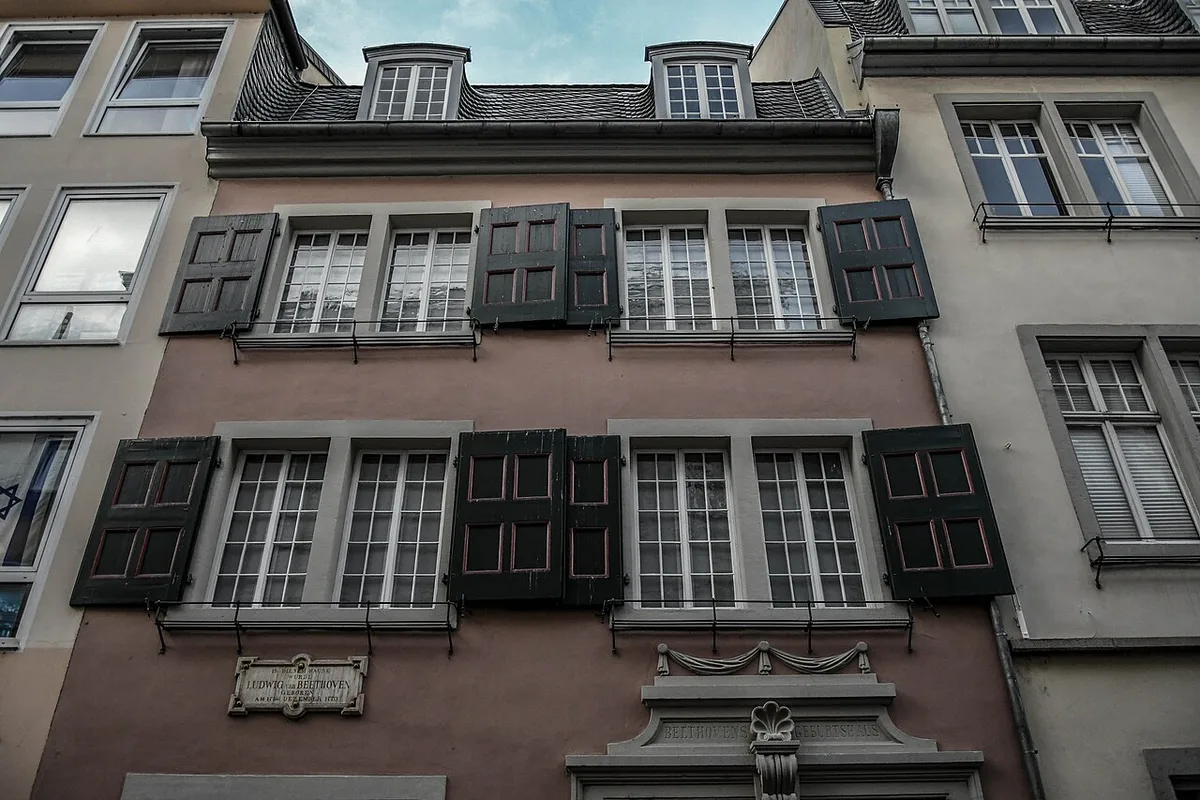
Beethoven-Haus on Bonngasse anchors the Old Town chapter, and the city is the former West German capital whose museum cluster sits along the Rhine. Because the districts sit close together, the main constraint is not distance but light and opening hours. The Bundeskunsthalle, for example, publishes Monday as closed and Tuesday to Sunday as open, with a full day ticket that covers all its exhibitions; where a specific time window has been published by a reliable source, it appears below, and where it has not, the advice is labelled as suggestion.
Shooting Order and Light: Building a Half Day and a Full Day
Treat the city as four zones that run roughly north to south: Old Town and Heerstraße in the centre, the Rhine bank by Alter Zoll, Museum Mile to the south along Adenauerallee, and Poppelsdorf further west beyond the university. A half day comfortably covers Old Town plus the riverside, since both sit within walking distance of each other. A full day adds Museum Mile exteriors and the Poppelsdorf axis, with the option of dropping into one museum interior.
The logic is simple: shoot the tight, shaded streets of Old Town while the light is still soft, move to the open Rhine bank when the sun is higher and the river reads clearly, and finish with the wider architectural subjects of Museum Mile and Poppelsdorf that tolerate flatter light. This is editorial sequencing rather than a sourced schedule, so adjust it to the weather on the day. Check the city's own listings for anything that changes your plan.
Old Town and Heerstraße: Minster, Sterntor, Maxstraße and Bonngasse
Old Town gives you dense material in a small area: the Minster on Münsterplatz, the Sterntor remnant of the medieval wall, the quieter Maxstraße with its white blossom, and Bonngasse where Beethoven was born. Because the streets are narrow, wide lenses struggle and a normal or short telephoto focal length rewards the facade detail. The Minster and Sterntor sit close enough to be covered in one slow loop rather than two separate trips.
Heerstraße is the one spot with a published timing tip: it is recommended to visit early in the morning for photographs without crowds, and weekends there tend to be busy with limited parking. Note what that tip does not tell you, because no reliable source gives a bloom window for the cherry blossoms here. Check current local reporting or the city's tourism pages close to your trip rather than booking flights around an assumed flowering date.
Bonngasse and the Beethoven-Haus are the strongest documentary subject in the quarter, and the museum publishes practical visiting information, including a museum app that works as an audioguide in several languages. Opening hours and admission for the house are listed on the operator's own site, so check there before you build a day around an interior visit. If you want a structured route through this quarter, a self-guided Altstadt walking tour pairs well with the shooting order above.
The Rhine Bank and Alter Zoll: Framing the River
Alter Zoll is a seventeenth-century defensive structure on university ground above the river, and it gives you a raised foreground of old stone against the water and the Beuel side beyond. This is the district where a longer lens earns its place, because compressing the far bank and the bridges into the frame reads better than a broad wide-angle sweep. As a working suggestion rather than a sourced figure, allow roughly an hour on the bank, more if you wait for clouds to move.
Treat riverside light as something to read on arrival. The operators do not publish specific sunrise or sunset vantage points for Bonn, so pick your position from what the sky is doing that evening. The banks are also the easiest place to combine a walk with camera work, since the path itself is the subject. Points further south, including the Godesburg ruin above Bad Godesberg, are covered separately if you want height rather than water. For wider planning, see Best Viewpoints in Bonn.
Museum Mile Exteriors: Forecourt, Facades and the Roof
Museum Mile is a strip of separate institutions rather than one complex, and the shared forecourt between the Bundeskunsthalle and the Kunstmuseum Bonn is the most photogenic piece of public space on it. The Bundeskunsthalle publishes roof access during regular opening hours, with the rooftop slide running from midday on Saturdays and from 11am on Sundays, subject to weather closures; its opening hours are Monday closed, Tuesday 10 to 18, Wednesday 10 to 21, and Thursday to Sunday and public holidays 10 to 18. Confirm those times on the operator's site before you plan a roof shot around them.
The operator's arrival notes are genuinely useful for a photographer carrying gear: from Bonn Hauptbahnhof, U-Bahn lines 16, 63 and 66 run toward Bad Godesberg and Königswinter, five stops to Heussallee/Museumsmeile, and the UN Campus stop is served by RE 5, RB 26, RB 48 and RB 30. A car park with 535 spaces sits directly at the hall on Emil-Nolde-Straße, and there are accessible parking bays by the shared forecourt. Check the operator's mobility page and the tourism office for anything that changes.
Museum Mile Interiors and the Ticket-Scope Trap
Do not assume one ticket covers the Mile. The Bundeskunsthalle sells a day ticket giving entry to all its exhibitions at the prices published on its tickets page, and it also sells a Verbundkarte valid for the Bundeskunsthalle and the Kunstmuseum Bonn for concurrently running exhibitions. That combined ticket does not extend to the neighbouring institutions, so budget for each venue you actually want to enter and check the current figures at the ticket desk.
The Kunstmuseum Bonn publishes its own schedule separately: Tuesday to Sunday 11am to 6pm, Wednesday until 7pm, closed Monday. Note that a page showing the museum closed reflects one particular day, not a permanent closure, so read the stated weekly hours rather than a single status label. Its digital short tours are a useful way to scout which rooms and works you want to photograph before you arrive.
Exhibition interiors generally limit what a camera plan can achieve, since artworks, lighting and loan conditions constrain both movement and equipment. Treat interior time as viewing time first and shooting time second, and keep your exterior plan as the backbone of the day. Where a venue has published rules about photography, they will be stated at the entrance rather than in a general guide.
Poppelsdorf: Palace Front, Water Axis and the Botanical Gardens
The Poppelsdorf axis gives you a long formal approach along Meckenheimer Allee toward the palace front, with the gardens, pond and greenhouses behind it. The Botanical Gardens are part of the University of Bonn, established in 1818, and the operator publishes the current opening times and a plant database so you can locate specific specimens before you go. Confirm seasonal hours directly, since they change through the year.
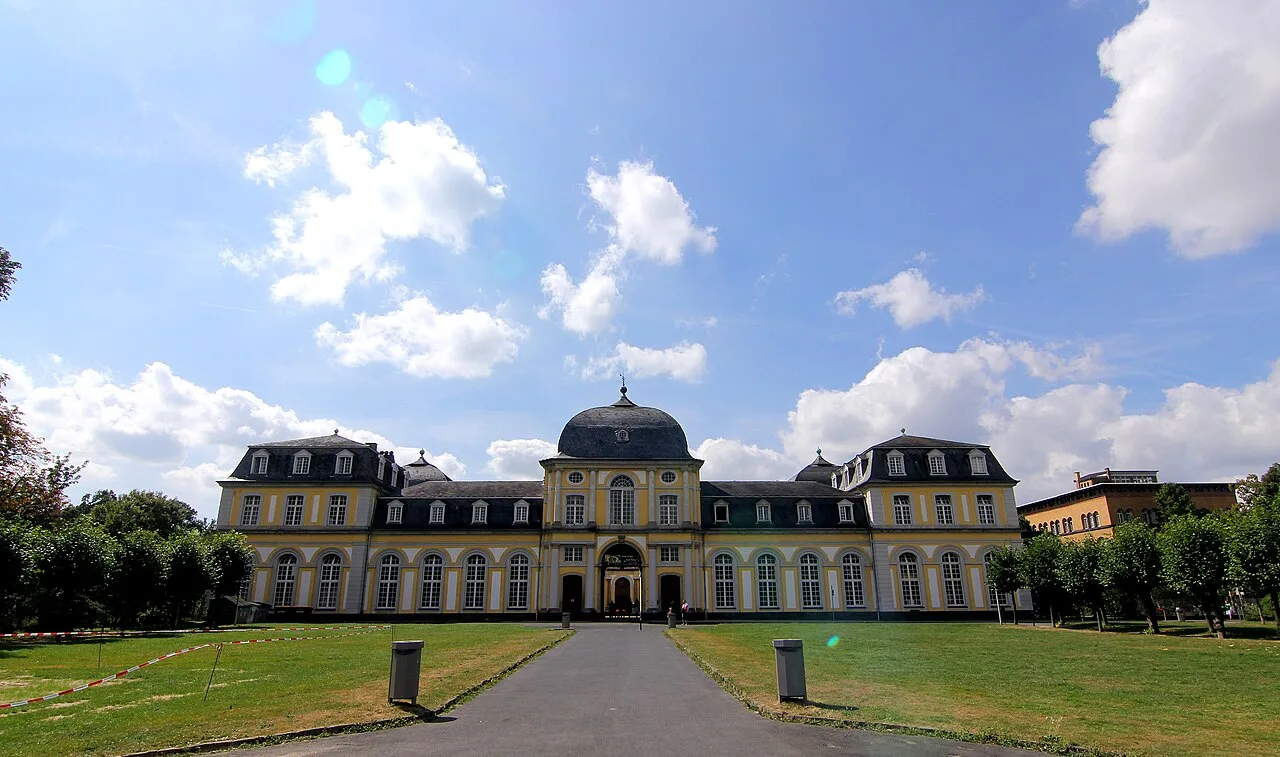
This is the clearest free-grounds versus paid-interior decision in the city. The gardens themselves are walkable public ground, while the palace houses a separate mineralogy collection with its own access arrangements, so do not treat one ticket or one entry as covering both. The garden side also hosts temporary exhibitions and guided walks, which the operator lists in its events calendar.
Poppelsdorf pairs naturally with Museum Mile because both sit along the same southern corridor, letting you shoot the campus edge and the palace approach in one walk instead of two trips. As a suggestion, sequence Museum Mile first and finish at Poppelsdorf, where the open water axis still photographs well when the light flattens. Verify any combination against the separate opening hours of each site.
Practical Constraints and What This Guide Deliberately Leaves Out
Anything volatile belongs at the point of visit. The Bundeskunsthalle's published schedule, the Kunstmuseum's weekly hours and the Botanical Gardens' seasonal times should all be reconfirmed on the operators' own pages in the days before you travel. Where a source gives no figure, this guide gives no figure rather than carrying a stale one forward.
Three things are left out on purpose. There are no golden-hour or blue-hour windows attached to named Bonn locations, because no reliable source verifies them; there is no bloom calendar for the Heerstraße cherry trees; and there is no prescribed order or timing between Museum Mile stops. Crowd advice extends only as far as the sourced early-morning tip for Heerstraße. If you want a second city for comparison, a Dresden photography guide shows how a very different German streetscape handles the same light problem.
Königswinter and the Siebengebirge are separate day-trip territory rather than part of Bonn, and the Drachenfels and Drachenburg material circulating online often comes from older posts whose hours and entry figures are not current. Check the operators' own pages if you extend your trip south. Within Bonn, the city's tourism and culture pages are the safest starting point for anything time-sensitive.
Plan Your Visit
Build your day around districts, not spots: Old Town and Heerstraße first, the Rhine bank and Alter Zoll next, then Museum Mile exteriors and the Poppelsdorf axis. That order keeps walking to a minimum and puts the tightest subjects where soft light helps most. Treat the timing as a sensible default and adjust on the ground.
Before you go, confirm the Bundeskunsthalle's published schedule and ticket scope, the Kunstmuseum's own weekly hours, and the Botanical Gardens' current opening times on their own sites. Decide in advance which interiors are worth paying for, since the Mile's institutions do not share one ticket. A photography plan is only as good as its logistics, and in Bonn those are unusually easy to check.
Frequently Asked Questions
What is the best time of day to photograph Heerstraße in Bonn?
The published guidance for Heerstraße is to visit early in the morning to capture photographs without crowds, and weekends there tend to be busy with limited parking. No reliable source gives a cherry-blossom bloom window for the street, so check local reporting or the city's tourism pages close to your trip instead of assuming a flowering date. Outside the blossom period the street is still a usable urban subject, just without the pink canopy.
Do you need a ticket to photograph the Botanical Gardens and Poppelsdorf Palace?
The Botanical Gardens are university grounds with freely walkable garden areas, while the palace houses a separate collection with its own access arrangements. Do not assume one entry covers both. Check the Botanical Gardens' own site for current opening times, since they vary through the year, and confirm palace access separately before you plan an interior visit.
Is one ticket enough for the whole Museum Mile in Bonn?
No. Museum Mile is a group of independent institutions, and the Bundeskunsthalle's combined ticket is valid only for the Bundeskunsthalle and the Kunstmuseum Bonn for concurrently running exhibitions. It does not cover the neighbouring museums such as Museum Koenig or the Haus der Geschichte. Check each venue's own ticket page and opening hours if you plan to enter more than one.
Can you walk from Museum Mile to Poppelsdorf Palace?
Yes, the two sit along the same southern corridor, which is why grouping them into one shooting session works better than making two separate trips. Sequence Museum Mile first and finish at Poppelsdorf, where the palace front and the water axis still read well when the light flattens. Because each site keeps its own opening hours, check both before setting out.
Which Bonn photography spots are free?
The freely walkable subjects are the strongest free options: the Old Town streets around the Minster, Sterntor, Maxstraße and Bonngasse, the Rhine bank around Alter Zoll, the Museum Mile forecourt and roof when open, and the open garden ground at Poppelsdorf. Interiors, including the museums, generally require tickets and have their own published hours. Confirm current times on each operator's site rather than relying on a general guide.


