

Bonn's Altstadt is compact enough that a walking route needs no transport at all. The shape of the walk is a loose loop: Marktplatz at the top, the Münster and Bonngasse in the middle, and the Rhine bank as the release at the end. For scale, CityAppTour publishes a Bonn Historic Centre self-guided audio walking tour and its FAQ answer suggests planning around two hours for the walking tour through Bonn's historic centre and Federal Quarter; that figure is the provider's estimate for its own route, not an official timing for the walk described here.
The important distinction on this route is between free public space and ticketed interiors. Marktplatz, the surrounding lanes, Bonngasse and the Rhine bank are open public ground. Beethoven-Haus is a cultural institution that, in its own words, is a cultural institution with museum, research centre, concert hall, collection, library and publisher. Those functions have their own access arrangements, so do not assume one ticket covers everything at that address.
Route shape at a glance
Think of the Altstadt as a dense cluster of lanes between the market square and the river rather than a long linear sightline. A workable loop runs from Marktplatz past the Old Town Hall, into the Münster, out through Bonngasse to Beethoven-Haus, then downhill toward the Rhine. You finish facing open water rather than squeezing back through narrow streets, which gives the walk a natural ending.
Because the distances are short, the real decision is not the route line but how many interiors you enter. Walking the lanes takes little time; standing inside a museum or waiting out a church service changes the arithmetic completely. Settle your interior budget before you set off, because it is much harder to abandon a plan halfway down a lane.
Stop 1: Marktplatz and the Old Town Hall
Marktplatz is the right starting point because it gives you orientation before the lanes close in. The square is open, the Old Town Hall gives you a clear architectural anchor, and you can see how streets radiate outward from it. Starting here rather than at a station exit means your first impression is the historic centre itself, not a road junction.
Linger a short while here and use the time to fix your bearings rather than to shop. Note which lane heads toward the Münster and check whether the square is hosting a market, which changes how you walk through it. If a market is running, treat it as an obstacle to route around rather than a stop, so your timings stay honest.
This is also the moment to photograph the square while it is relatively quiet. Later in the day the same space fills with shoppers and café traffic, and the Old Town Hall is harder to frame. The Altes Rathaus Bonn visitor guide is worth reading before you arrive if you want context on what you are looking at rather than a quick snapshot.
Stop 2: Bonn Münster
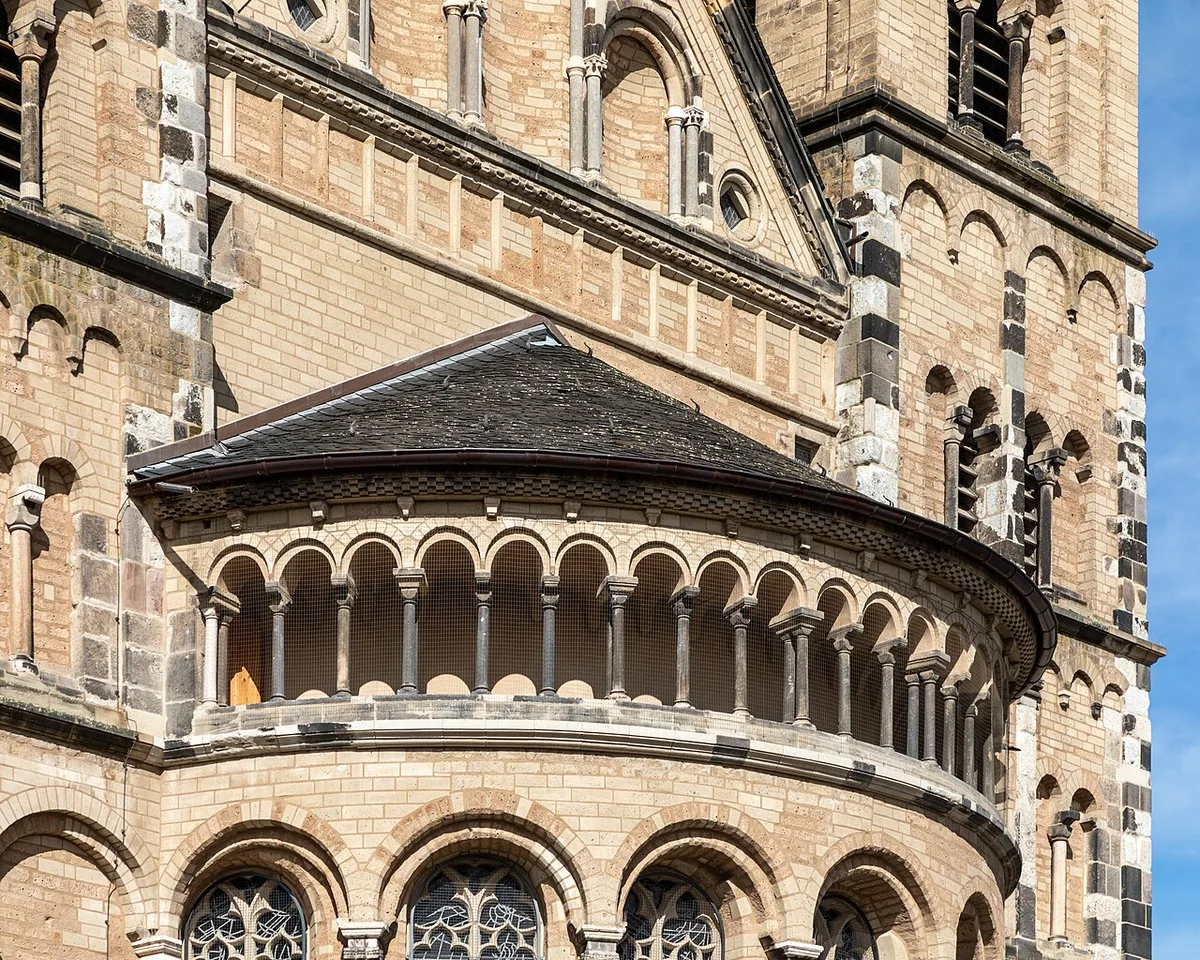
The Münster sits within a couple of minutes of Marktplatz, which is why it belongs second rather than later. The church is a place of worship first and a visitor site second, so the practical question is whether a service is underway. If it is, walk the exterior, look at the facade and the surrounding square, and return on a later pass rather than standing at the back with a camera.
Separate the church from anything around it in your planning. Church interiors and any adjacent ticketed or guided elements are not necessarily the same offer, and Bonn's official tourism pages are the place to confirm what is currently open, when, and on what basis. Do not carry an assumption from one site across to another.
Budget roughly fifteen to thirty minutes if you go inside and the church is open to visitors. If you only circle the exterior, five minutes is enough. Either way, leave the Münster with the same route plan: head from the church toward Bonngasse rather than doubling back to Marktplatz.
Stop 3: Bonngasse and Beethoven-Haus
Bonngasse is where the walk stops being scenery and becomes a specific visit. Beethoven-Haus is the institution built around the composer's birthplace, and its own site describes it as a cultural institution with museum, research centre, concert hall, collection, library and publisher, founded by the Beethoven-Haus association in 1889. Treat it as several functions sharing an address rather than one uniform attraction.
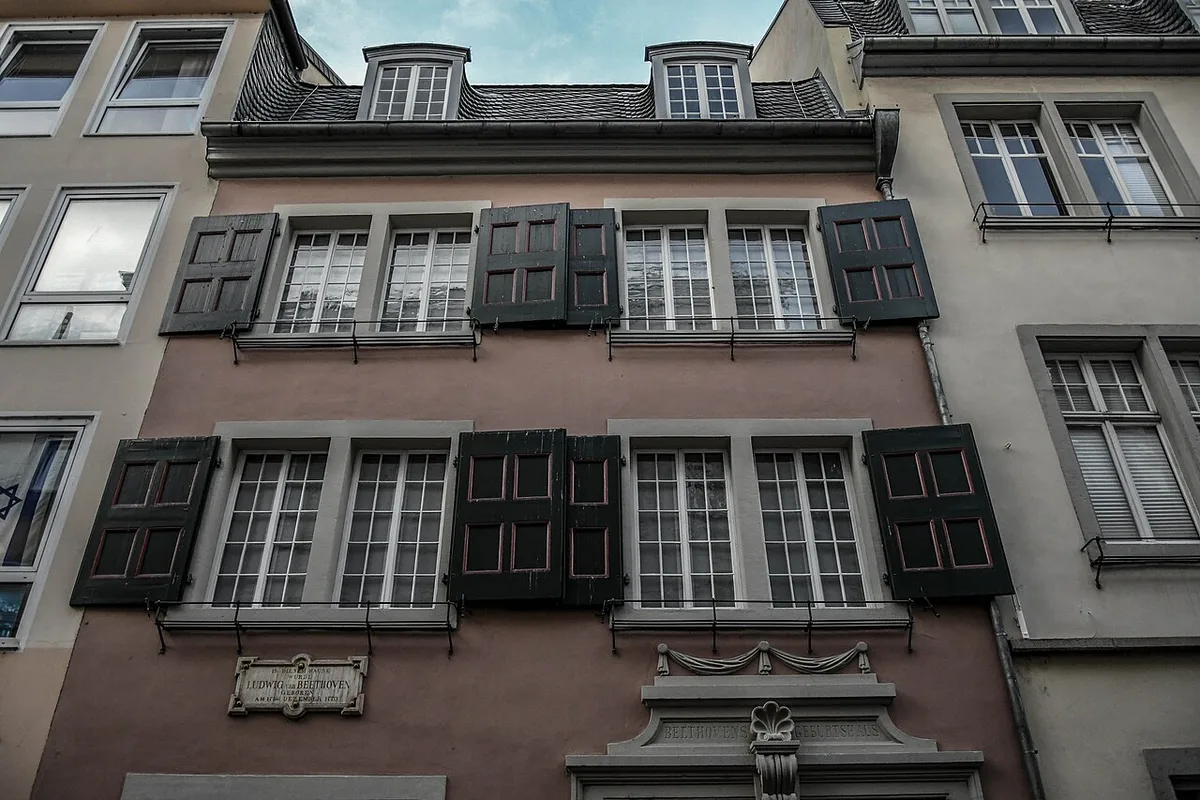
That structure matters for your budget and your clock. Museum admission, concert tickets, library use and research access are different things, and one does not automatically include another. Check the museum's own visit and admission pages for the current position on opening times and entry before you go, because these are the details most likely to change and least worth guessing.
If you are going inside the museum, allow an hour or more and accept that the rest of the walk compresses. If you are only walking Bonngasse, this stop costs you ten minutes and you keep the river in play for the afternoon. Choosing between those two options on the pavement is where most self-guided walks fall apart.
Stop 4: Down to the Rhine
The Rhine bank is the decompression point after the dense old lanes, and it works best as the final stop rather than a mid-route detour. After the lanes and the museum, the river gives you width, sky and a seat, which is exactly what a walking route needs at the end. A Bonn Rhine promenade walk can stand alone as its own outing, so if you have energy left, extend there rather than adding another museum.
Walking surfaces here are the easy part of the day: broad paths rather than cobbled lanes. Weather is the variable that actually matters, since an exposed riverbank in wind or rain is far less appealing than a sheltered Altstadt street. If the forecast is poor, reverse the logic and do your interior visits first, keeping the river for a dry window.
Use the promenade to decide what happens next rather than as a place to plan from scratch. From the river you can judge whether you have time for Museum Mile or the Federal Quarter, or whether the Altstadt has already filled your day. Doing that assessment beside the water is far more pleasant than doing it on a street corner.
Suggested durations: short loop versus half day
A short orientation loop covering Marktplatz, the Münster exterior, Bonngasse and the Rhine bank can be done in about an hour and a half at an unhurried pace. That version involves almost no queuing and no timed entries, which is why it is the safer choice if you are fitting Bonn around a train. Treat these figures as suggestions, not official durations.
The half-day version adds interiors, and that is where published estimates help. CityAppTour's FAQ answer suggests around two hours for its Bonn historic-centre audio route, which the operator says covers the Beethoven-Haus, the Münster, the Marktplatz, the Hofgarten, the Museum Mile and the key sites of the former West German capital all at your own pace; that figure describes the provider's own route rather than this walk. Once you add a museum interior or a long café stop, three to four hours becomes realistic.
If you are staying longer in the city, a 3 days in Bonn itinerary gives you room to split the Altstadt from the museum and government districts instead of forcing everything into one walk.
Timing and rhythm decisions
The single biggest variable is whether you enter buildings, and you should settle that before leaving Marktplatz. Lane walking is predictable; interiors are not, because they depend on current opening arrangements, services, and how long you personally want to stand in front of an exhibit. Deciding on the square takes thirty seconds and saves an argument later.
A workable rhythm is to spend the first half of the walk on streets and squares, then commit to one interior, then finish at the river. Two interiors in one short visit tends to turn a stroll into a schedule. If you want both the Beethoven-Haus museum and a Museum Mile collection, that is a fuller day, not a morning.
Check opening arrangements shortly before you travel rather than relying on anything you read months earlier, and check them per site. Bonn's official tourism pages and the individual institution's own site are the two places worth trusting for current visitor information.
What to skip or defer on a first pass
On a first visit, defer Museum Mile and the Federal Quarter rather than bolting them onto the Altstadt. They sit in a different part of the city and answer different questions, and mixing them into one walk stretches a compact route into a long day. Keep the old town as the old town. If you want deeper context on what each offers before choosing, the Bonn: Landmark Visitor Guides hub is the place to start comparing.
Also defer anything that depends on a fixed start time. Concerts, guided tours and special exhibitions tie you to a slot, which is fine if that is the point of your day and awkward as an add-on. A self-guided route absorbs delays; a booked slot does not.
Finally, resist adding a second city on the same day unless you have already tested your pace. Bonn rewards a slower pass through the Altstadt, and the Rhine bank at the end is best enjoyed without watching the clock.
Live guide versus self-guided
A live guide buys you interpretation and a fixed start time; self-guided buys total freedom and no schedule. In Bonn the organised options are thin. A free-tour listing is carried on GuruWalk, a third-party platform where the free-tour model rests on voluntary tipping and availability can change without notice. It is a useful option to check, not a fixture you should plan a day around.
If a guided slot does exist on your dates, it can be worth taking for the Altstadt's dense layers of history, which are hard to reconstruct from plaques alone. If it does not, the self-guided loop above covers the same geography competently. Either way, confirm the current listing close to your travel date rather than assuming a tour is running.
Practical orientation
The Altstadt is compact and genuinely walkable, which is why the route needs no transit planning between stops. You will cover it on foot, with the main station within reasonable walking range of the centre. Trams and buses serve the city, but naming lines or quoting journey times is not something to rely on from a guide; check a current local journey planner for your arrival.
Wear shoes that handle cobbles and uneven paving, because the old lanes are not uniformly smooth. Carry a light rain layer, since Bonn weather changes through the day, and take a payment method you know works for small purchases. None of this is dramatic, but it is what actually determines whether the walk feels relaxed.
Where to go next
The route works because it is short and honest: Marktplatz for orientation, the Münster for the city's oldest fabric, Bonngasse for Beethoven, and the Rhine for the release. If you remember one decision from this guide, make it the free-versus-ticketed split, because that shapes your timings and your expectations. Everything else can be adjusted on the day.
For a wider plan covering the city's other districts, start with the Bonn city guide and then decide whether the Altstadt gets a morning or a full day. Either choice works, provided you decide before you start walking.
Frequently Asked Questions
How long does a self-guided Bonn Old Town walking route take?
A short loop covering Marktplatz, the Münster exterior, Bonngasse and the Rhine bank takes roughly an hour and a half at an easy pace. Adding an interior visit, such as the Beethoven-Haus museum, typically pushes that to three hours or more. These are suggestions rather than official durations. CityAppTour suggests around two hours for its own historic-centre audio route, which is a useful reference point rather than a fixed figure for your walk.
Is there a free walking tour in Bonn?
Organised tour options in Bonn are limited. A free-tour listing is carried on the third-party platform GuruWalk, where the model depends on voluntary tipping and availability can change without notice. Do not treat it as a permanent fixture; check the current listing close to your travel date. If nothing suitable is running, the self-guided loop in this guide follows the same core geography.
Can you walk Bonn Old Town and Beethoven-Haus in one day?
Yes, comfortably, because the Altstadt is compact and the distances between Marktplatz, the Münster, Bonngasse and the Rhine bank are short. The question is depth, not distance. If you spend an hour or more inside the Beethoven-Haus museum, you will still have time for the lanes and the river, but defer Museum Mile or the Federal Quarter to another day rather than compressing everything.
Is the Beethoven-Haus visit free?
Not everything at the address is the same offer. Beethoven-Haus operates as a museum, research centre, concert hall, collection, library and publisher, and those functions have their own access arrangements. Museum entry is a ticketed visit, while the surrounding Bonngasse street is free public ground. Check the museum's own visit and admission pages for the current position before you travel, since these details change.
Is Bonn Old Town walkable from the main station?
Yes. The Altstadt is compact and sits within walking range of the main station, which is one reason the route needs no transport between stops. Rather than relying on quoted distances or times, check a current local journey planner if you want exact directions from the station to Marktplatz. Once you are in the old town, the loop itself is entirely on foot.


