
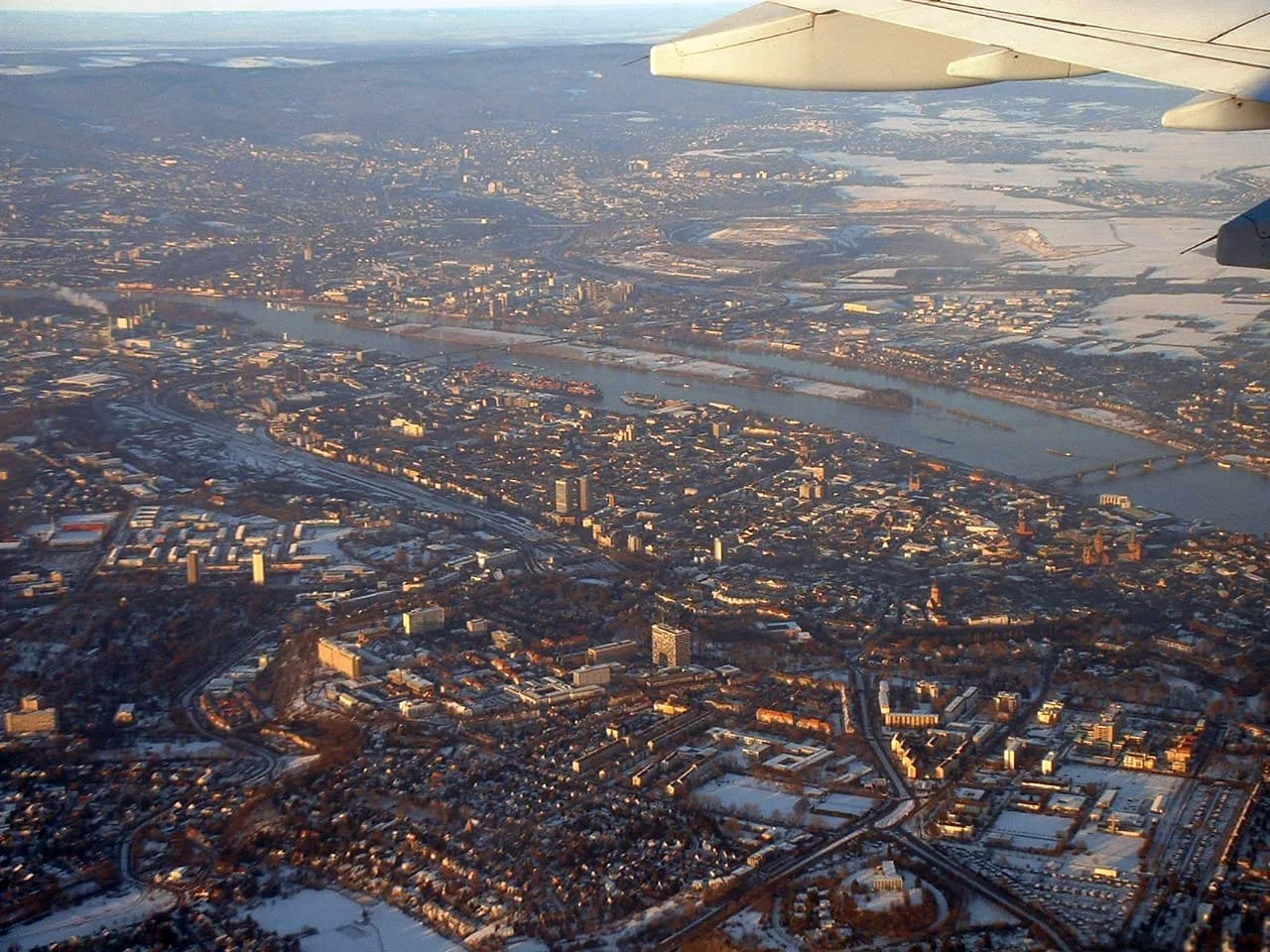
Mainz is the natural half-day pairing with Wiesbaden because the two cities face each other across the Rhine and belong to the same regional transport network, so the crossing is a routine commuter trip rather than an excursion product. You buy a normal regional ticket or use a flat-rate subscription pass, ride a few stops, and arrive in a different federal state with a different old town, cathedral and wine culture. That combination of low effort and high contrast is what makes the pairing work.
One concrete anchor for the far side: Mainz Tourismus runs its tourist information office and store at Markt 17 on Domplatz, and the tourist board publishes the opening pattern as Monday to Saturday, 10:00 to 18:00, closed on Sundays and public holidays. That puts a staffed information point directly in the area you are most likely to walk first, so you can collect a map and check current openings before committing to any paid interior. Re-check the pattern on the day, because seasonal changes happen.
This guide treats the trip the way a local commuter would: one decision about how to cross, one decision about how to fill half a day in Mainz, and one clearly separated decision about whether to add a river element. It avoids quoting fares, timetables or line numbers, because those are exactly the details that change and that the operator publishes in its own journey planner. Use the RMV site for the crossing and the Mainz tourist board for everything on the far bank.
Quick Verdict on the Crossing and the Half-Day Plan
Treat the Wiesbaden to Mainz leg as a regional-network trip, not a tour. The Rhein-Main-Verkehrsverbund operates the regional rail, bus and tram network that covers both Wiesbaden and Mainz, and its site publishes the journey planner, network maps, ticket range and current service notices you need to plan the crossing.
For the Mainz half, anchor the visit on the Mainzer Dom and the Altstadt lanes around it, because that compact area delivers the cathedral, the market square, the old-town streets and the wine taverns within a walkable cluster. Add one museum or one guided element if you have the appetite, and leave the river for a separate decision rather than trying to fold it into the same half day.
If you want the crossing explained as part of a wider Wiesbaden plan rather than in isolation, the Wiesbaden: Itineraries and City Travel Guides page shows how a Mainz half day slots into a longer stay, and the Wiesbaden: Landmark Visitor Guides page covers the individual sights you would be leaving behind that morning.
Getting There: Using the RMV Regional Network
The Rhein-Main-Verkehrsverbund is the transport authority that ties Wiesbaden, Mainz and the wider Frankfurt Rhine-Main region into one fare and timetable system, and its homepage is where you check connections, disruption notices and ticket options before you travel. Use the journey planner with your actual start and end points rather than relying on a remembered line number, because the operator is the authority on what runs today.
Fares change, so check the price of a single or day ticket in the RMV ticket range on the day you travel instead of budgeting from an old figure. If you already hold a Deutschland-Ticket subscription, note that the RMV has announced a price adjustment for that product from 1 January 2027, but that is a network-wide subscription change and not a Wiesbaden to Mainz fare.
Read the RMV travel information pages for bicycle carriage, accessibility and barrier-free connections if any of those matter to you, since the operator sets those rules and they differ by service type. Do not assume a bridge walk between the two cities is part of the plan; walk the route only if a current map and local signage confirm a pedestrian crossing, because a rail crossing and a walking crossing are not the same thing.
Service notices matter more than usual on this corridor. The RMV site carries a construction notice about modernisation work on the right-bank line between Wiesbaden and Troisdorf with effects reported between Wiesbaden and Koblenz, which is a different corridor from the Wiesbaden to Mainz crossing but still worth reading before you finalise a day that continues further up the Rhine.
Building a Mainz Half Day Around the Dom and the Altstadt
Mainz Tourismus presents the city as a mix of history and modern life, singling out the Mainzer Dom, the wine taverns along the old-town lanes and events through the year as the core of the visitor experience. That framing is a useful planning cue: the cathedral and the surrounding Altstadt form the natural spine of a half day, and everything else can hang off them.
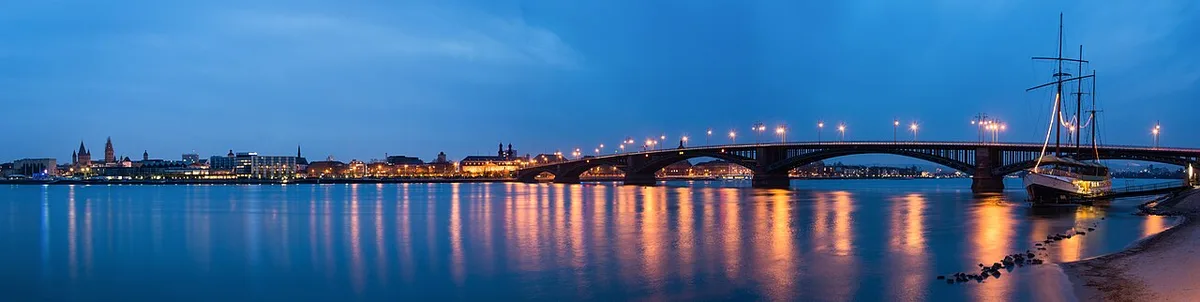
Start outdoors. The cathedral exterior, the squares around it and the old-town streets are public space you can walk without a ticket, which makes them the right first stop if you have arrived mid-morning and want to get your bearings before committing to any paid interior. Take the circuit slowly, look at the building from more than one side, and let the lanes pull you toward the market area.
Then decide whether to go inside anything. The cathedral interior and the individual museums are separately managed, so treat each one as its own ticket decision rather than assuming a single pass covers the complex; the tourist board's own booking pages are the place to confirm what is open and what a visit includes. Paying for one strong interior is usually a better use of a half day than spreading a small budget across several.
If you would rather have your whole Wiesbaden stay mapped out before you cross the river, the one day in Wiesbaden itinerary shows how to spend a full day on the Wiesbaden side, while the day trips from Wiesbaden Rhine page sets this Mainz crossing alongside the other river-direction options so you can compare them honestly.
Start at the Tourist Info at Markt 17 on Domplatz
The Mainz tourist information office and store sits at Markt 17 on Domplatz, which puts it directly in the area you are already walking, and Mainz Tourismus publishes its opening pattern as Monday to Saturday, 10:00 to 18:00, closed on Sundays and public holidays. Treat that pattern as something to re-check on the day, since seasonal changes happen, but it is a reliable enough anchor for planning a weekday or Saturday arrival.
Use the office for three things: a paper city map, current information on guided walks, and a straight answer about which museums are open on your date. Staff there also handle queries about tickets bought through the tourism organisation, so keep your booking reference if you reserved anything in advance.
The tourist board also publishes a free Mainz app, which is the practical alternative if you arrive outside the office hours or simply prefer to carry the map on your phone. Meeting the tourist information point early in the visit is the single most efficient thing you can do, because it converts a lot of guesswork into a short conversation.
mainzcardplus: Check It Against Your Own List
Mainz Tourismus markets the mainzcardplus as a way to explore the city flexibly, describing benefits that include free entry to Mainz museums, a city tour and further advantages, and it states that the card is available with or without a public transport ticket. That is the tourist board's own description, so read it as a claim to evaluate rather than a guaranteed saving.
Do the arithmetic against your actual shortlist. Write down the two or three museums you genuinely intend to enter, add the city tour if you want one, and compare that total with the card as priced on the tourist board's current pages; the card wins for museum-heavy days and loses for a half day built around the cathedral and streets. For a single afternoon, a plain ticket for one interior plus a coffee is often the cheaper and less pressured choice.
Confirm the current inclusions and price directly with Mainz Tourismus rather than from a secondary summary, because museum participation and card conditions are exactly the kind of detail that gets revised. Note too that a card combining transport only makes sense if you are not already covered by a flat-rate subscription for the crossing.
Free City Space Versus Ticketed Interiors
The most common planning mistake on a short Mainz visit is assuming that one ticket unlocks a whole complex. It does not: the public squares, the cathedral exterior and the old-town lanes are open ground, while the cathedral interior, individual museums and any guided tour are separate decisions with their own entry conditions.
Build the half day so that the free layer comes first and the paid layer is optional. That way, if an interior turns out to be closed, busier than expected or simply not what you fancied, the day still works; you have lost nothing but the chance to spend money. This is also the honest way to describe the city to anyone travelling on a tight budget.
Check individual opening times on the operator's own page on the morning of your visit rather than from memory, because cathedral and museum hours are published by the institutions themselves and are exactly what this kind of short trip depends on. If your plans lean toward the museums, the 2 days in Wiesbaden itinerary shows a slower rhythm that leaves room for several paid interiors without rushing.
Should You Add a Rhine Boat Leg?
Treat the boat as a separate product with its own operator, departure point, timetable and fare, and decide it on its own merits rather than as an assumed appendage to the train crossing. The RMV network information includes ferries and ships among its services, which is the right place to start if you want to understand what waterborne options exist within the regional network.
Use three tests. First, does a sailing fit the hours you actually have, given that a boat leg plus a Mainz half day makes a long day? Second, does the route show you something the train does not, such as a river-level view of the Rhine rather than a window view from a carriage? Third, is the operator's own page clear about where you board and what the trip includes, or are you relying on a reseller's marketing copy?
Be sceptical of cruise-booking platforms as a source of embarkation facts. A reseller page for Wiesbaden river cruises markets multi-day Rhine itineraries and quotes per-night and per-trip figures, but it is a booking platform's commercial description, not an operator timetable, so do not treat its claims about departures from Wiesbaden as verified boarding information.
If you want the river as scenery rather than as a cruise, keep the crossing simple and walk the Mainz riverfront instead, where the Rhine is free to look at and you control the timing. If you want the longer river experience, the 3 days in Wiesbaden itinerary is a better frame for it than a single half day, because it leaves room for a full excursion without sacrificing Mainz.
Booking and Planning Tools on the Official Sites
Mainz Tourismus runs an online shop alongside its tourist information point, covering tickets and bookable experiences such as public guided tours, and it also publishes accommodation booking and package-travel sections. If you want a guided walk or a specific experience on your date, booking ahead through that shop is more reliable than turning up and hoping.
For the crossing, the RMV journey planner is the tool to use: enter your actual start and destination, set the date and time, and read the current connection with its service notices attached. The same site carries ticket purchasing options and the tariff information you need if you are unsure which product applies to your trip.
Keep the two tools separate in your planning. Mainz Tourismus answers what to do on the far side; the RMV answers how to get there and what it costs today. Cross-checking one against the other on the day you travel is the whole verification routine in miniature.
Suggested Duration: A Labelled Suggestion
This is the article's suggestion, not an official itinerary: allow roughly half a day in Mainz if you are concentrating on the cathedral and the Altstadt, and a full day if you want a museum plus a guided walk plus a relaxed meal. The tourist board does not publish a recommended visit length, so treat any figure here as a planning convenience rather than an authority.
Work backwards from the return leg instead of forwards from arrival. Decide when you want to be back in Wiesbaden, subtract the crossing, and let that number govern how many stops you commit to in Mainz; that single habit prevents the most common failure of a short cross-river trip, which is over-scheduling the far side.
Verification Checklist Before You Cross
Before you leave Wiesbaden, confirm four things on the official sites: your connection and any current service notices on the RMV journey planner, the current ticket or pass arrangement for your party, the Mainz tourist information opening pattern at Markt 17 if you plan to start there, and whether any specific interior or tour you want is open on your date. Each of those is published by the organisation responsible, and each is capable of changing between planning and travel.
Then keep the day loose. The crossing is short and routine, the cathedral and old-town streets cost nothing to walk, and the only genuinely irreversible decision is a booked boat or tour with a fixed departure. Everything else can be adjusted on the ground, which is exactly why Mainz works so well as the half-day partner to Wiesbaden.
Frequently Asked Questions
What is the easiest way to reach Mainz from Wiesbaden without a car?
Use the regional public transport network that covers both cities. The Rhein-Main-Verkehrsverbund operates regional rail, bus and tram services across the Wiesbaden and Mainz area, and its journey planner gives you the current connection, ticket options and any service notices for your date. Check it on the day you travel rather than relying on a remembered line or timetable, because construction work and seasonal changes do affect services on this corridor.
Is half a day enough for Mainz?
Half a day is enough for the core of the city: the cathedral exterior, the squares around it and the lanes of the Altstadt, all of which you can walk without buying a ticket. It is tight if you also want a museum interior, a guided tour and a proper meal. Treat half a day as a sensible suggestion for a first visit rather than an official recommendation, and decide how many paid stops to add based on when you need to be back in Wiesbaden.
Can I combine a Mainz visit with a Rhine cruise?
You can consider it, but treat the boat as a separate product with its own operator, departure point, timetable and fare rather than as part of the train crossing. Check whether a sailing fits the hours you actually have, whether it shows you something the train does not, and whether the operator's own page clearly states where you board. Booking-platform pages describe multi-day Rhine cruises commercially and are not a substitute for an operator timetable.
Do I need the mainzcardplus for a short Mainz visit?
Only if its inclusions match what you intend to do. Mainz Tourismus describes the card as offering free entry to Mainz museums, a city tour and further advantages, available with or without a public transport ticket. For a half day built around the cathedral and the old-town streets, a single ticket for one interior is often the simpler and cheaper choice. Confirm the current price and inclusions directly with the tourist board before buying.
What should I re-confirm on the day I travel?
Re-check your connection and any service notices on the RMV journey planner, your ticket or pass arrangement, the current opening pattern of the Mainz tourist information office if you plan to start there, and whether any specific museum, cathedral interior or guided tour you want is open. These are all published by the responsible organisation and all can change between planning and travel, so verify them on the day rather than relying on a note made weeks earlier.


