

Two days in Wiesbaden are enough to understand why the city is often treated as a base rather than a single stop. The centre is compact and walkable, while the Rhine and Rheingau wine country sit within easy reach by regional train. That combination forces a decision on day two: stay local, cross the river to Mainz, or head up the Rhine to Rüdesheim and the vineyards.
This itinerary assumes you arrive with a full afternoon on day one and a full day on day two, and that you are travelling without a car. Wiesbaden's official tourism pages are the right place to confirm current opening times, guided tour availability and booking options, since those details change seasonally and cannot be carried over from older trip reports.
A suggested pacing note rather than an official schedule: give the city centre roughly four to five hours of walking time on day one, and reserve the whole of day two for one excursion rather than two. Trying to combine a Rheingau abbey with a Rüdesheim cable car and a Mainz museum in a single day produces a lot of platform time and very little seeing.
Day 1 morning: Market Square, Marktkirche and the compact Old Town
Start at Marktplatz, where the neo-Gothic Marktkirche and the nineteenth-century Rathaus face each other across the square. Both buildings are the visual anchors of the centre, and the church is worth walking around from several angles rather than viewing only from the front. Traveller accounts note that access inside the church and tower climbing are limited to certain days, so treat any tower visit as a check-on-the-day option.
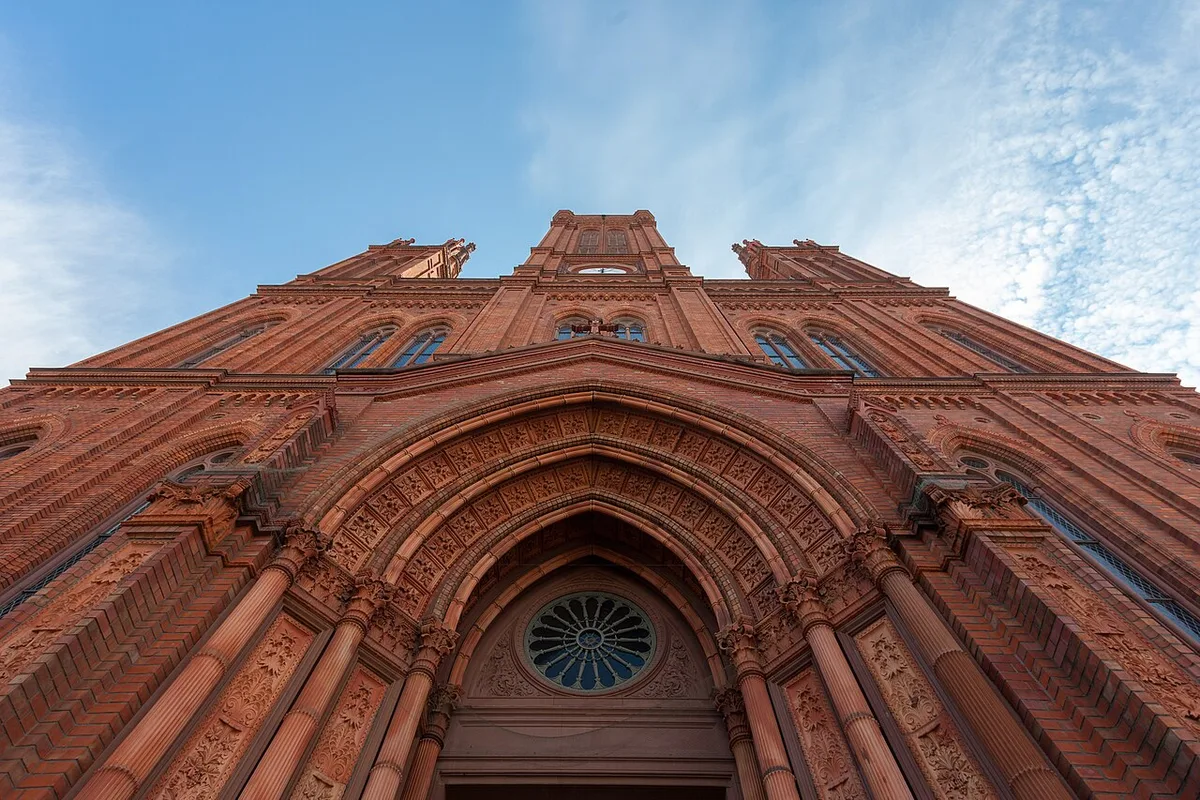
If a market is running, the square fills with stalls and the surrounding streets slow to a crawl, which changes the rhythm of the morning. Market days are not something to assume from an old blog post, so confirm the current schedule locally or on the city's own visitor pages before you build your morning around it.
From Marktplatz, the Altstadt is small enough to cover without a map for long stretches. Cobbled lanes, independent shops and café fronts make this the most atmospheric part of the city, and it links naturally toward the thermal-bath quarter. Budget around ninety minutes here if you want to stop for coffee, less if you are simply walking through.
Travellers who prefer a tighter, single-day structure can compare this morning with a one day in Wiesbaden itinerary, which compresses the same ground into a shorter visit. The two-day version simply adds breathing room and a full excursion day on top.
Day 1 afternoon: thermal baths, etiquette and the free fountains
Wiesbaden's bathing culture is the reason many visitors come, and the Kaiser-Friedrich-Therme is the best-known address for it, built on the site of Roman baths and arranged as a series of decorated pools and relaxation rooms. Understand clearly that this is a paid bathhouse with its own admission structure, not a free public facility. The free hot-spring fountains scattered around the centre, including the Kochbrunnen a short walk away, are a separate and complementary experience.
The operational details are the ones that catch people out. Older accounts describe a nude, mostly mixed-gender bathing environment, time-based charging that is not prorated, a chip bracelet that doubles as a locker key, and a designated ladies-only day, but current rules, rates and hours must be confirmed with the operator before you go, because policies at German baths change and differ between houses.
Do not assume that Wiesbaden's baths share a single ticket or a single rule set. Das Badhaus in the centre and Thermalbad Aukammtal further out are separate operations with their own conditions, and a ticket for one gives you nothing at another. Compare what each offers against what you actually want, whether that is a quiet soak, a sauna circuit or a shorter first-time visit.
Practical preparation makes the difference between a relaxing hour and an awkward one. Pack your own towel, robe and shower sandals, wash before entering communal pools, and keep water nearby. If you want to pair bathing with a wider look at the city's landmark offering, the Wiesbaden: Landmark Visitor Guides surface is a sensible next read.
Day 1 evening: using official booking surfaces for tomorrow
Use the evening to settle day two rather than improvising at the station. The city's tourism site publishes event listings, bookable experiences and public guided tours at any given time, and it is the correct place to check what is actually running during your dates. Confirm departure times for regional trains yourself before committing to an early start.
If your two days fall across a weekend, note that Saturday market activity and Sunday closures can reshape both days. Swapping the order of your city day and your excursion day is often the simplest fix, and costs you nothing except a re-planned morning.
A relaxed dinner in the Altstadt or near the Kurhaus area keeps you close to the station-to-centre axis. This matters more than it sounds: Wiesbaden Hauptbahnhof sits roughly a fifteen-minute walk from the Old Town and bath quarter, so an evening in the centre leaves you well placed for an early train the next morning.
Day 2 decision: Mainz, Rüdesheim or Eberbach Abbey
All three realistic day-two options run by train from Wiesbaden, and each solves a different problem. Mainz suits travellers who want minimal travel and a dense cluster of sights around one cathedral square. Rüdesheim suits wine and river views with a short ride and a walkable Old Town. Eberbach Abbey suits anyone specifically interested in Rheingau wine history, at the cost of an extra transfer.
Train-based trip reports put Mainz at roughly fifteen minutes by S-Bahn, Rüdesheim at around thirty minutes by regional train, and Eberbach Abbey at roughly forty-five minutes with a change in Eltville onto a bus. Treat those as planning figures reported by a travel source, not as guaranteed schedules, and verify current connections on the operator's timetable before you rely on them.
Ticket choice affects the economics of this day more than any single admission. A Deutschland Ticket covers regional and regional express trains plus local transport, but not high-speed ICE or IC services, according to that same report; for one or two short trips, single tickets booked through the national rail site may work out cheaper. Check current coverage and conditions rather than assuming either way.
Whichever you choose, commit to one destination. Splitting the day between the Rheingau and Mainz means losing the better part of two hours to trains and transfers, and neither place rewards a rushed visit. A 3 days in Wiesbaden itinerary is the better structure if you want both.
Day 2 option A: Mainz by S-Bahn
Mainz is the low-friction choice and the one to take if your second day is short or the weather is unreliable. The central market square, the cathedral with its late Gothic cloisters, and the compact Gutenberg Museum all sit within a walkable core, with the museum's Bible holdings the headline draw for most visitors. A wine tasting in the evening is a reasonable way to close the day given the city's position in the Rheingau growing region.
Market timing is the one thing to check rather than assume. Weekly markets in Mainz have historically run on specific weekdays, and nothing about a market schedule is permanent. Look it up locally before you plan your morning around stalls, and keep a fallback of the cathedral and museum if the square turns out to be empty.
Because the ride is short, Mainz also works as a half-day, leaving you back in Wiesbaden for a second bath session or an unhurried evening. That flexibility is the main argument for choosing it over the more scenic but more committing Rheingau options.
Day 2 option B: Rüdesheim am Rhein by regional train
Rüdesheim delivers the postcard version of the Rhine: half-timbered lanes, wine taverns and a compact Old Town that is easy to cover on foot. The main decision is how you reach the Niederwald Monument above the vineyards. A cable car gives you the view with almost no effort, while walking up through the vineyards trades time and effort for a more gradual, closer look at the slopes.
The walk is not a universal recommendation. Vineyard paths involve uneven ground, climbs and weather exposure, and no operator guarantee of suitability exists for casual visitors. If you are unsure about fitness, footwear or conditions on the day, take the cable car instead, and check its current operating status before travelling, since seasonal closures are common on Rhine routes.
Eibingen Abbey sits above the town and is a genuine optional add-on, known for goods made by the resident nuns as much as for its church. Access, opening arrangements and any visitor rules should be confirmed directly rather than assumed from older write-ups.
If river views are the priority rather than monuments, the best viewpoints in Wiesbaden on the Hessian side make a lower-commitment alternative to a full Rhine day. That said, Rüdesheim is the stronger choice when you want the wine-country atmosphere that Wiesbaden itself only borders.
Day 2 option C: Eberbach Abbey via Eltville
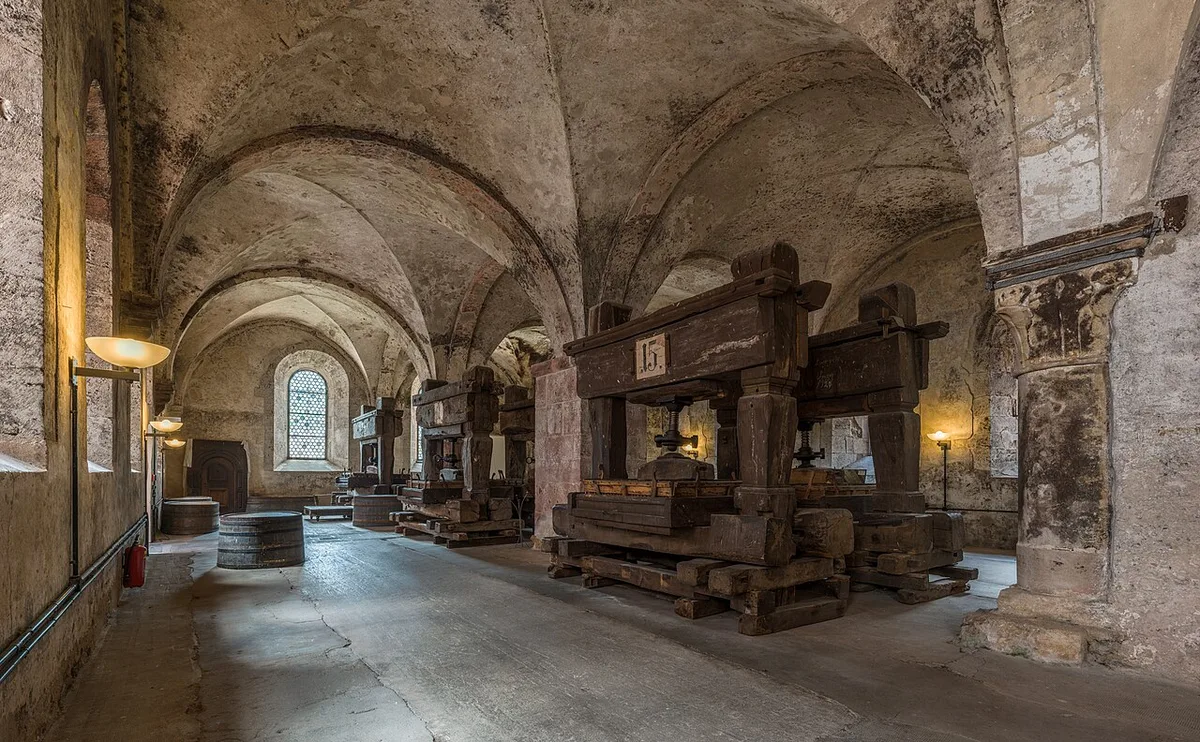
Eberbach Abbey is the excursion for anyone who cares about how Rheingau wine came to be. The monastery dates to the twelfth century and is closely associated with the region's Riesling history, and the complex includes historic wine presses alongside the architecture. Its own wine shop is a genuine reason to make the trip for oenophiles.
The transfer is the constraint. You ride a regional train toward Eltville and continue by bus, which adds a connection that cannot be improvised if you miss it. Check the current timetable before setting out, and consider whether visiting during a peak period requires advance booking, since availability at the abbey is not something to take for granted.
Because the abbey does not fill a whole day for most visitors, Eltville am Rhein becomes the natural pairing for the afternoon, and it is a pleasant small town on the river. Rüdesheim is also reachable if you would rather finish among vineyards and taverns than in a smaller town.
Fitting a Rheinsteig or Rheingau walk around the baths and museums
A short Rheingau or Rheinsteig stretch can be folded into day two, but not on top of a full abbey visit and a bath session. The realistic version is a one-way walk of a few kilometres with a train station at each end, which gives you the vineyard scenery without committing to a long route. Plan the walk around the train timetable, not the other way around.
Treat any hill walking here as unverified for your circumstances. Trails can be muddy, exposed or partially closed, and no source in hand confirms current conditions, signage or accessibility. Ask locally or check a maintained trail or operator page before relying on a specific path.
If you want walking without the logistics, the Neroberg area above the city offers a local alternative that pairs naturally with a lazy morning. It keeps you in Wiesbaden while still giving you elevation and a view, which is often the better trade on a two-day trip.
If you only have one full day: which half to cut
When arrival and departure compress the trip, cut the excursion and keep the city. Wiesbaden's Old Town, Market Square and thermal-bath quarter form a tight cluster that works in a single unhurried day, and you avoid the risk of a missed connection ruining your only full day. The Rheingau will still be there on a future visit.
The reverse applies if bathing is not your interest. In that case, use the single day for Rüdesheim or Eberbach Abbey and treat Wiesbaden as an evening base, which is a legitimate way to use the city given how quickly its centre can be walked.
Where to base yourself and how the station shapes the days
Wiesbaden Hauptbahnhof is close enough to the centre that the choice of base is not dramatic either way, but it does change your mornings. Staying near the station makes excursion days frictionless, while staying in or near the Altstadt puts the baths, Marktkirche and restaurants on your doorstep and adds a walk to the platform.
Travellers arriving from Frankfurt can reach Wiesbaden by direct S-Bahn services, and older accounts mention specific one-way fares from Frankfurt and the airport; those figures are historic and should be re-checked against current rail pricing rather than budgeted from a blog post. The important point is that the connection is straightforward and requires no car.
For a longer stay, a slow-paced structure such as A Slow 3-Day Wiesbaden Itinerary spreads the same components across more days and adds room for a second excursion. If your instinct is to see both the Rheingau and Mainz properly, that shape of trip serves you better than squeezing them into two.
Plan Your Visit
Two days in Wiesbaden split cleanly: one on foot through the compact centre and the thermal-bath quarter, one on the rails into the Rheingau or across to Mainz. The city rewards slow walking rather than ticking off sights, and its position on the Rhine makes the second day genuinely flexible.
Before you travel, confirm the variables that actually move: current bath rules, rates and hours with the operator, train connections and ticket coverage on the rail operator's site, and current visitor arrangements at any abbey or cable car you plan to use. Those checks take fifteen minutes and prevent most of the disappointment a two-day trip can produce.
Frequently Asked Questions
Is two days enough for Wiesbaden?
Yes, if you accept the trade-off. One day covers the Old Town, Market Square and the thermal-bath quarter comfortably on foot, and the second day is best spent on a single excursion rather than trying to see the whole Rheingau. Visitors who want both Mainz and a Rhine day should plan three days instead.
Should I choose Mainz or Rüdesheim for my second day?
Choose Mainz if you want the shortest journey and a dense cluster of cathedral, museum and square sights in one walkable core. Choose Rüdesheim if you want wine, river views and vineyard scenery, accepting a slightly longer ride and a decision between the cable car and a vineyard walk. Neither is objectively better; they solve different interests.
Are Wiesbaden's thermal baths free?
No. The bathhouses charge for admission, and the well-known ones are separate operations with their own rules and pricing rather than one shared ticket. The hot-spring fountains around the centre, such as the Kochbrunnen, are a different, free experience. Check current rates and conditions directly with whichever bath you plan to visit.
Can I walk up to the Niederwald Monument instead of taking the cable car?
Walking up through the vineyards is possible for reasonably fit visitors, but it involves uneven ground and a climb, and conditions vary. There is no blanket confirmation that the route suits everyone. If you are unsure, take the cable car and check its current operating status, since Rhine routes can close seasonally.
Do I need to book Eberbach Abbey in advance?
That depends on the season and current arrangements, which change. Peak periods have historically made advance booking worthwhile, but availability and requirements should be confirmed with the site before you travel rather than assumed from older reports. The same applies to the bus connection from Eltville, which is the main planning constraint of that excursion.
Where should I stay in Wiesbaden for a two-day trip?
Near the station if excursion mornings matter most, or in the Altstadt and bath quarter if you would rather wake up next to the sights you came for. The walk between the two is short, so the difference is convenience rather than feasibility. Book according to which day you expect to start earliest.


