

Wiesbaden sits on the eastern edge of the Rheingau, the wine belt along the north bank of the Rhine, and Kloster Eberbach is the region's most substantial medieval monument. The operator describes it as one of the most significant monasteries in Europe and probably the best-preserved medieval complex in Hesse, and it currently publishes daily opening for the visit from 10:00 to 19:00, with earlier opening at 09:00 on Saturdays, Sundays and public holidays. The same notice states that restoration and construction work, including necessary scaffolding, is causing restrictions on the self-guided visitor route, so a visit in 2026 should be planned around a partial rather than complete interior.
This guide treats Eberbach as three separate things rather than one ticket: the self-guided visitor route through the monastery, the guided tours and wine tastings sold as their own products, and the wine venues with independent hours. It also says plainly where the operator's published information is the only reliable source, and where this guide deliberately does not fill gaps with invented train lines, journey times or prices. Anyone comparing options across the region can weigh Eberbach against other outings using the Wiesbaden: Itineraries and City Travel Guides hub.
What Eberbach Abbey Actually Is
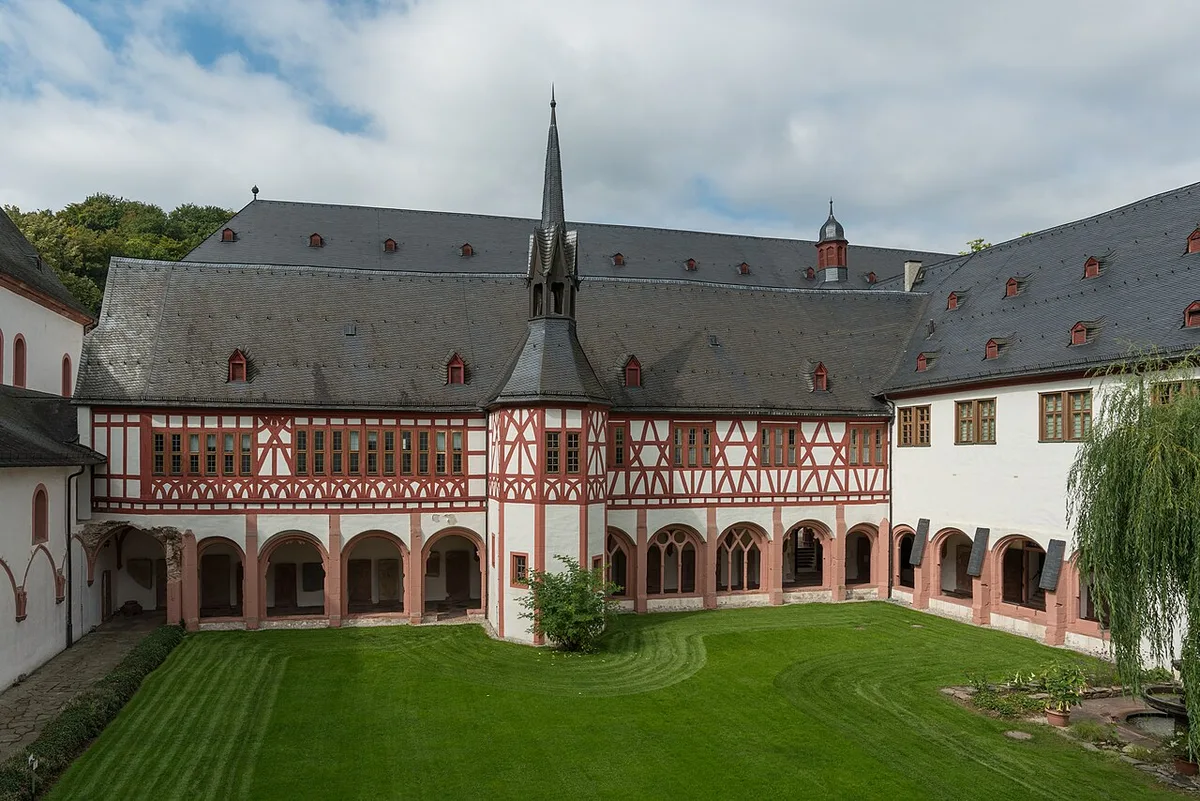
Kloster Eberbach is a former Cistercian abbey whose buildings survived largely intact, and the operator describes it as one of the most significant monasteries in Europe and probably the best-preserved medieval complex in Hesse. That claim matters because it sets expectations correctly: this is not a ruin with a visitor centre bolted on, but a working ensemble of church, cloister, convent buildings and estate infrastructure. The abbey's identity is inseparable from wine, since the Cistercians farmed the surrounding slopes and the estate continues that tradition today.
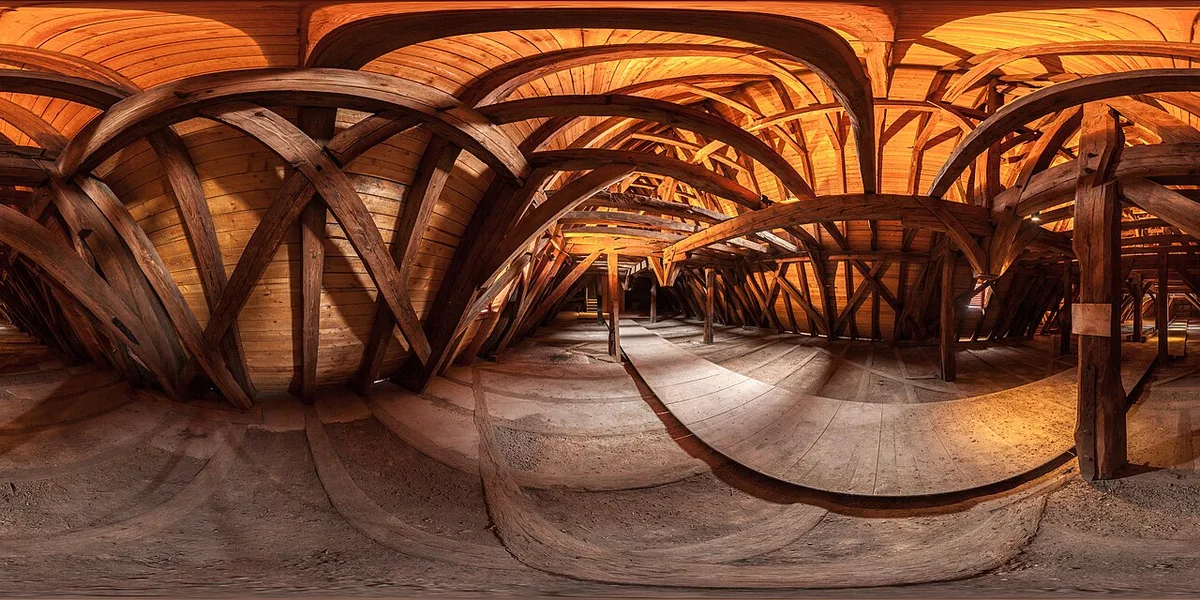
The Romanesque and early Gothic architecture is the reason most first-time visitors come, but the film connection draws a second audience. The abbey served as a location for the adaptation of Umberto Eco's novel about a medieval monastery, and the operator currently runs a 40th-anniversary exhibition on the film and the site. If you are deciding whether Eberbach deserves a slot in a short Wiesbaden stay, the honest answer is that the architecture alone justifies the trip, and the wine estate turns it into something you can spend most of a day on.
The Visit Itself: Visitor Route Versus Guided Tours
The operator distinguishes between the Besichtigungsrundgang, a self-guided walk through the complex, and guided tours, which are sold as separate products and often paired with wine tastings. The self-guided route lets you set your own pace and linger in the cloister, the church and the lay brothers' spaces, while a guided tour trades that freedom for interpretation and access to the monastery's history in narrative form. Neither is automatically included with the other, so decide before you arrive which experience you actually want rather than assuming one ticket covers everything.
Tours and tastings are booked through the operator's own channels and appear on its events calendar, which is the only place where current scheduling and availability are stated. Because tour slots and tasting formats change with the season and with special programming, check the operator's site close to your travel date instead of relying on a plan made weeks earlier. If you want the wine tasting as the centrepiece of the visit, book it first and build the rest of the day around it.
The operator publishes opening times for the visit itself: daily from 10:00 to 19:00, with earlier opening at 09:00 on Saturdays, Sundays and public holidays. Those times are the operator's currently published information and can shift seasonally or around special dates, so confirm them shortly before travelling. Guided tours and wine tastings may follow different schedules from the general visit, which is another reason to read each product's own listing.
Renovation Reality Check: Plan for a Partial Visit
The operator states that current restoration and construction work, including necessary scaffolding, is causing restrictions on the self-guided visitor route. That notice is the single most important planning fact on the site, because it means you should expect a partial rather than a complete experience on any given day. Plan around the possibility that some rooms or passages are screened off, and treat any specific room you have read about as a bonus rather than a guarantee.
The practical response is to check the operator's current notices immediately before your trip and again on arrival, since the extent of scaffolding can change as work progresses. Nothing in the operator's published information promises that every museum room or interior is open while building work continues, and no third party can confirm that on its behalf. If the interior route is a priority for you, it is worth asking at the ticket desk which sections are accessible that day before you commit to a long stay.
Restoration work on a monument of this scale is a preservation necessity rather than a nuisance; the operator notes that support from the state of Hesse allows it to maintain the monastery for future generations. Framed that way, the trade-off is straightforward: you accept a partly obscured route in exchange for the complex remaining intact and open at all. Visitors who treat scaffolding as a reason to skip Eberbach entirely usually miss the parts that are unaffected, including the outdoor ensemble and the wine venues.
Suggested Duration: Half-Day Abbey or Full-Day Rheingau
As a suggestion rather than an official figure, allow roughly two to three hours for the monastery itself if you take the self-guided route without a tasting, and closer to half a day if you add a guided tour or a tasting. Building in a buffer matters more than usual here because renovation restrictions can slow a route or redirect it. If you are coming from Wiesbaden, the journey each way plus that buffer is what turns a morning into most of a day.
The full-day version works better if you treat the abbey as the anchor and add regional stops chosen on the day rather than a rigid checklist. The Rheingau tourism site organises the region by municipality and by what is on, which makes it a sensible way to find something that genuinely fits your dates instead of assembling an itinerary from stale listings. A visit that combines the monastery with a walk through the vineyards and one wine-related stop tends to feel complete without being rushed.
The half-day and full-day plans should differ by what you add, not by how fast you move through the abbey. If your time is tight, do the monastery properly and skip the extras; if you have the whole day, the abbey still deserves the same unhurried treatment, with the additional hours spent in the surrounding wine landscape. Anyone weighing Eberbach against other regional outings can check the day trips from Wiesbaden Rhine options first.
The Wine Side: Estate, Vinothek and Steinberg
Weingut Kloster Eberbach is a working estate with its own range of wines, sold through the operator's shop and poured at the on-site wine bar. The Vinothek & Weinbar at the abbey keeps its own hours, published separately from the visitor route, and the operator has flagged specific days when it closes earlier than usual. That separation is the key planning point: a visit to the monastery does not automatically include a tasting, and the wine bar's schedule is not the same as the site's general opening times.
The operator currently lists the Vinothek & Weinbar as open daily from 10:00 to 19:00, with a notice that it closes early at 17:00 on Sunday, 18 October. Because a single exception like that can invalidate an otherwise correct plan, always read the operator's current notices rather than a general opening-hours line. If the wine bar is the reason for your trip, check its hours on the morning you travel.
The Steinberg estate has its own small venue, the Schwarzes Häuschen, with separate opening hours again: Friday from 16:00 to 19:00, Saturday from 14:00 to 19:00, and Sunday and public holidays from 11:00 to 19:00. That pattern makes it a weekend-oriented stop rather than something you can drop into on a weekday lunchtime. Treat each of the three wine-facing venues as its own schedule problem, and do not assume a single ticket or a single time window covers all of them.
Getting There from Wiesbaden: Train or Car
Wiesbaden and the abbey both sit within the Rheingau and its immediate surroundings, but the reliable way to choose between train and car is to check live connections rather than rely on a fixed journey time. The operator publishes an Anreise page covering arrival, and regional public transport planners will give you current connections for your specific date and time. This guide deliberately does not quote a train line, a bus route or a driving time, because those details change and should come from a transport operator on the day.
The train-versus-car decision usually comes down to how much you want to move around once you are there. A car gives you flexibility to combine the abbey with other Rheingau stops, while public transport keeps the day simpler and avoids parking questions that the abbey's own pages address. Whichever you choose, decide in advance whether the abbey is your only stop or the first of several, because that answer determines which option is better rather than the other way round.
If you are also considering a city-based outing on another day of the same trip, the Wiesbaden to Mainz Rhine excursion is an easy counterpoint to a rural wine day. The Wiesbaden: Itineraries and City Travel Guides hub collects these options in one place so you can see how an abbey day fits alongside everything else the area offers. Booking transport the day before, once you know the weather, is usually more useful than committing early to a plan you cannot change.
Best Time to Go and How the Visit Changes
The abbey's opening pattern already suggests a useful rule: weekends and public holidays open an hour earlier, which is a small advantage if you want the complex before the busiest part of the day. Weekdays are generally the calmer choice for the cloister and the self-guided route, particularly outside the main holiday periods. Because the wine venues have their own weekend-heavy schedules, a weekend visit is better if the Steinberg venue is on your list, while a weekday suits a quieter architectural visit.
Seasonality changes the feel of the estate as much as the buildings themselves; the vineyards are the visual backdrop, and their appearance shifts from early-season green to the autumn colour that coincides with the Rheingau's wine events. The regional tourism site maintains a calendar of what is on across the Rheingau, which is the practical way to find out whether your dates coincide with something worth planning around.
Weather is the variable you can actually control for: the visitor route includes outdoor ground between buildings, so a wet day is workable but less pleasant than a dry one. If you are travelling in the colder months, the indoor spaces become more valuable, and the early closing notice for the wine bar becomes more relevant to your plan. None of this changes the core recommendation, which is to treat the abbey as a half-day minimum regardless of season.
Rheingau Context: Why the Region Rewards a Wider Look
The Rheingau describes itself as one of Germany's most significant wine-growing areas, with roughly 3,000 hectares of vines, and the regional tourism site frames the area around wine festivals, castles, monasteries, walking routes and the river. That breadth is an argument for treating Eberbach as the centrepiece of a regional day rather than a standalone stop. The tourism site also lists municipalities across the region, which is the honest way to discover what is genuinely near your route rather than assuming a particular town sits between Wiesbaden and the abbey.
The tourism site is a regional events and discovery resource, so it confirms what is scheduled and where, but it is not a substitute for an operator's own visitor information when it comes to opening times or building work at a specific monument. Use each source for what it actually covers: the abbey's own pages for the visit, and the regional site for the wider landscape and calendar. Planning with both, rather than one alone, is what prevents a day that looks full on paper but unravels on arrival.
Plan Your Visit
Eberbach Abbey earns its place as the standout Rheingau excursion from Wiesbaden because it works on several levels at once: a substantial medieval complex, a wine estate with a genuine product, and a venue with its own cultural programming. The two decisions that shape the day are whether you add a guided tour or tasting, and how much time you leave around the visit for the surrounding wine landscape. Everything else is logistics that the operator's own pages settle better than any third party can.
Before you travel, read the operator's current notices for opening times and renovation restrictions, and treat those pages as authoritative over anything older. Book tours or tastings directly if you want them, and check the wine venues' separate hours rather than assuming they follow the main site. If you want a second opinion on what else is worth combining with the trip, the Kurhaus Wiesbaden visitor guide covers a very different kind of Wiesbaden day, and the Nassau State Theatre Wiesbaden guide helps if an evening performance appeals.
Frequently Asked Questions
Is Eberbach Abbey worth a day trip from Wiesbaden?
Yes, if you care about medieval architecture or Rheingau wine. The complex is described by its operator as one of the most significant monasteries in Europe and probably the best-preserved medieval site in Hesse, and the working wine estate gives the visit a second dimension beyond the buildings. It suits a half-day at minimum and can easily fill a full day if you add a tour, a tasting or other stops in the surrounding wine region. Anyone who wants a quick photo stop should expect to leave feeling they rushed it.
How long does a visit to Eberbach Abbey take?
As a suggestion rather than an official figure, plan around two to three hours for the self-guided visitor route without a tasting, and closer to half a day if you add a guided tour or wine tasting. Renovation restrictions can slow or redirect the route, so leaving a buffer is wise. If you are coming from Wiesbaden, remember that travel time sits on either side of that estimate. The operator publishes its own opening times, which are the correct framework for arranging your arrival.
Do I need to book a guided tour or wine tasting at Kloster Eberbach?
Guided tours and wine tastings are separate products from the general visit, so if you want one, arrange it through the operator rather than assuming it is included. Schedules and formats change with the season, so check the operator's own calendar close to your date. Booking the tasting first and building the rest of the day around it is the most reliable approach. If you only want to walk the complex, the self-guided route is the relevant option.
What are the current opening hours at Kloster Eberbach?
The operator currently publishes daily opening from 10:00 to 19:00, with earlier opening at 09:00 on Saturdays, Sundays and public holidays, and separate hours for the Vinothek and the Steinberg venue. These times are published by the operator and can change seasonally or around special dates, including occasional early closures. Always confirm on the operator's site shortly before travelling rather than relying on a saved page. This guide does not treat any opening time as permanent.
Are renovations affecting the visitor route at Eberbach Abbey?
The operator states that current restoration and construction work, including scaffolding, is causing restrictions on the self-guided visitor route. That means you should plan for a partial visit rather than expecting every room to be available. The extent of the work can change, so check the operator's current notices before you go and ask at the desk on arrival which sections are open that day.
Should I go by train or by car?
The right answer depends on whether the abbey is your only stop or the first of several. A car gives more flexibility across the Rheingau, while public transport keeps the day simpler. This guide does not quote specific lines, routes or journey times, because those details need to come from a current transport planner for your date; the operator's arrival page and regional transport tools are where to check.


