

One published self-guided itinerary for Füssen lists ten sights across about 2.3 kilometres with modest elevation change, which gives a useful sense of how compact the centre is. Treat any timing figure as a suggestion rather than an official tour length: how long you spend depends on whether you stop for interiors, cake, or photographs. A route of this scale is easy to trim if your train connection is tight.
Füssen's Altstadt is small enough to cover on foot in an afternoon, yet layered enough that a little planning changes what you actually see. The old town sits on a hillside above the Lech, with the Hohes Schloss above it and the former Benedictine monastery of St Mang tucked into the slope below. A self-guided walk lets you set your own pace and decide, stop by stop, whether to pay for an interior or simply enjoy the courtyards and lanes. For wider planning, see Füssen landmark visitor guides. For wider planning, see St. Mang's Abbey and Basilica in Füssen.
Route Overview and Suggested Order
A logical order runs from the station into the pedestrian centre, up to the castle hill, back down through the abbey quarter, out to the Lech bridge, and back through the town or the old wall and garden stretch. Each leg is short, so the walk flows naturally and you can reverse any part without much penalty. The order matters mainly because the castle courtyard and the riverside viewpoints are the two highlights most people want daylight for.
One published self-guided itinerary starts at Füssen train station, passes the tourist information office, and enters the old town on the pedestrian street opposite it. That is also a practical orientation point if you arrive by train and want to leave luggage or ask about current conditions. The tourist office sits at Kaiser-Maximilian-Platz, and the town's official tourism site is the place to confirm what is open before you set out. For wider planning, see Füssen city travel guides.
If your priority is catching a bus onward to Neuschwanstein and Hohenschwangau, a short in-town loop works well as a buffer between connections. If you have a full afternoon, the same route absorbs a museum visit, a coffee stop, and a riverside extension without feeling rushed. Decide which of those two shapes matches your day before you start walking, because it affects where you turn back.
Starting Point and Orientation
From the station, walk toward the large roundabout and continue to the next junction, where the tourist information building is on your left. Turning right up the pedestrian street opposite it takes you directly into the old part of town. This approach is straightforward and puts you in the Altstadt within a few minutes of stepping off the platform.
The town's official tourism website groups the Altstadt as its own district alongside Bad Faulenbach, Hopfen am See and Weißensee, which helps explain why the historic centre feels contained rather than sprawling. It publishes services, event listings and news for visitors, and it is the right place to check for current closures or construction before a walk. Localised roadworks and bus-station construction have appeared in its notices, so a quick look is worth the two minutes.
The visitor guides for Füssen's landmarks sit alongside the city material and are useful once you have decided which interiors you want to enter. Reading them after you have the route in mind keeps the decisions concrete rather than abstract. Start walking first; refine the stops as you go.
First Stretch: The Pedestrian Centre
The Altstadt is compact, with a pedestrian centre of small shops, cafes and little squares rather than one grand axis. Among the buildings worth pausing at is the old Apotheke, a historic structure on the main street. Wander downhill until you reach the fountain and the small square at the far end, just below the castle.
Beyond the fountain, recommended lanes to wander include Kirchstrasse and Brunnengasse, which leads off the first street to the left after the fountain. The streets are short, so exploring one or two costs little time and often reveals quieter corners than the main thoroughfare. Looping back to the fountain is easy if you want to keep the castle as your next stop.
This stretch is where the walk is most obviously free: you are simply moving through public lanes and squares. Keep an eye on the clock here if you are on a short stop, because it is easy to spend an hour on shops alone. Decide before you arrive whether browsing is part of the plan.
The Castle Hill: Free Courtyard, Ticketed Interiors
From the fountain, turn left and take the first road on the right, which climbs toward the castle and leads through a small gate to a path along the walls. Continuing through a grander gate brings you into the inner courtyard. Walking up and into that courtyard is free; only the interiors carry an admission charge.
The Hohes Schloss Füssen is a late-Gothic white castle that dominates the town from its hill, and its most striking feature for many visitors is the trompe-l'oeil painting in the inner courtyard. The castle displays a collection of Bavarian State Paintings, and inside you can also reach the clock tower and battlements for views over the town. As a rough older reference point, a source from 2025 recorded seasonal opening patterns and an adult admission with a combined option; treat those figures as dated rather than current and confirm today's prices and hours directly with the operator before you rely on them.
The decision here is simple: the approach, walls and courtyard give you the signature view and the painted facade at no cost, while the interior is a separate choice that needs more time and a ticket. If you are short on either, stay outside and keep moving. If you have an hour spare and the weather is poor, the interior becomes more attractive.
St Mang Abbey and the Museum der Stadt Füssen
Head back down from the castle and enter St Mang Abbey through a small door in a little courtyard below it. The church itself is free to enter, and its interior is notably austere compared with the painted facades you have just seen. Walk around the building to the front to reach the city museum, which occupies a different part of the former Benedictine monastery and is entered from the Altstadt side.
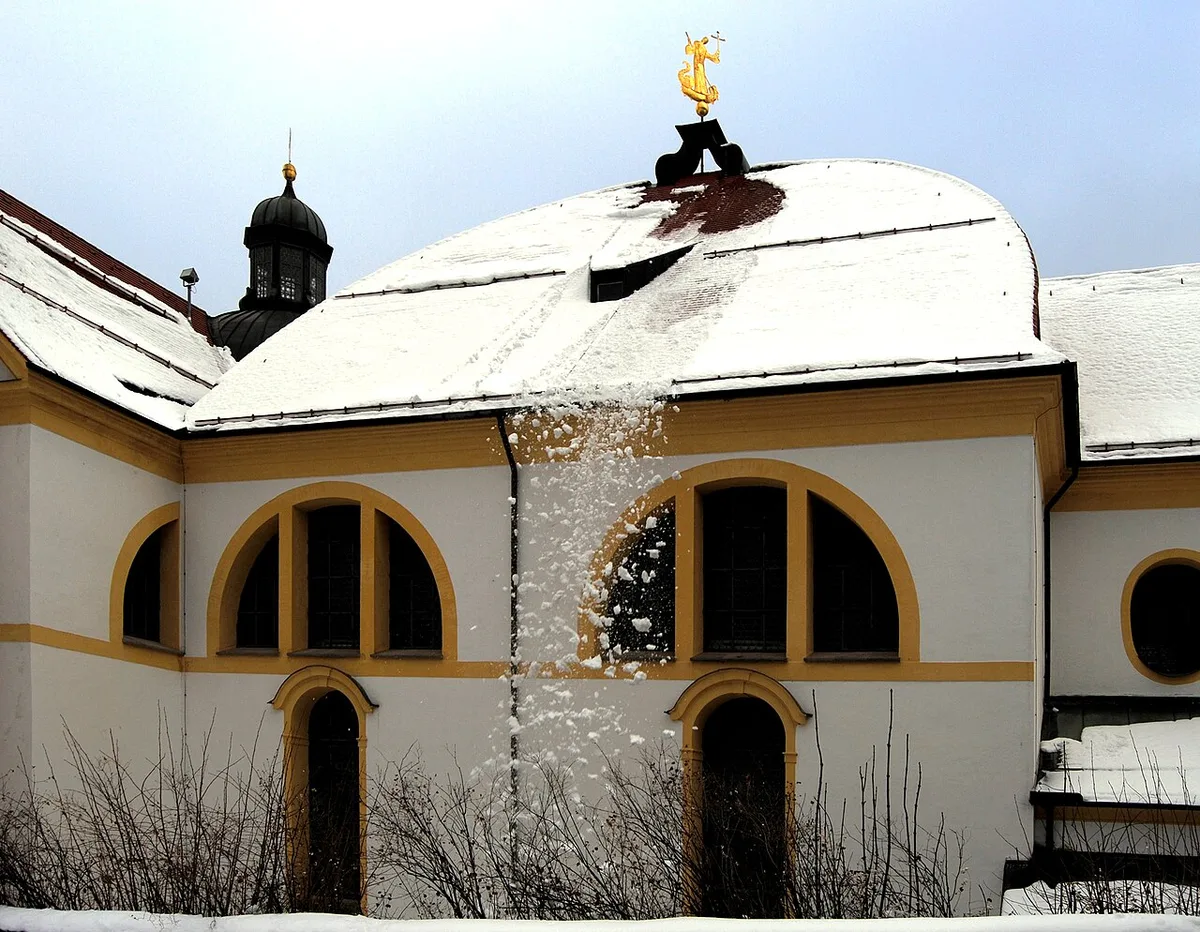
The Museum der Stadt Füssen shows exhibitions on the town's history, the monastery's history, and lute and violin making, and it houses the Chapel of St Anne together with the Baroque representative rooms of the monastery. That makes it a genuinely separate visit from the church, with its own entrance and its own rationale. A 2025 source recorded a combined castle-and-museum ticket as an option at that time; that is a dated example, not a guarantee that any combined offer applies now, so ask at the ticket desk or check the operator's own page.
Because the abbey church and the monastery complex are often described together, it is easy to assume one ticket covers everything; it does not follow from the sources, and you should treat the two as independent decisions. If you want only one interior on your walk, the museum's Baroque rooms and instrument collection give the more distinctive experience. If you mainly want quiet and architecture, the free church is enough.
Franciscan Monastery, the Old Wall and a Quieter Return
After leaving the museum courtyard, turn right; the colourful Holy Spirit church is visible at the end of the road. Take the first left up some steps and along a small street, following a section of the old city walls. When you reach a small courtyard, head right and you will soon arrive at the Franciscan Monastery of St Stephen.
Before entering the monastery itself, look through the gate into the gardens. Opposite stands a tower, one of the last remaining towers of the old walls, which run off from it in either direction. The monastery sits on a hill, so there are pleasant views back over the town from this stretch.
This wall-and-garden section is the best alternative to retracing the main lanes, and it is also the quietest part of the route. One published sightseeing circuit lists the monastery church of St Stephen among its ten stops, described as an outwardly simple 18th-century church with Rococo furnishings, which matches the low-key feel of this corner. If you are short on time, this is the stretch you can compress by following the wall directly downhill toward the river.
Lech Bridge, Magnus Blick and the Riverside Turn
From the monastery church, head down the steps to the river, follow the bank under the bridge, then bend right to walk up onto the bridge itself. The Lech bridge is a good viewpoint over the river, and on the far side, an area known as Magnus Blick gives a rewarding look back at St Mang Abbey. This is the natural turnaround point for a town-only loop.
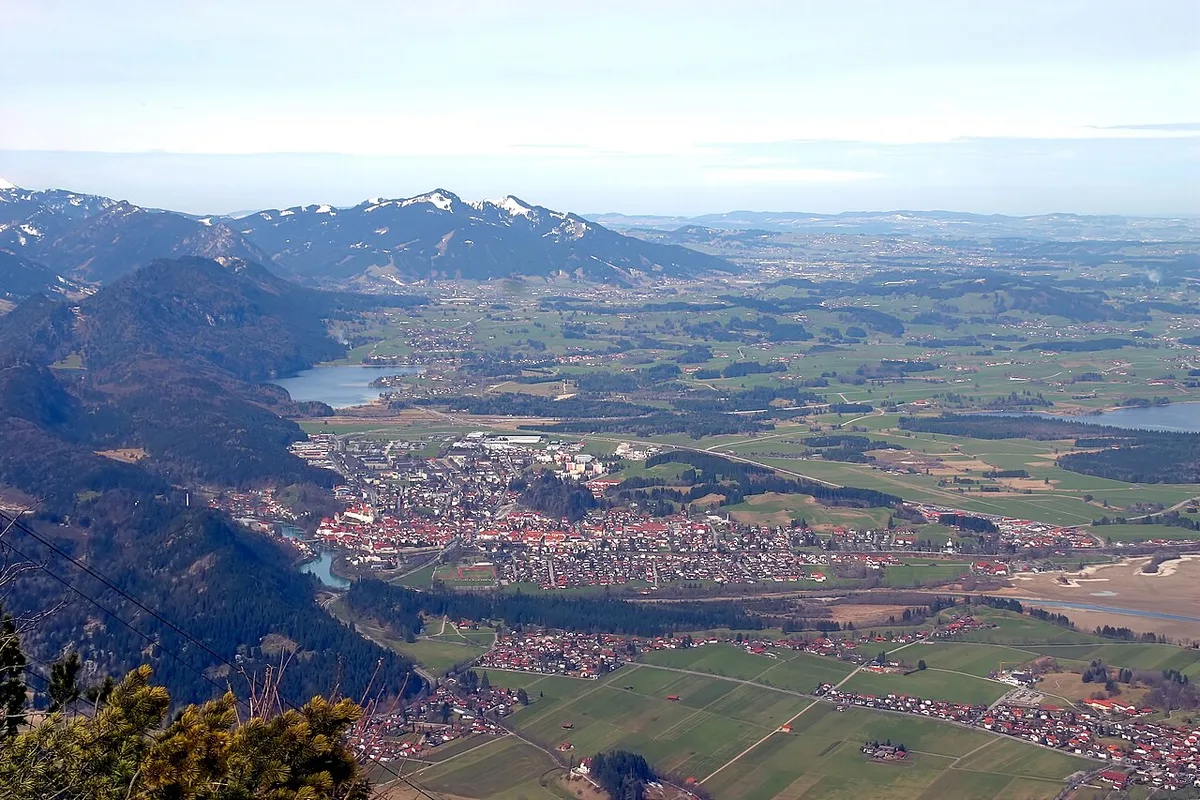
The Lech itself rises near the small Austrian town of Lech, flows north through the Alps past Augsburg, and joins the Danube downstream; a cycle path runs along much of its course, with a walking trail from Füssen toward Lech in Austria. Knowing that puts the bridge in context: you are standing on a river that has been a working route through this landscape for a long time. The view back at the abbey is the reason to cross rather than simply look from the near bank.
If time is tight, cross the bridge, take in the view, and return the way you came. If you have longer, the riverside paths are the obvious place to slow down. Either way, the town remains within easy walking distance.
Riverside Extension: Lech Waterfall and Gorge
From the viewpoint by the bridge, head right along the road using the large pavement, passing a partially renovated factory area. Continue until the road bends and you reach another bridge over the river, from which both the Lech waterfall and the gorge on the other side are visible. The waterfall is manmade, while the gorge is mainly natural and formed roughly 10,000 years ago when the ice caps melted at the end of the last Ice Age.
This is a genuine add-on rather than part of a compact in-town loop, so weigh it against your remaining time. If you are fitting the walk around a castle transfer, the gorge is the first thing to cut. If you have a free afternoon, the wild upper Lech and the forested valley make the extra walk worthwhile.
Riverside and outdoor options around Füssen are covered by the city's tourism pages, which also note the Lech among the area's waterways and lakes. For a broader look at low-cost options in town, the guide to free things to do in Füssen pairs well with this extension. Decide before you set off whether the gorge is in or out, because it changes the shape of the day.
Baumgarten and the Return Through Town
Cross the bridge and follow the path up through the field, then turn right back toward town, keeping left at the large hotel. Walk along the small road out of the suburb through a gap in the roads until you see a bridge above you, pass under it, and take the path left up and over the bridge into the Baumgarten. The Baumgarten is a public park on a slight hill next to the castle hill, and it is free to enter.
Within the garden there is an old stone spring and fountain at the far end, with the edge of the Hohes Schloss visible behind it; the elevation also gives views over the surrounding countryside. Leave by the steps to the right of the fountain, turn left along a cool paved path cut through the rocks, then descend to the road and head right into the centre. From there you can wander a few more streets before returning to the station.
Brunnengasse, the first street on the left after the central fountain, is a pleasant lane to finish on. This return leg also works in reverse if you would rather end at the river. Either direction keeps the walk comfortably within the town's compact footprint.
Optional Add-Ons: Ziegelberg and the Castles
If you still have energy, or time to fill before a train, the Ziegelberg viewpoint is a short climb that rewards clear days with views across to the high Alps. On the way you pass through a pleasant little park, and you can also look over toward the lakes on the far side of the mountains. Treat it as an optional extra with a climb rather than a standard stop on a short old-town walk.
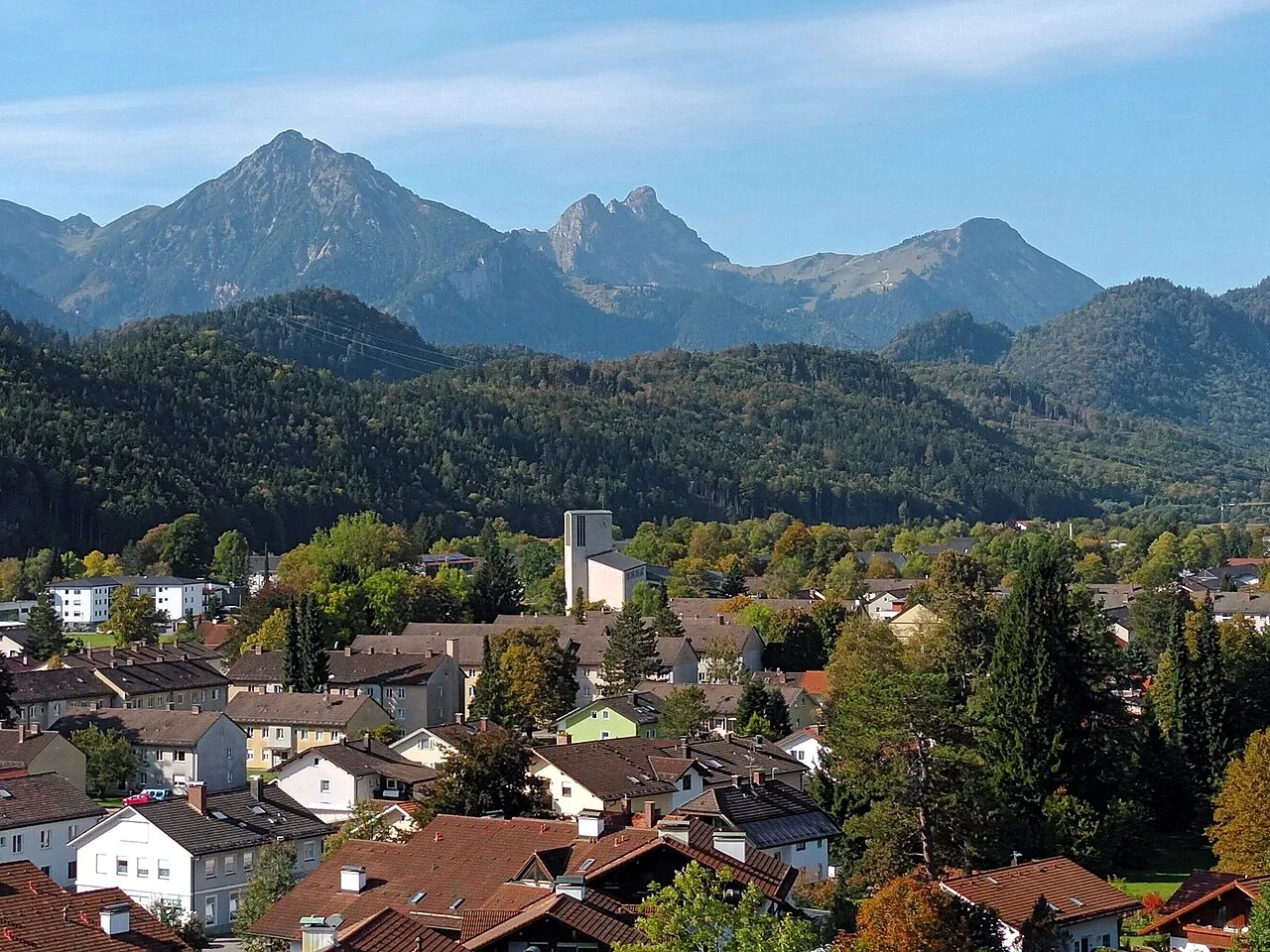
An alternative add-on is to walk onward to the castles at Neuschwanstein and Hohenschwangau instead of taking a bus. That turns a town walk into a much longer outing, so it suits a full day rather than a station stopover. If you plan to spend several days in the area, the three days in Füssen itinerary shows how a town day fits with castle and lake excursions.
Choose one add-on, not both, unless you have a genuinely open schedule. The Ziegelberg climb costs less time and delivers a different kind of view; the castle walk delivers the famous buildings but consumes the better part of a day. Matching the add-on to your energy level matters more than ticking off everything.
Time Budget: What Fits in Under Two Hours
Once you are in the Altstadt, the lanes, the castle courtyard approach and the walk down to the abbey can all be covered comfortably in an unhurried ramble, and one published account suggests two to three hours is enough time to walk around the town. That figure is a suggestion, not an official tour length, and it excludes any interior visits. Use it as a planning yardstick rather than a target you have to hit.
For an under-two-hour version, keep the castle courtyard exterior-only, treat the abbey church as a quick look inside, cross the Lech bridge for the Magnus Blick view, and skip both the gorge and the Ziegelberg climb. Adding a museum interior, or the riverside gorge extension, pushes you past that window. Photographers and slow walkers should budget on the longer side.
The distance involved is small, so the variable is not walking speed but how many stops you actually enter. Committing in advance to one paid interior, or to none, is the simplest way to keep the walk inside your window. Everything else can be decided on the spot.
Practical Decisions: Interiors, Cafes and Route Order
The clearest dividing line on this walk is between free-to-enter spaces and ticketed interiors. The castle approach and courtyard, the abbey church, and the Baumgarten park cost nothing to walk through, while the Hohes Schloss collections and the Museum der Stadt Füssen have their own admission arrangements. Check current prices, opening days and any combined offers with the operator rather than relying on older figures.
Cafes and restaurants are plentiful in the centre, so a mid-walk stop is easy to arrange rather than something you need to plan around. That makes the town a reasonable place to pause between trains even on a short visit. If you are travelling onward by rail, allow a margin before your departure so a long lunch does not turn into a missed connection.
On route order, the two defensible choices are castle-first or river-first. Castle-first puts the best views early and leaves the flat riverside for when your legs tire; river-first gets the walk done before crowds build in the centre. Neither is wrong, and the short distances mean you can change your mind halfway without losing much.
Plan Your Visit
A self-guided Füssen old town walk works because the distances are short and the decisions are few: how many interiors you want, whether the gorge or the Ziegelberg climb is in, and how much time you have before your next connection. The castle courtyard, the abbey church and the Baumgarten give you a satisfying loop with no admission at all, and paid interiors are an easy upgrade when you have the hours to spare.
Before setting out, check the town's official tourism site for current notices, and confirm castle and museum opening days and admission directly with the operator, since these change seasonally. The Füssen city guide collects the wider itinerary material if you want to build a longer stay around this route. Start at the station, walk uphill first, and let the lanes do the rest.
Frequently Asked Questions
How long does a Füssen old town walking tour take?
As a suggestion rather than an official figure, allow roughly two to three hours for the town itself, which is the range one published walking guide gives for covering the main sights. That estimate assumes you walk the lanes, the castle hill and the riverside without spending long inside any building. Adding a museum or castle interior, or the riverside gorge extension, will push you beyond it.
Is the Füssen old town walk free?
The walking itself is free, and several key spaces cost nothing to enter: the lanes and squares of the Altstadt, the climb up to the castle and its inner courtyard, the abbey church at St Mang, and the Baumgarten park. Paid elements are the interiors, such as the Hohes Schloss collections and the Museum der Stadt Füssen, each with its own ticket arrangements. Check current admission details with the operator before you go.
Do the Hohes Schloss and Museum der Stadt Füssen share one ticket?
Do not assume they do. A combined castle-and-museum ticket was recorded in a 2025 walking guide, but that is a dated example rather than a statement about current offers, and the abbey church is a separate free space in any case. Ask at the ticket desk or check the operator's own pages for the admission options available on the day you visit.
Can you do the Füssen old town walk in under two hours?
Yes, if you keep it tight. Stay outside the castle, look into the abbey church briefly, cross the Lech bridge for the Magnus Blick view, and skip both the gorge and the Ziegelberg climb. Any paid interior, or the riverside extension, usually takes you past the two-hour window.
Should you include the Lech waterfall and gorge in a short old town walk?
Not in a compact under-two-hour loop. The waterfall and gorge sit beyond the second bridge, reached by continuing along the road past the Lech bridge viewpoint, so they work better as a deliberate extension when you have a free afternoon. If you are fitting the walk around a castle transfer, treat the gorge as the first thing to cut.


