

Three days is the sweet spot in Füssen because the town itself is small but its headline sights are not in it. The royal castles stand in neighbouring Schwangau, the Zugspitze area sits across the Austrian border region, and the lakes that give the town its holiday character ring the surrounding valleys. You can see the historic centre in a couple of hours, which leaves two full days for the wider Ammergau and Tannheimer Alps.
The structure below splits those days deliberately: a castles day, a full-day mountain excursion, and a low-effort lake or spa day. As a suggestion rather than an official plan, aim for roughly seven to nine hours of activity on the castles day and treat the third day as deliberately loose, since weather in the foothills changes fast. Füssen markets itself under Outdoor, Culture and Wellness categories, and that trio maps neatly onto this shape.
Book anything ticketed as early as you can. Castle tours at Neuschwanstein and Hohenschwangau are separate ticketed entries with timed slots, and the mountain railways publish their own seasonal validity windows. Confirm prices, opening hours and combined-ticket options directly with each operator close to your travel date rather than relying on older blog figures.
Why Three Days Works in Füssen
Füssen packs a medieval Altstadt, a hilltop castle and a baroque abbey into a compact pedestrian core, so sightseeing inside town is genuinely short. The catch is that the experiences people travel here for sit outside it, in Schwangau or further into the Alps. Three days lets you absorb the transfer time without cutting anything.
The town describes itself across outdoor, cultural and wellness themes, and each theme needs different weather and energy. A castles day works in almost any conditions, a mountain day needs clear skies, and a lake or spa day floats. Building the trip around that logic means one bad-weather morning does not ruin the whole stay.
Staying overnight matters here. Coach parties and day-trippers from Munich clear out in the late afternoon, and the cobbled lanes around the Lech become far more pleasant. If you only have two nights available, the shorter version of this trip still works.
Getting There and Getting Around Without a Car
Füssen is reachable by regional train from Munich and by bus from Garmisch-Partenkirchen, but journey times vary with connections and delays, so check the current timetable before you commit to a schedule. The line into Füssen has limited track capacity, which is one reason third-party journey-time estimates are unreliable.
Once you are in town, buses to the castles and the surrounding villages leave from near the railway station, and the town is walkable for a full day on foot without much effort. Overnight guests receive a Gästekarte that covers local buses in Füssen and the surrounding area, which removes most parking and fare decisions. Check with your accommodation about how and when you receive it.
Road works can change everything on the ground. Füssen's own tourism pages carry a running news ticker for street closures, cycle-path works and bus-station construction, and in recent months these have affected Königsstraße toward Ziegelwies, the B17 through Schwangau and the area around the bus station. Read it in the days before you travel rather than weeks ahead.
Day 1: The Royal Castles at Schwangau
Neuschwanstein and Hohenschwangau are both in Schwangau, roughly a short drive or bus ride from central Füssen, so a castles day already includes travel time. Entry to each castle is by guided tour only, and the two are ticketed separately. Some operators and ticket desks offer combined arrangements, but whether that applies to your dates and which castles it covers must be confirmed at the point of sale.
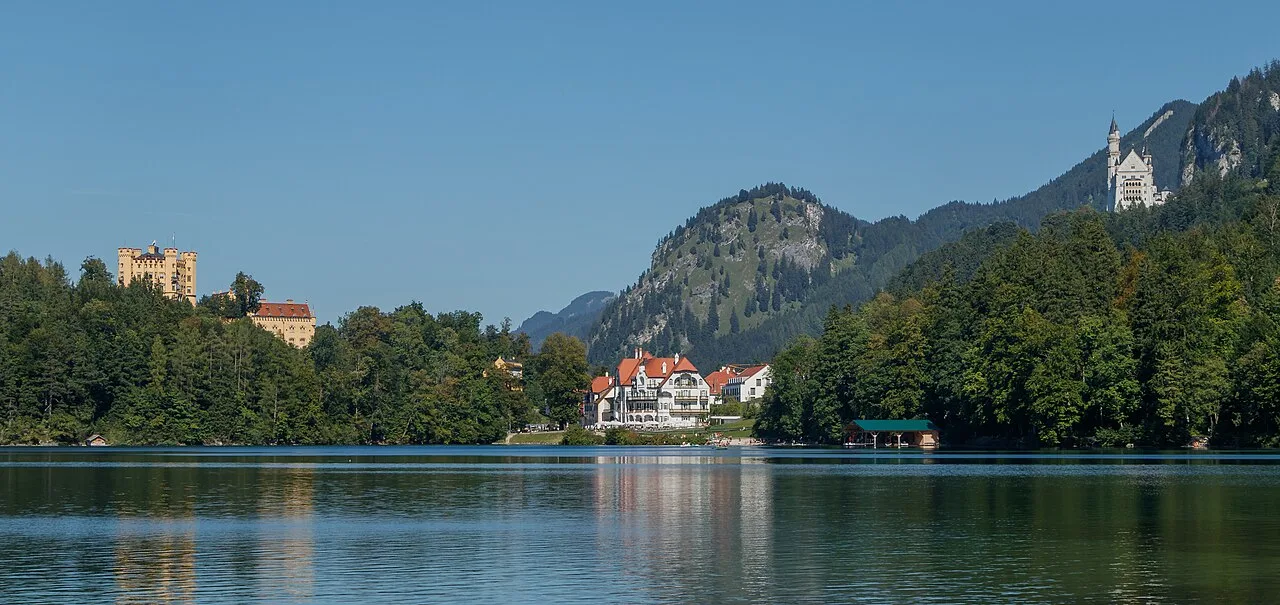
Start early, ideally for the first tour slot of the day. Visitors consistently report that the site fills up once coaches arrive from Munich, and that booking ahead is the difference between touring and photographing from outside. Decide in advance whether you want one castle or both, because two tours plus the walks between them consume most of a day.
The Marienbrücke viewpoint above the Pöllat gorge is the classic photograph, but it is a bridge, not a platform, and access can be restricted in winter or bad weather. Treat the walk up and the walk across as optional extras rather than guarantees. Grounds, courtyards and paths around the castles are generally open to wander without a ticket.
Day 1 Wind-Down: Füssen's Own Sights
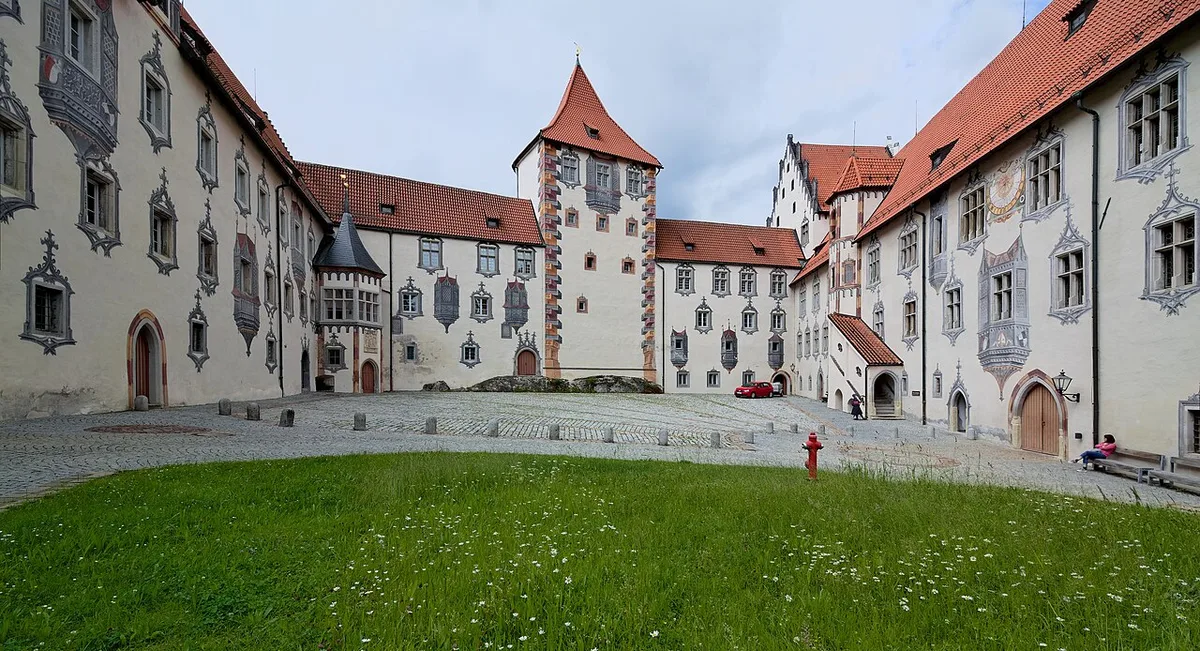
Keep the evening light and stay in town. The Hohes Schloss sits on the ridge above the Altstadt with trompe-l'oeil painting across its courtyard walls, and the courtyard itself is free to enter. Ticketed interiors and the attached art collection are separate from the Museum der Stadt Füssen, which occupies part of the former Benedictine abbey below.
A short self-guided walk links the Altstadt, the castle, St. Mang Abbey and the Lech bridge, and a couple of hours covers it comfortably. From the bridge at Magnus Blick you get the postcard view back toward the abbey, and the Lechfall waterfall is a further stroll south along the river. The waterfall is manmade and the gorge below it is natural, cut when ice-age meltwater carved the rock.
Check opening days before you plan a museum visit, since some Füssen sights close on Mondays or run reduced winter schedules. The tourist information offices in the centre, Hopfen am See and Weißensee can confirm what is open during your dates. Photography is not permitted inside the castle tours, so plan your pictures around the exteriors and viewpoints.
Day 2: Choosing Your Full-Day Excursion
Day two is a genuine choice rather than a default day trip, because the three obvious options deliver completely different experiences. The Zugspitze area gives you Germany's highest mountain and a network of lifts; Linderhof Palace gives you a compact royal palace and gardens in a quiet valley; a border day toward Bregenz or the Austrian side gives you lake scenery and a change of country.
Pick based on the forecast rather than a fixed plan. Mountain lifts are the first thing to suffer in cloud or high wind, while a palace and its grounds cope better with grey skies. If your mountain day looks marginal, swap it with day three and take the lake instead.
Day 2 Detail: Why the Zugspitze Needs a Whole Day
The Zugspitze operator runs three distinct areas, and understanding that changes how you plan. The summit area is reached by cable car and cogwheel train, the Garmisch-Classic area covers the classic hiking and skiing mountains above Garmisch, and Mount Wank is a separate panoramic summit with its own lift. Each has its own ticket, and the operator lists multi-day passes for pedestrians.
The operator publishes seasonal validity windows for its round-trip and multi-day tickets, and those dates move from year to year. Check the ticket pages and the opening-hours and timetable section shortly before your visit, because lift inspections and weather closures are listed there rather than on third-party sites. Do not assume a lift, cable car or shuttle is running on the day you want it.
Travel between Füssen and the Garmisch area takes a substantial chunk of the day, so treat this as an excursion rather than an afternoon. If you would rather not commit the whole day, the Tegelberg above Schwangau offers alpine views much closer to town, and the walk from the castles down to Füssen makes a good half-day alternative.
Day 3: Lakes, Spa and the Faulenbacher Tal
Füssen's third day is best kept deliberately slow, and the town has the geography to support it. Six small lakes lie within the municipal area, with Forggensee the largest reservoir in Germany and Hopfensee and Weißensee the other well-known swimming and walking spots. Bad Faulenbach, a mineral and moor spa district, threads six small lakes along a largely car-free valley.
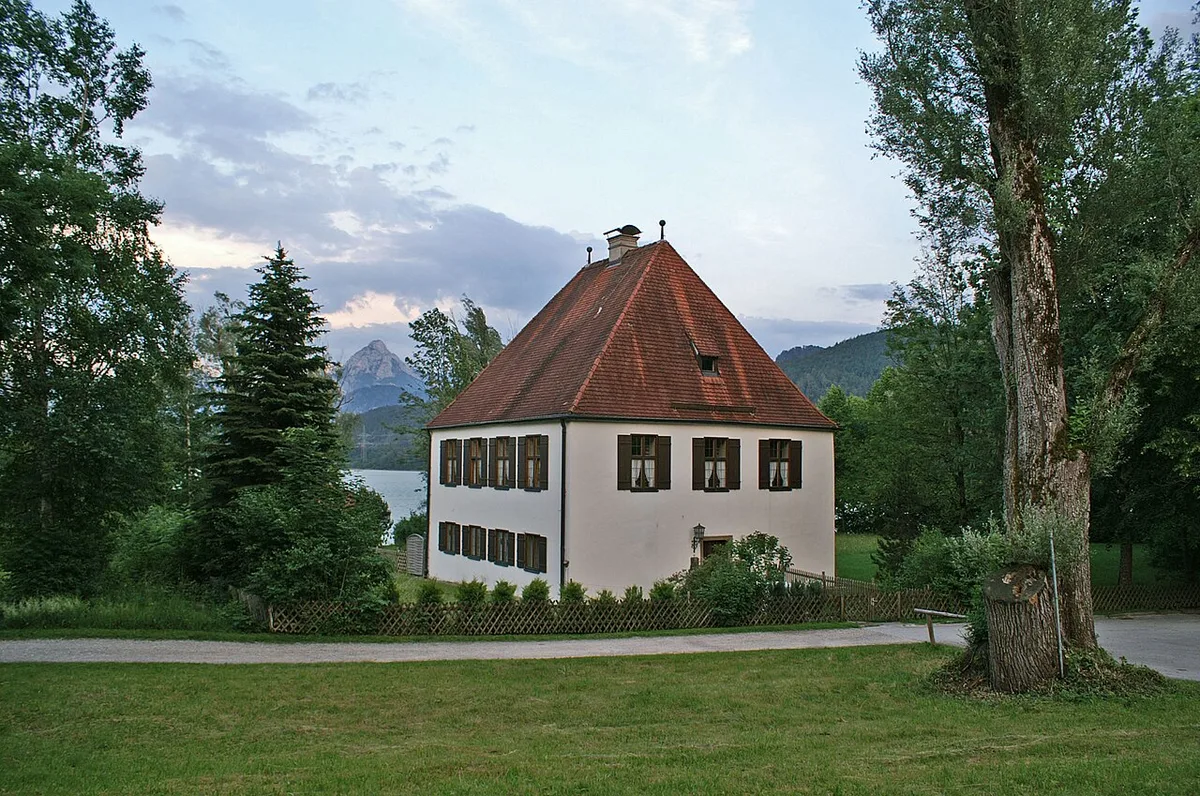
Forggensee sightseeing boats have historically run from around June into mid-October, with the operator confirming exact start and end dates each season, so check before building a day around a crossing. Outside that window the lake is still worth a shoreline walk or cycle. Hopfensee has a level promenade with mountain views, and Weißensee suits a swim plus a short hill walk.
If the weather turns, Füssen's Kneipp tradition gives you an indoors answer. The town has been recognised as a Kneipp spa resort for decades, and the wider area has thermal and wellness facilities including the Königliche Kristall-Therme at Schwangau. Confirm current opening hours, sauna rules and whether you need to book a time slot directly with the facility.
Where to Base Yourself
Staying in Füssen's old town puts restaurants, the station and the castle buses within walking distance, and it is the easiest base if you are using public transport. Staying in Schwangau or Hopfen am See buys you quieter evenings and lake views but usually requires a car or careful bus planning. Both work; they just serve different trips.
Accommodation ranges from hostels to spa hotels, and the town's own booking pages cover hotels, guesthouses and holiday flats rather than pushing a single option. Book early for summer and for the Christmas market period, when demand from Munich day-trippers and castle visitors overlaps. Confirm whether your host issues the Gästekarte and what it covers before you arrive.
Season, Weather and What to Check Before You Lock It In
Spring and autumn bring the most changeable conditions: snow can still sit on the high trails in April while the valley is mild, and the Marienbrücke or high routes may close without warning. Summer is the busiest and most reliable period, but also the most crowded at the castles. Winter turns the town into a quieter, colder version of itself, with ski terrain above and Christmas lighting below.
Build your itinerary so the mountain day is flexible, and check the operator's webcams and opening-hours pages the evening before. Füssen's tourism site runs live webcams for the Tegelberg area and Schwangau, which is the quickest way to judge whether the peaks are clear. If they are not, move the lake day forward.
Füssen also re-certifies selected walking routes as barrier-free under the national Reisen für Alle scheme, and publishes accessibility information for trails, facilities and accommodation. If anyone in your group has mobility needs, use those pages as your starting point rather than assuming a route is suitable. Local bus timetables and station layouts are the other thing to verify, especially while road works are ongoing.
Budget and Booking: What to Confirm, Not Guess
Ticket prices for the castles, the Hohes Schloss, the Museum der Stadt Füssen, the Zugspitze railways and any treetop walkway change over time, and older travel blogs quote figures that may no longer apply. Check each operator's own ticket page for the current adult, child and family rates, and for whether a combined ticket exists for the sights you want.
The same applies to parking. Some older guides describe certain Füssen car parks as free, but parking rules and charges are set locally and change, so read the signs on arrival or check the town's mobility pages. Guests using the Gästekarte often do not need a car at all for local travel.
Events are another moving target. Füssen's calendar lists guided old-town walks, concerts, night walks and seasonal programmes with their own dates, so treat anything you read elsewhere as a lead to verify rather than a confirmed booking. The Festspielhaus Neuschwanstein programme is published separately by the venue.
Plan Your Visit
Three days in Füssen works because each day answers a different question: what the region built, what the mountains offer, and what the water and the town's spa culture give back. Build the castles day first, keep the mountain day flexible, and leave the final day loose enough to follow the weather.
Book castle tours and mountain tickets as far ahead as your plans allow, verify hours and prices with each operator in the week before you travel, and check the town's news ticker for road works and bus-station changes. That level of checking is what turns a good itinerary into one that actually runs.
Frequently Asked Questions
Is three days too much or too little for Füssen?
Three days suits travellers who want the royal castles plus time in the Alps and at the lakes. The town centre itself can be walked in a couple of hours, so a one-day visit covers the Altstadt and possibly one castle, but it leaves no margin for the Zugspitze area, the lakes or a weather swap. Two days is workable if you skip the mountain excursion.
Can you visit Neuschwanstein and Hohenschwangau without a car?
Yes. Buses run from near Füssen railway station toward Schwangau and the castle area, and the town itself is compact enough to explore on foot. Overnight guests typically receive a Gästekarte that covers local buses in the area, which removes most fare decisions. Check the current timetable and any road works before you rely on a specific departure.
Should you do the Zugspitze, Linderhof or Bregenz as your Füssen day trip?
Choose the Zugspitze area if you want a full mountain day with several lift-served zones, Linderhof if you prefer a royal palace and formal gardens in a quieter valley, and a border day toward Bregenz if lake scenery and a change of country appeal more. Weather should make the final call, since lifts close in cloud and wind while palaces cope better with grey skies.
Do you need to book castle tickets in advance?
Both Neuschwanstein and Hohenschwangau are guided-tour entries and book up during busy periods, so reserving ahead is the safest approach. Whether a combined ticket is available, and what it includes, changes over time and must be confirmed with the operator. Arriving without a reservation risks finding only exterior views available.
What can you do in Füssen on a rainy day?
The Hohes Schloss interiors, the Museum der Stadt Füssen in the former abbey, and the town's Kneipp and wellness facilities all work in poor weather. The Königliche Kristall-Therme at Schwangau is the nearest large thermal spa. Check current opening days and whether booking is required, since some sights close on Mondays or run reduced off-season hours.
When should you go to Füssen?
Summer gives the most reliable conditions for hiking, lake swimming and mountain lifts, but it is also the busiest at the castles. Spring and autumn are quieter and often beautiful, yet high trails and the Marienbrücke can close without notice. Winter is cold and calm, with skiing above and a lit-up old town below.


