

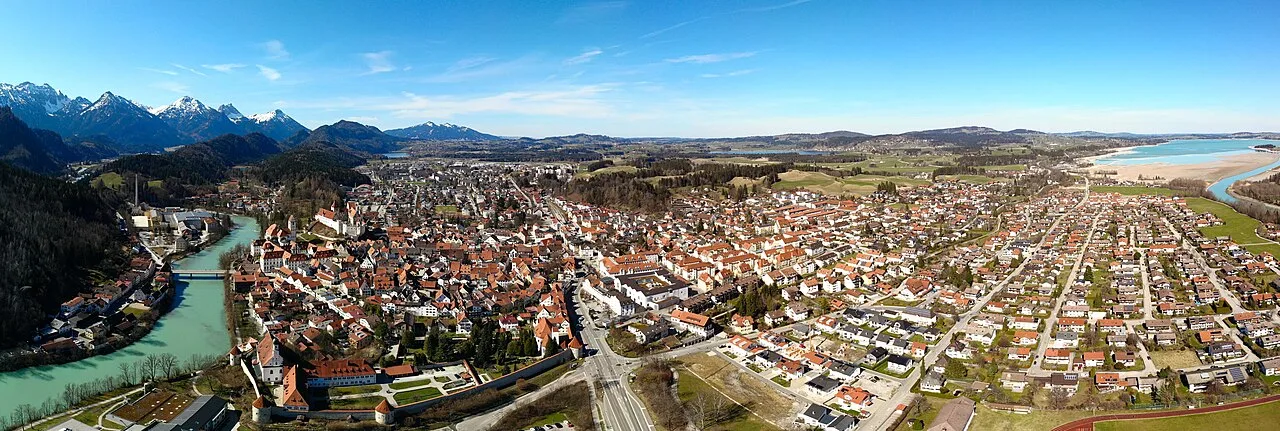
Füssen sits in Bavaria's far south, a small town wedged between the Ammergau and Tannheim Alps and close to the Austrian border. That location turns a modest Allgäu base into a launchpad for very different days out, from Germany's highest peak to a finished royal palace and a compact Roman city. This guide helps you choose by transport logic, ticketing considerations, and seasonal availability rather than a single ranked list.
Before booking anything, check two things: whether the mountain railways or cable cars you need are running, and whether local roadworks affect buses. Füssen's tourism site publishes a news ticker; through late 2026 it lists construction at the Füssen bus station and a closure of the Königsstraße in Ziegelwies running from June 22 to November 30, 2026. Confirm current conditions on the official tourism website before you rely on a specific bus or station.
Why Füssen Works as a Day-Trip Base
Füssen is compact, walkable, and oriented toward visitors, with a train station and bus hub that connect the Ostallgäu with larger Bavarian cities. Its tourism board treats mobility as a core service, noting that overnight guests ride local buses free with the guest card. That perk shifts the maths on day trips: local legs cost nothing extra for staying visitors, though long-distance trains and attraction tickets still add up.
The town also sits close to Austria, so a cross-border afternoon is realistic without a car. That proximity matters for planning: Austrian destinations like Bregenz involve different ticketing considerations than German ones. Treat Füssen as a hub with three concentric rings: local lakes and castles, Bavarian cities and peaks, and a narrow Austrian fringe.
How to Choose a Day Trip: Time, Cost, and Crowds
Start with the season. Mountain lifts and cogwheel trains do not run identically all year, and the Zugspitze operator publishes separate ticket validity windows that change annually; for one recent period it listed round-trip and multi-day Zugspitze tickets valid through November 22, 2026 alongside Garmisch-Classic tickets valid through November 8, 2026. Treat those dates as an example of how granular the small print is, and check the operator's current validity period before buying. If a lift is closed for inspection, an alpine day trip can collapse, so have a lower-altitude backup.
Then weigh travel time against what you actually get. A long train ride to a single viewpoint can feel thin, while a shorter hop to a town with a compact old town lets you walk, eat, and return without rush. Crowds concentrate at headline sights in high season and around midday; early starts help at castles and cable cars more than at city museums. If you want a fuller local plan, see the 3 days in Füssen itinerary for how day trips slot around the town itself.
Finally, decide whether you want one big ticketed experience or a flexible day of wandering. Ticketed attractions such as palaces, cable cars, and castle interiors have fixed entry models, while town centres, lakeshores, and many gardens are free to walk. Mixing a paid interior with free ground time usually produces a more balanced day than stacking two timed entries. Check each operator's own page for what a ticket actually includes rather than assuming a combined ticket.
Zugspitze: Germany's Highest Peak and the Garmisch-Classic Area
The Zugspitze, at 2,962 metres, is Germany's highest mountain, and the Bayerische Zugspitzbahn runs the cable cars and cogwheel railway that most visitors use to reach it. The operator groups its offering into three areas: Zugspitze, Garmisch-Classic, and Mount Wank, each with its own tickets and validity. This is the single most important distinction for planning, because a ticket for one area is not a ticket for another. Check the operator's site for current prices and booking options before you commit.
A common point of confusion is how you actually get up. One route is the cable car from Eibsee, a lake at the foot of the mountain; another is the cogwheel train from Garmisch-Partenkirchen. They involve different starting points and can be affected differently by weather and maintenance. Decide which side suits your onward travel before buying, because mixing them up can strand you on the wrong side of the massif.
Garmisch-Classic is a separate mountain area with its own tickets, aimed more at hiking and skiing than at summit views. If your goal is simply to be high up with a panorama, Garmisch-Classic may be enough; if you want the summit cross and glacier, you need the Zugspitze product. Winter changes the equation again, with ski operations, snow conditions, and lift inspections all affecting access, so check the operator's live status before travelling.
Suggested duration: allow a full day for a Zugspitze trip from Füssen when you factor in the train to Garmisch-Partenkirchen, the mountain railway ascent, time at altitude, and the return journey. That is an editorial suggestion, not an official timing. If you want to pair the mountain with the town below, see the visitor guides collected in Füssen: Landmark Visitor Guides for context on the local sights.
Linderhof Palace: A Finished Royal Retreat in the Ammergau Alps
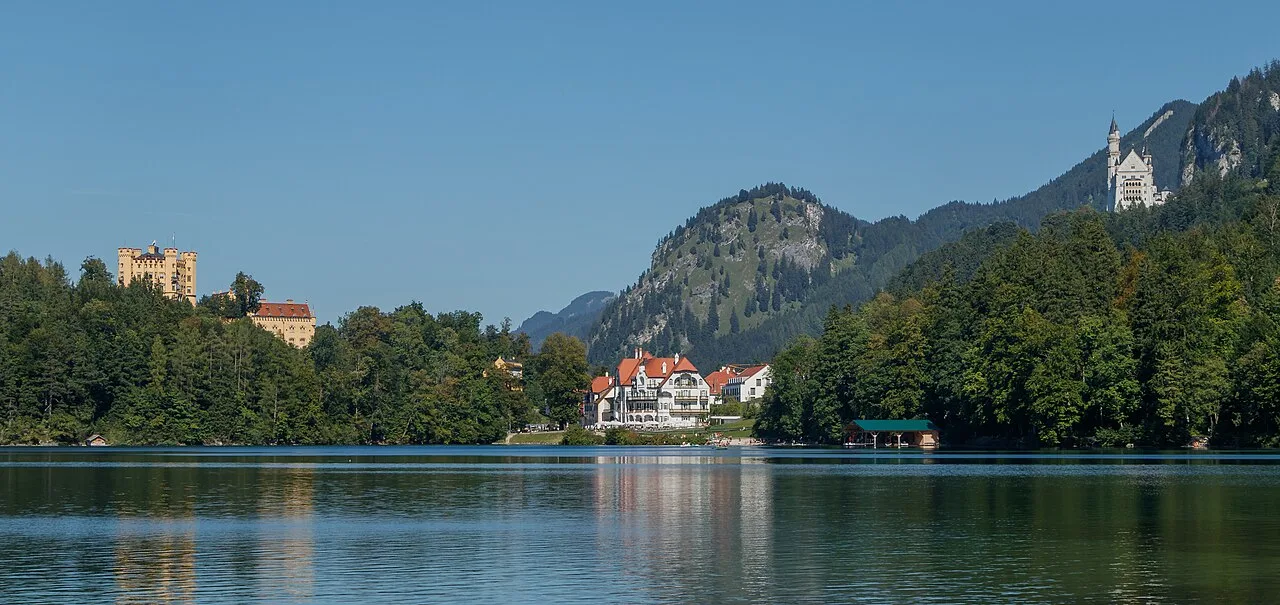
Linderhof Palace was built for King Ludwig II and, unlike Neuschwanstein, was completed. That single fact sets expectations: you are visiting a finished royal residence with furnished interiors, formal gardens, and several smaller structures on the grounds, rather than a construction site. For visitors who want to understand Ludwig's taste without the unfinished grandeur of his most famous castle, Linderhof is the clearer introduction.
The palace sits in the Ammergau Alps, and a visit typically combines the interior with time in the gardens and park. Palace interiors in Bavaria are usually ticketed separately from the grounds, and timed entry is common at busy royal sites, so plan to check the palace administration's official pages for current admission and booking rules. Do not assume a single ticket covers every building on the estate; some structures may be closed or ticketed on their own terms.
Getting to Linderhof without a car is the hard part, because it is not on a major rail line. Tour operators include it in combined excursions that pair it with Neuschwanstein, Hohenschwangau, or Wieskirche, which solves the transport problem at the cost of a fixed schedule. If you prefer independence, research bus connections and seasonal services carefully on the relevant operator sites, and be prepared for a slower, more fragile plan than a train-based day. For a sense of how the southern Romantic Road fits together, see Romantic Road stops near Füssen.
Bregenz and Lake Constance: An Austrian Detour by Train
Bregenz is in Austria, on the shore of Lake Constance, and reaching it from Füssen means crossing a national border. That matters for ticketing: cross-border journeys can require different passes or tickets than purely domestic German travel, so check the relevant rail operator's conditions rather than assuming your usual German ticket applies. The town's lakeside setting and compact centre make it a pleasant contrast to Füssen's alpine streets.
Lake Constance is a major destination in its own right, with boats, promenades, and a mild climate that differs from the Allgäu. Because the lake is shared by Germany, Austria, and Switzerland, onward travel options can become complicated quickly, and a day trip should stay focused on one shore rather than trying to circle the water. Check seasonal boat schedules and rail connections on the official transport sites for the period you plan to travel.
Augsburg: Roman Roots and a Compact Old Town
Augsburg is one of Germany's oldest cities, with Roman origins, and its old town is compact enough to cover on foot in a day. The appeal here is urban rather than alpine: architecture, churches, museums, and a working city centre that gives you a break from mountain villages. For travellers who have spent several days among lakes and peaks, Augsburg restores a sense of ordinary Bavarian city life.
As a major rail hub, Augsburg is one of the easier big-city day trips from the Allgäu, though the journey still consumes a meaningful part of the day in each direction. Plan around a specific district or two rather than trying to see everything, and check current train times and ticket types on the operator's site. City museums and churches often have their own admission and opening arrangements, so verify those individually rather than assuming a shared ticket.
Romantic Road Towns: What to See and How to Link Them
The Romantic Road is a touring route that runs from Würzburg south to Füssen, and Füssen sits at its southern end. The towns along it vary widely in size and character, from famous walled showpieces to quiet market towns that see far fewer visitors. If you are based in Füssen, the practical approach is to pick one or two southern stops rather than attempting the whole route in a day. For an overview of the closest options, see Romantic Road stops near Füssen.
The route is best linked by car or by bus, because many of its towns sit away from railways and rail connections between them are indirect. That is a real constraint, not a minor inconvenience: without a car, a day trip may mean one town and a long return rather than a string of stops. Coach tours solve this by bundling several towns into a fixed itinerary, which trades flexibility for coverage. Choose based on whether you value breadth or a slower look at one place.
Füssen's own tourism material highlights the Königsschlösser, the Königswinkel region, and the town's position on scenic holiday routes, which is why the Romantic Road identity is so strong here. But that also means the southern end of the route is the busiest, especially around the castles. If you want the quieter version of the Romantic Road experience, aim for towns further north or travel outside peak season. The same logic applies within Füssen itself, where a 2 days in Füssen itinerary can balance headline sights with calmer local corners.
Comparing the Day Trip Options at a Glance
Rank your options by what they demand rather than by reputation. Zugspitze demands a full day, a weather window, and a ticket decision between summit and Garmisch-Classic products. Linderhof demands a transport plan, since it is not easily reached by train alone. Bregenz demands attention to cross-border ticketing, Augsburg demands accepting a longer rail ride for an urban day, and the Romantic Road demands a car or a tour if you want more than one stop.
Cost is the least predictable variable, because lift tickets, palace admission, and rail fares all vary by season, validity period, and booking channel. Rather than budgeting from older figures, check each operator's own current pages: the Zugspitze operator publishes ticket validity windows that expire, and palace administration pages state admission and booking rules for their sites. If you are comparing against other German bases, the same decision framework applies to day trips from Munich.
Plan Your Visit
Build your Füssen itinerary around one major day trip and two lighter ones rather than three big excursions. Use the official tourism site to check transport disruptions, guest-card bus rules, and seasonal notes, and use attraction operators' own pages for tickets and opening windows. If something is closed or fully booked, have a lake, a town centre, or a lower-altitude walk ready as a substitute.
For the town itself, pair your day trips with the landmark guides collected in Füssen: Landmark Visitor Guides, which cover the castles and local sights you will pass on the way out of town. Booking transport and timed entries early reduces the risk that a single sold-out slot reshapes your whole week.
Frequently Asked Questions
What are the best day trips from Füssen without a car?
Train-accessible options include Augsburg and, with a cross-border ticket check, Bregenz; Garmisch-Partenkirchen and the Zugspitze area are reachable by rail plus a mountain railway or cable car. Linderhof and the Romantic Road towns are harder without a car, so consider a coach tour or accept a single stop rather than a string of them. Verify current connections on the relevant rail and bus operator sites, because seasonal services change.
How do I get from Füssen to the Zugspitze by train or bus?
You travel toward Garmisch-Partenkirchen and then use the Bayerische Zugspitzbahn's mountain railways, either the cogwheel train from Garmisch or the cable car from Eibsee. These are different starting points with separate timetables, so decide which suits you before buying. Check the operator's site for current routes, validity periods, and whether lifts are running on your date.
Is Linderhof Palace worth a day trip from Füssen?
Yes, if you want to see a completed King Ludwig II palace with furnished interiors and gardens, which makes a useful contrast to the unfinished Neuschwanstein. The trade-off is transport: Linderhof is not on a major rail line, so many visitors use a tour or a bus. Check the palace administration's official pages for admission, booking, and seasonal opening details.
Can I visit Bregenz as a day trip from Füssen?
It is possible, but treat it as a cross-border trip rather than a domestic German one. Bregenz is in Austria on Lake Constance, so ticketing and passes may differ from German regional offers. Check rail operator conditions and seasonal boat schedules for your travel dates, and keep the day focused on one shore rather than attempting to circle the lake.
Do I need to book Zugspitze tickets in advance?
Booking ahead is sensible for a popular summit, especially in peak season, but availability and booking channels change. The operator publishes separate tickets for Zugspitze, Garmisch-Classic, and Mount Wank, each with its own validity period, so check the current pages before buying. A ticket for one area does not cover another.


