

Füssen is the southern terminus of the Romantic Road, and the stretch leading to it is a run of small towns rather than one headline sight. The Romantische Straße Touristik-Arbeitsgemeinschaft states that the route covers 29 places and 460 kilometres and calls itself the original since 1950; its town register includes Schongau, Peiting, Rottenbuch, Wildsteig, Steingaden, Halblech, Schwangau and Füssen, so that list is the reliable spine for a southern itinerary. The same organisation sells the Romantic Road Coach through its own online shop, which is the product to investigate if you want to cover several towns in a day without driving. The organisation also describes the driving experience itself as covering a journey from the Main river to the Alps, with the philosophy that the way is the goal. A realistic suggested duration for the segment is one full day by car if you keep to two substantial stops and one walkable village, or two days if you want the smaller places too. Treat that as an editorial suggestion, not an official timetable.
The Romantic Road is a waymarked touring route rather than one continuous road, and satellite navigation often prefers faster motorways over the signposted alignment. A first-person account on the Traveling Spud of driving the route makes the same point: GPS results can sometimes send you onto the freeway instead of the winding road, so watch for the route signs and carry an offline map as backup. That habit prevents most of the frustration on this segment.
The order below follows the official town list running north to south into Füssen. Each section explains what a place contributes to a day plan rather than prescribing a fixed sightseeing list, and it points you to the operator or tourism office wherever live facts such as closures or ticketing matter.
Where the Southern Segment Begins
The southern stretch runs through Schongau, Peiting, Rottenbuch, Wildsteig, Steingaden, Halblech, Schwangau and finally Füssen. That list comes from the Romantische Straße Touristik-Arbeitsgemeinschaft town register, the authoritative source for what counts as an official route stop. Use it as the spine of the segment rather than a ranking of what deserves your time.
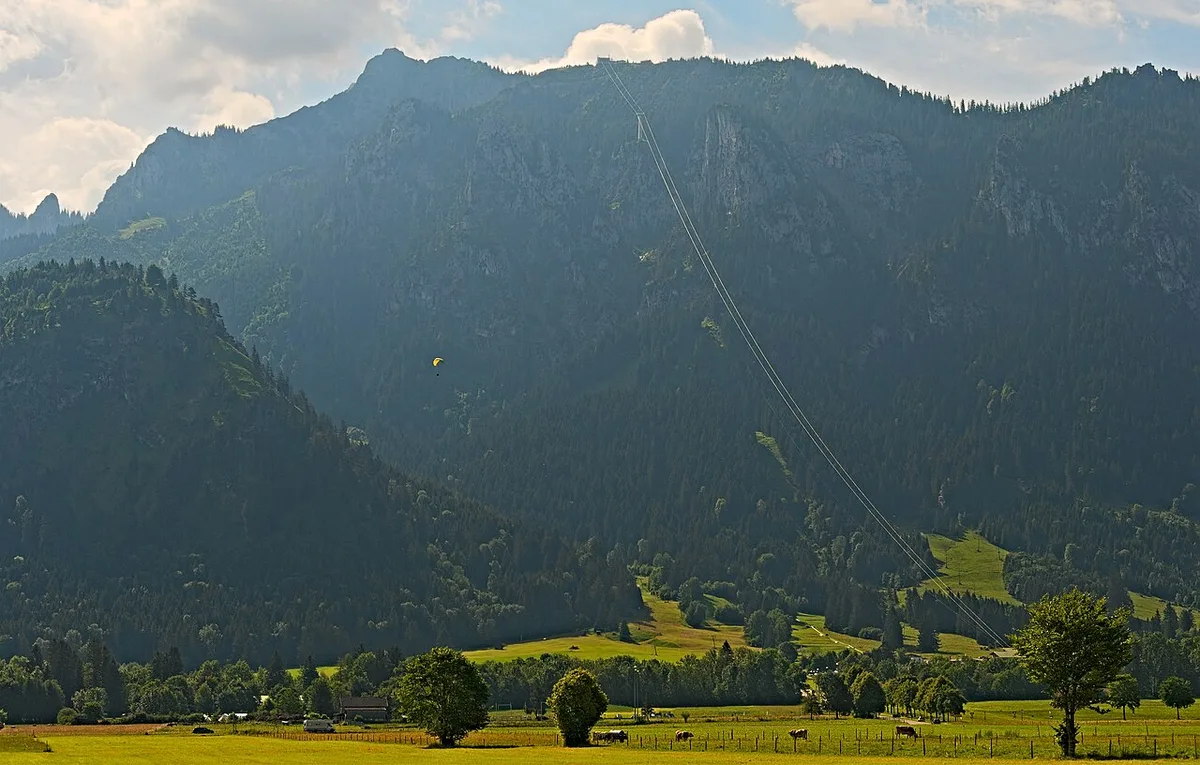
If you arrive from Augsburg or Landsberg am Lech, Schongau is the natural gateway into this section; if you are based in Füssen, you will likely work the segment in the opposite direction. Either way, the geography rewards grouping towns into pairs rather than treating each as a standalone destination, and the quiet villages between the larger stops work best as breathing space.
Schongau: The Northern Anchor
Schongau is an official route stop and the largest inland town of the southern segment, which makes it a sensible anchor before or after a longer drive. Its walled old town above the Lech can be covered on foot in a half day without demanding a full day. Coming from Augsburg or Landsberg, starting here gives the day a clear direction.
In smaller Bavarian towns, parking is often signed on the edge of the historic centre rather than inside it, so plan to leave the car and continue on foot. That habit solves most of the friction on this route and lets you pair Schongau with a short look at the neighbouring route village of Peiting without rushing.
Steingaden, Wieskirche and Wildsteig: Planning as One Block
Steingaden and Wildsteig are separately named route stops, and the Wieskirche sits in the same area, so these are best planned as one block rather than three separate outings. Steingaden is the village with its own monastic heritage, while the Wieskirche is the pilgrimage church in the meadow that draws many visitors to this stretch. Arriving assuming one visit covers everything usually means missing something.
Opening times and access arrangements for religious sites can change with restoration work or services, so check the operator's current notices rather than older trip reports. Füssen Tourismus und Marketing publishes dated notices for the wider area, and the route organisation maintains pages for the individual towns. Build some slack into this block, because it is where a spontaneous detour is most likely.
Rottenbuch and Peiting: Villages Meant for a Short Walk
Rottenbuch and Peiting are small route villages that reward a short walk rather than a full stop. Rottenbuch is known for its former Augustinian monastery church, and the surrounding landscape is farmland and moor, which is precisely why the Romantic Road passes through here at all. Treating them as leg-stretch breaks keeps the day humane.
These villages have limited services, so carry water and do not count on finding a cafe at the exact moment you want one. They are also where the route most obviously becomes a country lane rather than a highway, which is the point of the drive. If you are chaining three or more stops in a day, this is where to trim.
Halblech and Schwangau: Entering the Alps
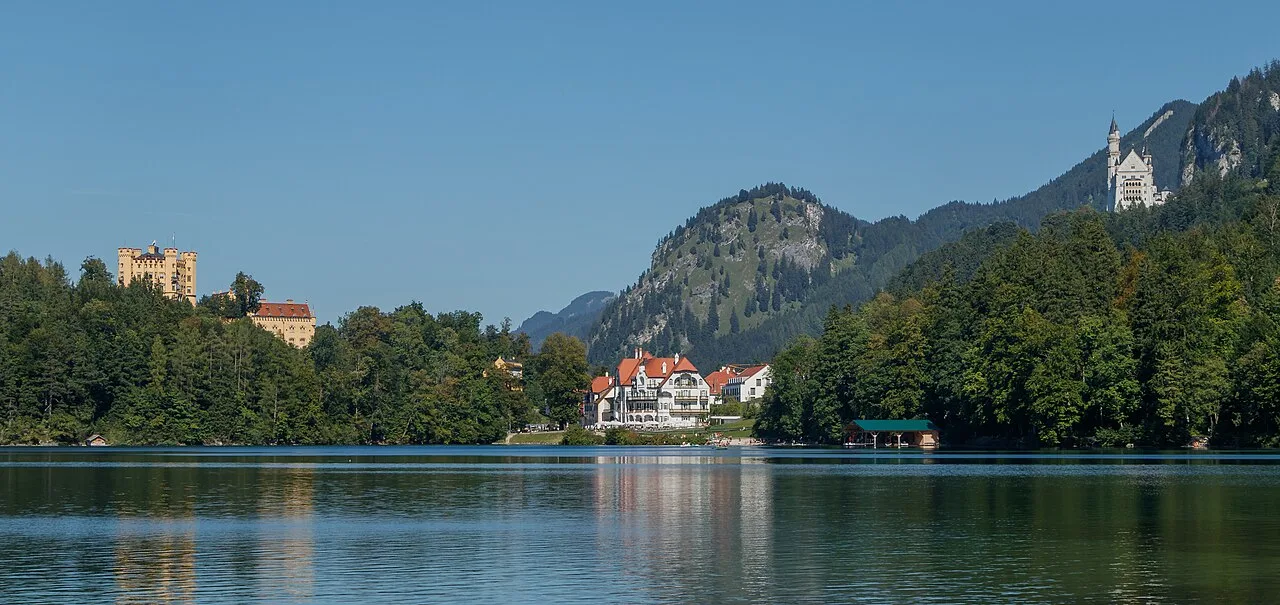
Halblech and Schwangau mark the transition from farmland into the Alpine foothills, and Schwangau is where the castle decision lands. Neuschwanstein and Hohenschwangau are ticketed attractions with their own visitor management, separate from the Romantic Road route itself. Castle ticketing is handled by the Bavarian palace administration, not by the route organisation, so treat it as a distinct planning task.
Füssen Tourismus und Marketing publishes dated notices for the area, including temporary road and path closures that affect how you move between Füssen, Schwangau and Hohenschwangau; recent examples on the site include a closure on the B17 through Schwangau and construction at the Füssen bus station. Because those notices change through the year, check them shortly before you travel rather than months ahead. A closure on one approach road can entirely change how a Schwangau morning works.
Füssen as Base Versus Füssen as Stop
Füssen has the densest concentration of hotels, guesthouses and restaurants at the southern end of the route, which makes it the practical base for this segment. Staying here also means the old quarter, the Hohes Schloss and the Lech riverside are available in the evenings when day-trippers have gone. That is a different experience from arriving, photographing and leaving.
The trade-off is that Füssen is also a gateway to the castles, so accommodation demand can be high in peak periods, and booking early is more useful than hunting for late bargains. If you want a slower rhythm, using Füssen as a base and doing the route towns as day loops works better than changing hotels every night. That approach fits naturally into a three days in Füssen itinerary, with the route towns slotted in as one of the days rather than squeezed around every other sight.
Chaining Stops by Car
Driving gives you the flexibility to stop in villages that have no practical public transport link to each other, and it is how most visitors cover this segment. The cost is cognitive: every extra town adds parking, orientation and decision time. Two or three substantial stops a day is a realistic rhythm for most travellers.
The route also punishes the checklist mentality because the reward is in the space between towns, not only at the named stops. Driving straight from Schongau to Füssen on the fastest road gets you there, but it skips the reason the Romantic Road exists. Budget time for the slower alignment and treat the drive itself as part of the visit.
Chaining Stops Without a Car
The Romantic Road coach is an organised product sold through the route organisation, which maintains a dedicated bus page and an online shop for it; it is not the same as a local scheduled bus network. It should be booked in advance rather than treated as a spontaneous hop-on service. If you want to cover multiple towns in one day without driving, that is the arrangement to investigate directly with the operator.
At the Füssen end, local mobility is easier: Füssen Tourismus und Marketing states on its mobility pages that overnight guests travel free in Füssen and the surrounding area with their guest card, which removes the need to search for parking. The tourism office explains the current arrangements, and you should verify the details close to your travel dates because transport arrangements change. In many cases, the local bus simply complements the scenic approach you have already made.
A Suggested One-Day Southern Segment
A workable single day, offered here as a suggested duration rather than an official schedule, is Schongau in the morning, the Steingaden and Wieskirche block around midday, and Füssen in the late afternoon. That keeps two anchors and one walking stop, which is about the limit before the day turns into driving practice. If you are starting from Füssen, run the same sequence in reverse.
This plan deliberately leaves out Rottenbuch, Wildsteig and Halblech. Adding them turns a comfortable day into a rushed one, especially if you also want time at the castles. Choose between the monastery villages and the Alpine approach rather than trying to include both.
A Suggested Two-Day Split
A two-day version, again a suggestion, pairs one anchor sight with one walkable village each day. Day one could take in Schongau and the Steingaden and Wieskirche block; day two could move through Wildsteig or Rottenbuch before finishing in Schwangau and Füssen. This keeps each day's driving modest and leaves room for meals.
If you have three days, spread the castles onto their own day rather than folding them into a route day, because castle visits have their own logistics and time demands. A three-day structure also lets you absorb a weather day without losing the whole plan. Füssen makes a sensible base for all three nights, whether you are following the castles or heading further afield on day trips from Füssen.
Common Mistakes on This Segment
The most frequent error is treating Füssen, Schwangau and Neuschwanstein as a single stop. They are three distinct places with separate transport and ticketing arrangements, and conflating them leads to unrealistic plans. Castle tickets are managed separately from the route town of Schwangau and from Füssen itself. For the wider network of options around Füssen, see the dedicated Füssen Transport and Bus Guide.
The second error is assuming every named stop has parking right at its centre. Some do, some are signed to edge-of-town car parks, and some are best reached on foot once you have stopped. Checking ahead on the official town or tourism pages saves a lot of circling.
A third mistake is expecting the Romantic Road to behave like a motorway itinerary. It is a touring route with its own signposts, and navigation devices will happily route you off it. Slower is the intended experience here, not a failure of planning.
What to Check Before You Go
Roadworks and temporary closures in and around Füssen and Schwangau are published as dated notices by Füssen Tourismus und Marketing, and they change through the season. Check the current notices in the days before you travel rather than relying on a guide written earlier in the year. This is the single most useful pre-trip check for drivers.
For the route as a whole, the Romantische Straße Touristik-Arbeitsgemeinschaft is the authoritative source for the town list, the coach product and seasonal information. Use it to confirm which towns are officially on the route before you build an itinerary around them. For castle ticketing specifically, go to the palace administration rather than to route or town pages.
Plan Your Visit
The southern Romantic Road works best when you accept that it is a short, dense segment rather than a grand tour. Pick an anchor for each day, add one village on foot, and leave the rest for another trip. Füssen gives you the best base, the densest services and the easiest onward connections at the Alpine end.
Before travelling, confirm three things: current road and path notices around Füssen and Schwangau, the castle ticketing arrangements in Schwangau, and whether a no-car plan depends on the organised coach product or on local transport. Each of those is published by a different body, and each can change. A little verification is worth more than a tightly packed itinerary.
Frequently Asked Questions
What are the main Romantic Road stops near Füssen?
The official route list places Schongau, Peiting, Rottenbuch, Wildsteig, Steingaden, Halblech, Schwangau and Füssen in the southern segment, with Füssen as the terminus. In practice, Schongau, Steingaden with the Wieskirche, and Schwangau are the stops most visitors build a day around, with the smaller villages used as walking breaks.
Is the Wieskirche a separate stop from Steingaden?
They are listed as separate places on the route, but they sit close enough that most travellers cover them as one block. The Wieskirche is the pilgrimage church in the meadow, while Steingaden is the village with its own monastic heritage. Planning them together avoids duplicating travel time, and because church access can change, check current notices locally.
Can you visit Schongau, Steingaden and Füssen in one day?
It is possible as a driving day if you keep each stop brief, but it leaves little room for the Wieskirche, walking or meals. Treating it as a suggested one-day combination rather than a fixed schedule is more realistic. Adding castles or the smaller villages on top usually makes the day feel rushed.
Do you need a car for the southern Romantic Road?
A car gives the most flexibility, especially for villages such as Rottenbuch and Wildsteig. Without one, the organised Romantic Road coach product is the practical way to cover several towns in a day, and local transport works well around Füssen, Schwangau and Hohenschwangau. Confirm current arrangements directly with the operators.
Is Füssen the start or the end of the Romantic Road?
Füssen is the southern terminus. The route runs roughly 460 kilometres through 29 towns from Würzburg in the north down to Füssen, so travellers heading south finish here and travellers heading north begin here.
How far is Neuschwanstein from the Romantic Road route?
The castles sit in the Schwangau area, which is itself an official route stop just north of Füssen, so they are effectively at the southern end of the route rather than far off it. Ticketing and access are handled separately from the route, so plan the castle visit as its own task.


