

Neuschwanstein Castle rewards preparation more than most landmarks in Bavaria, because a visit to the interior is only possible as part of a guided tour. That one official rule reshapes every other decision, from where you sleep to what time you start walking uphill.
The castle's official tourist information states that a visit to Neuschwanstein Castle is only possible as part of a guided tour, that tickets are available online through the Hohenschwangau ticket portal, and that remaining tickets are sold on site at the Ticket Center Hohenschwangau, subject to availability and exclusively for the same day, with no reservations possible. Photography and filming for private purposes are not permitted in the castle, and rucksacks, prams, child carriers and similar bulky objects may not be taken inside.
As a planning suggestion rather than an official duration, allow roughly half a day for the castle once you add the uphill approach and waiting time, and treat the walk, shuttle and horse carriage as time-and-energy trade-offs rather than simple transport choices.
Why the Guided-Tour Rule Determines Your Whole Day
There is no self-guided wander through the state rooms at Neuschwanstein. The castle's own visitor information says a visit is only possible as part of a guided tour, so your booking is not an add-on to a day out; it is the pivot around which the day turns.
This is why the castle behaves differently from many big European sights. You cannot buy a ticket at the gate and drift in when you feel like it, and the official guidance describes no mechanism for swapping a missed slot. Book around that constraint rather than around your train.
The practical consequence is sequencing. Decide first whether you can commit to a specific hour, then build transport and meals around it, and only then choose how to spend the rest of the day around Füssen. The Füssen landmark visitor guides collect the castle-area sights in one place, which is useful when you are weighing up what else deserves a slot in the same trip.
Where the Castle Sits and Why Hohenschwangau Village Is Your Hub
Neuschwanstein stands on a rocky ridge above the Hohenschwangau valley, with Hohenschwangau Castle and the Alpsee below it and the village of Schwangau spread across the surrounding slopes. Füssen's official tourism site lists Schloss Neuschwanstein together with Schloss Hohenschwangau, the Museum der bayerischen Könige and the Hohes Schloss under its castles and museums, which makes the town a sensible base rather than a separate add-on.
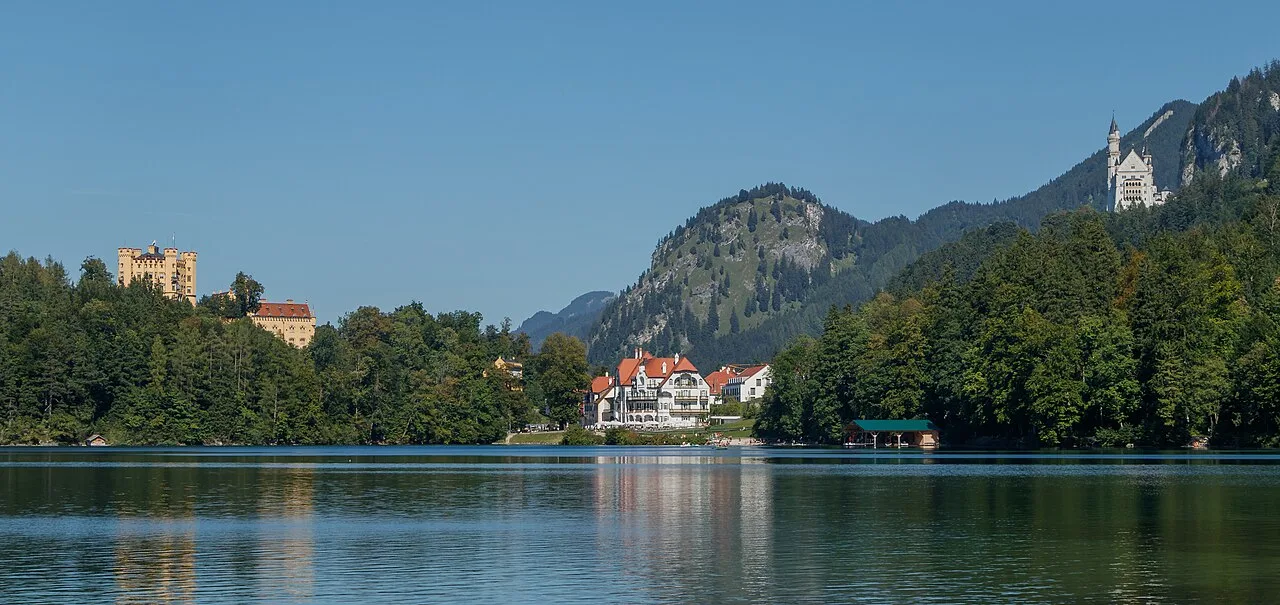
The castle's own visitor information adds that a visit is only possible as part of a guided tour, framing the cluster as one regional cultural destination rather than three separate day trips.
The Füssen itineraries and city travel guides explain how the old town, the station and the lakes fit together, which is useful when you are deciding how many nights to base yourself here. Because the ticket centre sits in Hohenschwangau village rather than at the castle gate, the village is where you collect anything you could not book online, use the toilets, and eat before or after the climb.
Buying Tickets: Online Portal Versus Same-Day Leftovers
The castle's official guidance points to the Hohenschwangau online portal for advance tickets, with any remaining tickets sold on site at the Ticket Center Hohenschwangau, subject to availability and for the same day only. Reservations are not possible for those leftover tickets, so the on-site route is a gamble rather than a backup you can rely on.
Ticket prices, reservation fees and any bundled passes change over time, so check the current figures and inclusions on the official portal while booking instead of trusting older blog posts. A visitor account from a 2019 trip recorded adult prices around twenty euros with a small reservation fee and mentioned Swan and Prince bundles, but those were the figures and combinations reported for that earlier visit and do not establish a current tariff.
The same 2019 account described a Swan ticket covering Neuschwanstein, Hohenschwangau and the Museum of the Bavarian Kings, and a Prince ticket with a different combination. Bundles are revised periodically, so verify what each option includes on the official portal before assuming one ticket covers every site in the village. If you are considering the museum separately, the Museum of the Bavarian Kings guide sets out what that visit involves on its own terms.
Choosing a Time Slot and Getting to the Entrance on Time
Work backwards from your slot. The castle entrance sits well above the ticket centre, and the uphill approach involves a sustained climb plus a final stretch on foot whatever the transport choice. A 2019 visitor account recommended budgeting at least forty-five minutes from the ticket office to the castle entrance, and that remains a sensible planning assumption, as does adding a similar buffer at the foot of the hill for a shuttle departure.
Translate that into a rule of thumb: if your tour starts at eleven, aim to be at the base of the hill by around ten, and earlier in high season or if you want photographs before the queue forms. Opening hours shift with the season, so check the official tourist information page close to your date rather than trusting a seasonal summary written years ago.
Arrival logistics matter too, because the bus stop, ticket centre and the start of the walking routes sit in different parts of Hohenschwangau village. Mapping the sequence of train, bus, ticket collection and climb in advance removes most of the stress on the day.
Getting Up the Hill: Walking, Shuttle or Horse Carriage
Three options cover the ascent, and each is really a choice about stamina. Walking is free and flexible and takes the longest, with a steady gradient; a 2019 guide estimated about forty minutes on foot and suggested adding a ten-to-twenty-minute buffer. Riding cuts the effort but ties you to a departure point and a queue.
The same source quoted shuttle fares of a couple of euros each way and horse-carriage fares a little higher uphill, with the carriage ride lasting around twenty minutes plus a walk. Treat those numbers as historical examples rather than current tariffs, because fares are set seasonally and change.
Whichever you pick, footwear matters. The path is uneven, can be wet, and the last stretch to the castle gate is steep enough that smooth soles become a liability, especially on the way down after a tour.
Marienbrücke and the Free Viewpoints
The bridge above the castle is the classic photo position, and it sits on a public trail rather than behind a ticket barrier. Access and trail conditions are changeable, and closures for weather, maintenance or crowd management happen, so plan the bridge as a bonus rather than the reason for the trip.
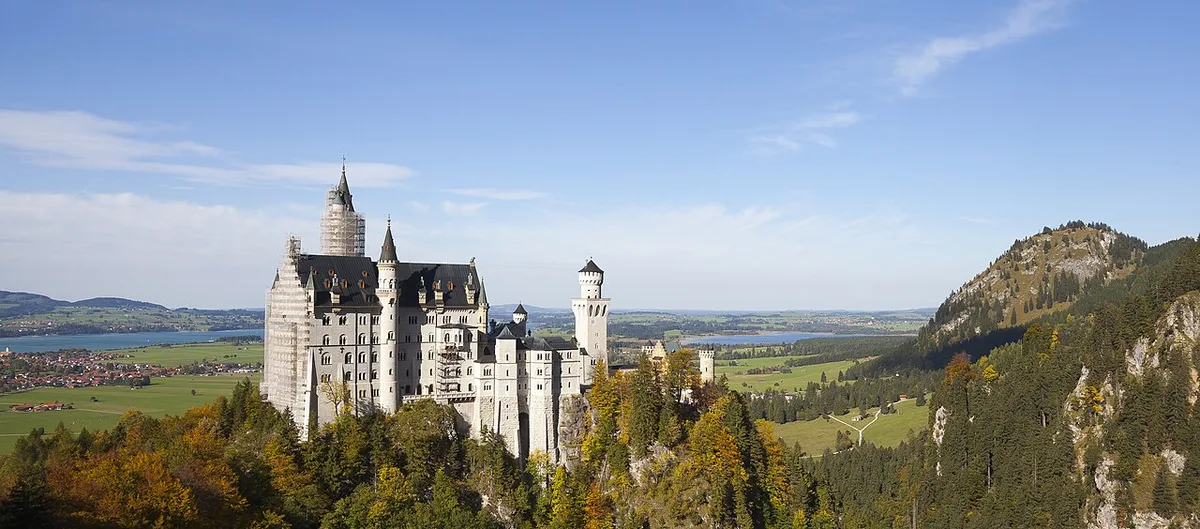
If the bridge is crowded or shut, the paths below the castle, the shoreline of the Alpsee and the meadows around Hohenschwangau still give you the postcard angle of the castle on its ridge. Taking pictures of the outside of the buildings for private use does not require a permit, as the castle's official information confirms.
Drone use is a separate matter. The same official page states that the Bavarian Palace Administration prohibits take-off and landing on its property and that flying over crowds is not permitted under wider EU rules, so leave the drone at the hotel even for the outdoor shots.
Inside the Tour: What You See and How Long It Takes
The interior visit is shorter than many first-time visitors expect, moving through a set of finished state rooms and halls before exiting near the shop and café. Because the route is guided and timed, there is little chance to linger, so decide in advance what you most want to look at.
Photography and filming for private purposes are not permitted inside, which is why so few interior shots circulate. Leave your camera expectations at the door and put the phone away; the exterior views are where your pictures will come from.
Tour lengths quoted by visitors vary. One 2025 traveller moment described a guided tour of roughly thirty-five minutes, while the 2019 account described a twenty-minute tour, so these are visitor-reported figures rather than official durations and should be used only as a rough sense of scale.
If Tickets Are Gone: Free Exteriors and Nearby Alternatives
Sold-out days are common in peak season, and the fallback is better than many people assume. The castle grounds, the approach paths, the Alpsee shoreline and the village of Hohenschwangau are all free, as one traveller account notes about the exterior scenery, and many visitors rate those views as the highlight anyway.
Hohenschwangau Castle, King Ludwig's childhood summer residence, sits directly below and runs its own separate guided tours with its own tickets; it is not included when you buy a Neuschwanstein slot. The Hohenschwangau Castle visit has a different character and a shorter climb, so it is worth reading up before you decide whether to add it.
The Museum of the Bavarian Kings in Hohenschwangau village covers the Wittelsbach dynasty in depth and works well on a wet afternoon or as background before a castle tour; one traveller account suggests allowing more time there than a short stop. Each of these three experiences is ticketed separately, so check what each ticket actually covers.
Security, Baggage and Comfort Rules
Rucksacks, prams, child carriers and similar bulky objects may not be taken into the castle, and the official guidance asks visitors to leave these items in their car or bus, with the right of controls reserved. Bring only a small bag you can carry comfortably.
The same official page lists weapons, explosive or flammable materials, knives, tools, scissors, pepper sprays and glass bottles as prohibited, and states that animals are not permitted in the castle. Repack before you leave your accommodation rather than discovering the problem at the gate.
Mountain weather is a genuine factor here. Layers, a light rain jacket and footwear with tread matter more than a stylish outfit, and a waterproof layer also makes the wait outdoors far more tolerable on a changeable day.
Seasons, Weather and Accessibility
Opening patterns and tour availability shift between the warmer and colder halves of the year, and winter conditions can affect paths and outdoor viewpoints. Confirm current details on the castle's official tourist information page rather than relying on seasonal summaries written years ago.
For visitors with limited mobility, the uphill terrain and the historic interior are the main constraints rather than the ticket rules. Füssen's official tourism site maintains a barrier-free travel section, and in October 2026 it reported that two walking routes had been recertified as barrier-free under the "Reisen für Alle" scheme, covering facilities and local advice.
If mobility is a concern, contact the ticket office before booking to confirm what assistance is available on your date, since neither the shuttle nor the bridge should be assumed to be step-free.
Pairing the Castle With Füssen and the Wider Region
Füssen justifies more than a passing stop, with its medieval old town, the Hohes Schloss above it and the former Benedictine monastery of Sankt Mang. The town's official site lists these alongside the royal castles as core cultural draws, which makes a two-night stay more rewarding than a rushed day trip.
Overnight guests in Füssen and the surrounding area can use the local guest card for buses, which changes how you plan the final kilometres to the castle and back. Whether it pays off depends on how much you move around, so compare it against your actual plans.
The bus stop, ticket centre and the start of the walking routes sit in different parts of Hohenschwangau village, so map the sequence of train, bus, ticket collection and climb before you travel. A Füssen transport and bus guide is the sensible place to sort out the last leg once your castle slot is fixed. Further visitor details appear in Füssen - Urlaub im Allgäu bei Schloss Neuschwanstein.
Sample Half-Day and Full-Day Shapes
A half-day version works if you are already nearby and only want the castle interior. Arrive in Hohenschwangau village, collect tickets if needed, take the shuttle or walk uphill, complete the timed tour, and spend whatever time remains at a viewpoint before heading back down.
A full day lets you add the Alpsee shoreline, a look at Hohenschwangau Castle from outside, and the Museum of the Bavarian Kings. It also gives you room for a proper meal in the village or back in Füssen old town rather than eating on the move.
Whichever shape you choose, build in slack. Travel delays, queueing and weather are normal here, and a schedule with no buffer is the most common reason people describe this visit as stressful. If you want to compare shapes, the Füssen itineraries and city travel guides cover one-, two- and three-day options separately.
Common Mistakes to Avoid
The biggest error is arriving without a booking on a busy day and assuming leftovers will be there. They exist, but they are same-day, first-come and not reservable, so the risk lands entirely on you.
The second is underestimating the climb. Visitors routinely plan to walk up in twenty minutes and then arrive late and stressed, which is a poor way to start a short guided tour.
The third is conflating the sites. Neuschwanstein, Hohenschwangau and the Museum of the Bavarian Kings are separate ticketed experiences in the same village, and assuming one ticket covers all three leads to disappointment at the entrance.
Plan Your Visit
Sort your ticket first, then everything else falls into place. Confirm the current booking route and any fees on the official castle page, pick a slot you can realistically reach, and decide in advance whether you are walking, riding the shuttle or taking the carriage.
Base yourself in Füssen, keep the day loose, and treat the bridge and the viewpoints as a bonus rather than a guarantee. That way a sold-out interior or a closed trail is an inconvenience rather than a ruined trip.
Frequently Asked Questions
Can you visit Neuschwanstein without a guided tour?
No. The castle's visitor information states that a visit is only possible as part of a guided tour, so there is no self-guided route through the interior. You can still walk the grounds, photograph the exterior from public paths, and enjoy the surrounding landscape without any ticket at all.
How long does the guided tour inside Neuschwanstein take?
The official site does not advertise a standard tour length; visitors describe roughly twenty to thirty-five minutes. Because those figures are visitor-reported rather than published by the castle, plan the surrounding climb and waiting time generously and treat the tour itself as one part of a longer visit.
Is Marienbrücke always open?
Bridge access and the surrounding trails are changeable and can be affected by weather, maintenance or crowd management, so nothing about the bridge should be treated as guaranteed. Check conditions on arrival, and if it is closed or overcrowded, use the lower paths and the Alpsee shoreline for exterior views instead.
How far is Füssen from Neuschwanstein Castle?
Füssen sits a few kilometres from the castle area, and the final approach runs through Hohenschwangau village, where the ticket centre and the uphill routes begin. Current bus routes, timetables and journey times change, so confirm them with the local transport operator or the Füssen tourism site rather than relying on older trip reports.
Sources
- Bayerische Schlösserverwaltung | Neuschwanstein Castle | Tourist information
- Füssen - Urlaub im Allgäu bei Schloss Neuschwanstein
- OUR TRAVEL ITINERARY: The Ultimate Guide to Neuschwanstein Castle Itinerary - Day trip from Munich to Sleeping Beauty Castle
- 🏰 Neuschwanstein Castle, Germany - One-day Tour Guide | Fairy Tale Castle Come True | Trip.com Germany


