

Füssen is a small town at the southern edge of Bavaria, close to the Austrian border, and its historic centre is genuinely compact. The official tourism site describes the Altstadt as the romantic soul of Bavaria, watched over by the Hohes Schloss and the former Benedictine monastery of St. Mang, with the town's districts of Bad Faulenbach, Hopfen am See and Weißensee spread around it. That geography is what makes a one-day plan realistic: the town is small enough to walk, while the castles sit just outside it.
The catch is the castle side of the day. Neuschwanstein welcomes over a million visitors a year, and travel writers who have visited repeatedly warn that admission can sell out weeks ahead in peak season. Treat the castle booking as the fixed point in your day, then build the Altstadt and the Lechfall around whatever time slot you secure.
Why one day in Füssen works
The Altstadt is one of the smallest old towns on a typical Bavarian trip, and that is an advantage. One widely read guide notes you can walk through the centre in around half an hour at a slow pace, past souvenir shops, cafés and cobbled lanes. Independent walking routes describe a two- to three-hour circuit that covers the main sights, including the castle courtyard, the abbey and the river.
The castles, by contrast, are a separate trip. They sit in the neighbouring municipality of Schwangau rather than inside Füssen, so every itinerary has to budget for a bus, a car or a long walk between town and the ticket area. If you want more detail on individual sights, our Füssen: Landmark Visitor Guides hub covers them separately.
Start with the castle decision
Your first decision is not which viewpoint to photograph but which castle, if either, you actually tour inside. Neuschwanstein is the famous one, built by King Ludwig II in the nineteenth century and left incomplete when he died; Hohenschwangau, a short distance away, is where he grew up and is a smaller, quieter building. Both are visitable only on guided tours, so an interior visit means committing to a fixed entry time.
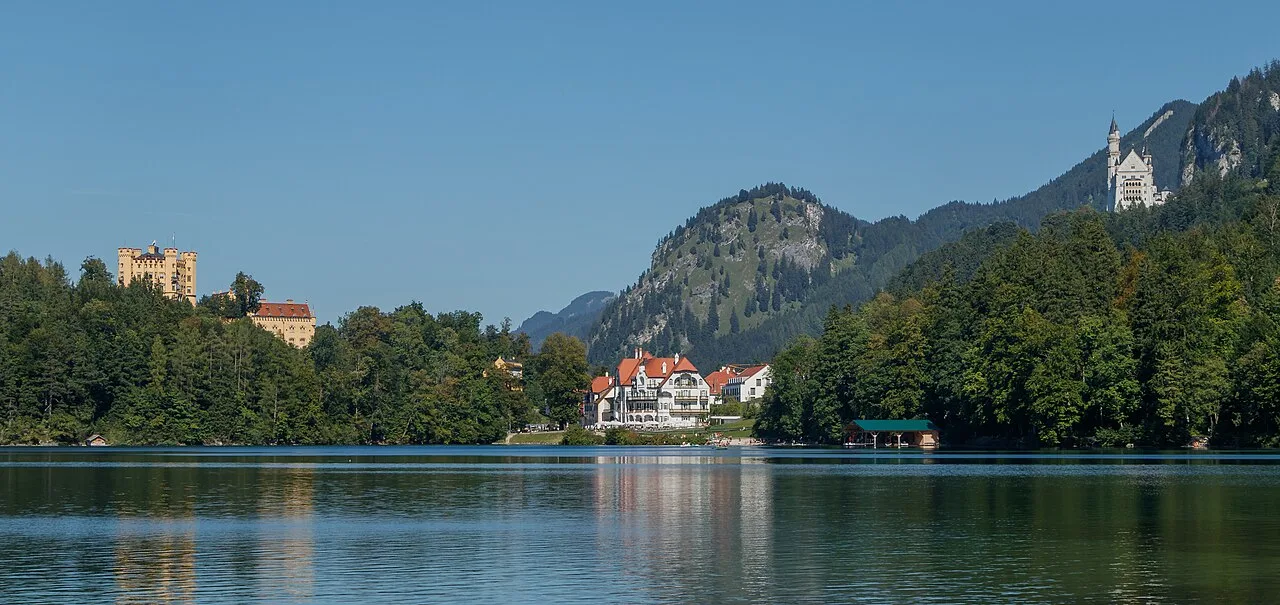
Some travellers find Hohenschwangau the more satisfying interior because it sees fewer visitors and retains original furnishings in many rooms. Others want the Neuschwanstein experience for its scale and setting. On a single day, touring both is possible on paper, but it will consume your whole morning and leave the town and river as an afterthought.
Morning: getting to the castle area
Buses run from Füssen train station towards the royal castles and Tegelberg, and the town's tourism office treats them as the convenient alternative to driving. Overnight guests also receive a guest card that covers local public transport in the region, which removes the parking problem entirely. Confirm current timetables with the operator rather than relying on a printed leaflet, since services change by season.
Arrive with time to spare before your tour slot. The ticket centre is not at the castle itself, and the walk or shuttle from the ticket area up to Neuschwanstein is uphill, so a tight arrival is a genuine risk. If you only have a fixed window, keep the castle visit alone in that window and leave the town for later.
The Marienbrücke question
The Marienbrücke, or Mary's Bridge, is the classic Neuschwanstein photograph: a pedestrian span above the Pöllat gorge with the castle framed against the mountains. It is free to cross, and it is not the same thing as a castle ticket. Weather and maintenance can close it, so treat it as a bonus rather than a guaranteed stop, and check locally before building your morning around it.
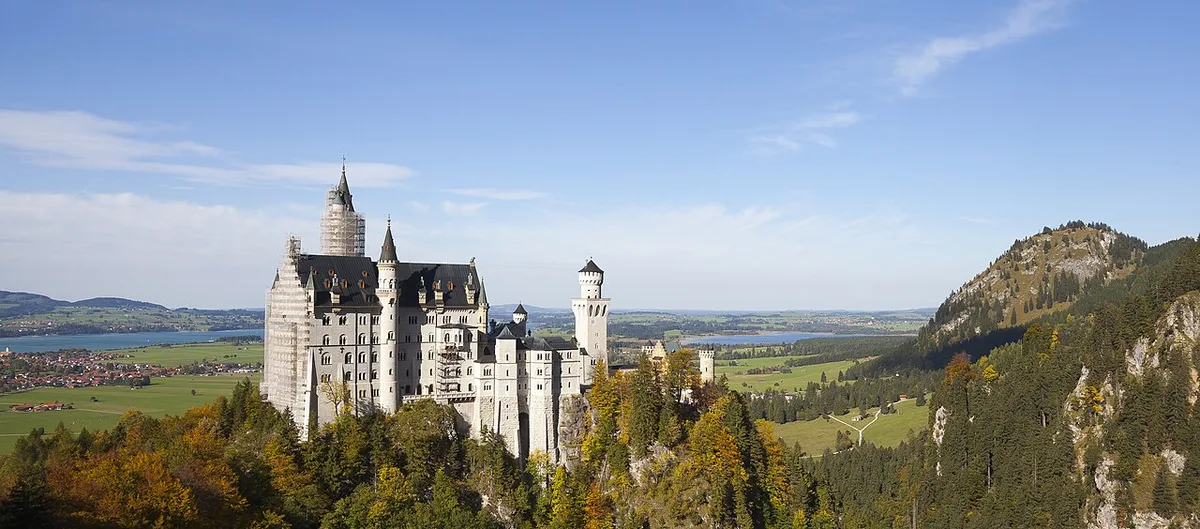
If you have an early tour slot, skip the bridge and go straight in; you can walk back to it afterwards if it is open. If your slot is later, the bridge is a sensible way to fill the waiting time. For more angles around town and the castles, see our guide to the best photo spots in Füssen and Around.
Midday: eating and regrouping
Between the castles and the town there is a natural pause for food, and the sensible move is to eat on whichever side of the transfer you actually are. The castle area has cafés and snack options around the ticket centre and the Alpsee; the Altstadt has a denser cluster of restaurants and bakeries within a few minutes of each other. Whichever you choose, confirm opening days on the day, because small Bavarian kitchens close on their own schedule.
Use this break to reassess the afternoon. If the weather has turned, the Altstadt is the better bet than a long viewpoint walk; if you still have energy and clear skies, keep a short hike or cable car in reserve. Our 2 days in Füssen itinerary shows how to spread these choices over a longer stay.
Afternoon: walking the compact Altstadt
The Altstadt is walkable end to end in under ten minutes, which makes it ideal for a loose, unhurried afternoon rather than a checklist. Independent walking guides typically route you from the station through the pedestrian centre, up to the Hohes Schloss courtyard, then down past St. Mang Abbey towards the river and along the old walls. The castle courtyard and the abbey church are free to enter, while the interiors are ticketed separately.
That distinction matters on a short visit. You pay to tour the Hohes Schloss with its decorated courtyard and state painting collection, and you pay separately to enter the Museum of the City of Füssen inside the former Benedictine complex, which holds baroque rooms and a collection of historic lutes and violins. Do not assume one ticket unlocks the whole hill. For a closer look at the castle, see our Hohes Schloss visitor guide.
The Lechfall and Lech riverside
The Lechfall is a short walk south of the old town, where the river drops into a gorge over a man-made weir. A bridge crosses directly above the falls, giving you the best view and a close look at the striking turquoise water, and the whole stop takes only a few minutes. Independent accounts put the walk from the centre at around ten to fifteen minutes each way, though you should allow for your own pace.
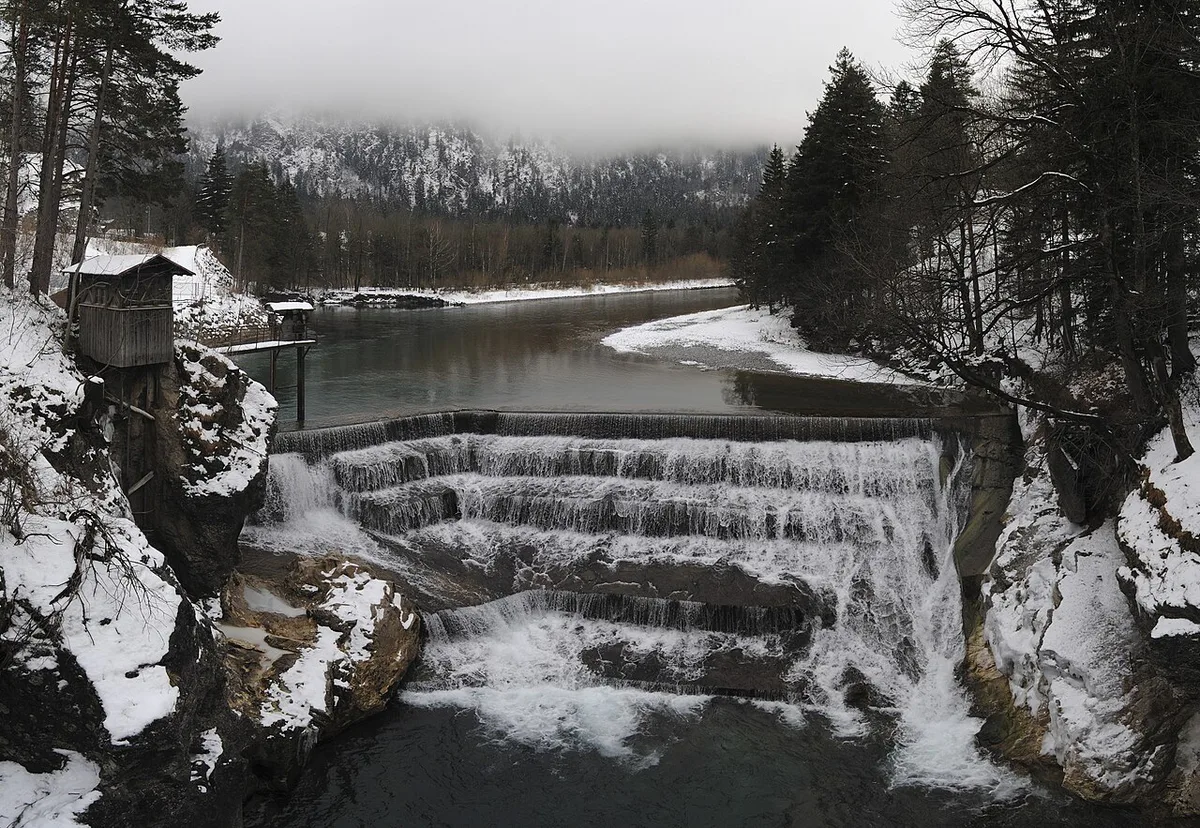
The riverside path also works as a gentler alternative for anyone who does not want the falls themselves. The Lech flows through town and the paved trail along it leads towards Baumgarten and beyond, with views of the water and the surrounding hills. Treat the Lechfall as a low-effort add-on rather than a headline stop, and it fits neatly into the last hour of daylight. Our dedicated Lechfall guide covers the details.
Late afternoon options
If you still have legs left, the Ziegelberg viewpoint sits a short climb from the town and offers sweeping views towards the Alps and the lakes beyond. Independent walking guides commonly suggest it as a way to fill time before a train, which makes it a useful buffer rather than a destination in its own right. The Franciscan Monastery of St Stephen, uphill on the other side of the river, is another quiet spot with good views back over the rooftops.
One timing caution: the Altstadt shuts down relatively early. One guide notes most shops close by early evening, and Sundays are notably quiet, so plan your shopping and café stops for the afternoon rather than the end of the day.
What to leave out
The strongest temptation on a single day is to add a third destination: Linderhof, the Tegelberg cable car, a lake swim, the treetop walkway near the Austrian border, or the Romantic Road. Each of those is a genuinely good half-day in its own right, and each one costs you the town. If Füssen's Altstadt and river are part of why you came, stop at two castles maximum.
If you do want castles plus a mountain and a lake, add a day. A longer version of this route, laid out at A Two-Day Füssen Itinerary, lets you keep the town and still reach the surrounding sights without racing. The 3 Days in Füssen itinerary expands the options further.
Booking order and transport
Reserve castle admission before you lock in train or bus times. Sell-outs are common in peak season, and same-day tickets are a gamble rather than a plan; if the official site shows nothing, local agencies sometimes still hold allocations. Once your slot is confirmed, build the rest of the day around it and buy regional transport tickets accordingly.
For local movement, the bus between the station, the town centre and the castle area is the simplest option, and overnight guests can use the guest card on covered routes. Confirm the current network and any construction notices the tourism office publishes before you travel. Our Füssen transport and bus guide expands the transport picture if you plan to stay longer.
Accessibility and seasonal realities
Weather decides more of a Füssen day than most visitors expect. The town sits at the foot of the Alps, so spring and autumn can bring cold, rain and cloud that close the Marienbrücke or obscure the mountain views entirely, while summer brings crowds and winter can be either beautiful or grey. Pack layers and a rain shell regardless of the forecast, and keep a bad-weather fallback such as the museum or the abbey church in mind.
Accessibility varies by site rather than by town, so check each attraction individually rather than assuming a uniform standard. The tourism office maintains a dedicated accessibility section covering paths, facilities and adapted routes, and it is the right place to confirm what works for your group before you commit to an itinerary.
Plan Your Visit
A single day in Füssen works best as one castle, one old town and one river walk, in that order. Book the castle first, use the bus or your guest card to get there, and keep the afternoon loose enough to enjoy the Altstadt without watching the clock.
If the castle sells out, the town still fills a day comfortably: the Hohes Schloss, St. Mang and the Lech riverside are all within walking distance of each other. One Day in Dresden shows how a comparable compact-centre day can be structured around a single district.
Frequently Asked Questions
Is one day in Füssen enough to see the town and the castles?
Yes, if you accept a trade-off. A single day comfortably covers one castle interior, the walkable Altstadt and a short riverside stop at the Lechfall. Trying to tour both Neuschwanstein and Hohenschwangau as well as explore the town will leave you rushing through all of it, so decide which matters more before you book.
Can I visit both Neuschwanstein and Hohenschwangau plus Füssen's old town in a single day?
It is physically possible but tight. Both castles are guided-tour only, so you are bound to two fixed entry times plus travel between them, and the old town tends to get whatever is left. If you want both castles, plan to eat quickly between tours and treat the Altstadt as a short evening stroll rather than a proper visit.
Should I book Neuschwanstein tickets before I arrive in Füssen?
Yes. Castle admission frequently sells out well ahead of peak-season dates, and same-day tickets are not something to rely on. Reserve through the official castle administration as early as your plans allow, and if your date shows no availability, check whether local agencies still hold allocations before giving up.
How do I get from Füssen town to the castles without a car?
Local buses connect the train station and town with the castle area in Schwangau, and overnight guests can usually use their guest card on covered routes. Check the current timetable with the operator, since services shift with the season, and allow buffer time because the final climb to Neuschwanstein is uphill.
Is the walk from the Füssen Altstadt to the Lechfall worth it?
For most visitors, yes. It is a short, mostly flat walk south of the old town, and the payoff is a close view of the turquoise Lech dropping into its gorge from a footbridge. It takes only a few minutes at the falls themselves, so it pairs well with an afternoon in the Altstadt rather than replacing it.
What can I do in Füssen if the castle tickets are sold out?
The town holds up on its own. Walk the compact Altstadt, visit the Hohes Schloss courtyard and the St. Mang complex, follow the riverside path, and continue to the Lechfall. You can also walk or take the bus out to the castle area to see the exteriors and the Alpsee shoreline, which does not require an interior tour ticket.
Is Füssen a good base for a day trip, or should I stay overnight?
Staying overnight gives you the old town after the day-trippers leave and makes an early castle slot far easier to reach. Füssen also works as a base for the wider Allgäu, with buses and trains reaching lakes, gorges and neighbouring towns. If you only have one day, arriving early matters more than where you sleep.


