

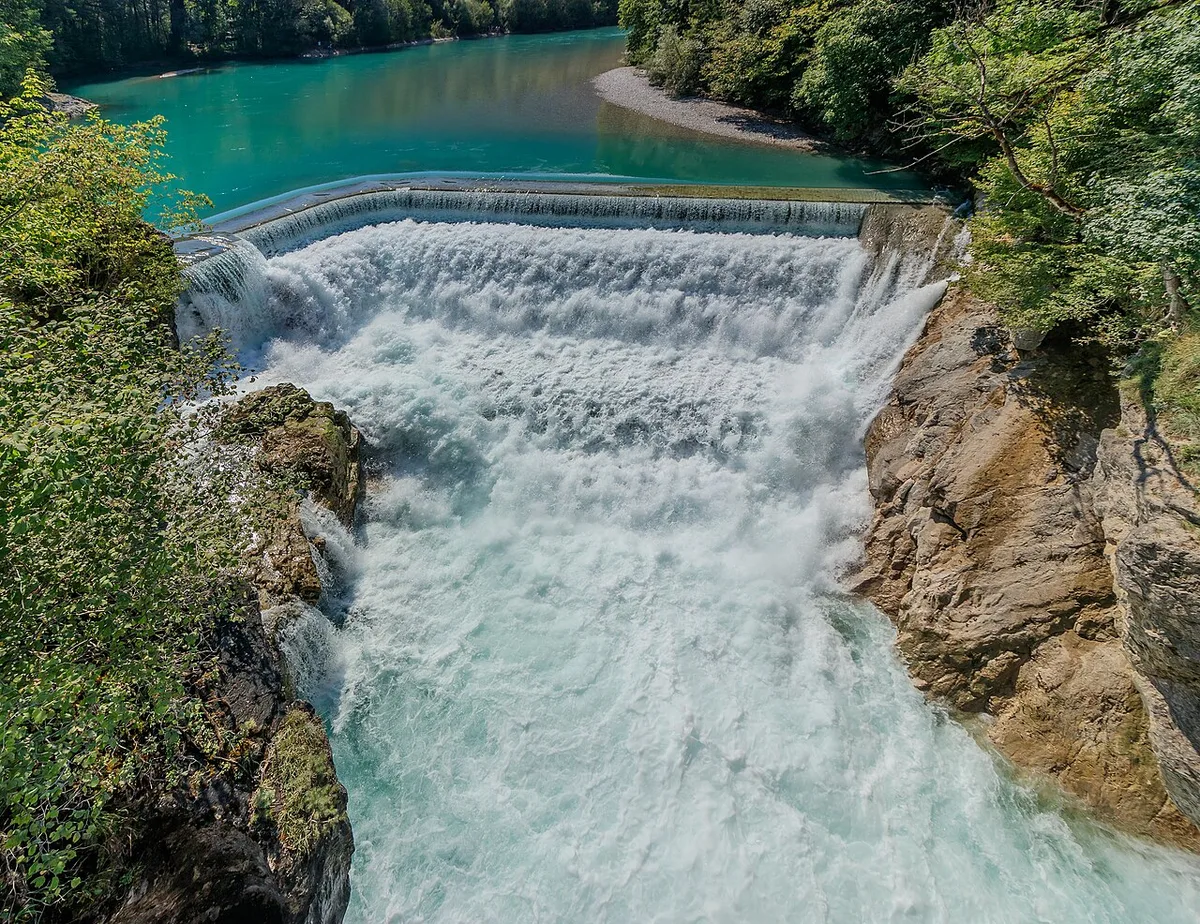
The Lechfall sits at the southern edge of Füssen, where the Lech leaves the open valley and drops roughly twelve metres over five steps into the Lechschlucht gorge. It is the closest thing the town has to a natural spectacle, yet it is only part natural: the drop is a broad overflow weir, not a free-falling mountain cataract. Knowing that distinction up front saves a lot of misplaced expectation.
Roßhaupten's tourism site describes the Lechfall as an approximately twelve-metre-high weir spanning the full width of the river at Füssen's southern town edge, with the current narrowing below it as it enters the gorge the Lech cut into the rock over millennia. The Lechfall's own site adds the detail that after heavy rain or during snowmelt, the volume of water turns the weir into a genuinely loud, spray-throwing sight. The same site notes the walk from Füssen's centre is about 1.5 kilometres on a mostly flat, well-signed route; as a suggested estimate rather than an official figure, allow about twenty to thirty minutes each way at a relaxed pace.
What the Lechfall Actually Is
The Lechfall is a Stauwehr, a barrage structure that spans the entire river and forces the Lech over a stepped sill before it can continue downstream. Because the weir is broad rather than a single spout, the water arrives as a wide curtain and then compresses violently where the channel narrows into the gorge below. Roßhaupten's page describes it exactly that way: a roughly twelve-metre fall in five stages, followed by the river entering the Lechschlucht. That structure is also why the site can look tame on a dry autumn day and unrecognisable after a spring melt.
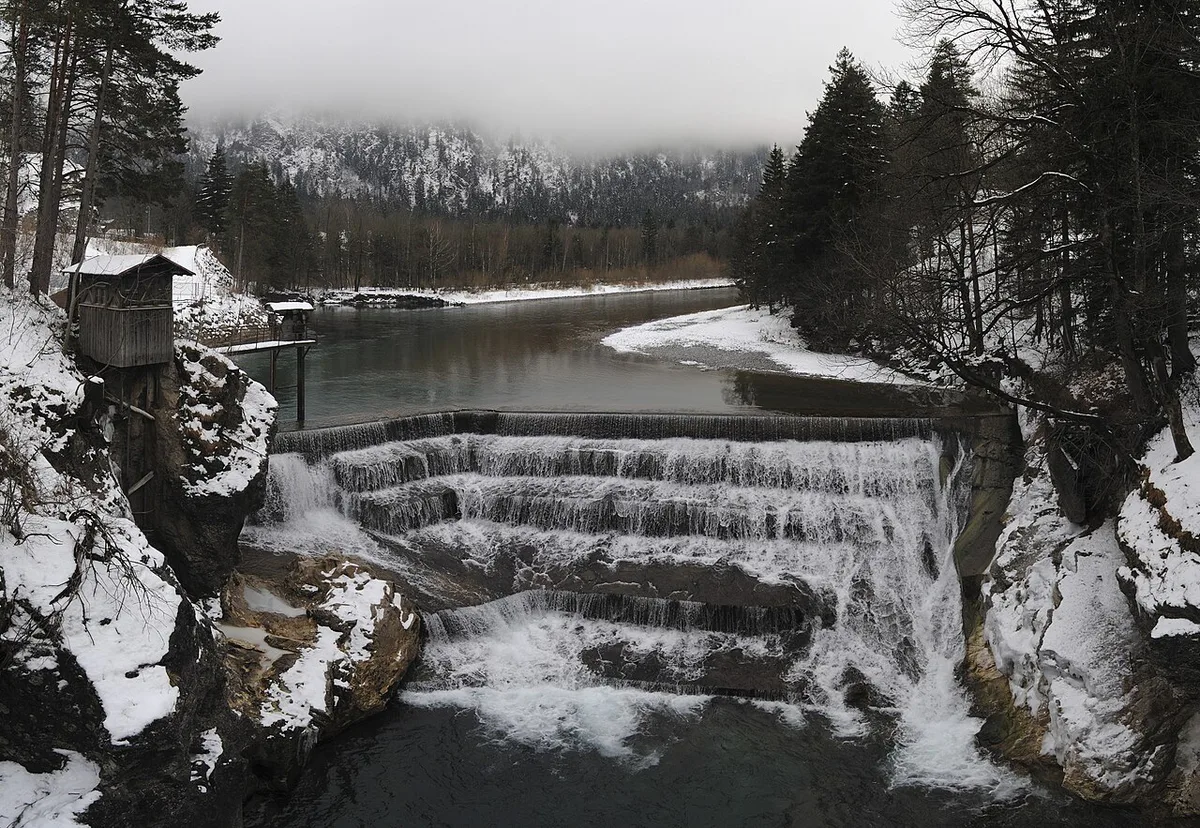
The gorge itself is genuinely natural even if the drop is engineered. The Lech has been cutting into the limestone here for a very long time, and high-water marks on the western bank document just how high the river can rise, especially after snowmelt in early summer. The same source describes those flood markers as evidence of the river's force in the early summer months. Reading them is one of the more interesting small details at the site.
Walking There from Füssen's Centre
The standard approach on foot starts in the old town and follows the river south along Tiroler Straße, where the address for the Lechfall is officially listed. The Lechfall site puts the distance at roughly 1.5 kilometres from the town centre and describes the route as well signposted and mostly flat, with no technically difficult sections. As a suggested estimate rather than an official figure, allow about twenty to thirty minutes each way at a relaxed pace, more if you stop for photos on the bridge.
If you want to fold the walk into a broader look at the town first, the Füssen old town walking tour covers the lanes around the Hohes Schloss and the former Benedictine abbey of St. Mang before you head south along the river. It is a sensible way to make the Lechfall the endpoint of a half-day rather than a standalone dash. The two fit together naturally because both sit on the same side of the centre.
Viewpoints: Bridge, Marienfelsen and Magnustritt
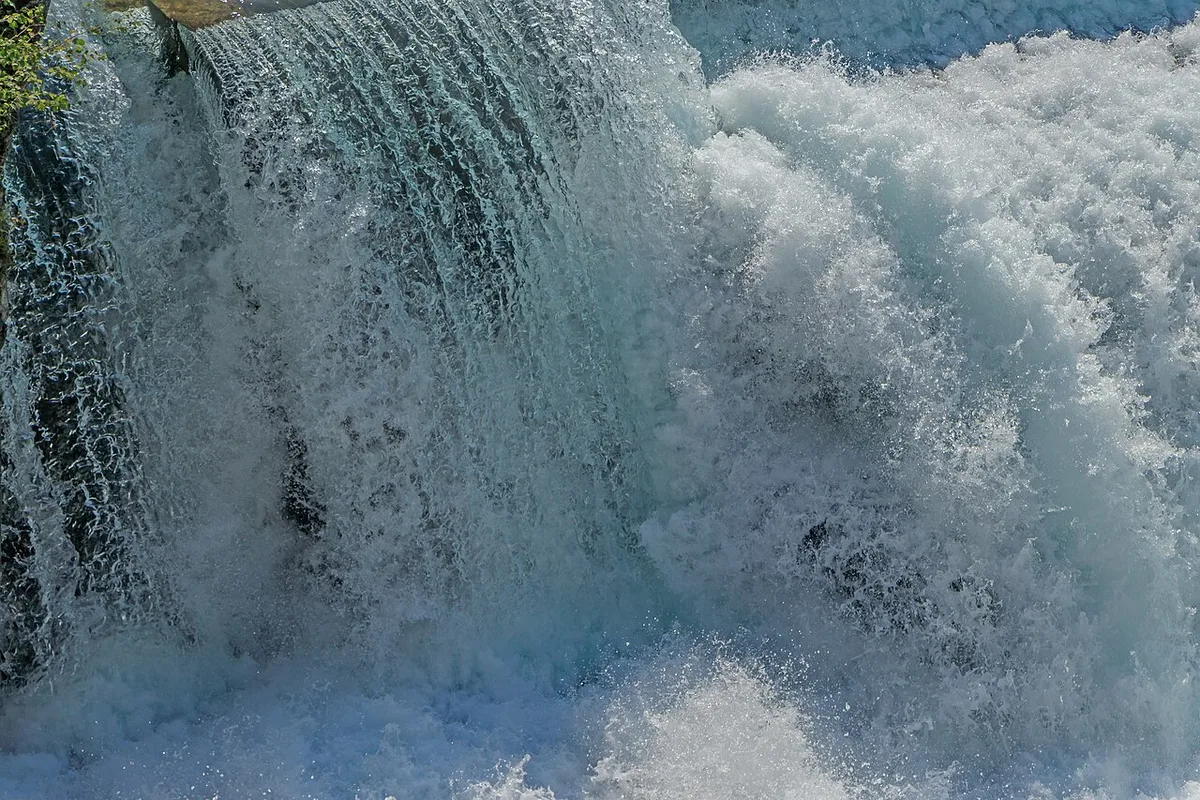
There are three distinct places to stand, and they give you three different pictures. The footbridge across the gorge was built in 1895 and offers the classic head-on view of the stepped fall and the turquoise water below it, according to KiMaPa. From the bridge you see the whole width of the weir at once, which is the shot most visitors come for. Bring something to wipe the lens; spray reaches the decking when the river is high.
The second position is the Marienfelsen, where a bust of King Maximilian II of Bavaria was unveiled on 26 June 1866 in honour of the monarch's attachment to the region. The Lechfall's own site describes the monument as a bust on a pedestal with a wide view over the fall and the surrounding landscape. This is the elevated angle rather than the close-up one.
The third is the Magnustritt, a rock ledge a short distance away that carries a supposed footprint left by Saint Magnus when he is said to have leapt across the gorge. KiMaPa describes it as a rock outcrop with the legendary imprint, a few metres beyond the bridge. Treat the story as local legend rather than geology, and treat the ledge itself as wet, uneven ground that deserves care rather than a confident stride. None of these three positions is far from the others, so most visitors see all of them without planning.
Short Stop or Longer Hike?
The honest answer is that the Lechfall works best as a short stop unless you deliberately extend it. The walk from town is flat and brief, the viewpoints cluster within a few dozen metres of each other, and there is no trail that requires a full day on its own. If you have an hour spare in Füssen, this fills it well. If you have a whole afternoon, you need to add something else rather than stretch the visit.
Water level matters more than season for deciding when to go. The Lechfall site is explicit that the cascade is at its most forceful after heavy rainfall or during snowmelt, when large volumes of water crash down the rocks. In a dry late-summer week, expect a much gentler curtain of water and a calmer pool below. If the spectacle is the point of your trip, check the river conditions rather than the calendar.
Accessibility is a separate question, and it is one where you should not assume. The riverside route from town is described as flat and easy, but that says nothing definitive about the gorge path, the steps down to the water, or the condition of the surfaces after rain. Anyone with limited mobility should check current path conditions with the Füssen tourist information before setting out rather than relying on a general description.
Free Access and What Is Not Included
The Lechfall grounds and the paths around the gorge are treated as open, freely accessible outdoor space in the sources used here, and no admission charge is stated for viewing the weir. That is different from the ticketed attractions elsewhere in Füssen, such as the Museum of the City of Füssen inside the former St. Mang's Abbey or the Hohe Schloss. Do not assume a single ticket covers the town's museums; each operates its own arrangement.
No current entrance fee, opening time or timed-entry rule for the Lechfall is published in the material reviewed here, so treat any figure you see elsewhere with suspicion and verify with Füssen Tourismus und Marketing before you plan around it. If you are mapping a low-cost day, the free things to do in Füssen page is the better starting point than a paid-attraction list. The Lechfall is genuinely one of the zero-cost options, which is part of its appeal.
Parking and Arriving by Road
The dedicated Lechfallparkplatz is very small, and the Lechfall site says so plainly, which means you should not build a plan around finding a space there. KiMaPa gives the practical alternative: coming from Füssen on the B17 toward the Austrian border, there are parking options on the right-hand side about 700 metres before the border, and the waterfall is already visible from there. That is a short pull-in rather than a proper car park, so it depends on the day.
Because neither the car park nor the roadside option can be relied on at busy times, the walk from town removes the problem entirely. If you are staying centrally, leave the car where it is and walk south along the river; the distance is short enough that driving saves very little. Note also that road works in and around Füssen and Schwangau appear periodically on the city's news ticker, so check the current notices before committing to a route by car. The 2026 notices shown there are dated and should be read as such rather than as permanent conditions.
Pairing the Lechfall with Ziegelwies
The Walderlebniszentrum Ziegelwies is a separate site with its own offer, not an extension of the Lechfall, and the two do not share a ticket or a single entrance. Its forest experience includes a treetop path, a floodplain trail, an exhibition and a play area, and it is listed by the Lechfall site as a distinct nearby destination. Treat it as a deliberate half-day choice rather than something you simply drift into.
If you are combining the two, the sensible sequence is Lechfall first on foot from town and Ziegelwies second, since the forest centre rewards more time than the weir does. Families in particular tend to spend longer at the treetop path and the play area than at the gorge itself. Check the forest centre's own arrangements for opening and any charges separately, because none of that is included in a Lechfall visit.
Safety and Terrain Notes
Wet rock is the main hazard here, not the water itself. Spray from the weir keeps the bridge deck, the steps and the stone around the viewpoints damp even on dry days, and the limestone polishes up underfoot. Grippy shoes with a real tread are worth the luggage space; smooth-soled trainers are a poor choice on the descent toward the water.
Edges around the gorge are largely unguarded in the way a formal viewing platform would be guarded, so keep children close and resist the urge to step past obvious boundaries for a better angle. After rain the riverside path can be muddy and slick in patches, and the water itself rises quickly when the catchment upstream is wet. If the river is visibly high and brown, watch from the bridge rather than the lower rocks.
Continuing from the Lechfall
Beyond the gorge, the Lech continues north and the wider Füssen area opens up. For a different kind of view, the best viewpoints in Füssen page covers elevated options including the Tegelbergbahn side of the valley, which is a cable-car trip rather than a walk. That is a separate outing with its own conditions and should be checked with the operator before you go.
In the other direction, the castle side of the valley is reachable from Füssen and is usually planned as its own day. If you intend to move on toward the castles, the Hohenschwangau village and castle arrival guide explains how the village, the ticket centre and the shuttle and bus options fit together; those arrangements are set by the castles' administration, not by anything at the Lechfall.
Further afield, the Forggensee has a seasonal boat service with departures from the Füssen boat harbour, and the city's own pages are the right place to check whether it is running during your dates. The service is seasonal and its schedule is the operator's to publish. Do not treat any timetable you find outside the operator's page as current.
Practical Timing and What to Bring
An early or late visit changes the experience more than the season does. Midday brings the most people to the bridge and the car park, while the light in the early morning and late afternoon catches the spray and the turquoise water more dramatically. Because the walk from town is short, there is no real penalty for going at an awkward hour.
Pack a light waterproof layer even in summer, since standing on the bridge in the mist of a high river will leave you damp. A camera or phone that can tolerate a bit of moisture is a better companion than one you have to keep wrapped up. If you plan to add Ziegelwies afterwards, add a bit more time and check that centre's own arrangements for the day.
Plan Your Visit
The Lechfall is a short, free, slightly misunderstood stop at the southern edge of Füssen: a broad weir rather than a wild waterfall, best seen from the 1895 bridge, with the Marienfelsen and the Magnustritt a few steps away. If you have an hour in town, walk it from the centre and skip the parking problem entirely. If you want more, add Ziegelwies or the castles as a separate decision rather than stretching this one.
Before you go, check the river conditions after rain or snowmelt if the drama matters to you, and confirm current access, works and any forest-centre arrangements with Füssen Tourismus und Marketing. For the rest of your stay, the Füssen: Itineraries and City Travel Guides hub is the place to see how this stop fits into a longer plan. It is a small site, but it earns its place on a Füssen itinerary.
Frequently Asked Questions
Is the Lechfall natural or man-made?
It is both, and that is the usual point of confusion. The drop is a broad overflow weir built across the full width of the Lech at Füssen's southern edge, so the stepped fall itself is a structure rather than a free-flowing cataract. The gorge below it, the Lechschlucht, is genuinely natural: the river has cut into the limestone over a very long period, and high-water marks on the western bank show how much the river can rise after snowmelt. Visit expecting an impressive engineered weir feeding a real rock gorge, not a wilderness waterfall.
How long does a visit to the Lechfall take?
The site itself is compact, so the viewpoints on the bridge, at the Marienfelsen and at the Magnustritt can all be seen within a short stop. The walk from Füssen's town centre is about 1.5 kilometres on a mostly flat, signed route, which most people cover in roughly twenty to thirty minutes at a relaxed pace each way; treat that as a suggested estimate rather than an official figure. If you want a longer outing, plan a separate add-on such as the Ziegelwies forest experience instead of stretching the Lechfall visit itself.
Can you walk to the Lechfall from Füssen town centre?
Yes. The riverside approach from the centre runs south toward Tiroler Straße and is described as well signposted and mostly flat, with no difficult passages, so it suits most walkers including families and older visitors. Because path conditions change with weather, anyone with limited mobility should confirm the current state of the route with the local tourist information rather than relying on general descriptions. The walk also pairs neatly with a look around the old town before you set off.
Where do you park at the Lechfall?
The dedicated Lechfall car park is very small, so you should not count on a free space at busy times. Coming from Füssen along the B17 toward the Austrian border, there are parking options on the right-hand side about 700 metres before the border, and the waterfall is visible from there. Because capacity is limited either way, walking from town is often the simpler choice if you are staying centrally. Check current road notices before driving, since works in the area appear periodically.
What is the Magnustritt at the Lechfall?
The Magnustritt is a rock ledge a few metres beyond the footbridge, associated with a legend that Saint Magnus left a footprint there when he leapt across the gorge. It is a story rather than a geological feature, and the ground around it is uneven and often damp. Treat it as an interesting local detail to look at from a safe position, not as a spot to scramble onto for a photograph.


