

Hohenschwangau village sits in the valley below both royal castles, and it is where every visit to Neuschwanstein or Hohenschwangau effectively begins. Private cars cannot drive up to either castle, so you park in the valley and continue on foot, by shuttle bus or by horse-drawn carriage. The road to Neuschwanstein, Neuschwansteinstraße, is closed to cars and bicycles except with permission from the castle administration.
The Bavarian Palace Administration states plainly that the path to the castle starts in Hohenschwangau and that this is your last opportunity to park. Because the village has only private parking facilities, the arrival sequence is fixed: park first, then walk or ride. Deciding which lot and which onward transport suits you takes five minutes of planning and can save a lot of stress later.
Why the Village Is the True Starting Point
Both castles are visited on timed guided tours, and all castle tickets are tied to the Ticket Center in Hohenschwangau. That single fact makes the village the hub of the day, not an optional stop on the way. Even travellers who only want the classic viewpoints still pass through the same valley area.
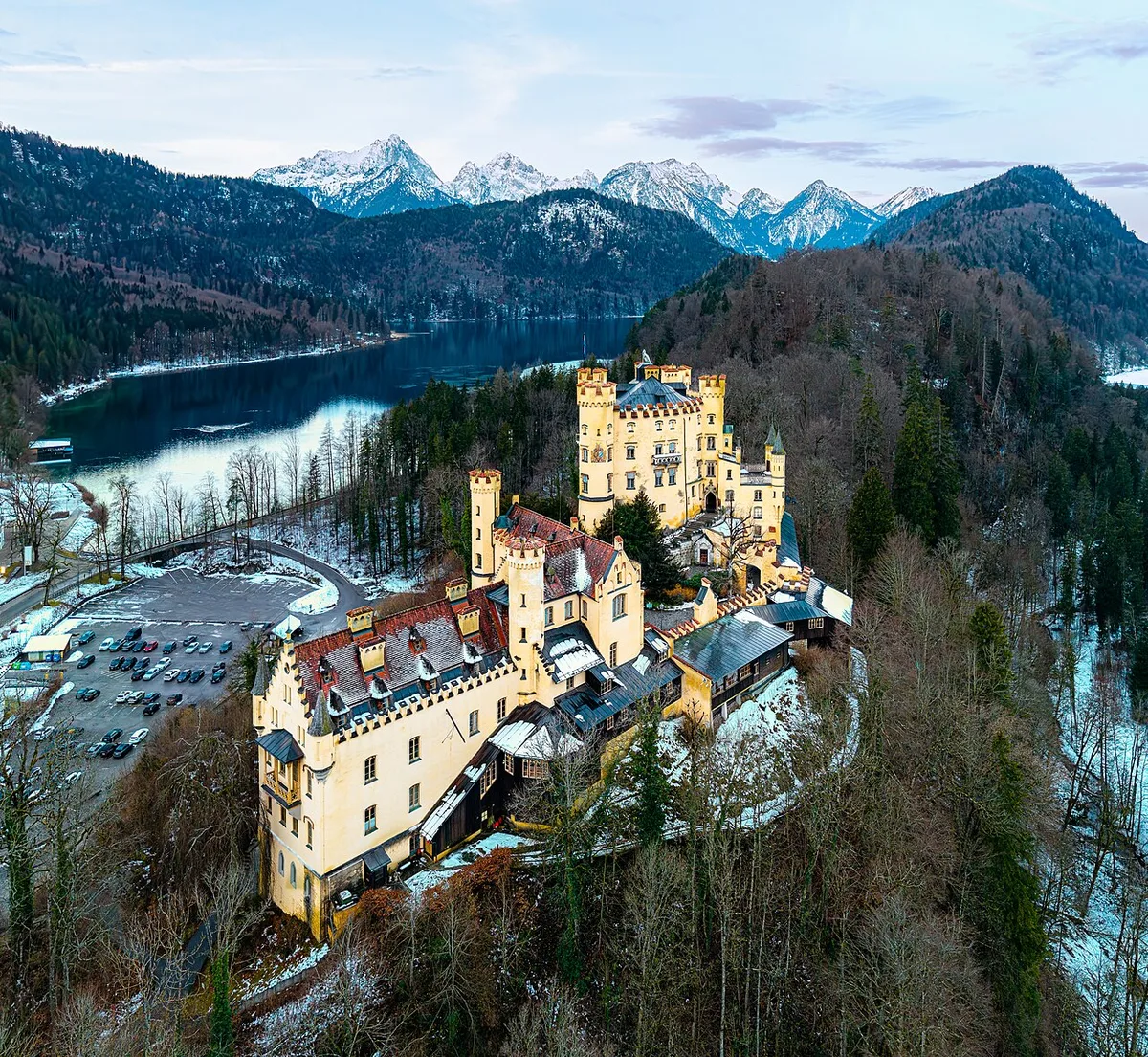
The village also holds more than ticket counters. The Museum of the Bavarian Kings, the Alpsee shoreline and the castle gardens give you reasons to arrive early or stay late without needing a timed castle slot. If your main interest is the Wittelsbach dynasty, the museum is a natural companion to a castle tour, though it is ticketed separately from the castles.
Füssen, a few kilometres north, is the usual base for visitors and the region's main service town with its own tourist information and transport links. Treat Hohenschwangau as the operational end point of the journey and Füssen as the place you return to afterwards. For overnight planning, the Füssen itineraries and city travel guides cover how the town fits around a castle day.
The Car-Free Rule: What It Means for Drivers and Cyclists
The royal castles are not accessible by private car, and the operator directs all visitors to the paid parking areas P1 to P4 in the valley. Coaches and cars use the same valley zone rather than approaching the castles. Cyclists must leave Neuschwansteinstraße after roughly 100 metres and follow the marked cycle path instead of riding up the castle road.
A strict no-stopping zone applies in front of the Ticket Center and along the street, so dropping passengers at the door is not an option. The operator asks drivers to use lots P1 to P4 exclusively rather than improvising roadside stops. In practice this means the driver parks while everyone else walks the last stretch.
Parking P1 to P4: Which Lot Suits Your Day
The four valley lots serve different purposes depending on your onward transport. P4, the Alpsee lot below Hohenschwangau Castle, doubles as the shuttle-bus departure point for Neuschwanstein, which makes it the obvious choice for bus users. The horse carriages to Neuschwanstein leave from across Hotel Müller, so anyone planning a carriage ride benefits from parking nearby rather than at P4.
Walkers have the simplest calculation because every lot sits within reasonable reach of the signposted paths. Still, arriving on a busy holiday morning changes the arithmetic: the operator warns of significant waiting times at the bus and carriage stops in peak seasons. Parking further from the bus stop costs you a few minutes on foot but may keep you out of a queue that eats far more time.
Ticket Center Essentials Before You Climb
Castle visits are only possible as part of a guided tour at a fixed entry time, with limited capacity per departure. Tours run in German and English, with audio guides in other languages on designated audio-guided departures. Because capacity is capped, the time printed on your ticket governs everything else in your day.
Tickets for the castles and the museum can be bought in the official online shop or on site at the Ticket Center, subject to availability. Same-day counter tickets are valid only for that day, and the operator notes they can sell out by late morning when demand is high. A limited number of additional tickets may be released daily from 8:00 a.m., again subject to availability.
One useful distinction: the museum is not time-bound, so you can explore it at your own pace once you have a ticket. The castles are the opposite, with fixed slots that reward punctuality and punish lateness. Current opening times and admission fees are published by the operator rather than fixed in this guide, so check them before you travel.
Arrival Buffers: How Much Time to Build In
The operator recommends arriving in Hohenschwangau village at least 1.5 to 2 hours before your Neuschwanstein admission time, and at least 1 hour before a Hohenschwangau Castle admission time. Those are the organiser's own planning figures, not a rule of physics, and they assume you still have to walk, queue or ride to the entrance. If you walk slowly, use a carriage, or visit on a holiday, treat the longer end as your baseline.
Waiting times at the bus and carriage stops are not included in any journey time and can be substantial in peak seasons. That is the main argument for giving yourself more slack than feels necessary, especially if your ticket slot cannot be moved. Build the buffer around the transport you actually plan to use, not the fastest theoretical option.
Walking Routes Compared: Two Castles, Two Climbs
From the Ticket Center, the operator estimates roughly 20 to 30 minutes uphill to Hohenschwangau Castle and about 30 to 40 minutes uphill to Neuschwanstein. The Bavarian Palace Administration puts the Neuschwanstein walk at roughly 1.5 kilometres on a steep uphill road. Both routes are signposted, so navigation is easy even if the gradient is not.
The choice between the two is really a choice about effort and time. Hohenschwangau Castle is the shorter, gentler climb and sits closer to the village, which suits a first visit or a tight schedule. Neuschwanstein demands more of your legs and more of your buffer, so pair it with a slower plan rather than squeezing it in before a train or dinner reservation.
Whichever castle you pick, the walk back down is quicker than the climb and needs no planning. If you want detail on what waits at the top, the Neuschwanstein Castle visitor guide covers the building itself, while the interiors are only seen on a guided tour.
The Shuttle Bus: Above the Castle, Then Down
The shuttle bus starts in the valley at the Alpsee parking area P4 and ends above Neuschwanstein at the Jugend viewpoint near Mary's Bridge. From that stop it is a steep downhill walk of about 500 metres, 10 to 15 minutes at a gradient of 12 to 19 percent, to the castle entrance. The counter-intuitive part is that the bus takes you higher than your destination and leaves you descending.
The bus shuttles according to demand without a fixed timetable, roughly every 20 minutes, and takes about 15 minutes excluding waiting. It operates only in suitable weather, does not run with snow or ice on the roads, and has no service on December 24, 25 and 31 or January 1. Pets are not carried, and discount cards such as the Königscard and Deutschland-Ticket are not valid on it.
You can ride the shuttle bus or a carriage even without a castle ticket, which matters if you only want the viewpoints. The bus is run by an independent company rather than the palace administration, so castle staff cannot resolve its schedule questions. Fares are posted by the operator and change over time, so confirm them at the bus station or on the operator page before you rely on a figure.
Horse Carriages: Two Services, Two Endings
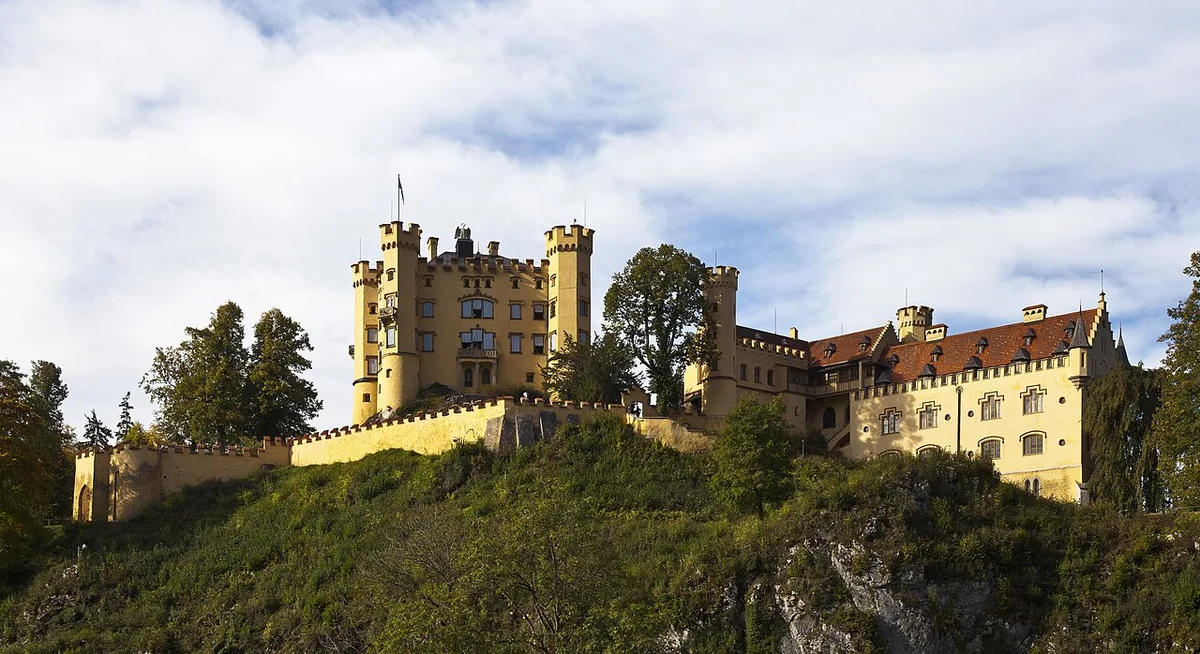
There are two separate carriage services, and mixing them up is a common arrival mistake. The Hohenschwangau carriage starts in front of the Ticket Center and ends directly at Hohenschwangau Castle, a ride of about 10 minutes. It runs without a fixed schedule and does not operate during the castle's winter opening hours.
The Neuschwanstein carriage leaves from across Hotel Müller and stops below the castle, roughly 20 minutes later. From there you still face an uphill walk of about 450 metres, 10 to 15 minutes, to the entrance, because carriages cannot reach the door. These carriages run all year round according to demand, with no reservations possible.
Carriages are operated by independent companies, not the palace administration, and you pay the driver directly. Fares are set by the operators and can change, so treat any figure you read online as historical and verify it on arrival. Note also that the carriages have no ramp, which matters if anyone in your group uses a wheelchair.
Reduced Mobility: Why the Bus Is the Wrong Choice
The operator states that the shuttle bus is not suitable for people with walking disabilities, because the route from the Marienbrücke terminus to the castle entrance is 600 metres down a very steep hill. For guests with limited mobility, the recommendation is instead to take the horse-drawn carriage up the hill. Since the carriages have no ramp, travellers with wheelchairs should confirm suitability directly with the operator before relying on this option.
Regional accessibility information is worth checking alongside the operator pages. The Füssen destination site maintains a dedicated accessibility section covering facilities and tips, and it also flags current construction and closures that can affect routes. Check those notices close to your travel date rather than months ahead.
Alpsee Shoreline and the Rest of the Village
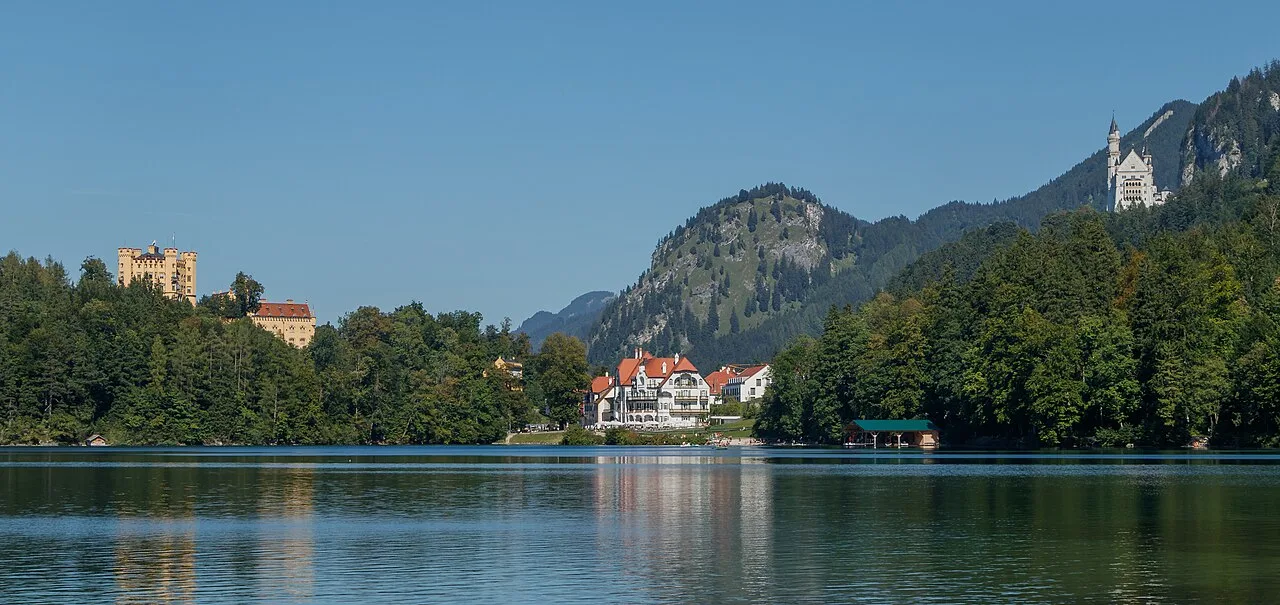
The Alpsee sits just below the village and offers a flat alternative to the castle climbs. Around it you will find the Alpsee circular trail, boat rental and the Alpseebad, with Mary's Bridge and the Pöllat gorge as the more dramatic viewpoints higher up. These are separate attractions from the castles and do not require a castle ticket.
Because viewpoint and trail access can change with weather and maintenance, the operator publishes a daily availability check for the shuttle bus, carriages and viewpoints. Use it on the morning of your visit rather than trusting a guidebook photo. If the bridge or a trail is closed, the lakeshore remains a reliable fallback.
For a wider sense of what the region holds beyond the castles, the Lechfall Füssen and the Lech river are short trips from the Füssen side. They work well as a half-day counterweight to a crowded castle morning. Also consider browsing the Füssen landmark visitor guides for the town's own sights and the Füssen: Landmark Visitor Guides collection before committing your whole day to the valley.
Getting There from Füssen, Schwangau and Beyond
By car, the palace administration describes taking the A7 motorway towards Füssen, then following the B17 to Schwangau and the signs to Hohenschwangau; an alternative approach runs via Kempten, Marktoberdorf, Roßhaupten, Buching and back onto the B17. By train, the pattern is to reach Füssen and continue by bus to the Hohenschwangau Neuschwanstein Castles stop in Schwangau. Bus routes and timetables sit with the regional operator rather than the castle site, so look them up separately.
Road works around Füssen and Schwangau have affected approaches and the bus station area, and the local tourism site publishes closure notices with dates as they arise. Check those before setting out, particularly if you are driving and relying on a specific route. Local overnight guests in the Füssen area may also benefit from guest-card transport arrangements, which are explained on the destination site.
Practical Sequencing After You Park
Start at the Ticket Center if you still need tickets or want to confirm your entry time, because everything else depends on it. Then choose your route: bus from P4, carriage from near Hotel Müller or the village paths on foot. Only after that decision does it make sense to think about viewpoints or the lakeshore.
A workable order for a first visit is arrival and parking, ticket check, then the harder castle while your legs are fresh, followed by the easier one or the Alpsee. If you plan to use the carriage to Neuschwanstein, remember the final uphill stretch to the entrance and leave room for it. Finishing at the lakeshore means you end the day downhill, which is kinder than the reverse.
Plan Your Visit
Hohenschwangau village rewards a simple plan: arrive earlier than you think necessary, park in one of the valley lots, and decide between walking, the shuttle bus and a carriage before you start climbing. The operator's own buffer of 1.5 to 2 hours for Neuschwanstein and 1 hour for Hohenschwangau Castle is the clearest planning figure available. Everything else follows from your ticket time.
Check the operator's transport availability page on the day for shuttle, carriage and viewpoint status, since weather and maintenance change what is running. Confirm fares and opening details at source rather than trusting older figures. With a buffer and a fallback plan, the village logistics stop being a source of stress and become just the first pleasant stretch of the day.
Frequently Asked Questions
Can you drive up to Neuschwanstein or Hohenschwangau Castle?
No. The castles are not accessible by private car, and the road to Neuschwanstein may only be used with permission from the castle administration. Drivers must use the paid valley parking areas P1 to P4 in Hohenschwangau and continue on foot, by shuttle bus or by horse-drawn carriage. A strict no-stopping zone applies in front of the Ticket Center and along the street, so dropping passengers there is not permitted.
How long does the walk from the Ticket Center to each castle take?
The operator estimates about 20 to 30 minutes uphill to Hohenschwangau Castle and about 30 to 40 minutes uphill to Neuschwanstein. The Bavarian Palace Administration describes the Neuschwanstein route as roughly 1.5 kilometres on a steep uphill road. Those are walking times only and exclude queueing or waiting for transport, so add extra time if you are visiting on a busy day.
Where does the Neuschwanstein shuttle bus actually stop?
The bus starts in the valley at the Alpsee parking area P4 and ends above the castle at the Jugend viewpoint near Mary's Bridge. It does not go to the castle entrance, so you continue with a steep downhill walk of about 500 metres, roughly 10 to 15 minutes at a gradient of 12 to 19 percent. Because of that steep final stretch, the operator does not consider the bus suitable for people with walking disabilities.
Do you need a castle ticket to use the shuttle bus or carriage?
No. Both the shuttle bus and the horse-drawn carriages can be used without a castle tour ticket, which makes them an option for visitors who only want the viewpoints. The services are run by independent companies rather than the palace administration, they follow no fixed timetable, and reservations are not possible. You pay the bus cashier or driver, or the carriage driver directly.
How early should you arrive in Hohenschwangau before a timed tour?
The Ticket Center recommends reaching the village at least 1.5 to 2 hours before a Neuschwanstein admission time and at least 1 hour before a Hohenschwangau Castle admission time. Those buffers account for walking, waiting and riding to the entrance. Waiting times at the bus and carriage stops are not included in published journey times and can be long in peak seasons, so plan generously if your slot cannot be changed.
What is there to do in Hohenschwangau besides the castles?
The village area includes the Museum of the Bavarian Kings, which is ticketed separately from the castles and can be explored at your own pace without a fixed entry time. Around the Alpsee there is a circular trail, boat rental and the Alpseebad, while Mary's Bridge, the Jugend viewpoint and the Pöllat gorge offer higher viewpoints. Shuttle, carriage and viewpoint availability can change with weather, so check the operator's daily status before setting out.


