

The Füssen Card is easy to misunderstand. It is not sold at a ticket counter and it is not a sightseeing pass. It is a guest card issued to overnight visitors as part of the registration process at their accommodation, with a separate card for each travelling companion. Further visitor details appear in Füssen Card - Füssen im Allgäu.
That origin shapes the decision. If you are staying overnight in Füssen or the surrounding villages with a participating host, the card arrives without a separate purchase step. If you are visiting only for the day, or staying somewhere that does not issue it, the question of whether it is worth it largely does not apply.
The headline value is transport: free use of the allgäumobil bus network, which the official card page describes as roughly 500 kilometres of routes. Almost everything else the card touches is a reduced price rather than free admission, so the calculation changes entirely depending on whether you tour by bus or by car.
What the Füssen Card Actually Is
The card is part of the check-in paperwork. The official tourism page explains that it forms part of the Check-In-Füssen-Bogen, is separated by the host at the end of the registration process and handed over, and that every travelling companion receives their own card rather than sharing one.
Two formalities decide whether the card works at all. Accompanying travellers must add their first and last names to their own card before it becomes valid, and the guest must sign the usage and data-protection terms on the additional section of the registration form. A blank or unsigned card is not a valid one.
On the ground, the card has to be shown unprompted at each acceptance point, according to the official description. That is a small habit worth building, because staff on buses, at museums and on boats are checking for it rather than asking whether you have one. Keep it with your room key so it does not end up in a suitcase.
Who Gets One and Who Does Not
The official description is written for overnight guests. It is issued during accommodation check-in, which means eligibility starts with a registered stay at a host who participates in the scheme, not with a visit to a tourist information desk.
Whether day visitors, campers at every site or travellers arriving purely by bus can obtain one is not addressed on the card page. Rather than guess, ask your specific host before arrival whether they issue the Füssen Card, and if the answer is unclear, contact the tourist information office through the English contact form, which is free to use.
The same page publishes no card price, purchase fee or stated validity period. Since no official figure is given, treat any quoted card cost you see elsewhere as unverified and confirm the current terms locally. What the official page does provide are the usage conditions and privacy information as downloadable documents.
The Bus Network Is the Real Saving
Free ÖPNV use is the one benefit on the card page described as kostenfrei rather than reduced. The card covers the bus route network of the allgäumobil transport association, which the official page puts at roughly 500 kilometres, and this applies to overnight guests travelling in Füssen and the surrounding area.
For most stays, the practical question is how often you would otherwise board a bus. The castle villages of Hohenschwangau and Schwangau, the lakes and the outlying districts are served by regional buses, and the tourism site's mobility pages address getting around without a car. If your plan involves multiple bus journeys a day, the transport benefit alone usually justifies signing and carrying the card.
Two limits are worth stating plainly. The card covers the allgäumobil bus network as described by the organiser, and no official source consulted here says it extends to rail services or to transport outside that network. If your itinerary depends on a train connection or a route outside allgäumobil, check the specific line with the operator before building your day around it.
What Else Is Genuinely Free
Beyond buses, the clearly free benefit is borrowing books from the Füssener Stadtbibliothek. The official page says library lending is kostenfrei with the card, and describes the library as holding a large selection in a historic setting, which makes it a reasonable rainy-afternoon option rather than a headline attraction.
That is a deliberately narrow list. The same page groups the library and the bus network as free services, then shifts to discounted offers for everything else. Readers who assume the card is a broad free-admission pass will be disappointed at the first castle ticket window.
Where the Card Only Reduces the Price
Most card benefits are ermäßigt, meaning a reduced price, not free entry. The official page names Schloss Neuschwanstein, Schloss Hohenschwangau and the Museum der bayerischen Könige in Hohenschwangau as discount partners, along with the Museum der Stadt Füssen and the painting galleries in the Hohen Schloss.
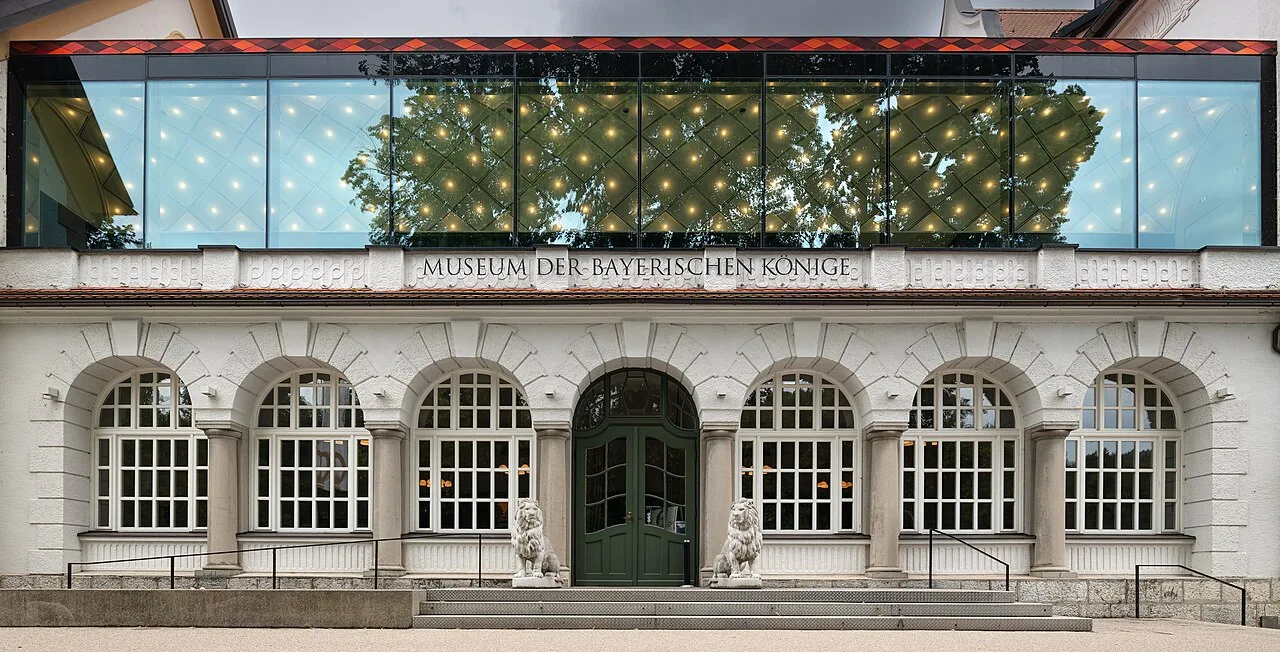
The castle discount is the point most visitors get wrong. The card reduces the price of admission where the organiser offers that arrangement; it does not remove the ticket cost, and the official sources used here do not publish Neuschwanstein or Hohenschwangau admission prices at all. Per-castle savings therefore cannot be calculated, and any figure claiming otherwise is not from the organiser.
The same discount model applies to the Forggenseeschifffahrt, where the card gives a reduction on both the short and the long lake cruise, to the Reptilienzoo Füssen, to the ABC-Bad Nesselwang, and to the Tegelbergbahn, Breitenbergbahn and Buchenbergbahn mountain railways. For a family weighing a lake cruise or a cable-car ride, a reduction on each ticket can add up, but the exact amount per attraction is not published on the card page.
Gästeprogramm tickets are also reduced with the card. The programme covers guided experiences around local history and outdoor activity, and if several of those appeal, the card becomes a modest multiplier on a part of the trip you were already planning to book.
One note of caution about the museums and galleries: the card page lists the Museum der Stadt Füssen and the Hohen Schloss galleries separately, and does not state that every collection in a complex shares a single ticket. Plan each visit as its own admission decision, and confirm at the desk which galleries are covered.
The Festspielhaus Saving Is Different
The Festspielhaus Neuschwanstein offers a percentage reduction rather than a flat one: the official page states that Füssen Card holders receive 20 percent off tickets for the theatre's own productions. The venue is described as having 1,300 seats and one of Europe's largest revolving stages, with a programme built around musicals.
This is a different kind of saving from a castle discount because it scales with ticket category. If you already intend to see an in-house production during your stay, the card is straightforwardly useful; if musicals are not on your list, ignore it entirely and judge the card on buses alone.
The One Published Card Price Example
The 4D Motion Cinema is the only place where the card page publishes both standard and card prices, which makes it a useful illustration of how the discounts work in practice. According to the listing on the card page, an individual ticket costs 17.00 euros, or 14.00 euros with the Füssen Card, and children aged seven to sixteen pay 14.00 euros, or 12.00 euros with the card.
The same listing gives a senior rate of 14.00 euros, or 12.00 euros with the card, and a family card for two adults and two children aged seven to sixteen at 59.00 euros, or 49.00 euros with the Füssen Card. The details are published with an errors-and-changes caveat, so treat them as retrieved values rather than fixed commitments and check at the counter.
Read as a pattern, this example shows what a card discount looks like: a few euros off per person, not a free experience. For a family of four the difference is real money across a trip, but it is measured in small increments, and the 4D film is one specific paid attraction rather than a template for free entry elsewhere.
A Decision Framework by Travel Style
Guests staying two or more nights without a car are the clearest winners. Multiple bus rides a day on the allgäumobil network, plus a reduced Gästeprogramm ticket here or a discounted lake cruise there, is exactly the pattern the card is built for, and the free bus travel does the heavy lifting.
Castle-focused visitors should temper their expectations. The card reduces admission at Neuschwanstein, Hohenschwangau and the Museum der bayerischen Könige, but since official sources do not publish those admission prices, the size of the saving is unknown until you see it applied. Buy your castle tickets through the official channel and present the card where the operator accepts it.
Guests who mainly drive and hike get the least from the card. Free buses you never board and reduced tickets for attractions you skip are worth nothing, and there is no published cash value or refund for unused benefits. For this trip style, sign the card because it comes with the room, but do not restructure your plans around it.
A three-day stay without a car that mixes buses, one castle, the lake and an evening at the Festspielhaus is the scenario where the card compounds most naturally. If you are sketching that kind of trip, a Füssen itinerary built around buses and lake days is a sensible starting point.
Mistakes to Avoid on the Ground
The most common error is assuming castle entry is free. Every castle, museum, boat, zoo and mountain railway the card touches is described by the organiser as a discount, so budget for admission and treat any reduction as a bonus rather than a plan.
The second error is logistical. Cards for accompanying travellers only become valid once names are completed, and the guest must sign the terms on the registration form, so do this at check-in rather than discovering the gap on a bus. Then carry the card: the official instructions require showing it on request at acceptance points, and leaving it in the room defeats the purpose.
Finally, do not assume coverage beyond the documented network. The official page describes free travel on the allgäumobil bus lines; it does not extend that promise to rail or to services outside the association, so verify any specific long-distance or cross-border leg with the transport operator.
Plan Your Visit
The Füssen Card rewards a specific kind of stay: several nights, no car, and a willingness to ride the local buses. In that scenario the free allgäumobil network is a genuine daily saving, and the stack of reduced tickets for boats, museums, mountain railways and theatre performances is a pleasant extra rather than the reason to get the card.
If you are weighing the card against individual spending on the castles, note that official sources do not publish Neuschwanstein or Hohenschwangau admission prices, so that comparison cannot be completed in advance. Start instead with the wider city guides for Füssen, then decide how much of your time will be spent on buses, and check eligibility with your host before arrival.
Frequently Asked Questions
Does the Füssen Card give free entry to Neuschwanstein or Hohenschwangau?
No. The official card page lists both castles as discount partners, using the German term for reduced admission, which is a different thing from free entry. The card lowers the ticket price where the organiser offers that arrangement, but you still pay for admission, and you must show the card at the acceptance point without being asked.
Can day visitors or people arriving only by bus get a Füssen Card?
The card is described as being issued during check-in at accommodation, one card per person for overnight guests, so it is tied to a registered stay with a participating host. The official page does not state whether day visitors or purely bus-based travellers can obtain one. Ask your accommodation in advance, and if it does not issue the card, contact the tourist information office for a definitive answer.
Is the Füssen Card worth it if you have a car and mostly hike?
Usually not in a decisive way. Free bus travel is the largest concrete benefit, and if you drive to trailheads you will rarely use it, while the remaining benefits are reductions on paid attractions you may not visit. The card typically arrives with your room at no separate charge, so sign it and carry it, but do not redesign your trip around it.
How much does the Füssen Card cost and where do you get it?
No official source consulted here states a purchase price or fee for the card, so treat any quoted figure as unverified. The card is not sold over a counter: it is handed to overnight guests by their host as part of the registration process at check-in, with a separate card for each travelling companion and a signature required on the terms.
Which buses can you ride free with the Füssen Card?
The card gives free use of the bus route network of the allgäumobil transport association, which the organiser describes as roughly 500 kilometres of lines. It does not follow from that description that rail services or routes outside the allgäumobil network are included. For a specific connection, confirm coverage with the transport operator before you travel.


