

Two days in Füssen works because the town is small while its headline sights sit just outside it. The Altstadt can be crossed in minutes, which frees a full day for Neuschwanstein and Hohenschwangau at neighbouring Schwangau, and a second day for water or mountains. The mistake to avoid is compressing both castles and a cable car into one morning.
One concrete planning detail: the official tourism site describes the Forggensee boat service as running between June and roughly mid-October, when two ships operate on Germany's largest reservoir. That single fact decides whether a cruise fits your dates or whether day two should lean on shoreline walking instead.
This guide treats day one as a booking and timing problem rather than a list of sights, because interiors at both castles are visited on guided tours with fixed slots. Day two then offers three shapes: a lake day, a Tegelberg day, or the Three Castles Trail from town.
How Füssen Is Laid Out and How to Get Around
Füssen sits in the far south of Bavaria against the Austrian border, with the Ammergau and Tannheim Alps behind it. Neuschwanstein and Hohenschwangau stand in the neighbouring municipality of Schwangau a few kilometres away, and the lakes cluster in the same direction. That geography is why the castle morning always involves a transfer out of town and back.
Overnight guests travel free on local buses in Füssen and the surrounding area with the guest card, according to the town's tourism authority. That detail reshapes both days, making the castle bus, the lake runs and the return from Schwangau a matter of timetables rather than taxi fares. Pick the card up at your accommodation and check the current network map at a Tourist Information office.
Arriving by train from Munich is straightforward in principle, but direct services are limited and connections vary by time of day, so treat any journey time you read as an estimate rather than a schedule. If you drive, expect peak-season congestion on the approach roads into Schwangau. Sleeping in Füssen the night before your castle morning removes most of that risk.
Day 1 Morning: Neuschwanstein and Hohenschwangau
Neither castle lets you wander its rooms independently. Interior access at both Neuschwanstein and Hohenschwangau is by guided tour only, so your morning is governed by the slot you hold rather than by when you arrive. Book through the official castle ticketing channels as early as your dates allow, because summer slots disappear first and buying on the day is a gamble.
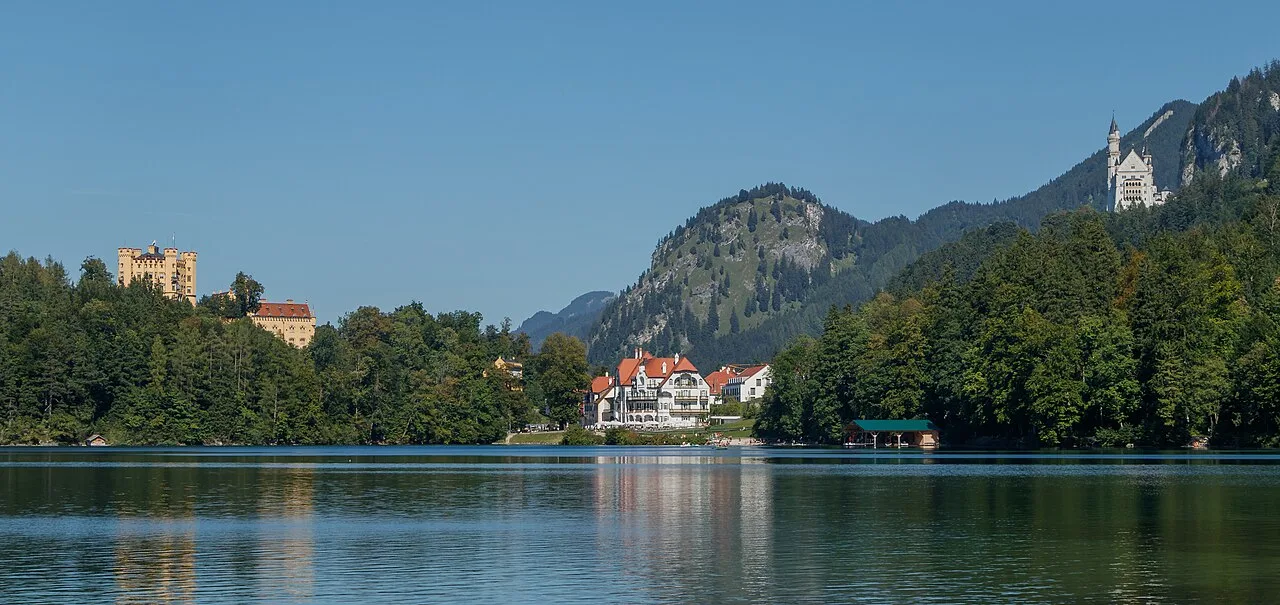
If you can only do one interior, decide what you want from it. Hohenschwangau, the childhood home of King Ludwig II, tends to be the quieter and more historically furnished of the two, while Neuschwanstein is the icon with heavier crowds and a stricter flow through its rooms. A combined ticket covering both is the usual way to see them in one day, but you must leave enough walking time between the two gates.
Photography is not permitted inside either castle during the guided tours, so plan to shoot exteriors, the valley and the Alpsee instead. Arriving well before your slot lets you walk the approach paths without rushing. If a booking page shows no availability, check back and check the official ticket office rather than assuming the day is closed.
Day 1 Midday: Marienbrücke, the Alpsee and a Fallback Plan
The Marienbrücke, the pedestrian bridge above the Pöllat gorge, is the classic viewpoint for a frontal look at Neuschwanstein. Access is not guaranteed: one traveller account describes finding the bridge closed on their visit day in spring, with no alternative platform of the same quality. Treat it as a bonus rather than the anchor of your morning and ask locally whether the path is open.
Alpsee, a short walk from the Hohenschwangau bus and car area, is the reliable alternative. The shoreline path is free to walk, needs no ticket, and works even when higher viewpoints are shut, and a loop of the lake makes a gentle hour or two between castle slots. Keeping the lake as your stated fallback means a closed bridge never becomes a wasted morning.
Build the midday gap deliberately. Guided tours are short, but walking between bus stop, ticket collection, castle gate and lake adds up, so give yourself a buffer instead of stacking two interiors back to back with a viewpoint in between. If timing tightens, drop the bridge and keep the lake.
Day 1 Evening: The Altstadt, the Lech and the Hohes Schloss
Back in town, the historic centre is small enough to cross in minutes, which makes it ideal for an unstructured evening. Colourful Bavarian facades, small shops and places to eat line the lanes, and the atmosphere changes once the day-trippers leave. This is the strongest argument for staying in Füssen rather than Schwangau, since the town becomes far quieter after roughly late afternoon.
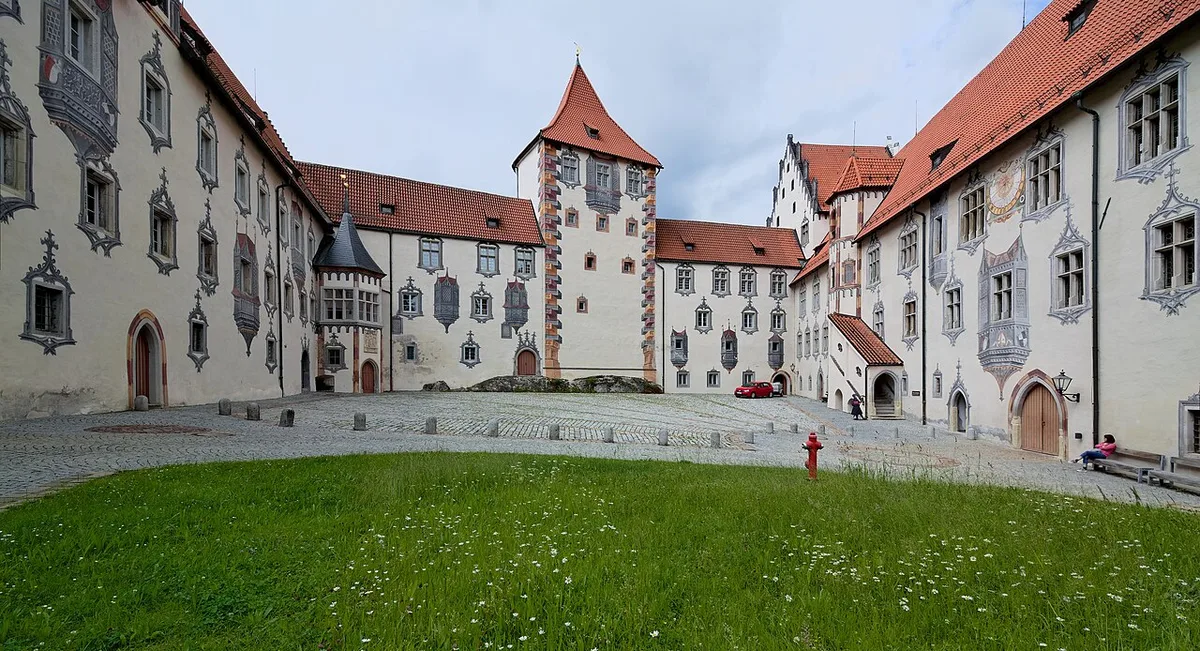
Walk the Lech riverside path, which runs from the bridge area toward the Altstadt and onward in the direction of the Lechfall. The water is a striking green against the wooded banks, and the path is paved and easy, so it suits an after-dinner stroll rather than a hike. Above the rooftops, the Hohes Schloss and the former Benedictine abbey of St. Mang form the skyline you will see from the river.
Save the Hohes Schloss for daylight, since the tower view over the town and the Alps is the point of climbing it. Note that the castle gallery and St. Mang's Abbey museum are separate ticketed collections rather than one combined entry, so check current admission and season at the ticket desk. In the evening, the exterior and courtyard are what you get, and that is enough.
Day 2 Option A: A Lake Day on the Alpsee, Forggensee and Hopfensee
The Füssen area holds several distinct lakes, and the tourism authority lists the Lech, Forggensee, Hopfensee, Weissensee and the Faulenbach lakes as separate destinations. That matters for planning: they are not one walkable circuit, so pick two rather than trying to tick off all of them. Alpsee pairs naturally with a castle morning, while Hopfensee and Weissensee sit in the other direction, toward the Hopfen am See and Weissensee districts.
The Forggensee carries a seasonal boat service between roughly June and mid-October, when two ships operate on it. Outside that window, assume no cruise and plan shoreline walking or cycling instead; the season is set by the operator, not by the calendar you prefer. Check sailing days and timetables directly with the operator before building a day around a crossing.
Hopfensee has a flat promenade with a wide mountain panorama, which makes it the low-effort option when legs are tired from the castle day. Weissensee, ringed by hills and meadows, is the better pick if you want a swim or a short wander. Whichever you choose, keep the guest-card bus in mind so the return leg does not depend on a taxi.
Day 2 Option B: Tegelberg by Cable Car or on Foot
The Tegelbergbahn lifts visitors up the mountain above Schwangau, and the top station is the start of ridge walks and a popular spot for watching paragliders. Operating times, fares and cabin arrangements change, and the tourism site runs a webcam from the Tegelberg summit station, so check conditions and service status on the day rather than trusting an old timetable. Mountain weather can hide the Alps entirely, as one spring visit found, making a cable car ride pointless.
If you prefer to earn the height, the Tegelberg circuit on foot is a long, serious day rather than a stroll. Reports put the loop at around 19 kilometres with roughly 1,100 metres of ascent, which is the hardest of the local walks and demands proper boots, water and a forecast check. Do not attempt it after a full castle day, and do not commit to it in uncertain weather.
A middle path works well for many visitors: ride up, walk a section of the ridge, and ride down. That gives you the alpine view without the full ascent, and leaves the afternoon free for the old town. Keep a lower-altitude plan in reserve, because cloud at Tegelberg height is common and independent of what it is doing in the valley.
Day 2 Option C: The Three Castles Trail from Town
The Three Castles Trail starts in Füssen, climbs to the Kalvarienberg for town views, drops to Schwansee lake and finishes at Hohenschwangau. Reports describe it as roughly six kilometres one way, rated easy to moderately challenging, which makes it a genuinely achievable day-two walk rather than a mountaineering commitment. It is the best option if you want scenery and exercise without a cable car or a long drive.
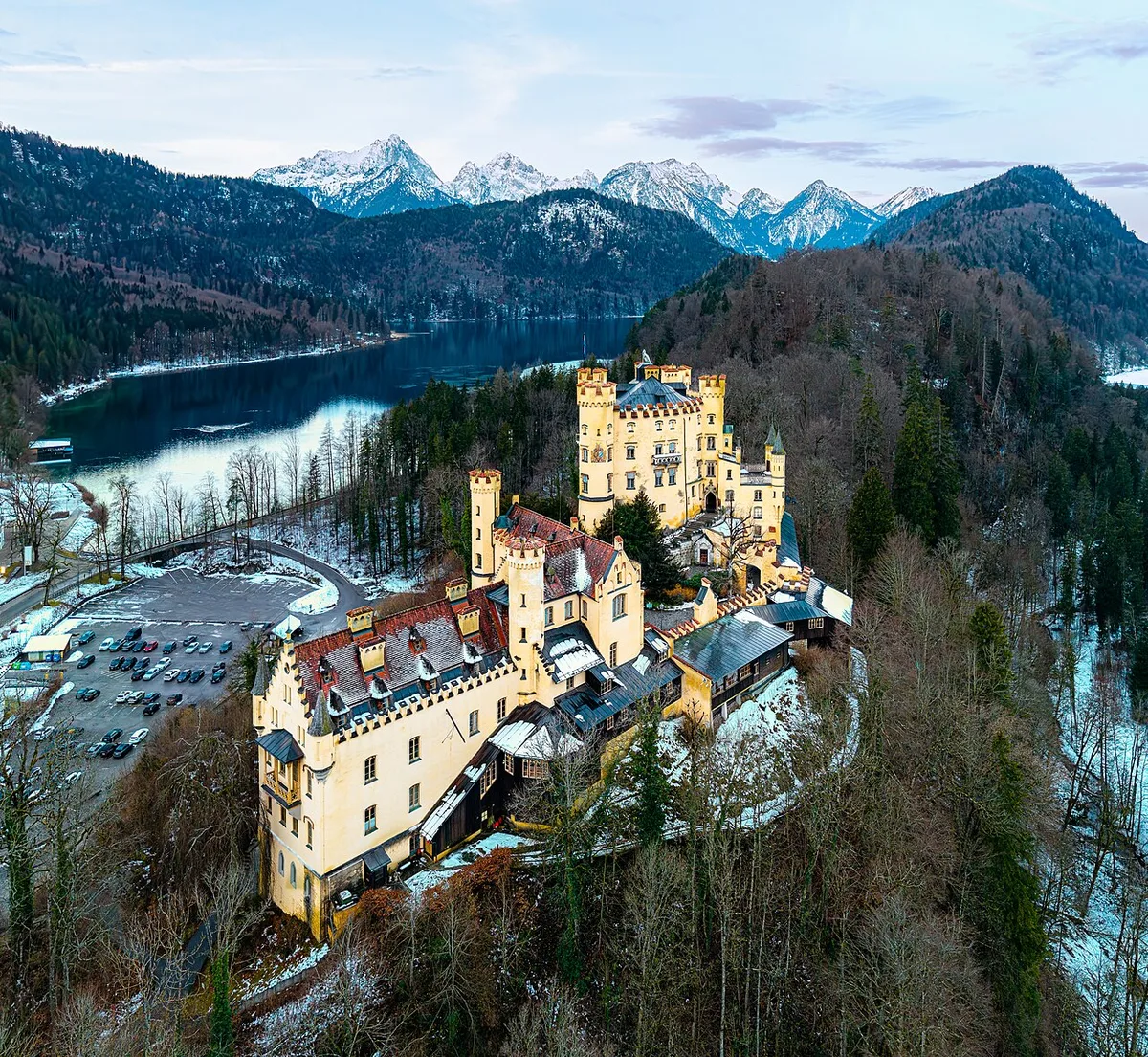
Because the trail ends at Hohenschwangau, you can plan the return by bus using the guest card, or walk back along the Alpsee shore. Start earlier than you think you need to, since the Kalvarienberg climb is front-loaded and the reward is a view back over the town's roofs. Take water and a layer; the lake section is shaded and cooler than the town.
Cyclists have an alternative, as the region around Füssen has an extensive signed network of walking and cycling routes linking the lakes and Schwangau. Renting a bike in town lets you cover more ground in a shorter day and keeps the effort adjustable. Confirm rental availability and route signage locally rather than relying on maps from previous seasons.
A Rainy or Low-Energy Day: Town Museums and the High Castle
When the mountains vanish into cloud, Füssen's own interiors take over. St. Mang's Abbey, founded in the ninth century by the Prince-Bishops of Augsburg, houses the Museum of Füssen, whose collection covers the town's history alongside historic lutes and violins tied to its instrument-making past. The abbey church itself is separate from the museum, so decide which you actually want before buying anything.
The Hohes Schloss is the other strong wet-weather stop, with a self-guided route through a fortress that was once the summer residence of the Prince-Bishops of Augsburg. Its interiors hold regional paintings and sculpture, and the carved ceiling in the Knight's Hall and the old Gate Tower view are the highlights. Opening seasons and admission change, and hours published by travel writers are observations from their own trips, not a current timetable, so verify before you go.
Note that the Hohes Schloss gallery and St. Mang's Abbey museum are separate ticketed collections rather than one joint entry, so budget and time them individually. Also check the tourism authority's outdoor warnings page before any hike, since closures and route notices are posted there as they arise. On a truly wet day, the town's museums plus the abbey church fill several hours comfortably.
Where to Stay and What an Overnight Changes
Staying in Füssen rather than Schwangau gives you the evening old town, the river walk and an easy departure the next morning, and there is accommodation across budget ranges, from hostels to mid-range hotels. Rooms in prime locations cost more, and the castle season fills the town, so booking ahead is the practical move. Staying in Schwangau shortens the castle approach but leaves you with a much quieter base after dark.
The single biggest benefit of an overnight stay is your castle morning. You can be at the ticket point and the approach paths before the coach arrivals build up, and you are not negotiating a long train or bus connection on the same day as a timed tour. If your only option is a day trip, take the earliest feasible arrival and treat one castle, not two, as the realistic target.
If your two days are part of a longer German trip, it is worth comparing this pace with a city break. Two days here are outdoor and spread out, whereas a 2 days in Dresden itinerary or a 2 days in Berlin itinerary is denser, walkable and far less weather-dependent, which is a useful reality check on how much you can honestly fit in.
Budgeting Two Days Without Guessing Prices
The cleanest way to think about cost here is to separate what is ticketed from what is free. The castle interiors, the Hohes Schloss gallery and the St. Mang's Abbey museum are all ticketed, and each has its own admission and season, so check the official pages for current figures rather than planning around numbers from old blog posts. Castle tickets in particular are sold through the operator's own system.
Free or near-free components are substantial: the Alpsee shoreline, the Lech riverside path, the old town streets, the Hohes Schloss courtyard and the castle exteriors and grounds all cost nothing to walk. Local bus travel is covered for overnight guests by the guest card, which removes a whole category of small spending. Expect extras to creep in through café stops, boat or cable car rides where they operate, and bike rental.
If you want a photography-led day, the free viewpoints are genuinely the product: the Hohes Schloss tower, the river path, the Alpsee shore and the castle exteriors. A dedicated round-up of the best photo spots in Füssen will help you sequence them by light rather than by map order, and it costs nothing extra to plan around them.
Getting Around and Extending the Trip
Within the Füssen area, the local bus network plus the guest card is the backbone of car-free movement, and the castles, lakes and trailheads are all served from town to some degree. Service patterns change seasonally, so pick up a current network map at a Tourist Information office on arrival and check evening return times before you leave for the day. Walking and cycling remain genuinely viable for the Schwangau side of town.
If two days leaves you wanting more, a third day opens up the wider region: Linderhof Palace, the Wieskirche and larger excursions become realistic. A 3 days in Füssen itinerary spreads the castles, lakes and a full mountain day across separate mornings instead of compressing them. You could also use a base here for day trips from Füssen into the Alps and the neighbouring Austrian side.
If your schedule only stretches to a single day, be realistic about scope: one castle interior, the lake shoreline and an evening in the old town is a full day, not a slow one. A one day in Füssen itinerary is the better fit for that shape of trip, and it will keep you from overbooking timed entries. The Füssen: Landmark Visitor Guides hub collects the individual attraction pages if you want to plan castle by castle.
Plan Your Visit
Two days in Füssen splits cleanly: a booking-driven castle day at Schwangau with the Alpsee as your safety net, then a second day chosen from lakes, the Tegelberg or the Three Castles Trail. Evenings belong to the old town, the Lech path and the Hohes Schloss skyline, which cost nothing and need no reservation.
Confirm the moving parts before you go: castle tour slots and interior rules through the official ticketing, Forggensee boat season with the operator, Tegelberg service and mountain weather on the day, and bridge or path closures locally. Assume nothing about Marienbrücke access and nothing about a seasonal boat running outside its summer window.
Book accommodation early, pick up the guest card at check-in, and keep one flexible slot in each day for weather or a missed connection. That flexibility is what makes a two-day Füssen trip feel unhurried rather than overstuffed.
Frequently Asked Questions
How much time do I need at Neuschwanstein Castle?
Interior access is by guided tour only, so the tour itself is short and the time around it is what fills your morning. Walking between the ticket point, the castle gate and the surrounding paths is the real variable, and the same applies at Hohenschwangau. Budget a generous half-day for one castle with the approach and the Alpsee shoreline, and a full day if you are touring both interiors with a gap in between.
Why can you not take pictures inside Neuschwanstein and Hohenschwangau?
Both castles restrict photography during the guided tours, so expect to leave the camera away while you are inside. The rule is enforced by the guides, and some interior collections elsewhere in the region have their own separate policies. Plan your images around the exteriors, the valley, the Alpsee and the viewpoints instead, and check the official castle guidance if photography is central to your visit.
Is Füssen worth visiting for two days, or is one day enough?
One day covers a single castle interior, the Alpsee shoreline and an evening in the old town, which is a full schedule rather than a relaxed one. Two days let you add a lake day, a Tegelberg visit or the Three Castles Trail without rushing the castle morning. If your dates are tight, prioritise one castle plus the town itself rather than trying to compress both castles and a mountain into a single day.
Should I stay in Füssen or Schwangau for a two-day trip?
Staying in Füssen gives you the old town, the Lech riverside and easier transport links in the evening, and it puts you in place for an early castle morning. Schwangau shortens the approach to the castles but leaves you with a quieter base after dark. Overnight guests in the area also benefit from free local bus travel with the guest card, which strengthens the case for staying in town.
What can you do in Füssen when it rains?
The Hohes Schloss and the Museum of Füssen inside St. Mang's Abbey are the obvious indoor stops, and they are separate ticketed collections rather than one combined entry. Check current opening seasons and admission with each site, since published hours from previous years may not still apply. Pair one museum with the abbey church and a long lunch, and keep the lake or mountain plan for a clearer day.
Can I do this itinerary without a car?
Yes, provided you work with the local bus network and check timetables on arrival. Overnight guests receive a guest card that covers local bus travel in Füssen and the surrounding area, which makes the castle, lake and trailhead runs straightforward. For the Forggensee, confirm the seasonal boat service and sailing days with the operator, as it only runs for part of the year.


