

Füssen's tourism authority states plainly that the town and its surroundings are well suited to visitors without their own car, because almost all regional sights can be reached by bus, train or bike, and overnight guests holding the Füssen Card or Königscard ride the 500 km allgäumobil bus network free of charge. That single benefit, explained on the Füssen mobility page, is the foundation of any car-free stay here.
This guide covers why the town works without a car, how the guest card actually functions, which allgäumobil lines serve which places, how to reach the castles, where seasonal services begin and end, how the Deutschlandticket applies, and how to plan rail connections properly. It deliberately avoids departure times and fares, because those change and belong on the operator's own timetable pages.
Why Füssen Works Well Without a Car
The historic centre is compact, with the Hohes Schloss, the former Benedictine monastery of St. Mang and the pedestrian core grouped closely together. The wider municipality spreads out into distinct districts: Bad Faulenbach, with its mineral and moor spa character and largely car-free valley, Hopfen am See on the Hopfensee, sometimes called the Allgäu Riviera, and Weißensee beside its own lake. Each has its own bus service rather than its own car park.
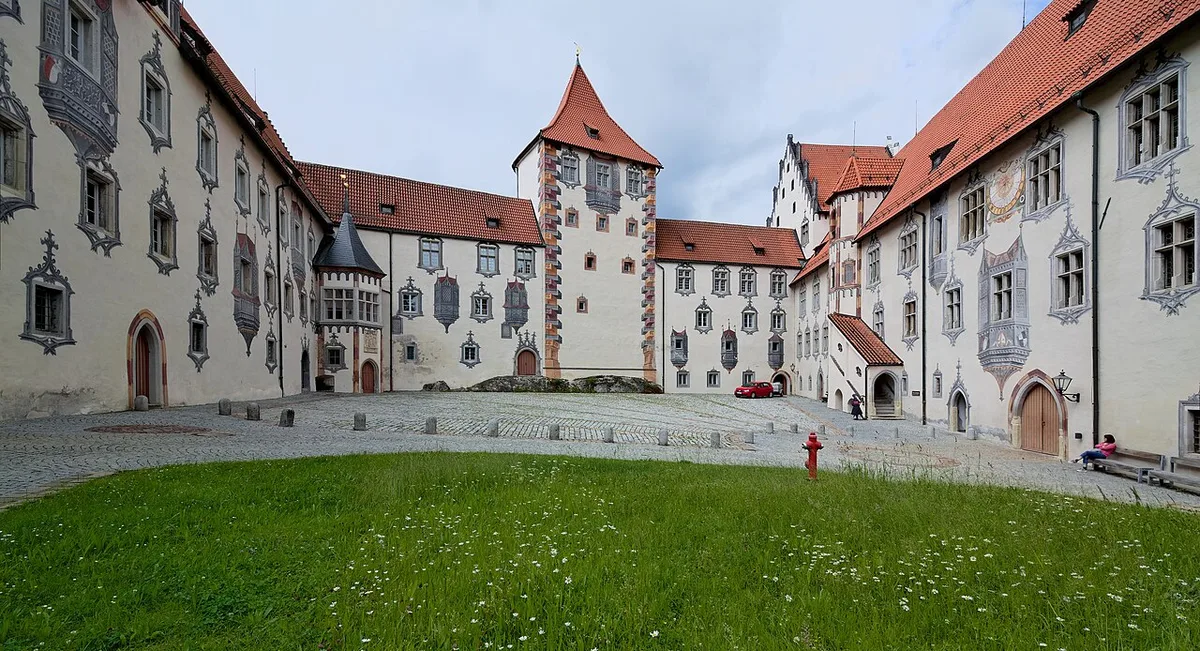
Füssen's mobility page frames the whole region as bus, bike and train territory. Buses let you hop from lake to lake or simply return after a long hike, which is the practical advantage over driving. Parking guidance signs direct drivers to numbered car parks around the centre, but for many day plans the bus is faster than searching for a space.
The one journey that is not a casual walk from the centre is the castle visit. Hohenschwangau village sits below the Königsschlösser, and line 78 is the direct bus from Füssen. If you want the site-specific detail on tickets, access and the climb, the Neuschwanstein Castle visitor guide covers that separately from this transport overview.
The Guest Card and What It Covers
Two cards are involved, and they are not identical. The Füssen Card is issued to guests staying with participating hosts in Füssen and its districts, while the Königscard is the broader Allgäu guest card from its own partner accommodation. Confirm at check-in which one your host provides and what extras come with it, because they are not interchangeable for every benefit.
According to the Füssen mobility page, free travel with the guest card applies to allgäumobil buses in and between Füssen, including Hopfen am See and Weißensee, plus Hopferau, Eisenberg, Nesselwang, Pfronten, Oy-Mittelberg, Rieden am Forggensee, Roßhaupten, Rückholz, Schwangau, Seeg, Halblech and Lechbruck am See, and across the entire bus route network of Regionalverkehr Oberbayern, known as RVO. The same page notes this covers buses only, not trains, so a rail leg remains a separate purchase.
Because the card is tied to overnight stays, it changes the arithmetic of local transport: if your accommodation issues one, extra local bus tickets inside the covered municipalities are usually unnecessary. Our guide to whether the Füssen Card is worth it examines what overnight guests actually receive and where coverage ends.
Which allgäumobil Lines Matter
Seven lines do most of the visitor work, according to the Füssen mobility page. Line 56 connects Füssen, Hopfen and Pfronten, continuing toward Nesselwang and Kempten. Line 63 runs from Nesselwang to Kempten. Line 70 circulates around the Füssen area itself. Line 71 goes from Füssen via Pfronten and Nesselwang to Kempten. Line 72 runs via Lechbruck to Steingaden. Line 73 runs via Schwangau and Halblech to Steingaden. Line 78 runs from Füssen via Schwangau and Hohenschwangau to Tegelberg.
For a first visit, line 78 is usually the decisive one, because it connects the station area with Schwangau, Hohenschwangau, the Königsschlösser and the Tegelberg valley in a single route. Line 70 is worth checking if you are staying in one of the Füssen districts and want to reach the centre without walking. Our one day in Füssen itinerary shows how a bus-dependent day can be sequenced.
Do not assume every line has the same frequency, season or operating days. The Füssen tourism page links each line's official allgäumobil timetable and shows which company operates it. Treat the line number as the stable fact and the schedule as the thing to verify in the week you travel.
Getting to Hohenschwangau and the Königsschlösser
Line 78 is the direct bus between Füssen, Schwangau, Hohenschwangau and Tegelberg, exactly as listed on the Füssen mobility page. Hohenschwangau is the village at the foot of the castles, and from there the approaches to Neuschwanstein Castle and Hohenschwangau Castle are on foot or by the local shuttle services. Because it serves a major attraction, this is the busiest line in the area in peak season.
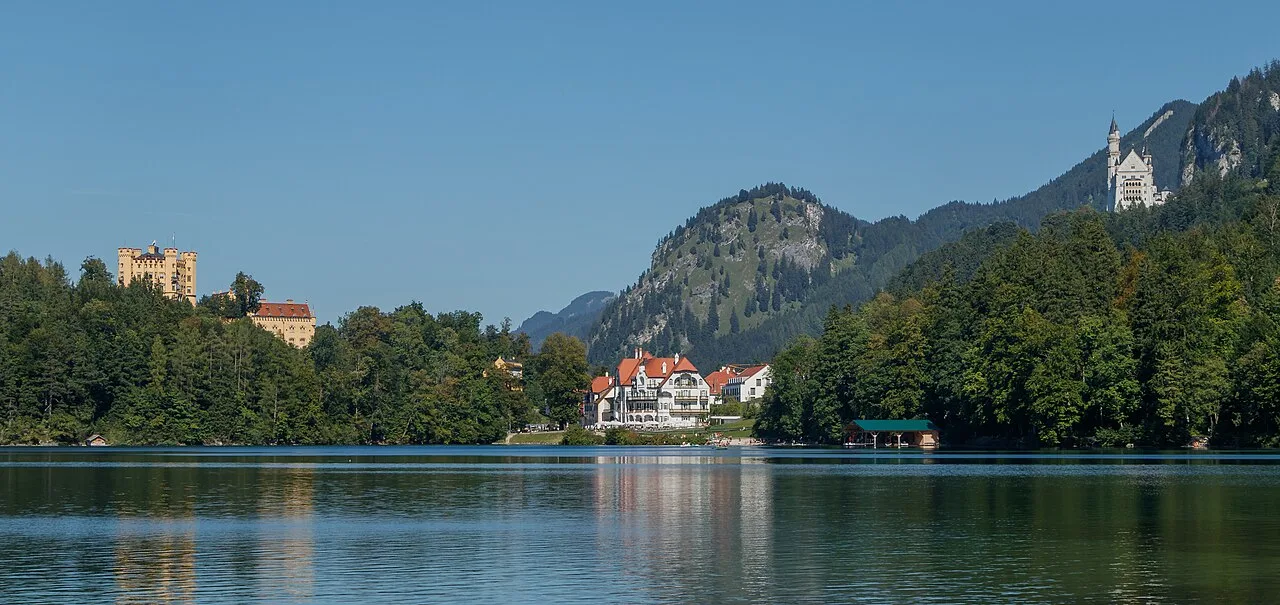
Late buses also run on line 78, but only in July and August, the Füssen mobility page states. Outside those two months, plan the return leg around the daytime timetable rather than assuming an evening bus. That seasonal restriction is one of the most common planning errors for visitors who book a late castle slot.
The route number is fixed; the schedule is not. Construction has affected the area, including the new central bus station works in Füssen that began on 14 September 2026 and a B17 closure through Schwangau with a first phase from 15 September until approximately 18 December 2026, both noted by Füssen Tourismus und Marketing. Check current notices before travelling, and treat the bus as the lower-risk option during roadworks.
Summer-Only Services and Seasonal Extras
Some services exist only in the warmer half of the year, and confusing them with year-round lines leads to stranded evenings. The Füssen mobility page records that the Ammergebirge ring bus, route 319, ran between Oberau and Reutte on Saturdays, Sundays and public holidays from 1 May 2026 through the May to September season, connecting hikers and cyclists with the Ammergau Alps and placing Linderhof Palace and Ettal within straightforward bus reach.
The late buses on lines 56 and 78 are the other summer-only element, restricted to July and August according to the same page. They serve evening excursions, useful if you want dinner in Schwangau or a later return from Hohenschwangau. Never build an out-of-season plan around them, and do not read them as a general night service for the region.
The Münchener BergBus is a separate seasonal option. Füssen's mobility page states that from June 2026 two weekend routes were expected, one being the 996 line toward Pfronten and the Wieskirche. The service is integrated into the Munich MVV fare system, the Deutschlandticket is valid on both routes, and seat reservation is recommended because capacity is limited. Check the current season before relying on it.
Where the Deutschlandticket Stops Applying
The nationwide Deutschlandticket does not cover every bus in this border region. Füssen's tourism authority states that, for legal reasons, the Deutschlandticket is not valid on the cross-border services of the Tälerbus. That route ran between Pfronten and the Tannheimer Tal from 24 May to 26 October 2026, with free carriage for Königscard holders and guests of the Grän and Breitenberg mountain railways on the day of transport.
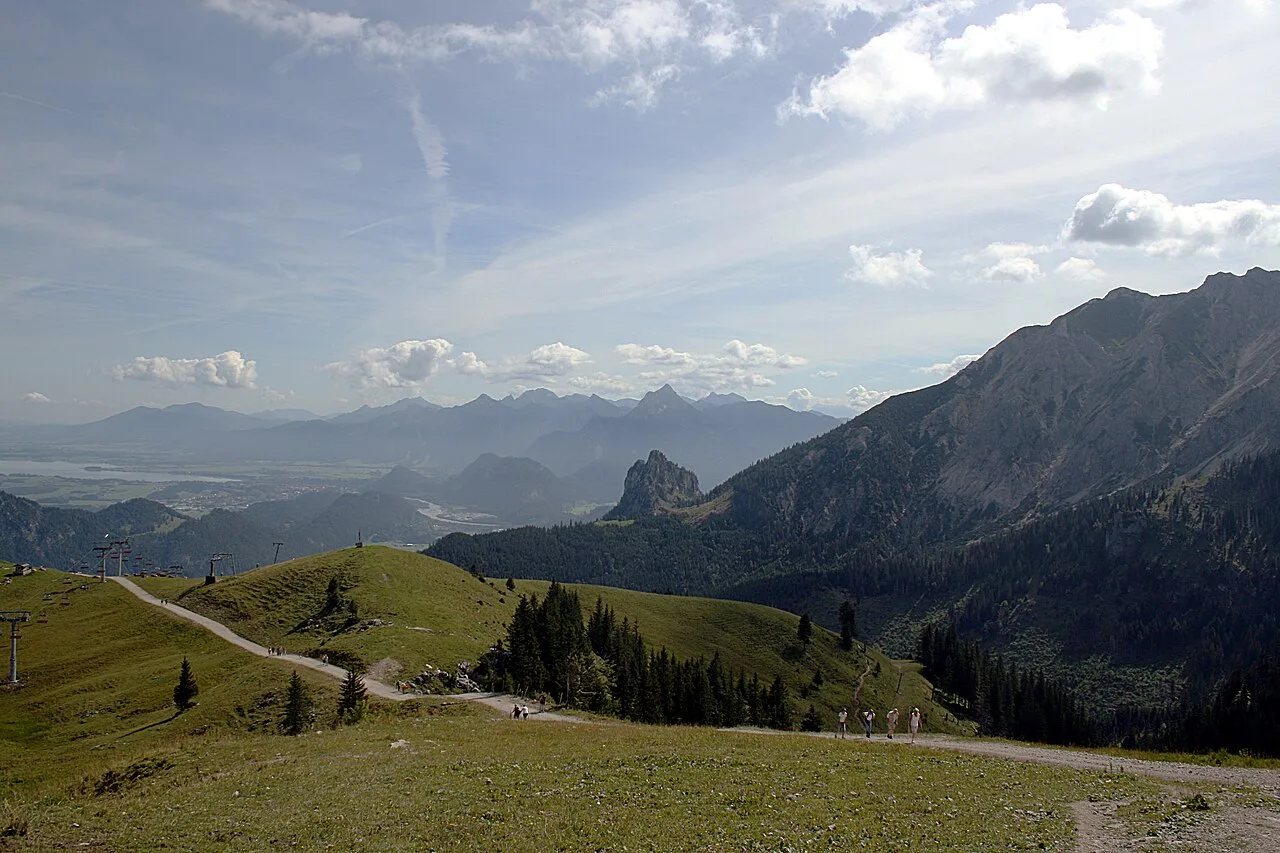
For everyone else on the Tälerbus, the fare rules of the Tirol transport association, the VVT, apply, so it is not a fare-free extension of a German ticket. Bicycles, but not e-bikes, may be carried free on the rear rack subject to availability. The service does not connect Pfronten-Ried and Pfronten-Steinach stations.
The Münchener BergBus routes are the contrast: they run as scheduled services under the MVV umbrella, and the Deutschlandticket is valid. The practical lesson is to check validity route by route rather than assuming nationwide coverage. Where a route crosses into Austria, assume the German ticket does not apply until the operator says otherwise.
Planning Trains with Deutsche Bahn
Füssen has a railway station, and rail planning is best done directly through Deutsche Bahn's journey planner at bahn.de. That is the correct tool for connections, ticket types and construction alerts, because it reflects the live timetable rather than a static page. Do not rely on third-party summaries for departures or platform changes.
Two points sit outside the timetable itself. First, the guest card's free travel covers buses, not trains, so any rail leg is a separate cost per the Füssen mobility page. Second, regional offers advertised through bahn.de change periodically, so compare them against your actual itinerary rather than buying on assumption.
For a multi-day stay, the 3 days in Füssen itinerary helps space castle, lake and mountain days so each one fits a realistic bus and train rhythm rather than packing the same valley twice.
Bikes, Taxis and Shared Cabs
Cycling is a genuine alternative in this river valley, and the region maintains an extensive bike path network. Bicycles, but not e-bikes, can be carried free on the Tälerbus rear rack where space allows, which opens up one-way rides across the border. Rentals are widely available locally, and the Füssen tourism site lists bike rental among its mobility options.
For late evenings, missed connections or luggage-heavy days, taxis remain the fallback. Füssen's mobility page lists Taxicenter Füssen GbR serving Füssen and the surrounding area, and a call-and-collect shared cab scheme, known by its German abbreviation AST, supplements the fixed timetable on some routes. Treat these as contingency, not primary plan.
The trade-off is simple: buses and bikes cost little or nothing with a guest card, but taxis give certainty once a seasonal line has stopped for the day. If your itinerary includes a late event, budget for one or two taxi rides as insurance.
Accessibility, Bike Carriage and Space Realities
The buses are marked with wheelchair spaces in the timetable, which helps at the planning stage. However, Füssen's mobility page is explicit that this space, which can also be used for baby carriages, e-scooters or bicycles, cannot be reserved and that there is no guarantee only one user will occupy it at a time. Plan a fallback and allow extra time at busy periods.
Tourist information staff can help with timetable questions, and the page also lists the Service-Zentrum-Verkehr and Regionalverkehr Allgäu contacts. Use them for the specific question of which vehicle serves your route rather than assuming every departure is equally accessible.
The same caution applies to bikes: carriage is subject to availability and never guaranteed on any given departure. If a cycle is essential to your day, choose a route with frequent departures so a full rack does not end your plan.
Parking and Driving Context
If you do arrive by car, Füssen uses a numbered parking guidance system and several metered car parks around the centre. Füssen's mobility page lists daily flat rates, including the fairground car park at five euros per day for cars and the boat harbour car park also at five euros for cars. These figures are published by the tourism authority and should be re-checked before travelling, because operators can revise them.
Some municipal spaces in Füssen, Weißensee and Hopfen am See also accept payment through the Parkster smartphone app. Electrically powered vehicles marked under the German Electric Mobility Act are exempt from parking fees for the first three hours in specified car parks when using a parking disk, according to the tourism authority. Long-stay parking exists, but can be interrupted by events, so the same page advises confirming with the tourist information office or the city before leaving a car for an extended period.
Roadworks have also disrupted the area, including construction at the Füssen bus station that began on 14 September 2026 and a B17 closure through Schwangau from 15 September until approximately 18 December 2026. That is an argument for checking current notices before driving and for treating the bus as the lower-risk option during construction periods.
A Practical Planning Order
Start with your accommodation, because the guest card determines whether local buses are free for you. Confirm whether you receive the Füssen Card or the Königscard, and which municipalities your card covers. That step alone decides whether you need to budget for local bus fares at all.
Next, identify the line serving each place you want to visit, then open the official allgäumobil timetable for that line and check the operating days and season. Only after that should you fill in the gaps, such as a train leg planned on bahn.de or a taxi backup for a late finish. This order prevents buying tickets you do not need.
Finally, take one broader look at how your days fit together using the Füssen: Itineraries and City Travel Guides hub, and adjust the plan so you are not crossing the same valley twice in one day. A little sequencing saves more time than any single transport purchase.
Plan Your Visit
Füssen is one of the easier Alpine-edge towns to visit car-free, provided you confirm two things before you arrive: which guest card your accommodation issues, and which allgäumobil line serves each destination in your plan. The guest card turns the local bus network into a free resource for overnight guests, while line 78 handles the most popular single journey to Hohenschwangau and the Königsschlösser.
Everything volatile, from timetables to seasonal services to rail connections, is published by the transport operators themselves. Check allgäumobil for local timetables and bahn.de for rail, re-check parking fees with the city, and keep a taxi number for the evenings when the summer-only buses have stopped. With those checks done, the town works well on foot, bike and bus.
Frequently Asked Questions
How do I get from Füssen to Neuschwanstein Castle without a car?
Take allgäumobil bus line 78, which runs from Füssen via Schwangau to Hohenschwangau and on to Tegelberg, as listed on the Füssen mobility page. Hohenschwangau is the village below the castles, and the final approach is on foot or by the local shuttle services. The bus is free for overnight guests holding the Füssen Card or Königscard within the covered municipalities. Check the current line 78 timetable before travelling, because schedules and seasonal extras change.
Is the Deutschlandticket valid on Füssen buses?
It depends on the route. The Füssen mobility page states that the Deutschlandticket is valid on the Münchener BergBus routes, which run as scheduled services under the Munich MVV system. However, the same page states that the Deutschlandticket is not valid, for legal reasons, on the cross-border Tälerbus between Pfronten and the Tannheimer Tal. Always check validity for the specific line, especially on routes that cross into Austria.
Do I need a car in Füssen?
Most visitors do not. Füssen's tourism authority describes the region as well suited to visitors without their own car, because almost all regional sights can be reached by bus, train or bike, and overnight guests holding the Füssen Card or Königscard travel free on the listed allgäumobil network. A car becomes useful mainly for outlying trailheads or carrying equipment, and it brings parking costs plus construction-related delays in the town centre.


