GermanyPhoto: Llez, CC BY-SA 3.0. Resized and converted to WebP.
Füssen Transport and Bus Guide 2026
Füssen is compact and bus-friendly, and the guest card changes what local travel costs. This guide explains the allgäumobil lines that matter, how line 78 reaches Hohenschwangau and the Königsschlösser, which summer services run only part of the year, where the Deutschlandticket stops applying, and how to plan rail legs with Deutsche Bahn.
Photo: Fred Romero from Paris, France, CC BY 2.0. Resized and converted to WebP.
Day Trips from Augsburg by Train: 8 Rail-Friendly Towns
Augsburg Hauptbahnhof sits close to the old town, which makes it a practical base for short car-free days out. This guide groups eight surrounding destinations by the shape of day they suit, separates free grounds from paid interiors, and points you to the operator pages where you check live times and fares before you commit.
Photo: Flocci Nivis, CC BY 4.0. Resized and converted to WebP.
Day Trips from Passau: Danube, Bavaria and Austria Options
Passau sits where the Danube, Inn and Ilz meet, which makes it an unusually practical base for day trips. This guide sorts the options by travel mode and time budget, separates scenery from ticketed interiors, and shows where to verify schedules and fares before you commit.
Photo: Tiia Monto, CC BY-SA 4.0. Resized and converted to WebP.
Garmisch-Partenkirchen Transport: Buses, Cog Railway & Guest Card
Garmisch-Partenkirchen is manageable without a car once three things are clear: nearly all arrivals funnel through one main station, the cog railway and the Eibsee buses split the lake traffic between them but not on the same ticket rules, and the MVV guest card covers valley transport rather than mountain lifts or museums.
Photo: JoachimKohler-HB, CC BY-SA 4.0. Resized and converted to WebP.
2 Days in Konstanz: Old Town, Münster, Mainau and Reichenau
Two days in Konstanz split cleanly in two: the medieval Old Town, Münster and Rhine waterfront on day one, then a choice between Mainau's manicured gardens and Reichenau's UNESCO monastic landscape on day two. This plan stays walkable and transit-based, keeps free grounds separate from paid interiors, and points you to the operators for anything time-sensitive.
Photo: Gregorini Demetrio, CC BY-SA 3.0. Resized and converted to WebP.
Konstanz Train and Boat Transport Guide: Trains, Ferries and the Harbour
Konstanz suits car-free travel unusually well: the main train station, the harbour and the city bus terminal sit within a few minutes of each other. This guide explains arrival by rail, boat and ferry connections on Lake Constance, cross-border links to Switzerland, and the ticket decisions worth settling before you travel.
Photo: Ermell, CC BY-SA 4.0. Resized and converted to WebP.
Bamberg Day Trips by Train: Nuremberg, Coburg and Bad Staffelstein
Bamberg's station sits within walking distance of the old town, so the city works well as a base for car-free excursions. This guide compares three directions by train: Nuremberg for museums and urban density, Coburg for a compact town with palace views, and the Bad Staffelstein area for the Vierzehnheiligen and Kloster Banz monastery landscape, where local connections need checking.
Photo: Gerd Eichmann, CC BY 4.0. Resized and converted to WebP.
Baden-Baden Transport Guide: Trains, Buses and Car-Free Travel
Baden-Baden rewards travellers who arrive by train and stay on foot, but the rail station sits outside the centre, so the transfer matters. This guide covers the walkable core, when local buses earn their keep, taxi caveats, and how outlying sights and day trips fit into a car-free plan.
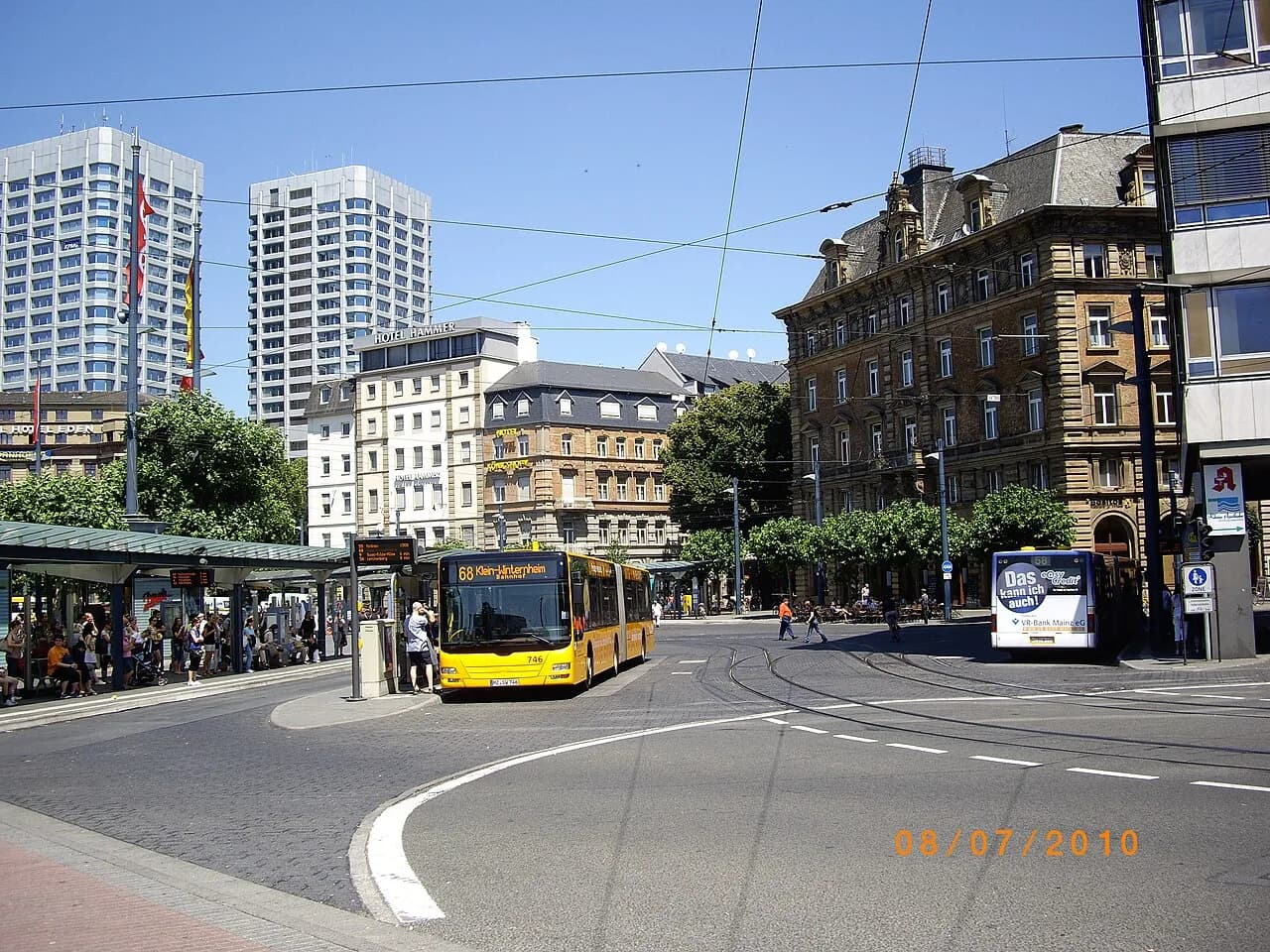
Photo: ekeidar, CC BY-SA 3.0. Resized and converted to WebP.
Day Trips from Mainz by Train: A 2026 Car-Free Guide
Mainz is a practical base for car-free exploring, with Rhine crossings, wine towns and big cities within the regional network. This guide sorts destinations by the hours you actually have, explains why regional and high-speed trains are different products, and shows where to verify times, tickets and disruptions before you travel.
Photo: High Contrast, CC BY 3.0 de. Resized and converted to WebP.
GermanyPhoto: Kritzolina, CC BY-SA 4.0. Resized and converted to WebP.
Getting Around Lübeck: Walking, Buses and Bike Tips
Lübeck rewards travellers who leave the car behind. The medieval Altstadt sits on an island between the Trave and the Wakenitz, and the main station is a short walk from the gates. This guide covers walking the Old Town, reading the bus network, cycling questions, and the trip out to Travemünde on the Baltic.