

Bamberg works well as a car-free base because the main station is within walking distance of the old town, so you can leave in the morning and return among the half-timbered streets by evening. The city itself is a UNESCO World Heritage site, and Bamberg Tourismus notes that the old town is compact, with the cathedral and the Hain park only minutes from most hotels. The three most natural rail directions are Nuremberg to the south, Coburg to the north, and the Bad Staffelstein area to the northeast, each suited to a different kind of day.
A traveller writing about Bamberg describes the station as roughly a 15-minute walk from the old town, which supports the idea that day trips here do not require a car. That compactness is why excursions work without sacrificing an evening of local sightseeing. Treat the station as your pivot point and the plan becomes simple.
Why Bamberg Works as a Car-Free Base
Bamberg is a compact World Heritage city, and its tourism office emphasises that the cathedral, the Hain park and the main streets are only minutes from most accommodation. The main station sits within walking distance of this core, so a day trip does not require a rental car at either end. Trains from that station reach destinations across the Franconian network, making Nuremberg, Coburg and the Bad Staffelstein corridor plausible without a vehicle.
Because the old town is small, a day trip does not cost you an evening in Bamberg. You can leave after breakfast, spend the middle of the day elsewhere, and still walk the Regnitz bridges or sit in a brewery taproom after dark. If you want a slower start before any excursion, a two-day framework lets you orient yourself first.
Comparing the Three Day-Trip Directions
The three directions are less ranked options than different experiences. Nuremberg offers urban density and large museums reached from a major station; Coburg offers a compact town with palace and fortress views; the Bad Staffelstein area leads to a rural monastery landscape that demands more planning. Choose by what kind of day you want, not by which name is most familiar.
A useful filter is travel-time tolerance and how late you want to return. Nuremberg suits a full day with many indoor options, while Coburg suits an earlier return and a quieter evening back in Bamberg. The monastery direction suits a clear-weather day and a traveller prepared for a two-stage journey.
Nuremberg: Big-City Museums and Urban Density
Nuremberg is the urban counterweight to Bamberg: a larger city where museums can fill a rainy day and there are still streets left over. The trade-off is that you exchange Bamberg's intimacy for scale, and much of the day goes into walking between sights and navigating a larger station.
Because verified timetable or fare data for the Bamberg to Nuremberg route is not part of the researched material here, check Deutsche Bahn for the current journey time, connection pattern and ticket options before committing. Enter Bamberg as origin and Nuremberg as destination, then compare the regional and flexible fare results returned for your date. Timetables are normally published in advance, so a check a day or two ahead is usually enough.
Coburg: A Compact Town with Palace and Veste Views
Coburg suits a shorter, calmer day: a compact town centre, palace interiors, and the fortified Veste rising above the streets. A half-day of focused walking plus a museum visit can feel complete rather than rushed. Because it is smaller, an earlier return leaves energy for Bamberg in the evening.
Before travelling, confirm the current Coburg connection and return options, since the sensible return time depends on what the operator actually runs that day. Build your day around a specific return train rather than assuming a late one, and keep the palace visit as the anchor of the afternoon. If interiors matter, check the palace administration's own pages for the season you are visiting.
Bad Staffelstein, Vierzehnheiligen and Kloster Banz
The northeastern direction leads toward Bad Staffelstein and the monastery landscape above it, where Vierzehnheiligen and Kloster Banz are the two landmarks usually combined. This is the least spontaneous of the three because the final approach may involve a local connection beyond the main rail line, which changes how the day is planned.
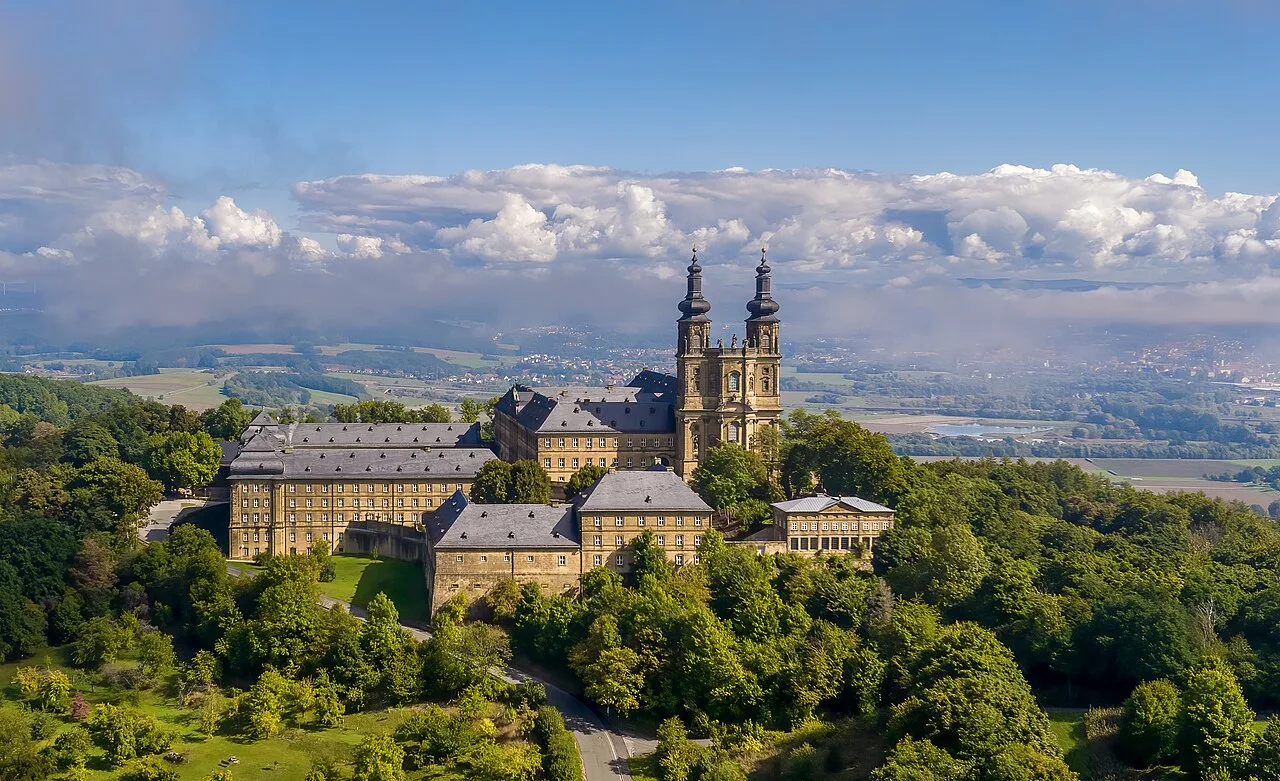
Treat the Bad Staffelstein region as a rail-plus-local-transport day: plan a main train to Bad Staffelstein, then verify separately how the basilica and the former monastery are reached, whether by local bus, taxi or on foot. The common planning mistake is assuming one train gets you to the church door, then losing an hour working out the last leg. Confirm the return connection before leaving the station area, because rural services thin out later in the day.
This is also the most weather-dependent of the three options, because much of the appeal lies in the walk, the terrace views and the surrounding countryside. On a clear day the light on the monastery hills is the reason to go; on a wet day, an urban museum direction is the better trade. Keep the monastery day flexible and move it to the best forecast of your stay.
Ticket and Timetable Checks Before You Go
Ticket rules for German regional travel change, and the material here does not confirm which fares, regional passes or nationwide subscription tickets apply to these specific routes. Rather than assume a pass covers your journey, look up the exact route on the operator's site and read what the ticket under consideration includes. Also check whether a city card sold in Bamberg has any transport component, because city cards and transport passes are separate products.
Buy before boarding where the fare structure rewards it, and keep a digital or printed confirmation available for inspection. If you are making several trips in a short stay, compare the price of individual tickets against a multi-day regional product for your exact dates. Any figure quoted in an older article should be treated as historical, not as a current price.
Reducing Risk When You Stay in Bamberg
Bamberg's own sights are strong enough that an excursion every day is unnecessary. If you would rather not gamble on connections, build one or two local days around the New Residence, the Rose Garden and the cathedral square, and keep a single day trip as the exception. On the Domberg, the Residence and museums sit close together, so a local day needs no transport planning.
If you miss a connection, the sensible fallback is to head back to the nearest larger station and re-plan from there rather than waiting on a rural platform after dark. Keep your return ticket flexible where the fare allows it, and note the last practical departure in advance. A calm evening in Bamberg is a better outcome than an improvised night elsewhere.
Free-time options in Bamberg itself include the riverside paths along the Regnitz, which work as a low-effort half day and pair naturally with the old town. Paid interiors should be checked separately, since a complex's gardens and a ticketed collection are rarely the same thing. That distinction is worth applying to any site you visit, in Bamberg or elsewhere.
A Simple Decision Framework
Start with the weather, then the clock. On a wet day, choose the urban direction with museums; on a clear day, choose the monastery landscape; if you want a short, contained day with a guaranteed early return, choose the compact town. This order prevents defaulting to the biggest name on a day when it does not fit.
Then check the operator for actual times and fares on your chosen date, because everything above depends on what runs that day. Write down your outbound and return trains, and treat the return as the fixed point around which the day is built. With those two anchors set, the rest of the plan is flexible.
Plan Your Visit
Bamberg's advantage as a base is that all three directions begin from a station you can walk to from the old town, so a day trip never requires a car or a hotel change. Pick your direction by weather and by how late you want to return, then verify the timetable and fare on the operator's site for your specific date. The monastery direction deserves the most caution because of its final local leg.
Whatever you choose, keep the return train as your fixed anchor and leave the rest of the day loose. That way a delayed connection costs an hour rather than an evening, and you still end up back among Bamberg's bridges and brewery taps.
Frequently Asked Questions
Which day trip from Bamberg by train is easiest for a first visit?
The easiest first trip is usually the one with the fewest connections and the most frequent service, which in practice tends to be the urban direction rather than the rural monastery landscape. Because actual frequencies vary by date and timetable period, check the operator's journey planner for your specific day before deciding. A route with a simple return and plenty of indoor options is the safest introduction.
Can I visit Vierzehnheiligen and Kloster Banz from Bamberg without a car?
Yes in principle, but this is the one direction where you should expect more than a single train ride. Plan a main rail journey to the Bad Staffelstein area, then verify separately how the basilica and the former monastery are reached that day, whether by local bus, taxi or on foot. Confirm the return connection before you start the last leg, because rural services thin out later in the day.
Should I buy a regional ticket or rely on a nationwide pass for these trips?
That depends entirely on which route you take, how many journeys you make and the conditions attached to each product, and the specifics change over time. Read what the ticket you are considering actually covers on the operator's site, and compare it against single fares for your exact dates. Do not assume a city card sold for Bamberg includes day-trip transport, since those are usually separate products.
What should I do if I miss a connection back to Bamberg?
Head to the nearest larger station and re-plan from there rather than waiting on a rural platform, and keep your ticket flexible where the fare allows it. Note the last practical departure in advance so you recognize the point of no return. A night in a larger town is workable, but it should be a fallback, not the plan.


