The Domberg is not a district you wander through so much as a plateau you arrive on, and everything worth seeing sits around one square. Bamberg Cathedral, the Alte Hofhaltung and the Neue Residenz face each other within a few steps, which is why the hill works as a short walk rather than a half-day expedition. For wider planning, see Bamberg landmark visitor guides.
The catch is that the square looks like one attraction and behaves like several. The grounds and the Rose Garden are free, while the Historical Museum, the Neue Residenz state rooms and the Diözesanmuseum each run their own admission and their own hours. Assuming one ticket covers the hill is the mistake that catches most first-time visitors.
Why the Domberg Deserves Its Own Short Walk
Bamberg spreads across seven hills, and the Domberg is the one that held political and ecclesiastical power for centuries. Emperor Heinrich II made the Old Court the seat of the first Bamberg bishop in 1007, and the cathedral square has been the city's ceremonial centre ever since. That concentration of authority is exactly why the buildings sit shoulder to shoulder rather than scattered across town. For wider planning, see Bamberg city travel guides.
A city-wide itinerary will typically give the Domberg twenty minutes and move on, which is enough for a photograph and not much else. Giving the hill its own slot lets you decide whether you want the view, the museum collections or the palace interiors, rather than defaulting to whichever queue is shortest.
If you have more time in the city, a two days in Bamberg itinerary can absorb the Domberg on one morning and leave the riverfront and brewing side for the rest. The point is sequencing, not squeezing everything into one pass.
The Climb: Arriving on the Hill
The Domberg rises directly above the old town, and the walk up from the shopping streets is short but noticeably uphill on cobbles. Because the plateau is compact, you cover very little distance once you are up there, so the climb is the main physical effort of the whole outing.
Bus line 910 is the documented alternative for reaching the hill, and it stops at Domplatz, directly at the square. The Museen der Stadt Bamberg lists bus line 910 stopping at the Domplatz stop for the Historical Museum, which confirms the square is directly served.
The practical version that suits most visitors is a one-way arrangement: walk up through the old town while you are fresh, then ride the bus back down when legs and light are fading.
Start at the Cathedral: The Hinge of the Ensemble
The cathedral anchors the square both physically and visually, with its four towers visible from much of the old town below. Use it as your orientation point: the Alte Hofhaltung sits on one side, the Neue Residenz on the other, and the Diözesanmuseum is a few steps away at Domplatz 5.
This guide deliberately treats the cathedral as exterior context rather than an admission guide, because stable published detail on entry arrangements is thin. Rather than repeat a number that may be out of date, check the cathedral's own information before you travel.
Start here anyway, even if you only look from the square. Standing in front of the main portal gives you the full sweep of the ensemble in one view, and that view tells you immediately which buildings you want to enter.
Alte Hofhaltung and the Historical Museum
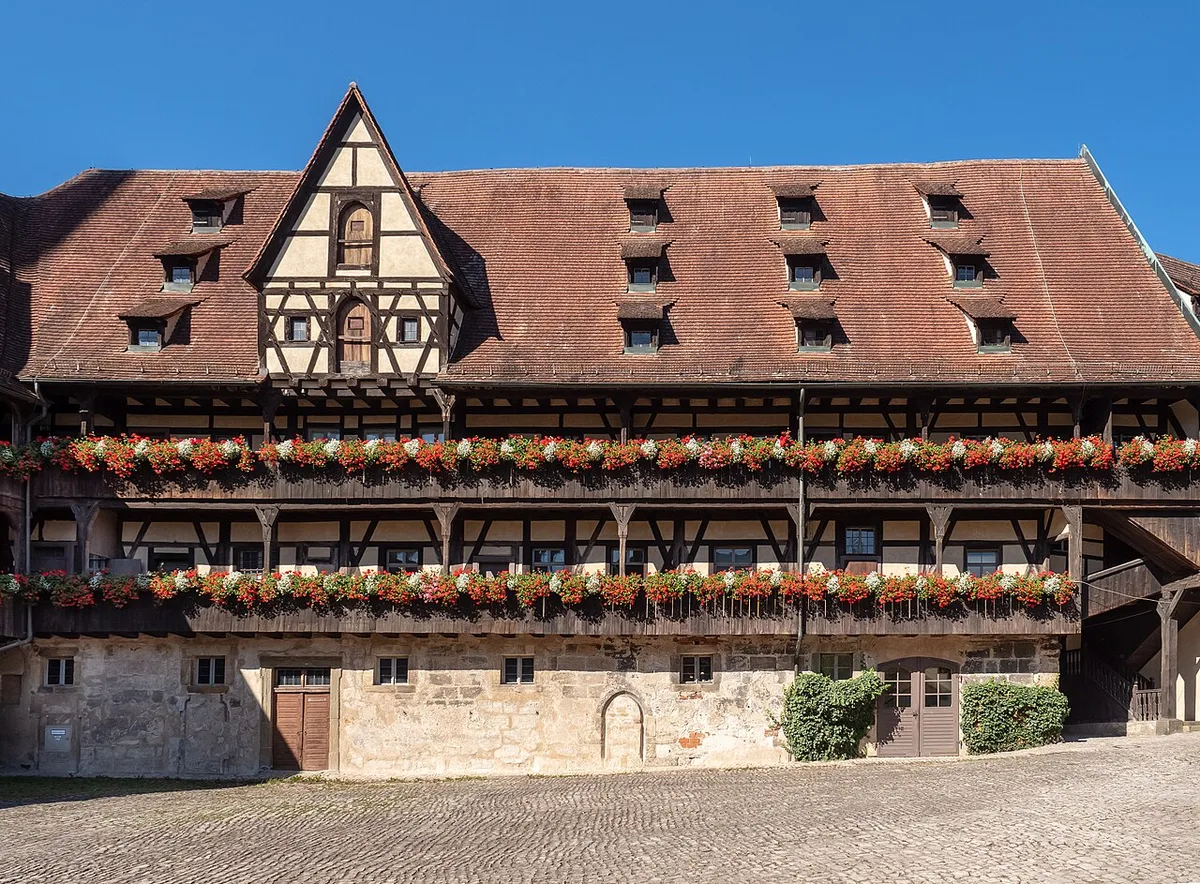
The Alte Hofhaltung is the half-timbered complex on the cathedral square, begun in the 15th century and later extended in Renaissance style. Its courtyard is one of the most photographed spots on the hill, and the arcades connect quickly to the neighbouring sights. The Historical Museum of the city of Bamberg is housed inside it.
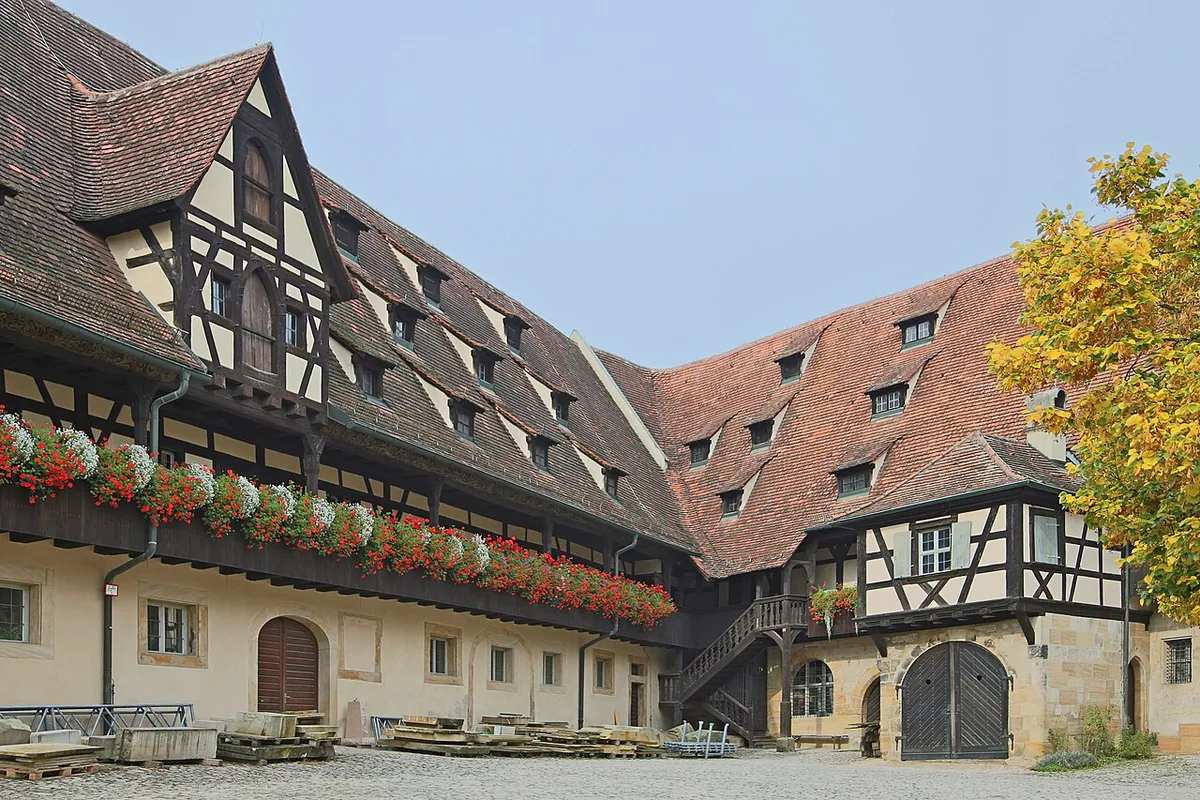
This is a city and regional history museum rather than a treasure house, spanning themes from early settlement to modern times and setting Bamberg within wider Franconian and European narratives. Its address is Domplatz 7, and the Museen der Stadt Bamberg publishes opening hours of Tuesday to Sunday and public holidays, 11am to 5pm, with adult admission at 8 euros as of 2026. Reduced rates apply for groups, seniors, students and visitors with severe disabilities, and under-18s enter free.
Because the museum occupies a historic building, the architecture and the collection are part of the same experience, and the arcades and courtyard carry you straight back out onto the square when you finish. Do not assume this ticket covers anything else on the hill, because it does not.
Neue Residenz: The Prince-Bishops' Palace
Across the square, the Neue Residenz shows the other face of the same power: the prince-bishops who were both church leaders and secular rulers until 1802. The Baroque wings facing the cathedral were built from 1697 to 1703 under Prince-Bishop Lothar Franz von Schönborn. The Imperial Hall on the second floor, decorated with portraits of emperors and allegories of the four world empires, is the interior highlight.
The Bavarian Palace Administration publishes 2026 admission of 7 euros regular and 6 euros reduced, with under-18s free, and a combination ticket with Seehof Palace at 10 euros regular. Opening hours run April to September 9am to 6pm and October to March 10am to 4pm, daily, with closures on 1 January, Shrove Tuesday and 24, 25 and 31 December. Tickets are sold only at the on-site cash desk. Visitor details: Bavarian Palace Administration | Palaces | Bamberg New Residence.
The visiting pattern matters for pacing: the Prince-Bishop's Apartment is shown by guided tour, while the other state rooms can be seen independently. The palace administration also notes that the Elector's Apartment and the Old German section of the State Gallery are closed until further notice for renovation, while the remaining state rooms are open without restriction.
The Rose Garden: The Free Part of the Visit
The Rose Garden behind the Neue Residenz is the clearest free-versus-paid distinction on the hill: the Bavarian Palace Administration states that admission to the garden itself is free, separate from the palace interiors. It also holds the best view back over the city, looking down across the rooftops towards St. Michael's Monastery on its own hill opposite. A café sits within the garden.
Even if you skip every interior, the garden justifies the climb on its own. It is also the natural pause point in the sequence, since it sits at the far side of the square from where you arrive.
Diözesanmuseum: A Separate Decision
The Diözesanmuseum at Domplatz 5 grew out of the cathedral's old treasury and holds the cathedral treasure, including the medieval imperial cloaks associated with Emperor Henry II and his wife Kunigunde. It occupies rooms of the chapter house built by Balthasar Neumann in 1733, with the cloister used to display sculpture from the cathedral's portals.
Treat it as a separate ticketed decision rather than an extension of the Historical Museum, because the two are run by different organisations and there is no shared ticket. The museum's own site lists its opening hours, so check the operator's own opening times page on the day you plan to go. Admission is also something to confirm directly, as no current price is published in the sources checked here.
A Suggested Order and a Suggested Duration
The following two to three hours is a suggested duration, not an official visiting time, and it assumes one paid interior rather than all three. Start at the cathedral square for orientation, look into the Alte Hofhaltung courtyard, then choose either the Historical Museum or the Diözesanmuseum depending on whether city history or cathedral treasure appeals more. Finish with the Neue Residenz state rooms and the Rose Garden.
That order has a practical logic: the free spaces come first so you can gauge your energy and the weather, and the timed or ticketed interiors come later. If you want the full circuit rather than a short walk, a Bamberg old town walk can help you decide what else fits around it.
For rough planning, allow around 45 to 60 minutes for the Historical Museum if you read labels, and rather less if you skim. The Neue Residenz takes longer than its footprint suggests because of the guided apartment tour and the separate gallery rooms.
Tickets and Money Decisions
The single most useful rule for the Domberg is that nothing here behaves like a combined site pass. The Historical Museum, the Neue Residenz state rooms and the Diözesanmuseum each have their own admission arrangements, and the free areas are the square itself and the Rose Garden.
Note also that admission to the Rose Garden is free and separate from the palace, so a garden-only visit is genuinely possible without paying anything. On the palace side, the 2026 rate is 7 euros regular and 6 euros reduced, with children under 18 free, and tickets available only at the cash desk on site. Further visitor details appear in Bavarian Palace Administration | New Residence in Bamberg | Tourist information | Admission charges.
Whether the Neue Residenz and the Alte Hofhaltung ever share one ticket is not established by the official pages, so plan on paying separately. The city's BambergCard is listed by the Museen der Stadt Bamberg as giving free entry to the Historical Museum.
When to Go and What to Verify
The palace runs on a seasonal pattern, opening 9am to 6pm from April to September and 10am to 4pm from October to March, which means a late autumn visit has a noticeably shorter window. The Historical Museum keeps a consistent Tuesday to Sunday and public holiday pattern of 11am to 5pm.
Restoration is a live variable on this hill: the palace administration reports that parts of the Neue Residenz and its State Gallery are closed until further notice, and the Diözesanmuseum publishes occasional deviations from its standard hours. Build in a fallback and confirm the day before.
A useful routine is to check the palace administration's page, the city museums' page and the Diözesanmuseum's own site the day before, then decide which single paid interior you actually want. Bamberg's tourism site also lists current exhibitions and events across the city.
Domberg or Michaelsberg?
Bamberg's other famous hill, Michaelsberg, is a separate site with its own access arrangements, and visitors sometimes assume the two are interchangeable. They are not: St. Michael's Monastery Church is open only Friday to Sunday and on public holidays, 11am to 4pm, with renovation work continuing. Its gardens, monastery courtyard and observation deck remain accessible at all times.
Bus line 910 serves both areas but at different stops, which is a common source of confusion when planning a two-hill day. If you want both, put the Domberg first while you have energy for the cobbles and treat Michaelsberg as the slower second visit.
Plan Your Visit
A Domberg walk works best when you stop treating the square as one attraction. Decide before you climb whether you want the city history collection, the cathedral treasure or the prince-bishops' apartments, because each carries its own admission and its own hours. The square itself and the Rose Garden cost nothing.
Then check the three operator pages the day before: the Bavarian Palace Administration for the Neue Residenz, the Museen der Stadt Bamberg for the Historical Museum, and the Diözesanmuseum's own site. Note that palace tickets are sold only at the on-site cash desk.
Frequently Asked Questions
Is the Domberg walk in Bamberg free?
The square itself and the Rose Garden are free to walk through, and that alone justifies the climb for the view back over the city. The interiors are not: the Historical Museum, the Neue Residenz state rooms and the Diözesanmuseum each have their own admission and are run by different organisations.
How long does a Domberg walk take?
As a suggestion rather than an official figure, allow two to three hours if you visit one paid interior and the Rose Garden at an unhurried pace. The square to square walking itself is only a few minutes, so almost all of that time is spent inside buildings or resting at the viewpoint.
Do you need a ticket to enter Bamberg Cathedral?
Stable published detail on cathedral entry arrangements is not available in the sources checked for this guide, so it would be misleading to give a figure or an opening pattern here. Check the cathedral's own information before you travel, or ask at the Domplatz.
Is the Rose Garden free to visit?
Yes. The Bavarian Palace Administration states that admission to the Rose Garden is free, separate from the palace interiors, and it sits behind the Neue Residenz with the best view over the city. Note that the garden being free does not mean the palace next to it is.
Does one ticket cover the Neue Residenz and the Alte Hofhaltung?
No shared ticket is established by the official pages, so plan on paying separately. The Neue Residenz is run by the Bavarian Palace Administration and sells tickets only at the on-site cash desk, while the Historical Museum inside the Alte Hofhaltung is run by the Museen der Stadt Bamberg with its own admission.
Which museum should you choose if you only have time for one?
Choose the Historical Museum if you want the city's story, from early settlement through to modern times, told inside a half-timbered historic building on the square. Choose the Diözesanmuseum if medieval textiles, imperial cloaks and cathedral treasure appeal more than civic history.
How do you get up to the Domberg without walking?
Bus line 910 is documented as stopping at Domplatz, which puts you directly on the square, and the Museen der Stadt Bamberg confirms that stop for the Historical Museum. The same line also serves the Klinikum Michelsberg stop on a different hill, so check which stop you need before boarding.