

Most visitors arrive at the Würzburg Residence with the staircase and the Tiepolo ceiling fresco already on their list, and the Court Church (Hofkirche) tends to come as an afterthought. That is a mistake worth correcting, because it is a serious piece of religious art sitting right beside the main palace entrance rather than somewhere across town. The one thing to know before you plan around it: the Residence's own description states that the Court Chapel is entered separately from the southern front yard, so it works as a deliberate yes-or-no decision on the same visit rather than a room you simply pass through.
The short version for planning is that the Residence's official page does not say the church is included in the palace ticket. Admission figures published there for 2026 cover the Residence, and the opening hours listed there are published for the palace rather than the church. Treat the church's entry conditions as something to confirm face to face at the ticket desk on the day and you will not be caught out.
Why the Hofkirche Is a Separate Decision, Not a Footnote
A palace visit and a church visit follow different rhythms. The Residence route moves you through a sequence of state rooms with guided tours, while the church is a single sacred space that rewards a slower look at one decorative programme. If you plan the church as an extra room on the palace tour, you will rush it; if you plan it as a short standalone stop, it becomes one of the more memorable parts of the morning.
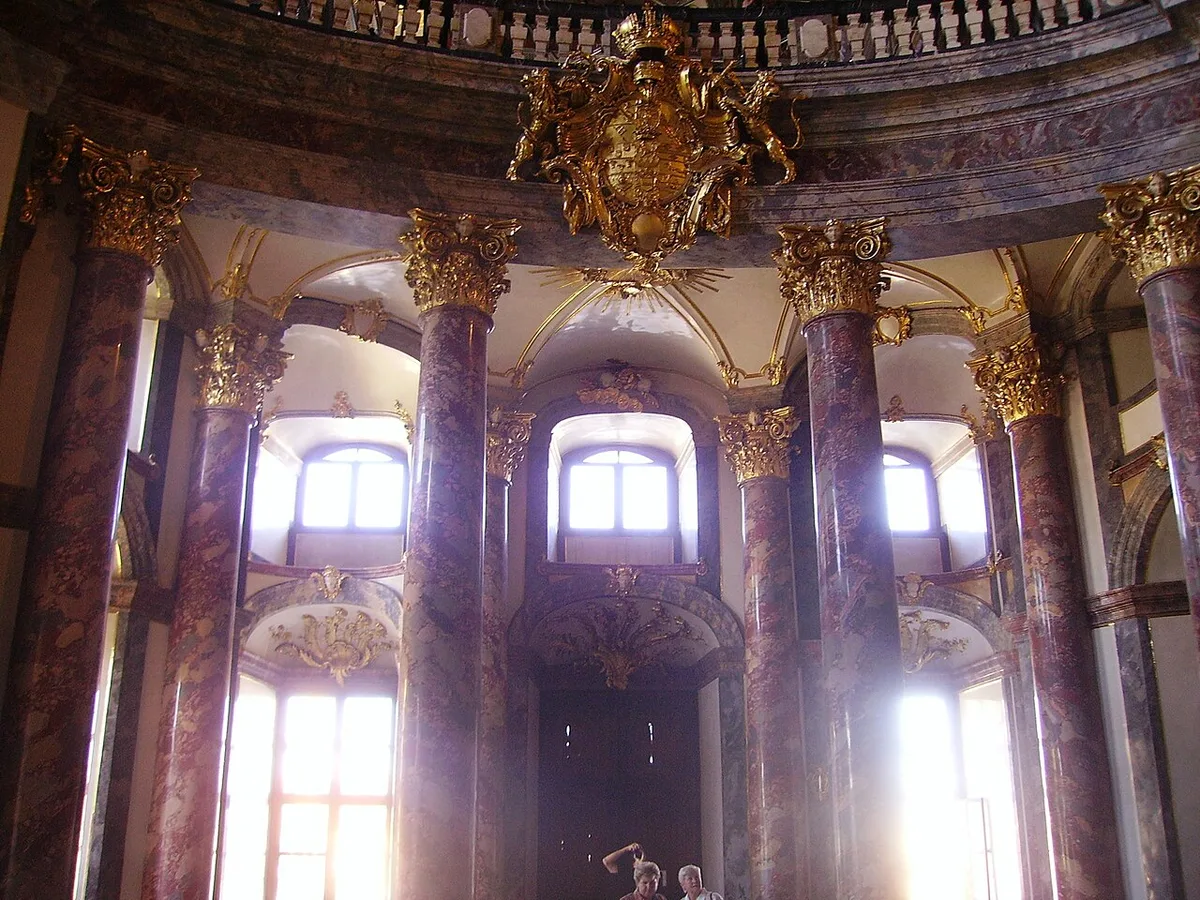
The practical consequence is that you should decide before you queue whether the church matters to you. If religious Baroque interiors are your priority, build the stop into your sequence and ask about access the moment you reach the desk. If your interests run to palace ceremonial rooms instead, a quick look at the exterior and a note to return another time is a perfectly reasonable choice. The wider Würzburg Residence visitor guide covers the state rooms if that is your focus.
Where the Church Sits in the Residenz Complex
The Residence occupies a large plot at Residenzplatz, and the Court Chapel is entered separately from the southern front yard, which places it on the forecourt side of the building rather than inside the ticketed room sequence. That single detail explains why the church behaves like its own venue even though it forms part of the same architectural complex.
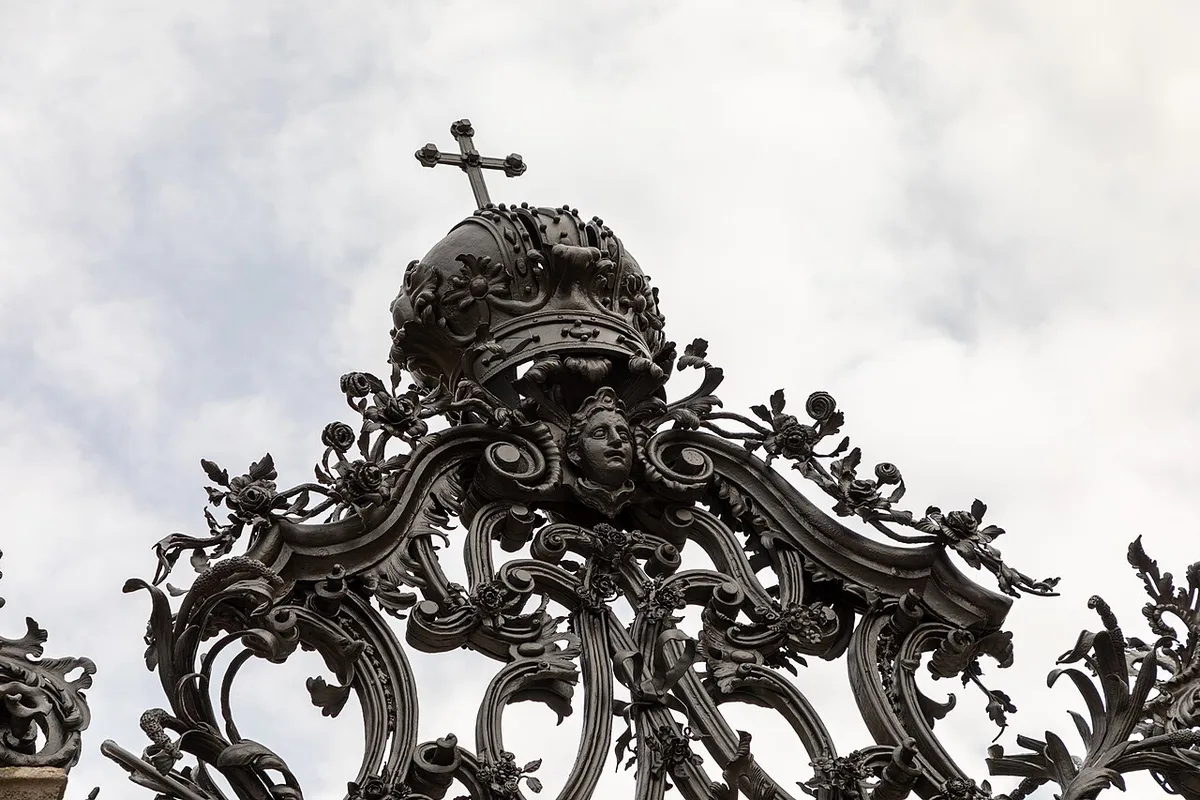
The building chronology records that the wrought-iron gates across the cour d'honneur, which had separated the inner area from the large Residence Square, were demolished in 1821, and that the Franconia Fountain now marks the spot, unveiled in 1894 as a tribute to Prince Regent Luitpold. Approaching from the city centre, that forecourt is the natural first orientation point, and the church entrance sits across the yard rather than at a separate address to hunt for.
The 1735-1743 Decorative Campaign and the 1743 Consecration
The official building chronology ties the church to the reign of Prince-Bishop Friedrich Carl von Schönborn, under whom work on the central building and the decoration of the court church proceeded from 1735 with Lucas von Hildebrandt taking part alongside Balthasar Neumann, and it records the consecration of the court church in 1743. That gives you a firm date bracket for the religious interior rather than a vague eighteenth-century label, and it shows the church running in parallel with the main staircase of 1737 and the vault over the staircase completed in 1743.
One useful nuance for visitors is that this decorative campaign is not the work of a single hand. Neumann's role as court architect and Hildebrandt's participation appear in the same entry in the official record, which is why the church reads as a collaborative religious scheme rather than a miniature version of the palace state rooms. If you enjoy comparing architect signatures, the church is the place in this complex to look for that shift in emphasis.
War Damage and the 1963 Reopening
The interior you see today is a restoration, not an untouched survival. The building chronology records that after the air raid of 16 March 1945 the Residence burnt out almost completely and only the central building with the vestibule, Garden Hall, staircase, White Hall and Imperial Hall survived besides the roofs, while much of the furnishing and large sections of wall panelling had been removed in time. Reconstruction began the same year, and the restored court church was reopened to the public in 1963.
That timeline matters for how you read the church decoratively. The rebuilding process as a whole only concluded in 1987 with the reopening of the Mirror Cabinet, so the church's 1963 reopening came well before the complex's reconstruction drew to a close. Knowing this changes the question you ask in the room: not whether everything is original, but which elements survived and which were faithfully recreated. The Court Garden guide covers the outdoor side of the complex if you want to extend the visit.
What to Look For in a Short Visit
The Residence's own description calls the Court Chapel one of the finest examples of religious art in Würzburg, which is the right frame for a brief stop. Read it as a devotional space with a courtly patron rather than a smaller version of the Imperial Hall, and give your attention to the overall decorative programme, the proportions of the room and the way the scheme serves worship. Descriptions of specific fixtures vary between sources, so note what you actually see rather than arriving with a checklist of named works.
Photography rules inside the church are not published on the pages a visitor can check in advance, so ask before you raise a camera; that is a one-question fix at the entrance. Weekday visits are generally quieter than weekends and holidays, which is a reasonable expectation rather than a documented church rule, so verify quiet periods on site.
Admission Reality Check: What the Residence Pages Do and Do Not Say
The Residence's tourist information lists 2026 admission fees of 10 euros regular and 9 euros reduced for the palace, notes that tickets are also available online in its ticket shop, and states that children under eighteen are admitted free of charge. Those figures are published for the Würzburg Residence; the same page does not state that the Court Church is included on that ticket. Do not assume the palace tariff carries over to the church, and do not assume the reverse either.
A dated third-party account has described the Court Chapel as free to enter, but that is one visitor's experience from an earlier trip, not a current rule, and it should not be treated as the price you will pay this season. The workable approach is to plan as if the church might need its own answer and settle it at the desk: ask whether palace tickets admit you here, whether a separate ticket applies, and whether any reduced rate exists. Bring the question with you rather than improvising at the door.
Free Grounds, Ticketed Interiors and the Church: Three Separate Categories
It helps to keep three things apart. The Court Garden is described by the palace administration as a walk that is a delight for both nature and art lovers, and it is a free outdoor space rather than a ticketed interior. The Residence state rooms are ticketed, with guided tours included in that arrangement and last entry forty-five minutes before the stated closing time. The Court Church sits in a third category: entered separately from the southern front yard rather than absorbed into either the garden or the room sequence.
Separating the categories prevents a common planning error, which is budgeting palace time for a church visit or treating the garden as a paid add-on. If you only have an hour, the garden plus the church forecourt is a self-contained, low-commitment loop; if you have half a day, add the Residence rooms and let the church border the visit. If the outdoor half appeals more, plan it properly with the Court Garden guide before you arrive.
Sequencing the Hofkirche Around Your Residence Tour
The palace page states that guided tours in German take place every full and half hour, with the last tour in the April to October window at 4.30 pm and in the November to March window at 3.30 pm, and English tours at 11 am and 3 pm. If you want both the palace tour and the church, book your place in the tour rhythm first, then slot the church on one side of it. Arriving for the 11 am English tour leaves a clean hour beforehand for the church and forecourt.
The same page lists the Residence as open daily from 9 am to 6 pm between April and October and 10 am to 4.30 pm between November and March, closed on 1 January, Shrove Tuesday, and 24, 25 and 31 December. Those are palace hours, not confirmed church hours, so treat them as the frame within which the church stop has to fit rather than as a schedule you can rely on for the chapel itself. In winter, the shorter day makes the church-before-tour sequence more sensible than the reverse.
How Much Time to Allow: A Suggestion, Not Official Guidance
For the church alone, a suggested twenty to thirty minutes is usually enough to see the space properly, look at the decorative programme and sit for a few quiet moments; this is a planning suggestion, not an official visit length. If you plan on photography, add a little buffer, and if a service or concert is in progress, your stop may be shorter or unavailable altogether. The Residence itself, by comparison, is commonly described by visitors as a two to three hour visit when you include the tour and gardens, which makes the church a modest addition rather than a competing half-day.
Access Caveats You Can Only Resolve on the Day
Church venues close for worship and for music, and the Court Chapel is a working Catholic church whose acoustics are associated with concert use, so a service, rehearsal or event can restrict entry on a day when the palace is open normally. No published schedule tells you in advance which afternoons are affected, so treat access as a same-day variable rather than a fixed item on your itinerary. If the church is your main reason for the trip, ask at the Residence desk first and be ready to return on another day.
Arrival itself is not the hard part. The palace administration documents a bus to Residenz, a bus to Mainfranken Theater, a tram to Dom, 300 car parking spaces with costs and 15 bus parking spaces nearby, so getting to the complex is well served whichever way you come. The uncertainty is inside the building. Build a fallback into the plan: if the church is shut, the free Court Garden and the exterior views of the palace keep the stop productive, so a closure costs you a detour rather than the afternoon.
Practical Planning Notes from the Official Visitor Information
The palace administration publishes an address at Residenzplatz, roughly 300 paid car parking spaces, free wi-fi on site, and notes that groups can reserve in advance by phone or email. General tariff rules including annual and 14-day season tickets are set out separately from standard admission. All of these are palace facilities; whether any of them extends to the church is unconfirmed, so use them for arrival planning only.
Two neighbouring venues sit within the same complex and are easy to confuse with the church: the Martin von Wagner Museum, reached via the south wing, and the Staatlicher Hofkeller. Both are separate from the Court Chapel, so check which door you are standing at before you queue. If you want the church plus one of these, plan them as distinct stops rather than a single admission.
What to Pair with the Hofkirche in Würzburg
The Residence sits within walking distance of the historic centre, so the church can anchor a compact morning that continues on foot. A river crossing at the Alte Mainbrücke and the pilgrimage church on the hill above the city both extend the religious thread without repeating what you have just seen. Walking between them is the simplest option, and the centre is compact enough that you rarely need more than one form of transport in a day.
If you want a second religious interior to compare with the Court Church, the Käppele makes a deliberate contrast because it was built as a pilgrimage destination rather than a court chapel. Pairing the two lets you see how Würzburg's sacred architecture shifts between courtly and devotional programmes. Set aside a separate slot for it rather than squeezing it into the Residence stop.
Plan Your Visit
The Court Church is worth treating as a decision rather than a box to tick: it has its own entrance from the southern front yard, a documented decorative campaign from 1735 with a 1743 consecration, and a restored interior reopened in 1963. Give it a suggested twenty to thirty minutes, and ask about tickets at the desk rather than assuming the palace tariff covers it.
Build flexibility into the day. Confirm admission, check whether a service or concert affects access, and keep the free Court Garden as your fallback if the church is closed. If you are planning the wider city around this stop, the Würzburg itineraries and city travel guides give you the surrounding structure.
Frequently Asked Questions
Is the Court Church included in the Würzburg Residence ticket?
The Residence's own description states that the Court Chapel is entered separately from the southern front yard, and it does not bundle the church into the palace ticket. Because the ticket scope is not spelled out for the church, ask at the Residence ticket desk whether your palace ticket admits you here or whether a separate arrangement applies.
Do you pay extra to enter the Hofkirche?
That is not settled by the official pages a visitor can read in advance. A dated third-party account described the chapel as free to enter, but that reflects one earlier visit rather than a current rule, so it should not be treated as the price you will pay now. Confirm the position with staff at the entrance before you plan around it.
How long should you spend in the Court Church?
A suggested twenty to thirty minutes is enough to see the space, study the decorative programme and sit quietly for a few moments. This is planning advice rather than official guidance. If a service or concert is taking place, your time inside may be shorter or entry may not be possible at all.
Why does the church have a separate entrance from the Residence?
The palace administration describes the Court Chapel as entered separately from the southern front yard. That separate door places it on the forecourt side of the building rather than within the ticketed sequence of state rooms, which is why it behaves like its own venue even though it forms part of the same architectural complex.
When was the Court Church decorated and consecrated?
The official building chronology records work on the central building and decoration of the court church from 1735, with Lucas von Hildebrandt participating alongside Balthasar Neumann, and it lists the consecration of the court church in 1743. The restored interior was reopened to the public in 1963 following wartime damage.
Can the church be closed for concerts or services?
It can. The chapel is a Catholic church, and its acoustics are associated with concert use, so a service, rehearsal or event may restrict entry on a day when the palace is otherwise open. No advance schedule of those interruptions is published for visitors, so treat access as something to check on the day.
What are the current opening hours for the Court Church?
Exact church hours are not published on the pages a visitor can check in advance, and hours you will find quoted, such as the Residence's April to October and November to March windows with last entry forty-five minutes before closing, apply to the palace rather than the chapel. Ask at the Residence for the church's hours on your visiting day.
Is the Court Garden free if I skip the palace interiors?
Yes. The Court Garden is described by the palace administration as a free walk that appeals to both nature and art lovers, and it is kept separate from the ticketed state rooms. That makes it a sensible fallback if the church is closed or if you decide to skip the paid interiors entirely.


