
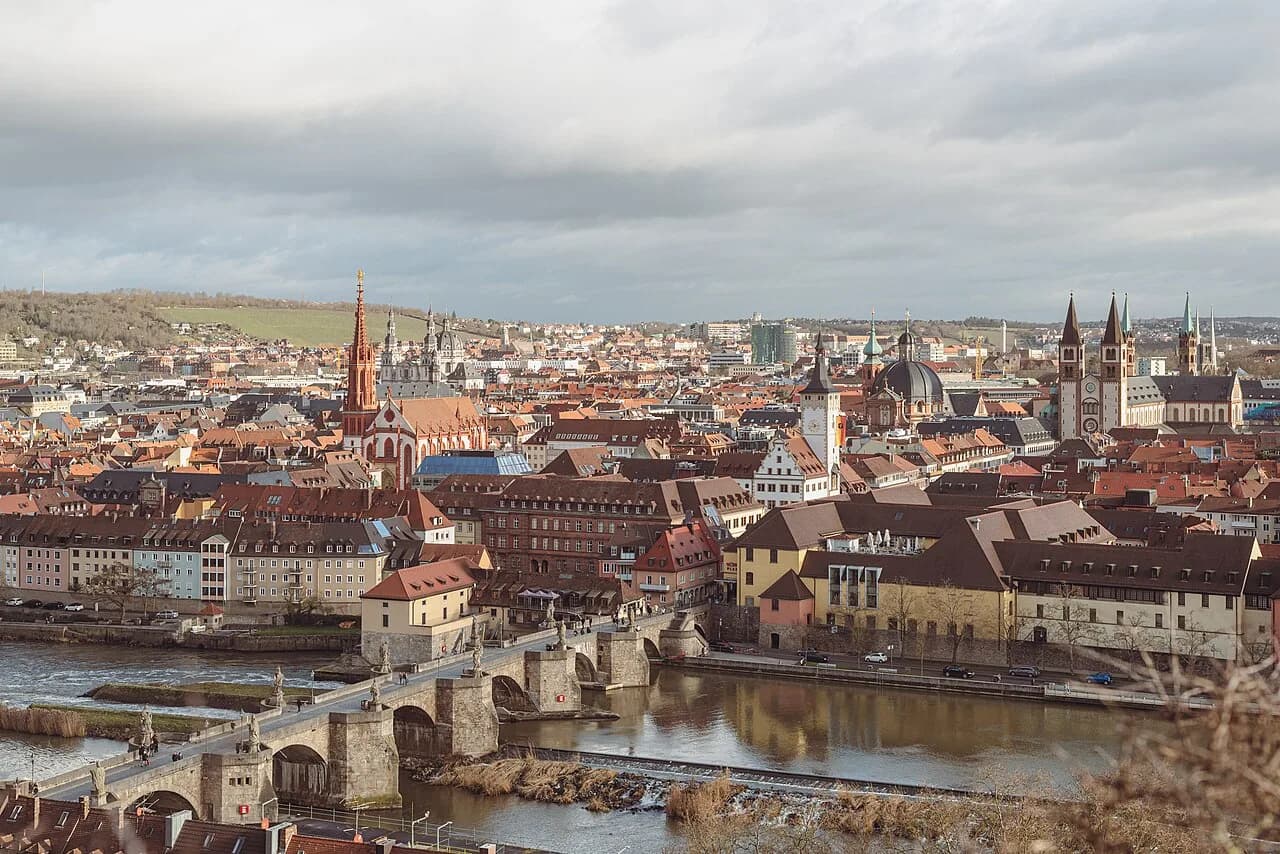
The Alte Mainbrücke is the rare Würzburg landmark that asks almost nothing of you: no interior to decipher, no room-by-room route. The city tourist office lists it beside the UNESCO World Heritage Residenz, Festung Marienberg and the Käppele, and introduces it with the phrase 'much more than just a bridge'. That listing is a sensible place to start, because the city pages are maintained rather than scraped from elsewhere. Visitor details: Tourismus | Infos über das touristische Angebot - Tourismus.
As a suggestion from this guide rather than an official figure, allow around twenty to thirty minutes to cross, look at the statues and take a few photographs, and add more if you intend to stand at the parapet with a glass of wine. This article is built around one decision rather than a checklist: do you use the bridge as a viewpoint stop, walking its length and moving on, or as a social stop, standing with a Brückenschoppen the way residents do. That choice changes your timing, your footwear and how much of the day the crossing absorbs.
Everything below separates what is stable about the bridge from what shifts with season, light and the event calendar. Where a detail depends on a fare, a schedule or a festival, this guide points you to the city's own pages instead of presenting a number as fixed.
What the Alte Mainbrücke Actually Is
The Alte Mainbrücke is a stone crossing over the Main, and it now functions as a pedestrian route rather than a through road, which shapes every visit. Because it links the old-town bank with the Marienberg side, it belongs to the city's daily circulation as much as to its sightseeing map. The city tourist office treats it as a headline sight, listing it alongside the Residenz, the fortress, the cathedral and the Käppele.
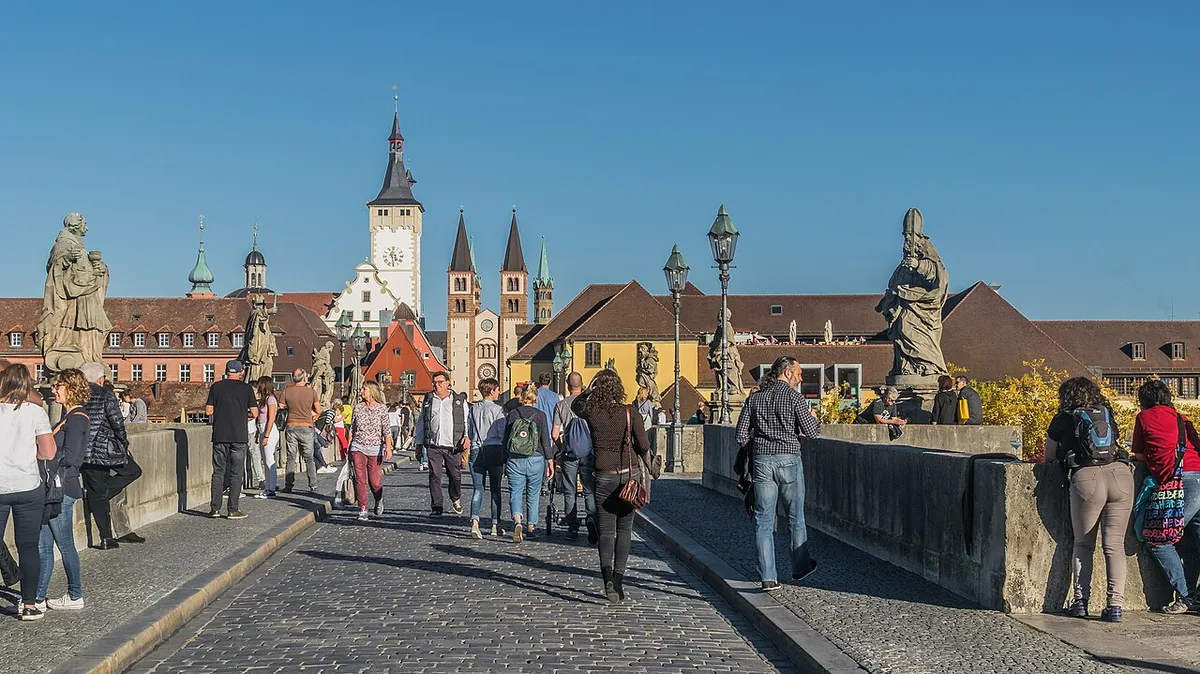
Statues of saints and historical figures line the crossing, added in the eighteenth century, and weathering means much of what you see at close range is careful replacement work. That matters practically: this is outdoor sculpture in a river climate, viewed from below, in whatever light the day provides. Look at the figures in sequence rather than trying to identify each one from a distance, and stand slightly to one side so each silhouette reads clearly against the sky or the opposite bank.
What you will not find is a gate, a foyer or a turnstile. Treating the bridge as a building to enter is the most common planning error, and it sends people hunting for opening hours that are not the relevant question. The city's tourism pages are the place to confirm anything that does change, including temporary works and event-related restrictions.
Viewpoint Stop or Social Stop: Choosing Your Version
The viewpoint version of the visit is short and structured. You walk the span, stop once or twice at the parapet for the fortress on the hill, the river below and the old town behind you, look at the statues on the way back, and leave. This suits a tight schedule, a rainy afternoon or anyone combining the bridge with a fixed appointment elsewhere.
The social version is longer and looser, and it is what gives the bridge its reputation. Vendors on the bridge pour glasses of Franconian wine, and standing at the parapet with a glass while watching the river is a recognised local habit rather than a tourist invention. If that is your plan, arrive with time to spare and no fixed next stop, because the point is that nobody is hurrying you.
A useful compromise on a first visit is to cross the bridge once briskly for orientation, then return to the bank where you started and slow down. You get the geography before committing your attention, and you avoid standing in the middle of a busy walking route while deciding where to look. For a wider menu of elevated and riverside options, compare this with other Würzburg viewpoints before locking in your timing.
Reading the Statues Along the Parapets
The statues are the reason the bridge rewards a slow walk rather than a quick crossing. General visitor descriptions identify Saint Kilian, the patron associated with Würzburg, along with historical rulers such as Charlemagne and King Pepin the Short, set among other saints. The programme mixes religious and dynastic memory, which tells you something about who paid for the bridge's adornment and what they wanted it to say.
Neither the city tourism listing nor the general visitor descriptions provide a figure-by-figure commentary, so treat any detailed iconographic claim you read elsewhere with caution. If the statues are the reason you are coming, consider a guided city walk, which the tourist office organises, since a guide can place the figures in the city's religious history. Otherwise, notice what is visible and enjoy it without a checklist.
The Brückenschoppen Wine Tradition
Brückenschoppen is the local term for the glass of Franconian wine you drink on the bridge rather than in a bar. Vendors along the crossing pour it, and the convention is simple: you take your glass, you find a spot at the parapet, and you drink standing while looking at the river. In Franconia the wine is often served in the flat, rounded Bocksbeutel bottle, and that shape is part of what makes the ritual recognisable.
Etiquette here is mostly about not hogging the view. The parapet is narrow and shared, so stand to one side where the walkway is widest, keep bags and prams clear of the main line of movement, and step aside once you have finished rather than treating one railing section as a table. Because the bridge is a pedestrian route used by residents going about their day, the fastest way to look like a visitor is to block the crossing.
Do not assume the wine is always there. The bridge also hosts festivals and open-air events, and vendor presence depends on the season, the day and whether an event has taken over the space. The city's event listings and general tourism pages are the honest place to check what is running, and you should also confirm accessibility arrangements there rather than relying on a third-party summary.
Best Light and Which Way to Face
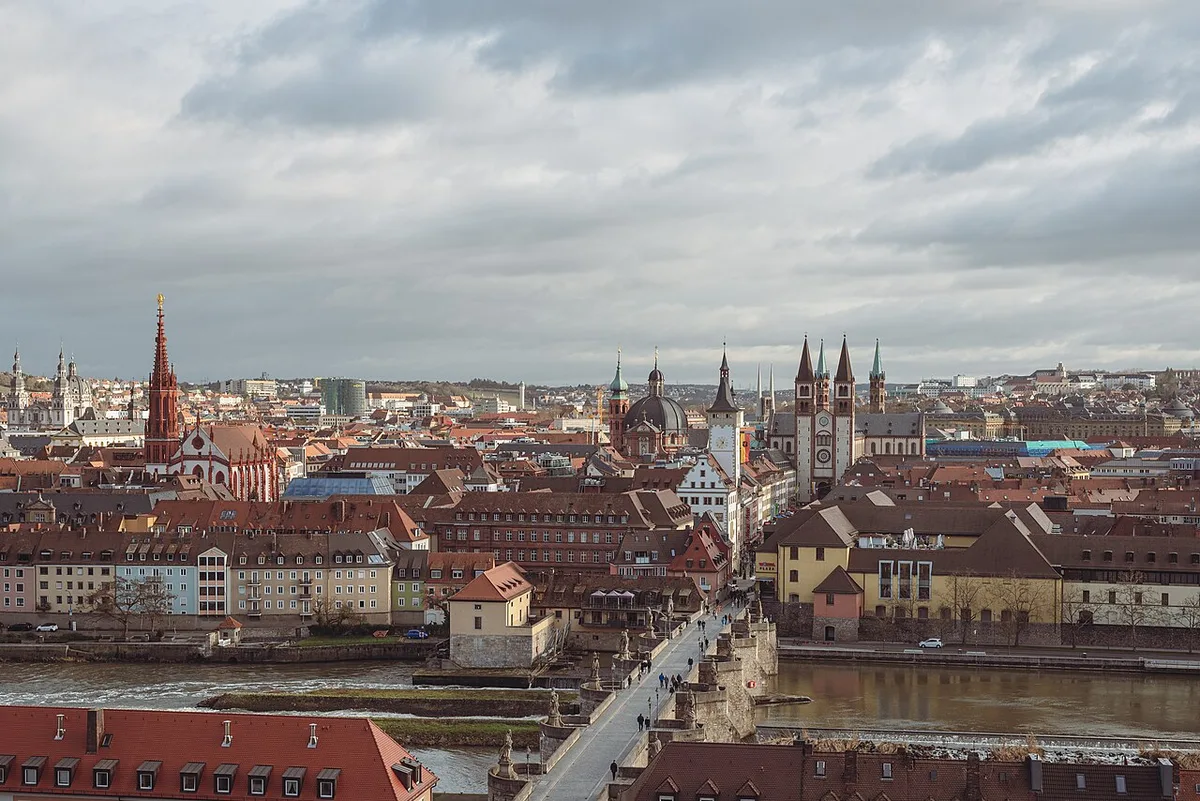
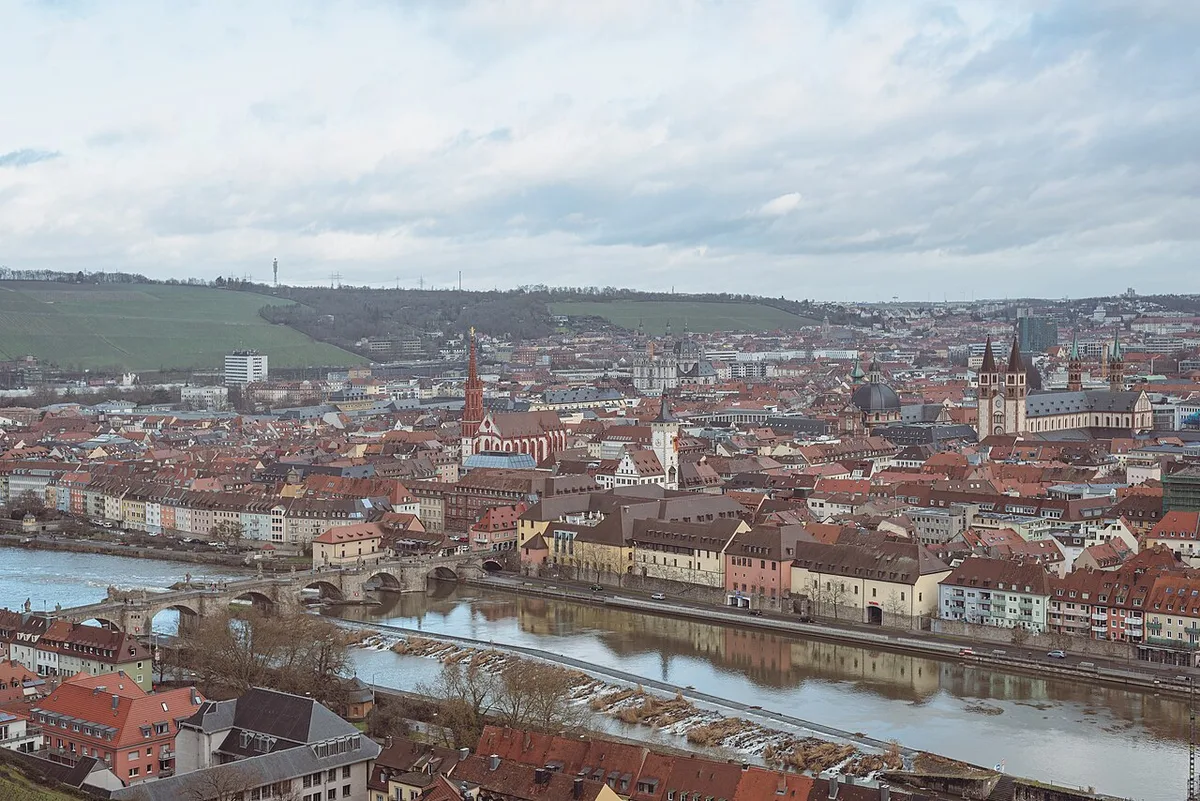
The bridge gives you two quite different pictures depending on which way you turn. Look upstream toward Festung Marienberg on its hill and you get the view that defines Würzburg, with the fortress above the vineyards. Look back at the old town and you get the cathedral, the rooftops and the bank you have just left, which is the better frame when you want to show someone where you have been.
Late afternoon into sunset is the period most visitors find most flattering, and general visitor descriptions single out sunset for the colour on the stone and the skyline. The trade-off is obvious: that is also when the parapet is busiest, and the light goes quickly, so a flexible arrival beats a tightly scheduled one. Morning on the bridge is quieter, flatter in tone, and usually better if you want the statues and the paving without people in the frame.
After dark, the statues are illuminated and the crossing takes on a different character, which is why it is often listed among things to do after dinner. If you are building an evening around the river, pair it with the rest of the city after dark rather than making the bridge the only stop. For wider planning, see Würzburg Photo Spots.
Walking from the Residenz Through the Hofgarten
The walk from the Würzburg Residence is the most natural approach for anyone starting the day at the UNESCO World Heritage palace. Head toward the city centre and pass through the Hofgarten, the court gardens attached to the Residenz, then continue toward the river until the bridge comes into view. General visitor descriptions note that the route is mostly flat and takes roughly ten to fifteen minutes from either the Marktplatz or the Residence, but treat that as an estimate rather than an official figure, especially if you want time in the gardens. Further visitor details appear in Old Main Bridge, Wurzburg Travel Guide | Evendo.
If you are coming from elsewhere in the centre, the same logic applies: aim for the riverbank rather than for any specific stop, since the bridge is visible from a distance and you will not need turn-by-turn directions. For transport options, fares, parking and step-free routes, use the city's own mobility and accessibility pages, which are maintained far more reliably than any commercial listing.
Timing, Crowds and Events
The bridge has no guaranteed quiet hour, and anyone promising one is guessing. Its crowd level tracks the weather, school holidays, the cruise and coach schedule and the city's event calendar, and the tourist office publishes festivals and events that can change how the space is used. Check what is on before planning a sunset visit during a festival weekend.
Seasonally, the trade-off is between daylight and comfort. Long summer evenings give you the fortress lit from the side and a livelier bridge, while winter visits are shorter, colder and often clearer of crowds, with the statues and street lighting doing the work instead of the sun. Shoulder-season mornings on a weekday are usually the closest thing to an unhurried crossing.
If your visit coincides with a major event, plan the bridge as a pass-through rather than a place to linger. That is also the honest answer for travellers with limited mobility: the city publishes dedicated accessibility information, including guidance for visitors with reduced mobility, and that is where you should confirm what is currently possible rather than trusting a general description.
How Long to Budget, and What Not to Expect
As a suggestion from this guide rather than an official figure, allow around twenty to thirty minutes if you want to cross, look at the statues and take a few photographs, and add twenty minutes or more if you intend to stand with a glass of wine. Anyone pairing the bridge with the fortress or the Residenz should not double-count that time, because the surrounding streets and gardens will absorb far more of the day than the span itself.
What you should not expect is a ticketed attraction. There is no museum interior on the bridge, no exhibition hall and no formal sightseeing slot to reserve, and the city's sightseeing listings present it as an open landmark rather than a venue. Commercial pages listing ticket prices or timed entry for the bridge itself are describing tours that meet there, not admission to the bridge.
The other expectation worth dropping is that the bridge is a viewpoint in the sense of a platform. It is a street with railings, so your view runs along the river rather than sweeping above it, and if you want the elevated postcard perspective you need the fortress or a higher path. Knowing that in advance saves disappointment at the parapet.
What to See on Either Bank
Stepping off the old-town end puts you within a short walk of the cathedral, the market square with the Falkenhaus and the lanes of the centre, all of which the city lists among its sights. This is the natural place to fold the bridge into an afternoon of walking, and it is where you will find most of the food, drink and shopping options for a break.
The other bank leads you toward the riverfront and the climb up to Festung Marienberg and, further out, the pilgrimage church of the Käppele. That side is the hill day: it asks for more time, more climbing and better shoes, and it rewards you with the view back across to the bridge you have just walked. If you are choosing one extended outing beyond the bridge, that is usually the one.
For a photography-focused day, plan your stops so the bridge appears twice, once in soft morning light and once near sunset, with the fortress or the old town in between. That structure gives you two different treatments of the same subject without repeating the same frame.
Plan Your Visit Around the Bridge
Decide first whether the Alte Mainbrücke is a viewpoint stop or a social stop, because that single choice settles your timing, your footwear and how much of the day it takes. As a rule of thumb from this guide, a crossing plus statue-watching takes about half an hour, while a Brückenschoppen visit with a glass of Franconian wine can easily run longer on a mild evening.
For anything that changes, including events, festivals, transport, fares and accessibility, rely on the city's tourism and mobility pages rather than commercial listings, which often recycle outdated details. Check the current position on the day you go, and keep one flexible evening in your plan so that good light is something you can take rather than something you have to schedule.
Treat the bridge as a pedestrian route shared with residents, not as a stage, and it will reward you with the best half hour of an unhurried Würzburg day. Pair it with the Residenz, the Hofgarten and one climb toward the fortress, and the rest of the city arranges itself around you.
Frequently Asked Questions
Is the Alte Mainbrücke free to walk across?
The bridge is an open, pedestrian-used stone crossing rather than a ticketed attraction, and the city's sightseeing pages present it as a landmark within the city rather than as a venue with admission. That said, this guide will not repeat a blanket free-entry claim from a third-party listing, because access arrangements and any temporary restrictions are matters for the operator. Check the City of Würzburg tourism pages for the current position on your travel dates, and note that any tickets you see advertised online are for tours that meet at the bridge rather than for the bridge itself.
What is the Brückenschoppen tradition on the Old Main Bridge?
Brückenschoppen is the local habit of drinking a glass of Franconian wine standing on the bridge, typically at the parapet with a view of the river and the fortress. It is an everyday social custom rather than a booked experience, and the wine is generally poured by vendors on the crossing. It is also the part of a bridge visit most affected by weather and the event calendar, so check the city's event listings if standing on the bridge is central to your plan.
How do you walk to the Alte Mainbrücke from the Würzburg Residenz?
Head from the Residenz toward the city centre, pass through the Hofgarten, and keep going toward the river until the bridge appears ahead of you. The route is mostly flat and largely pedestrian, which makes it an easy approach for most visitors. One third-party guide suggests roughly ten to fifteen minutes for the walk, but treat that as an estimate rather than an official figure, particularly if you want time in the gardens. Confirm step-free options on the city's accessibility pages if you need them.


