

Würzburg rewards photographers because so many layers sit inside one sightline: the Main, a statue-lined bridge, a hilltop fortress, and vineyard slopes climbing behind it. That density is also the difficulty, since a wide frame can flatten the castle into a distant smudge. The solution is to decide the foreground before you decide the landmark.
This guide groups the city by composition problem rather than by a ranking, and it keeps free outdoor vantage points separate from interiors that are ticketed and governed by an operator's photography conditions. Treat every time-of-day and duration note below as a suggestion, not official guidance, and confirm current access details with the operator before you commit a morning to one spot.
Why Würzburg Rewards Compositional Planning
The city's historical core was largely rebuilt after the Second World War, and a travel guide describes roughly 90 percent of Würzburg as destroyed in a 20-minute bombing in 1945. That context matters to a photographer: many facades you frame are careful reconstructions rather than untouched medieval surfaces. Knowing this changes how you read texture, stone colour and rooflines in a composition.
The most reliable layered frame runs from the riverbank up through the bridge statues to the fortress hill, with the vineyards reading as a soft green band between architecture and sky. A frame that includes all four elements needs a long focal length to compress the distance, or a deliberate step back so the foreground carries the weight. If the sky is blank, underexpose slightly and let the vineyard slope and statue line carry the picture instead.
Old Main Bridge: Statue Lines as Leading Lines
The Old Main Bridge works as a composition subject in its own right because its figure sculptures create a repeating vertical rhythm across the deck, and the travel guide compares the effect to a smaller Charles Bridge in Prague. Stand slightly off the bridge's centreline so the statues recede diagonally instead of stacking into one occluding column. A moderate telephoto at that angle keeps the figures separated while the deck edge still guides the eye forward. For wider planning, see Alte Mainbrücke Visitor Guide.
For fortress and vineyard views, position yourself near the bridge's downstream rail and use the stone parapet as a low foreground ledge rather than letting it cut the frame in half. The same travel source notes that the dozen statues were added in the 18th century, so a low angle that emphasises the figures against open sky produces a very different picture from one that includes the hill. Shooting from the bridge itself compresses the river out of the frame, which is the main trade-off against shooting from the bank.
Sunset is the obvious temptation here, since the bridge functions as a gathering place on warm evenings, and the writer describes locals carrying wine bought at the shops near the old-town end and paying a glass deposit that is refunded when the empty glass is returned. Anyone who wants a clean composition should treat that activity as part of the scene: either include silhouettes as human foreground, or arrive well before the light turns and work the geometry while the deck is emptier.
Marienberg Fortress from Across the Main
Shooting the fortress hill from the opposite bank gives you the full silhouette, including the walls, the church tower and the vineyard slope that a view from inside the complex simply cannot show. The trade-off is scale: the hill sits far enough away that the fortress becomes a mass of shapes rather than a detailed building, so the frame has to succeed on profile and layered greenery. Reach for a longer lens and place a strip of river or a boat wake along the bottom edge to anchor the picture.
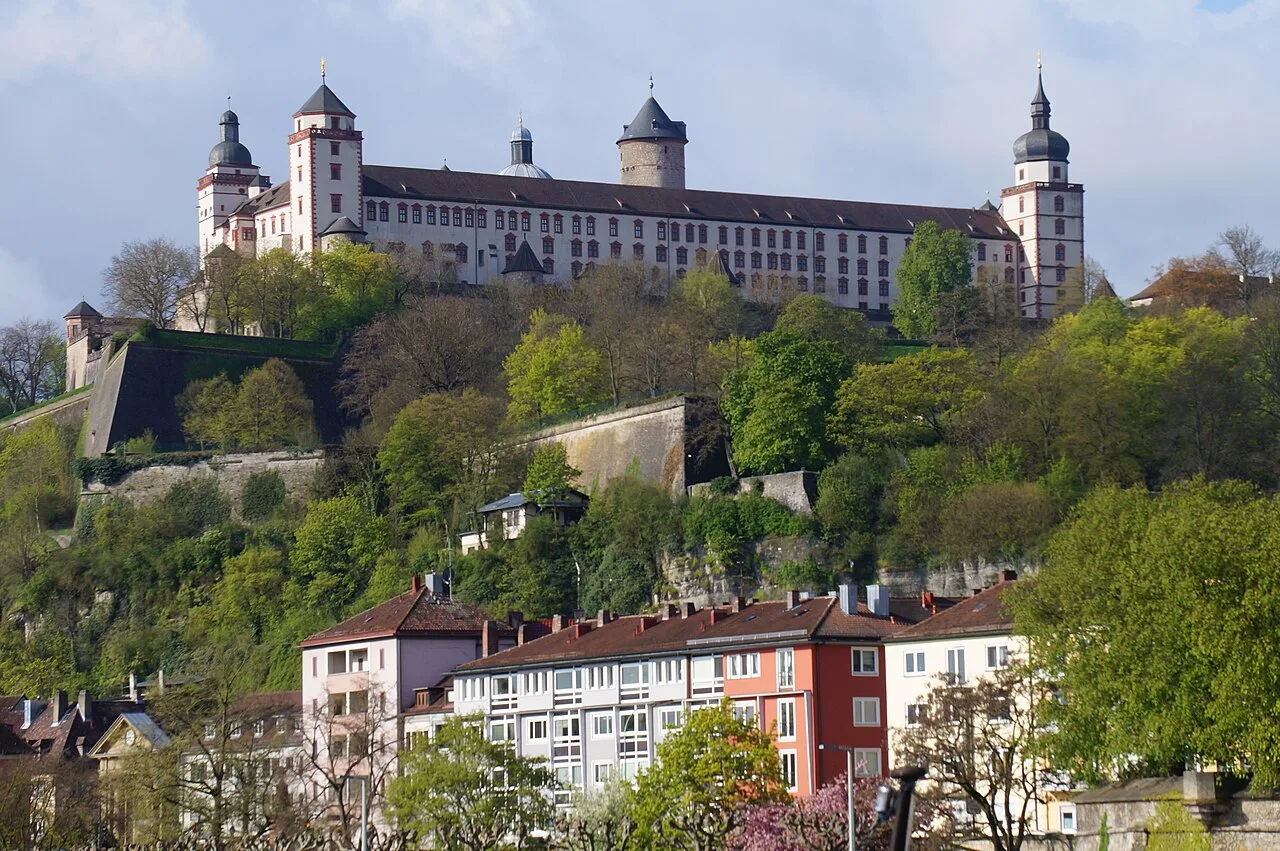
The travel guide states that the fortress, the original castle of the prince-bishops, is currently closed to the public because of renovations. Because that single source does not date the closure clearly against 2026, treat the statement as reported rather than verified current status. Before planning any shot from inside the walls, check the city's tourist information pages for what is actually accessible on your dates.
Käppele and the Stations of the Cross
Käppele is recognisable from a distance by its twin towers, and the fourteen Stations of the Cross that lead up to it read as a row of small structures flanking the approach path. In a landscape frame that path becomes a natural leading line climbing toward the chapel, which is why it repays a long-lens composition from elsewhere in the city rather than only a close approach. Compressing the distance flattens the incline and lines the stations up into a legible sequence.
The travel guide notes that reaching the chapel requires a little more effort than the riverside landmarks and is worth it if time allows. That effort is the practical constraint for photographers: build the ascent into your schedule rather than tacking it onto the end of a full day. If you are limited to one vantage, decide in advance whether you want the twin towers seen at distance or the station path seen up close, because they rarely combine well in a single frame.
Würzburg Residence and Court Garden Framing
The Residence is a UNESCO World Heritage site and the palace administration's overview explains that Balthasar Neumann coordinated the project with architects and artists drawn from France, Vienna and northern Italy. That mix is visible in the exterior, where the long facade and regular window bays give you a clean symmetry subject. Square-on symmetry is the easiest frame; moving off axis trades that order for depth along the wings.
The Court Garden is the more interesting photographic problem, because the travel guide observes that the garden was designed to frame the building. Garden paths, hedges and open lawn can therefore act as foreground layers that pull the eye back to the facade instead of competing with it. Grounds and interiors are separate propositions, so plan the garden as a free-access outdoor subject and treat the state rooms as a different visit with its own conditions.
Photography and video rules inside the state rooms are set by the palace administration, and its site lists a dedicated information page for them, but no rule text is available to quote here. Check that page directly before you travel rather than assuming a tripod is permitted. Admission, opening hours and guided-tour timings are likewise published by the operator, so read the current figures there instead of relying on any secondhand number.
Marienkapelle and the Market Square as Foreground
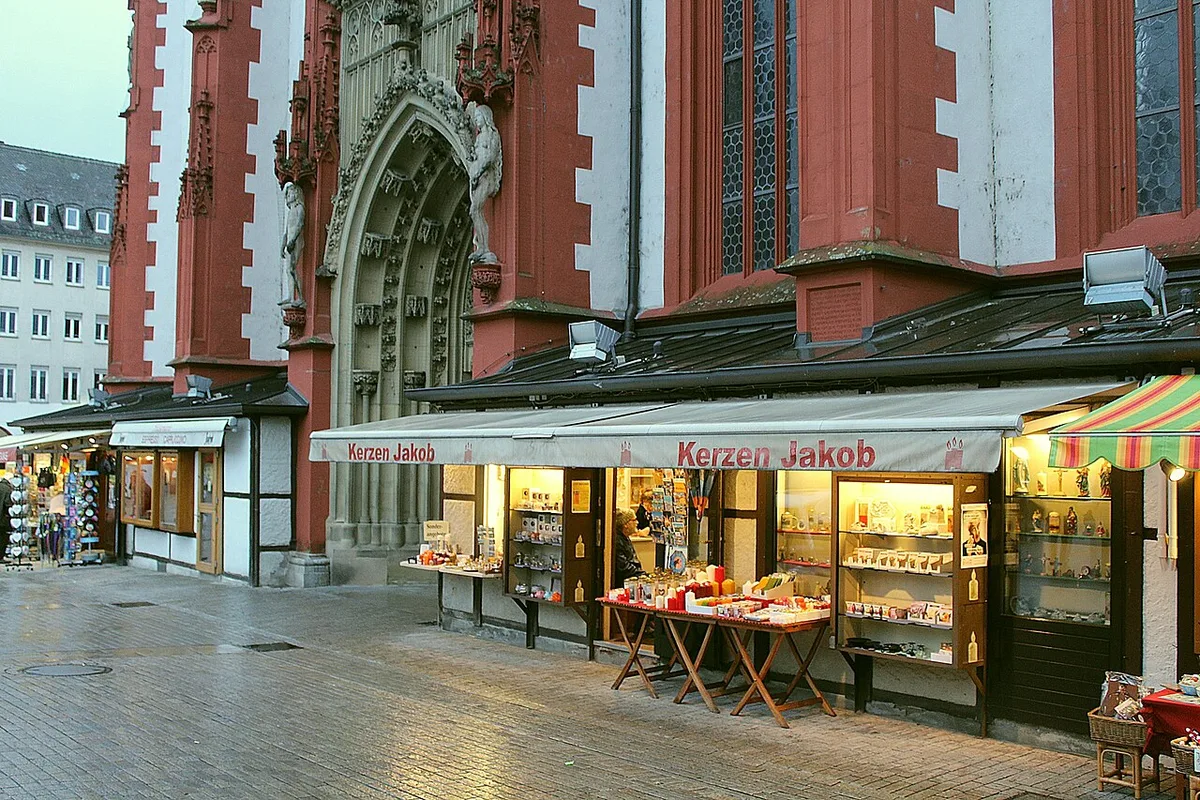
Marienkapelle stands in the central market square, and its red and white facade is the kind of high-contrast subject that survives grey weather better than most of the city's landmarks. The travel guide describes it as the writer's favourite religious structure for aesthetics while noting it is a chapel rather than a cathedral, which is a useful reminder that scale in a frame can be played up by a tight crop. Fill the frame with facade detail when the sky is flat.
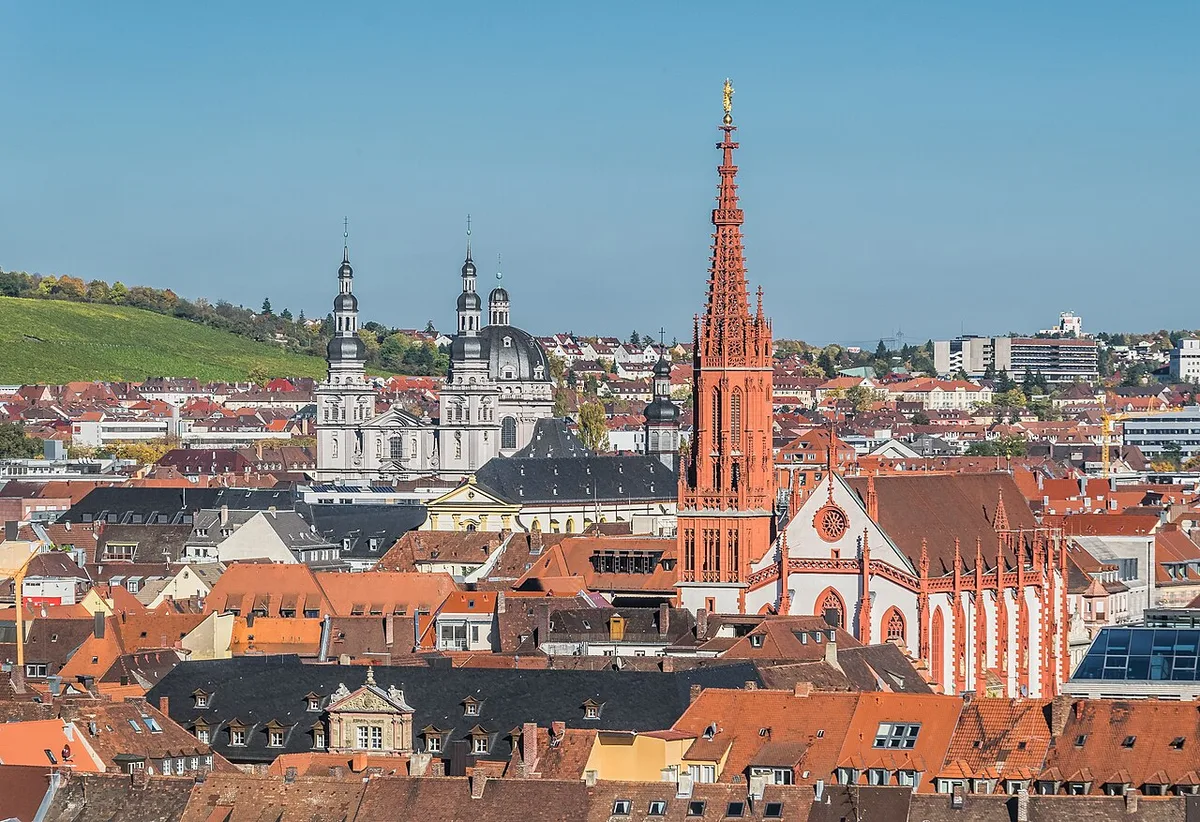
The square around it gives you two completely different pictures: an architectural frame with the chapel filling the composition, or a documentary frame with market stalls and shoppers as foreground activity. The same source reports that the Green Market next to the chapel runs on selected weekday and Saturday mornings and relocates during the Christmas market period, but those hours come from a single third-party blog. Verify current market days with the city before building a morning around them.
Church and City Landmarks as Supporting Frames
Dom St. Kilian, Neumünster with the Lusamgärtlein, Grafeneckart and the Alter Kranen all appear on the city's own tourism pages as named sights, which makes them easy to slot in as secondary frames rather than headline subjects. The Alter Kranen sits on the river beside the Old Main Bridge, so it can serve as an industrial foreground when you shoot along the bank. Pairing one of these with a bridge or fortress sightline gives a sequence a sense of place.
The travel guide describes Alter Kranen as a beer garden with outdoor seating among trees by the river and says the venue has an indoor area for off-season or rainy days, but that seasonal claim is the blog's own and should be checked before you plan an evening around it. For photography, the value is the tree canopy and riverside seating as a soft foreground rather than any claim about opening patterns. If your main goal is wide city composition, these landmark stops are best treated as fillers between the bigger vantage points.
Light, Weather and Reflection Decisions
The river is your most volatile element, because a mirror-flat Main doubles the bridge and the fortress hill while a wind-ruffled surface breaks the same view into texture. Morning usually gives calmer air before the day's breeze builds, which is the best argument for starting at the riverside and working uphill later. Conversely, evening light from the direction of the bridge gives warm side light on the fortress hill, which suits a longer lens from the bank.
Plan around a small number of light states rather than a long list of spots: flat overcast for facade detail at the chapel and Residence garden, clear morning for river reflections, and late-day warmth for the fortress silhouette. If the sky is featureless, crop it out and build the frame from statue lines, hedges or market stalls. If conditions turn, swap to an interior or a covered market rather than forcing a wide landscape that will not hold contrast.
A Compact Shot List for One Walk
A sensible single-day sequence is to start low and finish high: riverside reflection frames near the Old Main Bridge and Alter Kranen, then the bridge deck itself for statue leading lines, then the market square for Marienkapelle and market foreground, then the Court Garden for facade symmetry. If daylight and energy allow, finish with a long-lens hill silhouette from across the river. This is a suggestion for ordering, not an official route, and it works best when you accept that two or three strong frames beat a rushed checklist.
If you want comparisons from other German cities, the same compositional logic applies elsewhere; the best photo spots in Berlin and the best photo spots in Munich both hinge on deciding a foreground before choosing a landmark. The shot list works best when you note one exposure decision per spot in advance, such as underexposing the sky or repositioning to keep a parapet out of the middle of the frame. Keep the list short enough that you still have time to react when the light does something unexpected.
Plan Your Visit
Treat Würzburg as a city of layered frames rather than a list of monuments, and decide before each stop whether the bridge, the river, the fortress hill or the vineyard slope is carrying the picture. Confirm access and photography conditions for the Residence and the fortress with the palace administration and the city's tourist information before you travel, since both change. Everything else, from statue lines to market-square foregrounds, is a matter of where you stand and when.
Frequently Asked Questions
What are the best photo spots in Würzburg?
The most productive vantage points are the Old Main Bridge for statue leading lines and river foreground, the riverbank opposite the fortress hill for the full silhouette, the market square around Marienkapelle for facade and market foreground, and the Court Garden for framing the Residence facade. Käppele and its station path work well as a distant long-lens subject. Which one you choose first should follow the light rather than a fixed ranking.
Where do you photograph Marienberg Fortress from across the Main?
Stand on the opposite bank from the fortress hill and use a longer focal length, letting a strip of river or a boat wake anchor the bottom of the frame. This gives the whole hill profile, including walls, church tower and vineyard slope, which a view from inside the complex cannot show. Note that one travel source describes the fortress as currently closed for renovations, but the source does not date that clearly against 2026, so check the city's tourist information before planning a visit inside the walls.
Is the Old Main Bridge good for sunset photos?
It can work well, because the bridge faces the river light and the statues create useful silhouettes. The complication is that the bridge is a popular gathering place on warm evenings, so figures will occupy the deck and either become part of your composition as human foreground or obstruct it. Arriving before the light turns gives you time to work the geometry while the deck is emptier.
Can you photograph inside the Würzburg Residence?
Rules for photographs and videos inside the state rooms are set by the palace administration, and its website lists a dedicated information page, but the specific conditions are not published in the sources reviewed here. Check the palace administration's own information page before you travel rather than assuming tripods or flash are allowed. The Court Garden and exterior are a separate, outdoor proposition from the ticketed interiors.
How many photo spots can you cover in one day in Würzburg?
Four to five vantage points is a realistic suggestion for one unhurried day if you accept short stops: riverside reflections near the bridge and Alter Kranen, the bridge deck, the market square, and the Court Garden, with a long-lens hill silhouette at the end if light and energy allow. Adding Käppele's ascent changes the day considerably because of the climb. This is a planning suggestion, not official guidance.


