

Würzburg stacks its best views in three distinct elevation bands, and picking between them is really a question of what you want in the frame. The Old Main Bridge sits at river level and looks up at the fortress silhouette; the Käppele pilgrimage church rises on a hill above the inner city; and Marienberg Fortress occupies the ridge that dominates the whole basin. Understanding which band you are choosing saves you from climbing twice for the same picture.
One live constraint shapes any fortress plan right now. The Bavarian Palace Administration states that the main castle and the inner castle courtyard from the Scherenberg Bridge are closed to individual visitors until further notice because of construction work, while the second courtyard, the Echterhof, and the viewing points around the castle remain accessible. Guided tours of the entire grounds do continue, though the route may be adjusted at short notice, and the Museum für Franken remains open.
The sections below separate what is free from what costs money, because the fortress is not one product but several. Outdoor areas and viewpoints are one thing; the guided tour is another; and the Museum für Franken inside the complex is a third with its own operator. For a wider city orientation before you commit to a climb, the Würzburg: Itineraries and City Travel Guides surface covers how the landmarks fit together.
How to Choose Your Viewpoint
Start by deciding what you want the picture to contain. From the fortress hill you read the whole city, the Main River and the bridge in one sweep, which suits anyone who wants orientation rather than a single landmark. From the bridge you get the classic upstream composition with the fortress above the river, and from the Käppele you look down over the inner city from its own hillside.
The second question is effort. The bridge requires no climb at all, the Käppele sits on a hill above the city, and the fortress involves getting up to the ridge by whatever means you choose. Because no reliable walking times or step counts are published for either hill, judge the climb by your own pace and the weather on the day rather than by a number someone else quoted.
The third question is money. Bridge and fortress outdoor areas are the free options, while the guided fortress tour and the museum are separate paid products. If you are comparing this city with others in Germany, the best viewpoints in Berlin and the best viewpoints in Munich follow the same logic of free public spaces versus ticketed towers and terraces.
Marienberg Fortress: What Is Open Right Now
The fortress hill gives the widest panorama in Würzburg, but access is currently partial. The palace administration reports that the main castle and the inner courtyard are shut to individual visitors until further notice for construction work, and asks visitors to accept that tour routes can change at short notice. The Museum für Franken, by contrast, remains open.
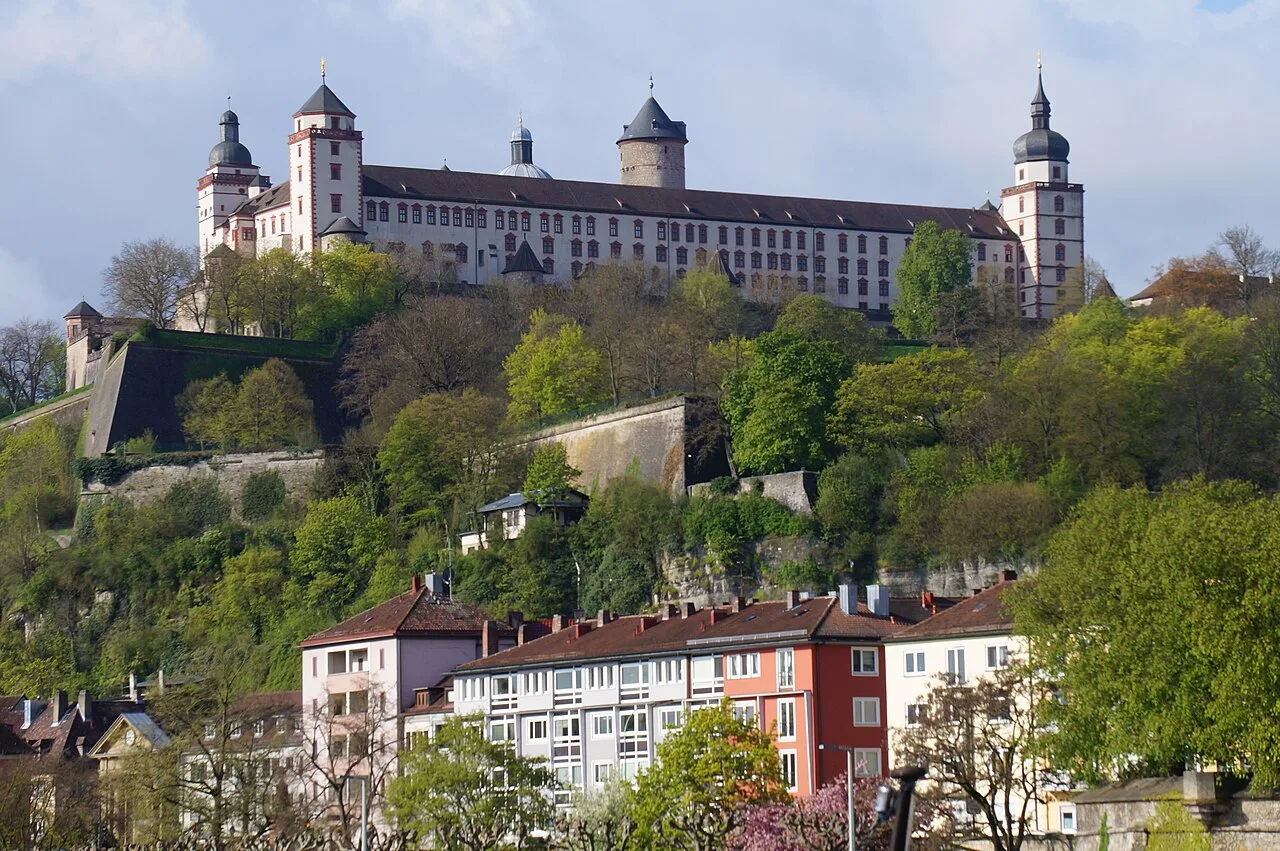
What you can still do is walk the accessible outdoor areas, including the Echterhof and the viewing points around the castle, which is where most of the panorama actually comes from. That distinction matters: the headline rooms may be off limits while the view that drew you uphill is unaffected. Check the current information section of the operator page before travelling, since closure wording changes with construction progress.
If the fortress is the anchor of your day, the Marienberg Fortress visitor guide explains the grounds, the courtyards and the monuments in more depth, including the Marienkirche and the well house with a cistern over 100 metres deep. Read it alongside the operator's notices so you know which parts of the description apply to your dates.
Free Fortress Grounds vs Paid Interiors
The most common mistake at Marienberg is assuming one ticket covers everything. The Museum für Franken, which displays art and cultural history in the Arsenal and the Princes' Building, is explicitly not operated by the Bavarian Palace Administration, and the operator states that it cannot be visited with its annual season tickets or 14-day tickets. Treat the museum as a separate attraction with its own admission arrangements, which you confirm through the museum rather than through the palace administration.
The guided fortress tour is a third, separate product: an outdoor tour of roughly an hour that does not include the Maschikuli Tower and casemate. The palace administration lists it at 5 euros regular and 4 euros reduced, with children under 18 admitted free. Because these are the operator's stated prices, verify them on the operator page at the time of your trip rather than relying on any cached figure.
Season tickets held for other Bavarian palace sites do not unlock the museum, which is why it pays to decide in advance whether you are visiting for architecture, collections or the view. If the answer is the view, you can skip the ticketed interiors entirely and spend the money elsewhere. The Würzburg: Landmark Visitor Guides hub is the place to compare those other paid options before you commit.
The Princes' Garden on the Fortress Hill
The Princes' Garden is a 1,300 square metre terrace on the fortress hill, reached from the castle courtyard and reconstructed on the basis of early eighteenth-century plans. It gives you formal planting and a framed view without adding another climb once you are already up there. For anyone who wants a garden setting rather than a bare bastion edge, this is the low-effort option on the ridge.
Because it sits inside the fortress grounds, its availability follows the outdoor area hours rather than separate garden rules. Build it into the same visit as the Echterhof and the surrounding viewpoints instead of treating it as a standalone stop. If you are collecting free garden views across the city, Free things to do in Würzburg covers the Hofgarten and other no-cost green spaces.
Old Main Bridge: The River-Level View
The Old Main Bridge is the zero-effort option and arguably the most photographed angle in the city. Its sixteenth-century stone span, lined with statues, carries pedestrians and gives the classic upstream composition of the fortress above the Main. Because it sits at river level, nothing is required of your legs and the view is available at any time you happen to be in the old town.
What the bridge does not give you is the city laid out below. It reads as a foreground-to-background shot: river, bridge, fortress, sky. That makes it a strong pairing with a climb rather than a substitute for one, and a sensible first stop while you decide whether to invest in the hill. The Alte Mainbrücke visitor guide covers the statues, the setting and the practicalities of the crossing.
Photographers often combine the bridge with tighter urban framings in the old town, such as the alley view toward the Marienkapelle tower, which the Wanderlog viewpoint collection includes among its Würzburg entries. If that is your plan, the Würzburg photo spots collection groups the city's composed shots by location so you can string them into one walk.
Käppele: The Inner-City Hill
The Käppele is an eighteenth-century pilgrimage church on a hill above the city, designed by Balthasar Neumann, and it offers a panorama that looks back over the inner city rather than out along the river. That is the essential difference from the fortress: you are inside the town's own skyline rather than on the ridge facing it. Come here if you want the city as the subject instead of the river valley.
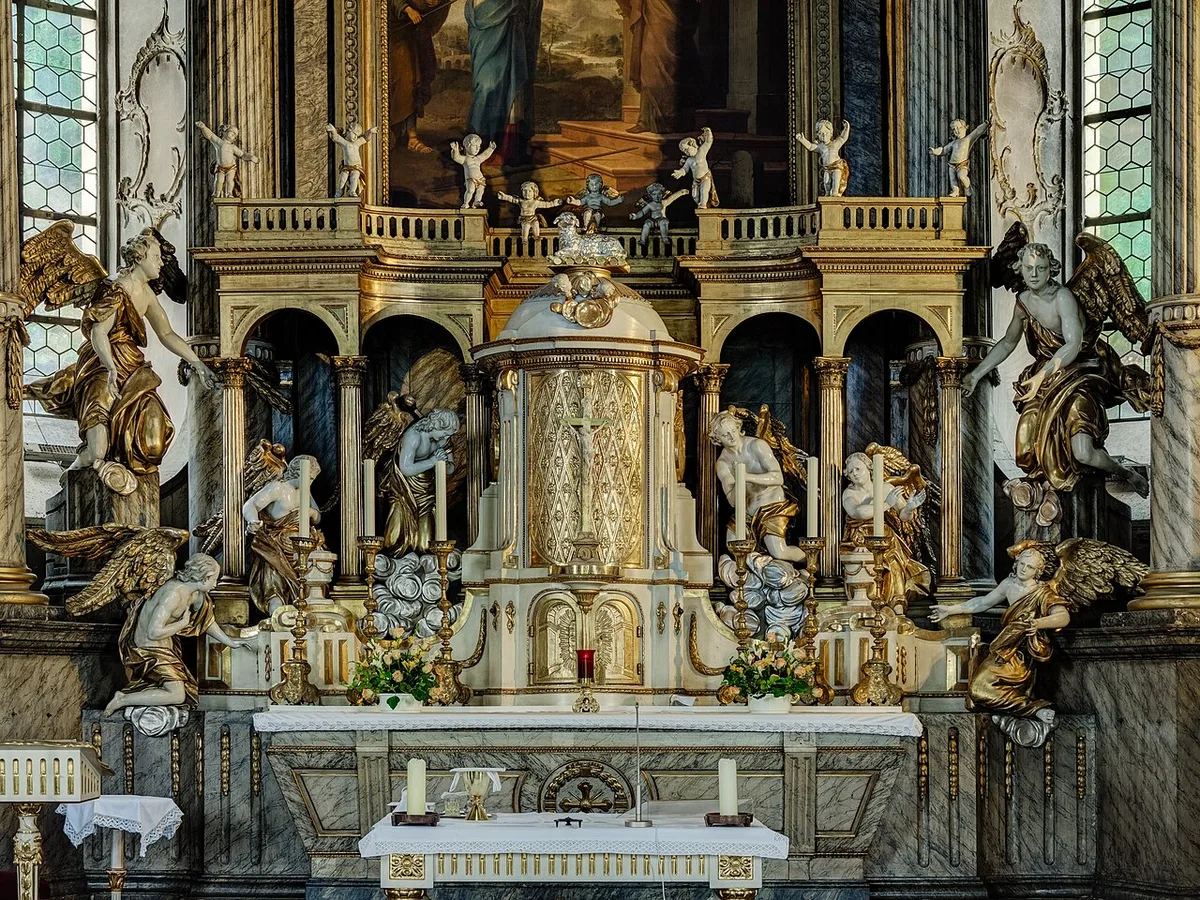
It is a working sanctuary, so treat the interior as a place of worship and check locally for what is open on the day you visit. The city tourism pages list the Käppele among the main sights and are the sensible place to confirm current visitor arrangements. Pair the hill with a walk down through the vineyards or back into the old town so the climb earns you more than a single photograph.
Because there is no officially published step count or walking time, plan the ascent by how much time you have rather than by a fixed schedule. A slow, unhurried climb with stops is the realistic approach for most visitors. If you are deciding between this and the fortress, choose by the direction you want to look.
Guided Fortress Tours: What You Get
The bookable fortress tour is an outdoor walk of about sixty minutes covering the grounds, and it is the only way to see the main castle while construction closures keep individual visitors out of that area. The palace administration notes that the route can be adjusted at short notice, so expect variation. Registration is recommended and can be made by telephone on Tuesday to Sunday between 9 am and 5 pm.
English-language departures run on weekends and public holidays at 3 pm from April to October, while German tours run more frequently across the season, and the meeting point is the museum shop at the Echtertor. Note that the tour excludes the Maschikuli Tower and casemate. If you are visiting outside those months, check the winter schedule directly with the operator before building your day around a fixed departure.
Is the tour worth it for the view alone? Only if you want the historical commentary and access to areas otherwise closed. The panorama itself is available from the free outdoor areas, so the tour is really a content decision rather than a viewpoint decision. If you mainly want the photograph, save the hour and spend it on a second location instead.
Accessibility and Mobility Trade-Offs
The operator is clear on one point: people in wheelchairs cannot take part in the castle tours. That is the only accessibility statement the palace administration makes about the fortress, so do not read it as a general verdict on the outdoor areas, the courtyards or the bridge. Anyone with mobility requirements should contact the site and the city tourist information directly to describe their needs and get an answer for their specific route.
The city maintains dedicated accessibility pages for visitors with limited mobility, including information for people with walking difficulties and accessible guided tours. Using those pages is more reliable than extrapolating from a general description of a historic site. Historic cobbles, slopes and stepped entrances are common in Würzburg, so assume nothing and verify each stop.
Timing, Seasonality and Closed Days
The fortress outdoor area follows a seasonal pattern set by the operator: April to October it is open from 9 am to 6 pm, and November to March from 10 am to 4.30 pm, with Mondays closed apart from a list of exceptions that includes 6 January, Easter Monday, 1 May, Whit Monday, 15 August, 3 October and 1 November. It is also closed on 1 January, Shrove Tuesday, and 24, 25 and 31 December.
Because Monday closures catch visitors out, build the fortress into a Tuesday-to-Sunday plan and keep a river-level or inner-city option for the Monday itself. The bridge and the old town work regardless of the fortress calendar. Reconfirm hours close to your travel date, since seasonal transitions and construction updates are announced by the operator rather than by third parties.
A Suggested Half-Day Viewpoint Plan
This is a suggestion, not an official itinerary, and it assumes you have roughly half a day and reasonable weather. Start on the Old Main Bridge for the low-effort orientation shot, then move up to the fortress hill and spend your time in the free outdoor areas, the Echterhof and the Princes' Garden. Finish with the guided fortress tour if the departure times suit, or with the Käppele if you would rather see the city from its own hillside.
If you only have a couple of hours, drop the fortress interiors and the museum and do bridge plus one hill. The reverse also works: choose the fortress for the widest read and skip the bridge if you have already crossed it earlier in the day. Either way, decide before you climb, because the walk back down is the part people most often regret repeating.
Common Mistakes to Avoid
The first is treating the fortress as a single ticket. The grounds, the guided tour and the Museum für Franken are separate, the museum is not run by the palace administration, and palace season tickets do not admit you to it. Budget and plan accordingly instead of assuming one purchase covers the visit.
The second is arriving on a Monday or expecting the main castle to be open to individual visitors when construction closures are in force. The third is climbing for a view you could have had at river level. Match the elevation to the picture you want and the day works out far better.
Plan Your Viewpoint Day
Choose by elevation and by purpose rather than by reputation. The bridge gives the postcard silhouette with no climb, the fortress gives the widest city-and-river read from free outdoor areas, and the Käppele gives the inner city seen from its own hillside. None of the three replaces the others, which is why a half day can comfortably cover two.
Before you go, confirm the fortress construction status and outdoor hours with the Bavarian Palace Administration, and check the city tourism pages for accessibility information and current visitor arrangements. Those two sources settle almost every practical question, from closed days to what a guided tour includes. Everything else is preference.
Frequently Asked Questions
Are the views from Marienberg Fortress free?
The outdoor areas and the viewing points around the castle are accessible without a ticket, according to the Bavarian Palace Administration, and that is where the panorama is. The guided fortress tour is a separate paid product, and the Museum für Franken has its own arrangements because it is run by a different operator. Check the operator page for the current position before you travel.
Can you visit the main castle at Marienberg Fortress right now?
The palace administration states that the main castle and the inner castle courtyard from the Scherenberg Bridge are closed to individual visitors until further notice because of construction work. The Echterhof and the viewing points around the castle remain accessible, and guided tours of the entire grounds continue with the caveat that the route may be adjusted at short notice.
How long does a guided fortress tour take and what does it cost?
The operator describes it as an outdoor tour of roughly sixty minutes that does not include the Maschikuli Tower and casemate. The palace administration publishes a regular and a reduced rate, with children under 18 admitted free. Because prices are set by the operator and can change, confirm the current figures on the palace administration page rather than relying on a second-hand listing.
Do fortress tours include the Museum für Franken?
No. The Museum für Franken is not operated by the Bavarian Palace Administration, and the operator states that it cannot be visited with palace annual season tickets or 14-day tickets. Treat the museum as a separate attraction with its own admission arrangements and confirm those with the museum.
Is the Old Main Bridge a good viewpoint without climbing?
Yes. It sits at river level, so it asks nothing of your legs, and it delivers the classic composition of the fortress rising above the Main. What it does not give you is the city spread out below, which is why it pairs well with one of the hill options rather than replacing them.
How does the Käppele view compare with the fortress view?
The fortress looks out across the river valley and the whole city from the dominant ridge, while the Käppele looks back over the inner city from a hillside above it. Choose the fortress for the widest read and the Käppele if you want the town itself as the subject. Neither publishes an official step count or walking time, so pace the climb to your own ability.


