

The monastery complex of St. Michael sits on Michaelsberg, one of the hills that frame Bamberg, and its silhouette is the first thing many visitors notice when looking up from the old town. The church is currently open only Friday to Sunday and on public holidays, from 11 a.m. to 4 p.m., while the gardens, monastery courtyard and observation deck are accessible at all times, according to the owning foundation. That makes timing the single most important planning decision: the church window is narrow, but a Monday or Tuesday climb still rewards you with the grounds and the terrace view.
This guide separates what is genuinely open at all times from what is time-limited, names both uphill walking approaches and the bus alternative, and explains why the Franconian art museum on the hill is not the same visit as the monastery church. It also treats the foundation's stated 2026 reopening as context that depends on construction progress rather than as a guaranteed date. Read it alongside a broader Bamberg overview or a detailed Bamberg: Itineraries and City Travel Guides if you are building a whole day around the hill.
What Michaelsberg Abbey Actually Covers
St. Michael's is not a single building you enter and leave; it is an ensemble of the monastery church, abbey wings, convent building, forecourt and gardens that reads as one designed landscape. Bamberg's tourism office describes the Baroque rebuilding of the 17th and 18th centuries as the work that gave the complex its current appearance, largely shaped by the Dientzenhofer brothers. Treat the site as a small hilltop district rather than an attraction with a turnstile: you can wander the grounds even when the church is shut. The terraced garden with its fountain and two pavilions is part of that ensemble and deserves its own unhurried stroll.
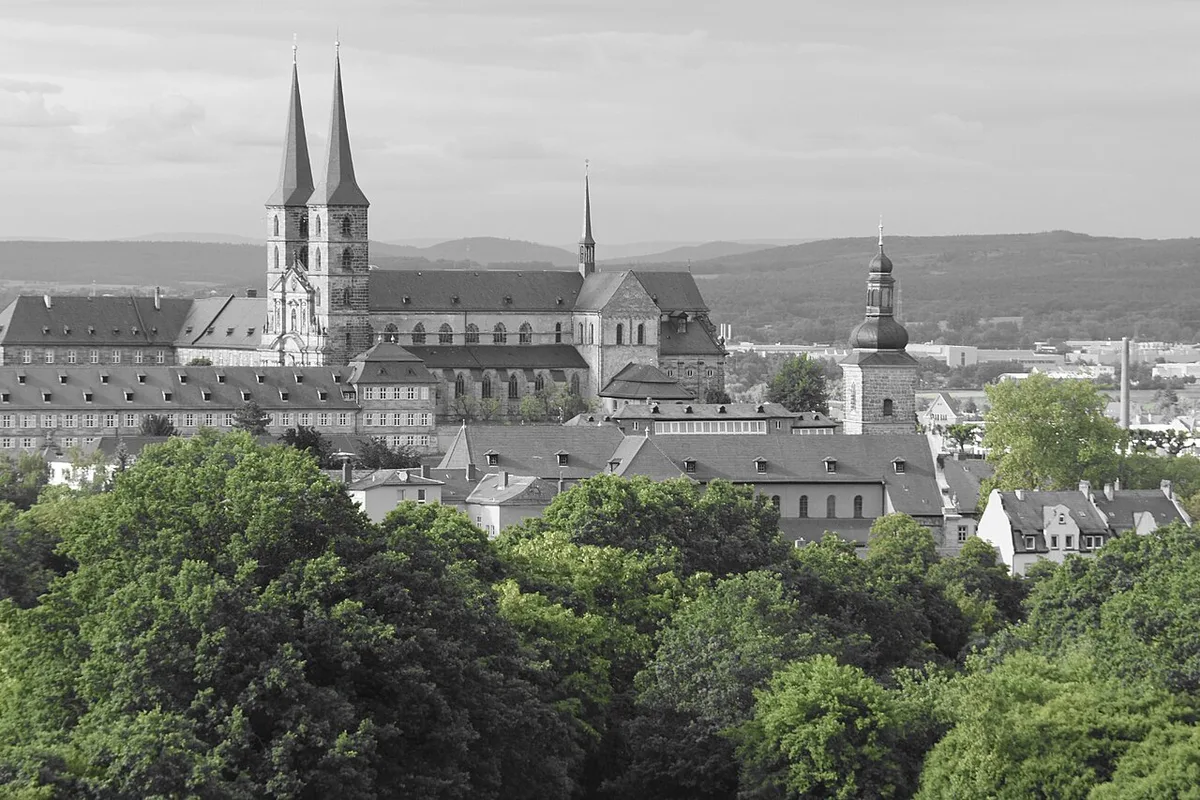
Because the complex is split between sacred space, foundation-owned grounds and a separate museum presence on the hill, opening hours and entry conditions do not apply uniformly. The owning foundation, the Bamberg Civic Hospital Foundation, publishes the visiting rules for the monastery complex itself. If you want to understand the Franconian art collection sometimes associated with the Michelsberg, check the museum's own website directly rather than assuming it shares the monastery's hours or ticket scope. That distinction prevents the common mistake of arriving for a museum visit on a day the church happens to be closed.
Getting Up the Hill: Walking Routes and Bus 910
The foundation lists two pedestrian approaches: the Panoramaweg along Aufseßstraße and Benediktinerweg, or the route via Maienbrunnen. Both are real climbs on uneven surfaces, so choose footwear and pace accordingly rather than assuming a gentle promenade. On weekdays, city bus line 910 runs from the ZOB to the Klinikum Michelsberg stop, which is the practical car-free option for anyone who would rather not walk uphill. Do not rely on that bus on weekends or public holidays, when the service pattern differs.
Drivers should note a hard limitation: parking on the grounds is only available in the evenings and on weekends for visitors to the restaurants and similar facilities. That effectively rules out driving up for a daytime weekday visit and expecting a convenient space, so plan on foot or by bus instead. The upside of arriving on foot is that the Panoramaweg delivers the terrace view as part of the approach rather than as a separate stop. If mobility is a concern, plan around the terrain honestly instead of assuming lift access, and ask the foundation or tourist information about your specific needs before you commit to the climb.
Opening Times and What Is Currently Accessible
St. Michael's Church is currently open only from Friday to Sunday and on public holidays, from 11 a.m. to 4 p.m., a restriction the tourism office presents as temporary while renovation continues. Gardens, the monastery courtyard and the observation deck are accessible at all times, which means a weekday visit is still worthwhile even without church access. Build your day around the free outdoor spaces first and slot the church in only if your dates align with those days. Because this pattern is tied to construction work, verify it again shortly before travelling.
The foundation states that since the high risk of collapse of the church became known in 2012, visitors have only been able to visit the monastery courtyard and gardens until construction is complete. That is a significant reframing for anyone expecting a normal abbey interior visit, so adjust expectations before the climb rather than after. It also explains why the church window above is narrow: the building itself is the subject of the safety work. Before you set out, check the foundation's own pages for the latest status, since statements about reopening are tied to construction progress.
Free Grounds Versus Time-Limited Church Access
The clearest planning line on Michaelsberg is between what is always open and what is not. The gardens, monastery courtyard and observation deck are accessible at all times, so there is no ticket gate or daily closing time governing your arrival on the hill. Church access, by contrast, is confined to the Friday-to-Sunday and holiday afternoon window. Visitors to the vineyard are a third category: those visits can only be arranged as part of guided tours and events, not by simply walking into the rows.
The foundation does not publish admission prices for the church, museum or art collection on its general information page, so treat any figure you see online with caution and confirm current conditions with the operator. What you can rely on is the structural fact that the free outdoor areas exist independently of ticketed interiors. If your priority is the Franconian art collection, approach it as a separate destination with its own published information, not as an extension of the monastery visit. This keeps your expectations honest and your day flexible.
History and Architecture to Notice
The monastery was founded around 1015 on the initiative of Emperor Henry II, and by the 12th century it had grown considerably in importance under Bishop Otto I. Earthquakes, fires and wars repeatedly damaged the complex over the centuries, yet it was always rebuilt and expanded, which is why the buildings you see today are a palimpsest rather than a single-era design. The Baroque renovations of the 17th and 18th centuries gave the site its current appearance, with the Dientzenhofer brothers shaping much of the cohesive layout. Walking the forecourt toward the garden, you are moving through that deliberate design sequence.
Until secularization in 1803, the Benedictines shaped life on Michaelsberg and developed St. Michael's into one of the largest, most influential and wealthiest monasteries in Europe. That scale explains the ambition of the architecture and the extent of the grounds, which now belong to the Bamberg Civic Hospital Foundation. Knowing this history changes how the currently limited access reads: you are seeing a fragment of a much larger institution while its most fragile part is stabilised. Pair the visit with a Bamberg Cathedral visitor guide if you want to trace how ecclesiastical Bamberg connects across the city.
The Terrace View and the Michaelsberg Garden
The terrace behind the church is the payoff of the climb: a panoramic view over Bamberg that gives the old town, the river and the cathedral towers a single frame. Because the terrace stays accessible at all times, you can time your visit to the light rather than to the church schedule. Late afternoon tends to flatter the city below, and there is no need to coordinate with a tour to enjoy it. Bring a layer, since the exposed hilltop position catches the wind even on otherwise mild days.
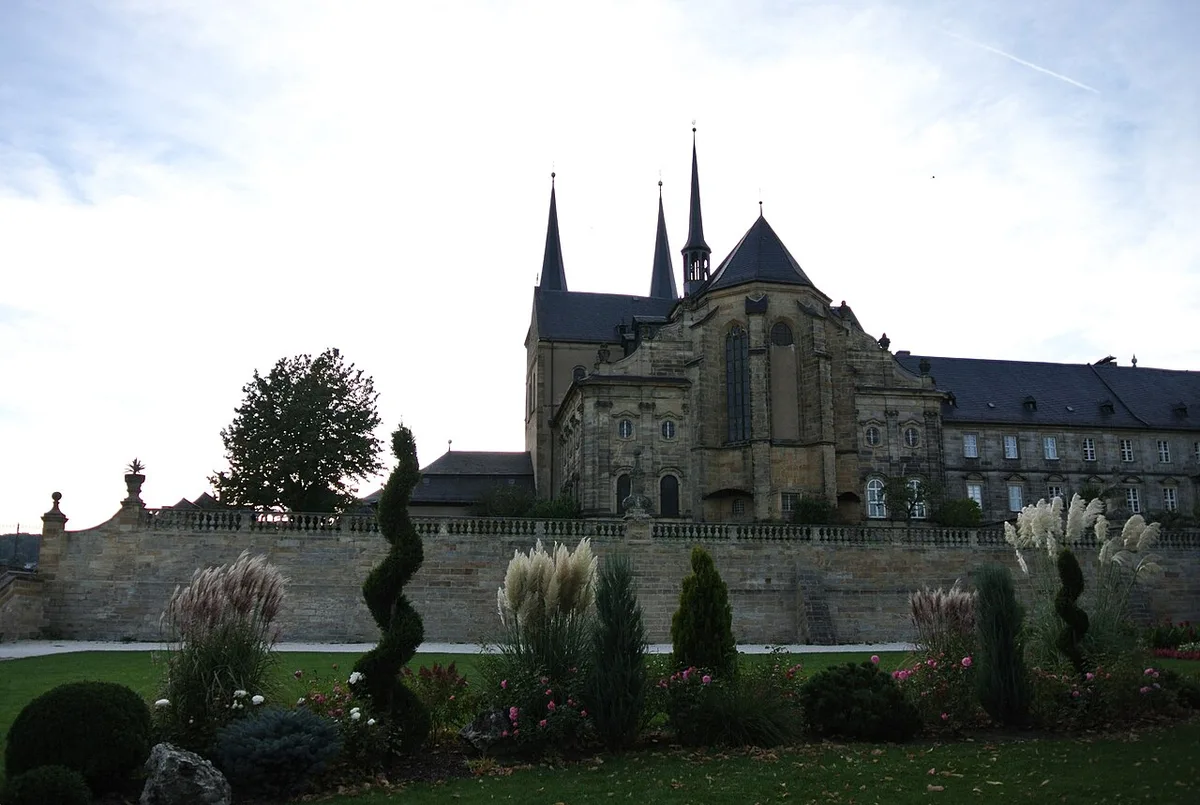
Below and around the church, the Michaelsberg Garden is a Baroque terraced garden with a fountain and two pavilions, and it rewards a slow circuit rather than a quick pass-through. Since 2012, vines have been growing on the slopes again, producing a Bamberg Silvaner, which ties the garden to the city's wider wine identity. If the vineyard interests you, remember that access is arranged through guided tours and events rather than casual wandering among the rows. The abbey shop on Michelsberg sells a selection of gifts from the Bamberg Abbey Garden and also acts as an information point for visitors.
Renovation Reality and the 2026 Reopening Context
Renovation is not a footnote here; it is the main constraint on what a visit can include. The foundation frames the reopening of St. Michael's as a 2026 project, but that is a stated goal tied to construction progress, not a date you should book around. The tourism office likewise notes that renovation work will continue in the church and across the whole site over the coming years. Plan for the possibility that interior access remains limited even if the calendar year matches what you read. Check the foundation's news section before travelling if the church is the reason for your visit.
A sensible approach is to treat the outdoor complex as the guaranteed part of the visit and the church interior as a bonus if your dates and the current schedule align. That way, a change in construction status does not ruin your day. If you have specific needs around access, contact the foundation management directly rather than relying on third-party summaries. The same caution applies to any guided format on the hill: confirm availability with the organiser in advance.
Sequencing the Hill With the Rest of Bamberg
Michaelsberg works best as a half-day anchor rather than the whole day, because the freely accessible grounds do not require hours of queuing and the church window is fixed. Combine it with a lower-town stop such as the Historisches Museum Bamberg in the Alte Hofhaltung, which sits in a very different architectural register and fills the afternoon neatly. If you are building a fuller itinerary, the cathedral and the Domberg ensemble are natural companions on the same day. Keep the climb for when you have energy rather than tacking it onto a long walking day.
For contrast, the Neue Residenz Bamberg on the Domberg is another ticketed interior with its own rules, so do not assume one ticket or one opening pattern covers both hills. Decide in advance which interiors matter most to you and build the day around those rather than trying to see everything. A short, realistic plan beats an overstuffed one when slopes and renovation closures are in play. Bamberg rewards slow movement between its hills more than checklist tourism.
Something to Eat and the Abbey Shop
Restaurants on the grounds operate on their own schedule, and the parking rule linked to evening and weekend restaurant visitors hints at when they are busiest. Rather than counting on a specific kitchen being open, treat a meal on the hill as a possibility and have a backup in the old town. The abbey shop on Michelsberg is the reliable retail and information stop, selling gifts from the Bamberg Abbey Garden and serving as a contact point for visitors. If you want a memento tied to the site rather than generic souvenirs, that is the place to look.
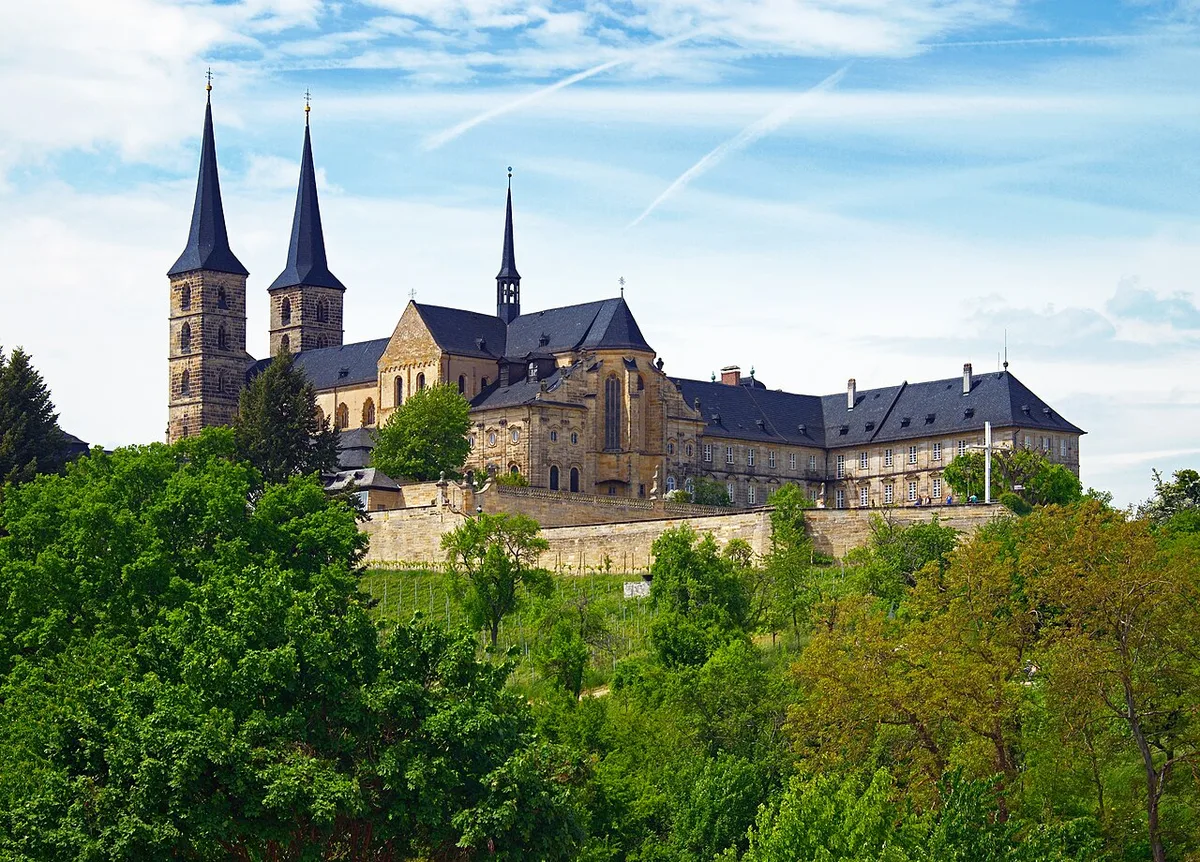
Because the abbey shop and any restaurant on the hill can change their own hours independently of the monastery grounds, check before you rely on either. The grounds being open at all times does not mean every building on them is staffed. A quick look at the foundation's pages or a call to the tourist information will settle it. Plan the shop stop for the end of your walk so you are not carrying purchases up the slope.
Plan Your Visit
Michaelsberg rewards preparation more than spontaneity right now. The workable formula is simple: pick a day when the church window fits your schedule if the interior matters, otherwise go anyway for the courtyard, garden and terrace view. Take the Panoramaweg or the Maienbrunnen route on foot, or use weekday bus 910 from the ZOB, and leave the car behind unless you are coming for an evening restaurant visit. Two to three hours is a reasonable suggested allowance for the grounds and the terrace, though that is our estimate rather than an official figure.
Before you climb, confirm three things with the operator: the current church opening pattern, the status of renovation work, and whether any guided vineyard or abbey format is running during your dates. Conditions on the hill are published by the foundation and the city's tourism office, and they are the only sources that reflect construction progress. Treat everything else as background. If you want to see how the monastery fits into the wider city, a broader Bamberg: Landmark Visitor Guides overview helps you place the hill among the cathedral, the old town and the river landscape.
Frequently Asked Questions
Is Michaelsberg Abbey free to visit?
The monastery courtyard, gardens and observation deck are described by the owning foundation as accessible at all times, so you can walk up and enjoy those areas without a timed entry. The church interior follows a separate, currently limited pattern, and ticketing for any interior space should be confirmed with the operator because published conditions change with construction work. Do not assume one price or one ticket covers everything on the hill.
Can you go inside St. Michael's Church in Bamberg?
Yes, but only during the current restricted window: the church is open Friday to Sunday and on public holidays from 11 a.m. to 4 p.m., according to the tourism office. That pattern is temporary and tied to renovation, so verify it again shortly before you travel rather than treating it as permanent. Outside those hours, the courtyard and gardens remain the accessible parts of the visit.
How do you get up to Michaelsberg without a car?
Walk via the Panoramaweg along Aufseßstraße and Benediktinerweg, or via Maienbrunnen, both of which climb the hill on footpaths. On weekdays, city bus line 910 runs from the ZOB to the Klinikum Michelsberg stop, which is the practical public transport option. The bus pattern does not extend to weekends or public holidays, so plan the walk on those days.
Is there parking at Michaelsberg Abbey?
Parking on the grounds is limited to the evenings and weekends for visitors to the restaurants and similar facilities, per the foundation. That means a daytime weekday visit by car is not well supported, and most visitors should plan to arrive on foot or by bus instead. If you are coming specifically for an evening meal, check with the venue about access and any conditions.
What can you see during the renovation?
The monastery courtyard, the Baroque terraced garden with its fountain and two pavilions, the observation deck and the terrace view behind the church remain available, and the abbey shop on Michelsberg serves as an information point. Since 2012, the foundation has limited visitors to the courtyard and gardens while construction continues. The church is the structure most affected, which is why its opening hours are narrowed.
When will St. Michael's reopen fully in 2026?
The foundation presents reopening as a 2026 project, but it is tied to construction progress rather than a guaranteed date, and renovation work is expected to continue across the site over the coming years. Treat any specific reopening day you read elsewhere as unconfirmed. Check the foundation's news and the city tourism pages close to your travel dates for the current position.
Can you visit the vineyards on Michaelsberg?
Vineyard visits are arranged only as part of guided tours and events, so you cannot simply wander into the rows on your own. Vines have grown on the slopes again since 2012, producing a Bamberg Silvaner, which is why interest is high. Ask the operator whether a guided format is running during your dates, and book through the official channel rather than assuming walk-up access.
How long should you spend at Michaelsberg Abbey?
Allow roughly two to three hours for the walk up, the courtyard, the terraced garden and the terrace view, with extra time if the church happens to be open. That is our suggested allowance, not an official figure, and the climb itself varies with your route and pace. If you are combining the hill with the cathedral and old town, treat Michaelsberg as one substantial stop rather than the whole day.


