

St. Mang's Abbey occupies a prominent spot on the hillside above Füssen's Altstadt, with the Hohes Schloss rising immediately behind it. The complex began as a Benedictine monastery founded in the 9th century and was dissolved during the post-Napoleonic secularisation of Bavaria. Today it contains both the baroque basilica and the Museum of the City of Füssen, and understanding that these are separate spaces with different entry arrangements is the key to planning a good visit.
The practical decision is simple: the abbey church is generally free to enter, while the museum in another wing of the former monastery is ticketed. A walking guide describes the church interior as slightly cold and austere, which sets expectations for what you will find inside. The museum, by contrast, holds the baroque state rooms, the lute and violin collection, and the Anna Chapel with its Dance of Death. Knowing this split before you arrive helps you decide how to spend your time.
What the Former Benedictine Monastery Contains
St. Mang's Abbey presents as a baroque four-wing complex rather than a single church. The monastery was founded by the Prince-Bishops of Augsburg for both spiritual and political reasons, which explains its position on the hillside overlooking the town. The building survived its religious function being dissolved and was later adapted for civic use, with different wings serving different purposes today.
Walking the complex means moving between distinct spaces. The church, the museum wing, the Anna Chapel and the cloister areas are reached from different points around the building, so expect a small circuit rather than one continuous interior. The museum is housed in the south wing, while the basilica functions as a working church. This physical separation is why the free-versus-paid split exists in the first place.
The Baroque Basilica
The basilica is the church within the former monastery, and travel sources treat it separately from the museum because entry arrangements differ. One walking guide describes the interior as slightly cold and austere rather than richly decorated, so do not arrive expecting the exuberant baroque finish found in some other Bavarian churches. That is one visitor's impression rather than a fixed rule, but it is worth knowing before you climb the hill.
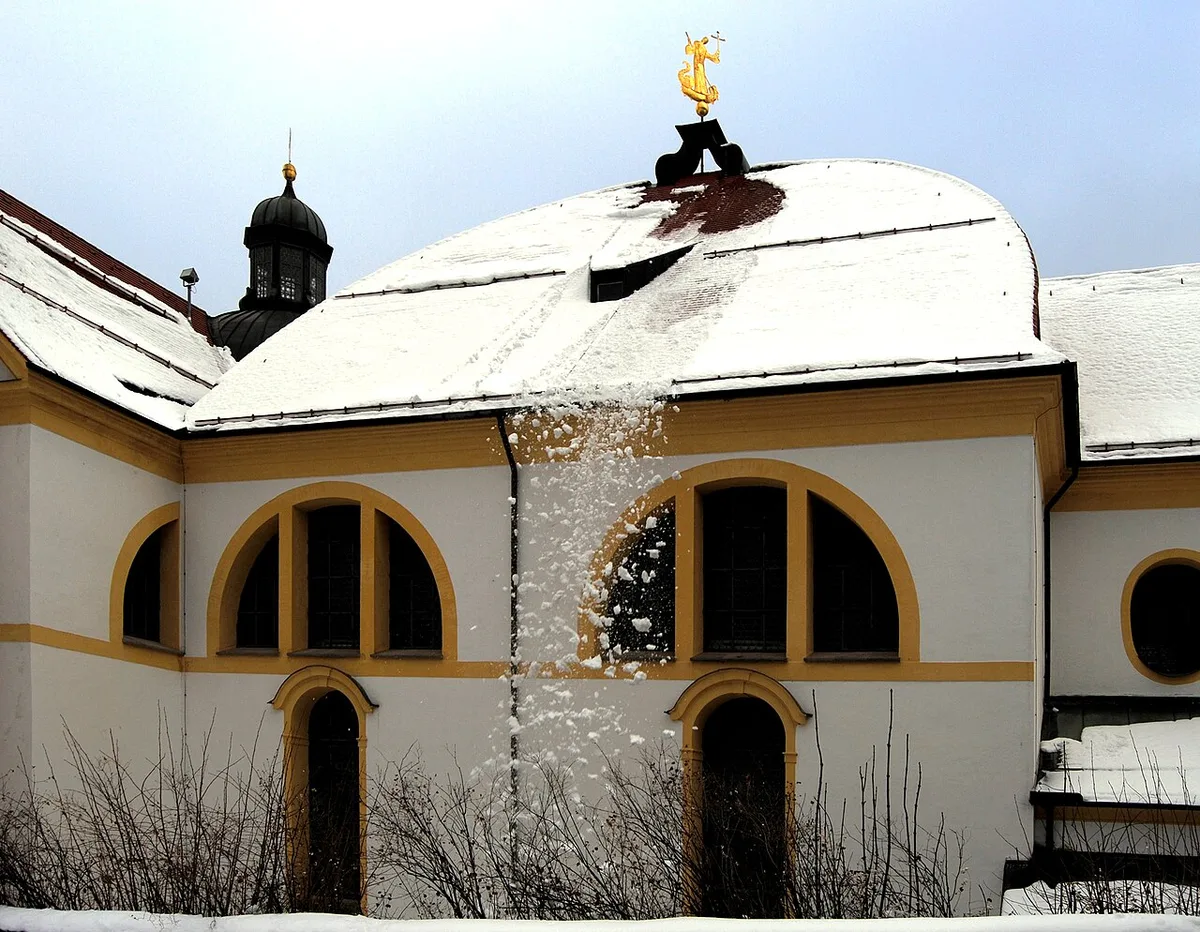
Because the church is a religious building rather than a museum, its opening is generally tied to services and the church calendar rather than to the museum's ticket desk. If the door is open, the interior is usually free to enter. Check any posted notices when you arrive, since a working church can be closed around services. If the interior is closed, the courtyard and exterior views still justify the short climb from the Altstadt.
The Museum of the City of Füssen
The Museum of the City of Füssen occupies a different part of the former Benedictine cloister, accessed from the Altstadt side. Its baroque state rooms are the main reason to pay admission: the Imperial Hall, Monastery Library, Colloquium and Chapter Hall together convey the former wealth of the Benedictine community. Walking these rooms is a different experience from walking the church, which is exactly why the two deserve separate decisions.
Beyond the state rooms, the museum tells the town's story across roughly a millennium, with artefacts described as around a thousand years old alongside the baroque interiors. Budget your time by room count rather than by a fixed figure, because the decorative rooms reward slower looking than the displays do. If you only have a short window, prioritise the Imperial Hall and the library over the chronological galleries.
The Lute and Violin Collection
The museum holds valuable historical lutes and violins, displayed as evidence of a specific local trade rather than as a generic collection of old objects. One source describes Füssen as the cradle of European lute making and states that the first European lute-making guild was founded there in the 16th century. Attribute that guild claim to the source making it rather than treating it as an uncontested fact, and read the museum labels for the local detail they add.
The city itself promotes its instrument-making past, describing Füssen as a centre of lute and violin making that became known across Europe. That context is useful because it explains why a small Alpine town has a collection of this kind at all, and why the museum's holdings are worth more than a quick glance. If the instrument displays interest you, give them the extra time you might otherwise spend elsewhere.
The Anna Chapel and Its Dance of Death
The baroque Anna Chapel inside the complex is the setting for a Füssen Dance of Death, a very different kind of highlight from the state rooms. One source describes the cycle as completed in 1602 against the backdrop of plague raging along the Lech, and as the oldest surviving death dance cycle in Bavaria. Those two details are what make it worth seeking out rather than treating it as a decorative afterthought.
Because the chapel sits within the museum wing, seeing it depends on being inside the paid part of the complex rather than on walking the free church. Plan the sequence so you reach the chapel while you still have attention for it, rather than at the end when you are already heading for the exit. If you are short on time, the chapel and the state rooms are the two elements to prioritise inside.
Where the Free Versus Paid Line Falls
The line is best understood room by room rather than by building. Travel sources describe the abbey church as free to enter, while Füssen City Museum, which occupies a different part of the former Benedictine cloister and is reached from the Altstadt side, is ticketed. Since the museum holds the baroque state rooms, the lute and violin collection and the St Anna Kapelle with its Dance of Death, the paid entry covers the interiors that most reward a deliberate visit.
Do not assume that one ticket covers every ticketed collection in the complex, including the Hohes Schloss, because the castle is a separate institution with its own admission. Treat any combined ticket as something to confirm at the desk or with the city cultural office rather than as a given. That check takes a moment and prevents an awkward surprise if you planned to see both on one purchase.
Prices and any combined offers are volatile and belong to the operator, so this guide deliberately does not state a figure. Instead, confirm current admission with the museum or the city cultural office before your visit. That way you know whether you are buying the museum alone or a shared ticket, and you can decide accordingly.
A Suggested Duration and How to Pair the Abbey with the Hohes Schloss
As a planning aid, our suggestion is to allow roughly 45 to 75 minutes for the free church and its immediate surroundings, and around 60 to 90 minutes if you add the museum interiors. These are our own figures, not an official estimate, so adjust them to how long you linger in state rooms and how much you read. If you tend to move quickly through museums, the lower end is realistic.
The abbey sits below the Hohes Schloss, which makes a combined old-town circuit natural rather than contrived. A workable sequence is to walk up from the Altstadt to the abbey, continue to the castle courtyard, and return through the lanes, which keeps the climbing to one direction. This is also a good way to structure a Füssen old town walking tour if you want one continuous route rather than separate outings.
The castle's inner courtyard is free to walk into even when the interiors are ticketed, so you can include the Hohes Schloss without committing to a second admission. That makes the abbey-and-castle pairing flexible: you can see both exteriors and choose which interiors, if any, to pay for. Decide on the day based on how much time and energy you have left after the abbey.
Practical Checks Before You Visit
Opening hours, prices and any combined tickets change, and this guide does not state them because they must be confirmed at source. Check the museum's own pages and the city's visitor information before you travel, and note that some operational details are published in German first. If a detail matters to your plan, ask the cultural office directly rather than relying on a secondary travel write-up.
Guided tours and access arrangements are also worth confirming in advance rather than assuming, and any accessibility claim should be verified with the operator rather than taken from a third party. Füssen's own visitor service maintains current information for the town's cultural sites, so use it as the starting point for opening patterns and seasonal changes. Build a little slack into your day in case a room is closed for conservation or a service.
Plan Your Visit to St. Mang's Abbey
St. Mang's Abbey rewards a deliberate visit because the interesting parts sit in different rooms of one complex. Enter the church for free, decide separately whether the museum interiors are worth the ticket to you, and check current prices and hours with the city or museum before you go. If you have time for only one paid interior, choose the museum for the state rooms, instruments and Dance of Death.
Set the abbey into a wider Füssen day rather than treating it as a standalone stop, because the Hohes Schloss, the Altstadt and the Lech riverside are all within a short walk. If weather turns, the museum interiors make an easy indoor fallback, which is worth keeping in mind if you are considering Füssen on a rainy day. Check the current situation at the abbey first, then build the rest of the route around it.
Frequently Asked Questions
Is St. Mang's Abbey free to enter?
Travel sources describe the abbey church as free to enter, while the Museum of the City of Füssen in a different part of the former monastery is ticketed. Because the church and the museum are separate spaces, you can visit the basilica without paying museum admission. Confirm current arrangements at the entrance or with the city cultural office, since opening patterns can vary.
Is the basilica the same as the Füssen museum?
No. The basilica is the church inside the former Benedictine monastery, and the Museum of the City of Füssen occupies a different part of the complex, in the former Benedictine cloister area, with its own entrance from the Altstadt side. The museum holds the baroque state rooms, the lute and violin collection and the St Anna Kapelle with its Dance of Death. Treat them as two separate visits with separate entry conditions.
What can you see in the Füssen Heritage Museum?
The museum's baroque interiors include the Imperial Hall, Monastery Library, Colloquium and Chapter Hall, which together convey the former wealth of the Benedictine community. It also displays historical lutes and violins tied to Füssen's instrument-making past, and the St Anna Kapelle with its Dance of Death cycle completed in 1602. The town's history is covered across a long chronological span, including artefacts described as around a thousand years old.
How long should you spend at St. Mang's Abbey?
As our own suggestion rather than an official figure, allow about 45 to 75 minutes for the free church and its surroundings, and roughly 60 to 90 minutes more if you add the museum interiors. How long you actually need depends on how much you read and how long you spend in the state rooms. If you are short on time, prioritise the Imperial Hall, the library and the St Anna Kapelle.
Should you combine St. Mang's Abbey with the Hohes Schloss?
The abbey sits directly below the Hohes Schloss, so pairing them makes sense geographically and keeps the climbing to one direction. The castle courtyard is free to walk into even when its interiors are ticketed, so you can see the exterior without committing to a second admission. Do not assume one ticket covers both, because they are separate institutions; verify any combined offer at the desk or with the city before relying on it.


