

An evening in Füssen is best treated as a walk rather than a night out. The historic core is compact and pedestrianised, with cafés, shops and painted facades packed into a few streets beneath the Hohes Schloss, so the essentials fit into a single loop. The honest expectation is an early-quiet town: this is a Bavarian Alpine resort that winds down rather than ramps up.
As a rough shape for the evening rather than an official timing, allow around two hours for the core streets, the view from Franziskanerplatz and a stretch of the Lech bank, plus more if you stop to eat. Füssen lies at the southern end of the Romantic Road, on the Lech and close to the Austrian border, with a compact centre that rewards walking. Use the town's own tourism site for current events and seasonal pages, and treat sunset as the anchor of the evening.
Start on Reichenstraße, the Pedestrian Heart of the Old Town
Reichenstraße is the spine of the old town and the natural first stop. The town's own description calls it the heart of Füssen and notes that it is the pedestrian zone, with small cafés and stores, painted house facades and the High Castle always in view. Because the street is pedestrianised, you can wander without watching for traffic.
Use Reichenstraße as an orientation device rather than a destination. Walk it once in the fading light to get your bearings, note which side streets look worth a detour, then loop back later when the shop windows are lit and the street feels calmer. If you want a structured route through the same core streets in a logical order, a Füssen old town walking tour covers the ground before you improvise.
The town's culture pages list cafés and restaurants along the pedestrian zone but do not publish reliable evening closing times, so do not build the evening around a specific venue staying open. Eat earlier rather than later if a sit-down meal matters, and treat any late stop as a bonus rather than a plan.
The Quaglio View from Franziskanerplatz: The Evening's Best Single Stop
If you only make one deliberate stop, make it Franziskanerplatz, in front of the Franciscan monastery. From here the town's own description explains the Quaglio View as a layered composition: the Hohes Schloss at the top as a symbol of secular power, the former St. Mang monastery below it as the spiritual centre, and the town houses at the foot. It is called the Quaglio View after Domenico Quaglio, the Italian painter and master builder who painted the panorama in the 19th century.
The viewpoint rewards a slow look rather than a quick photo. Because castle, monastery and town stack into one frame, the square is the clearest place to understand how Füssen was organised, and low evening light tends to fall across the facades rather than behind them. Pair it with the wider choice of viewpoints in Füssen if you want to compare this panorama with the options above and around town.
St. Mang and the Lech Bank: Where the Riverside Fits In
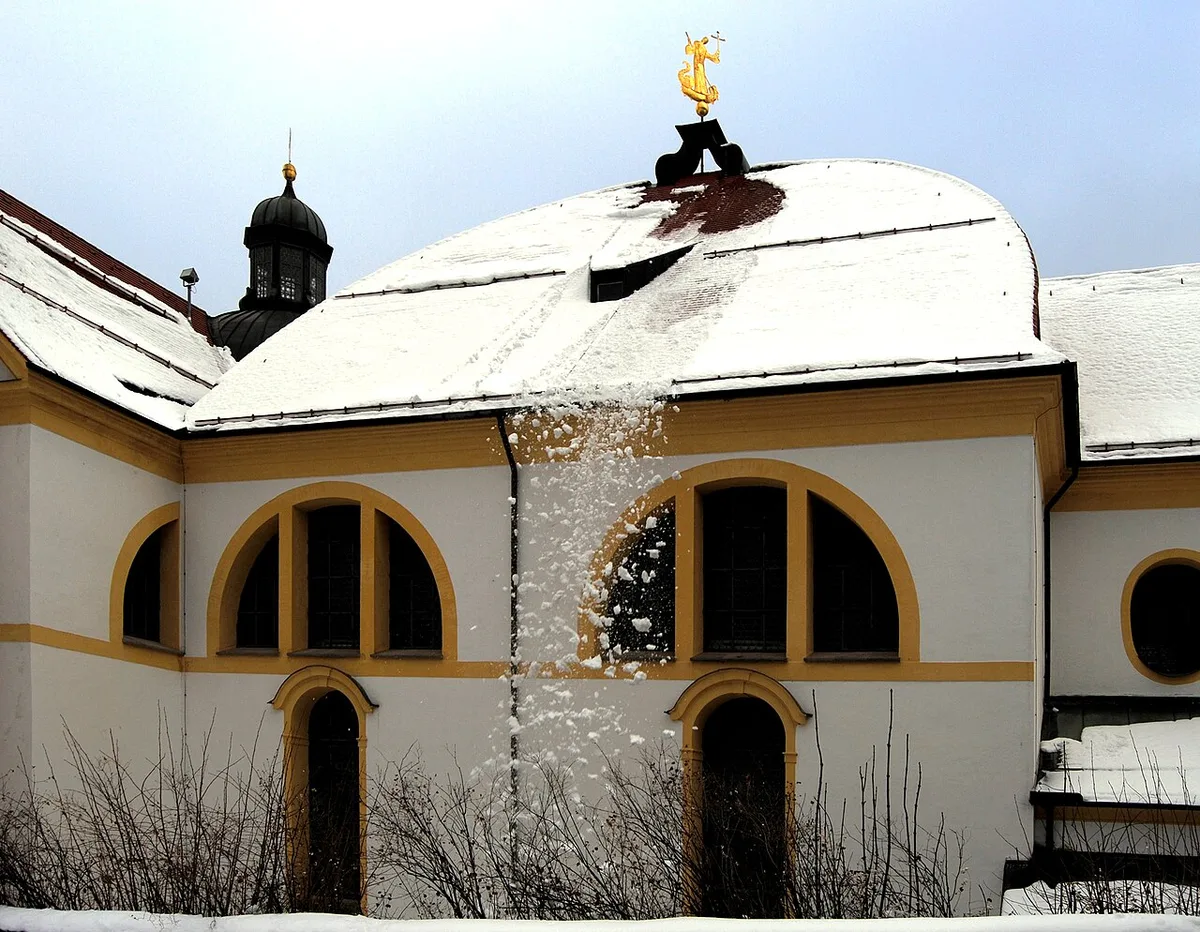
The former Benedictine monastery of St. Mang rises on the high bank of the Lech and anchors the eastern edge of the old town. The town describes it as a baroque complex holding the museum of the town of Füssen, the town administration and the parish church of St. Mang, and notes that the site's history reaches back to the 8th century, when the town's patron saint Magnus founded a monastic cell there. Outside, the massing of the buildings above the river is the point; whether the interiors, including the Museum der Stadt Füssen, are open when you visit is a separate question to check with the operator.
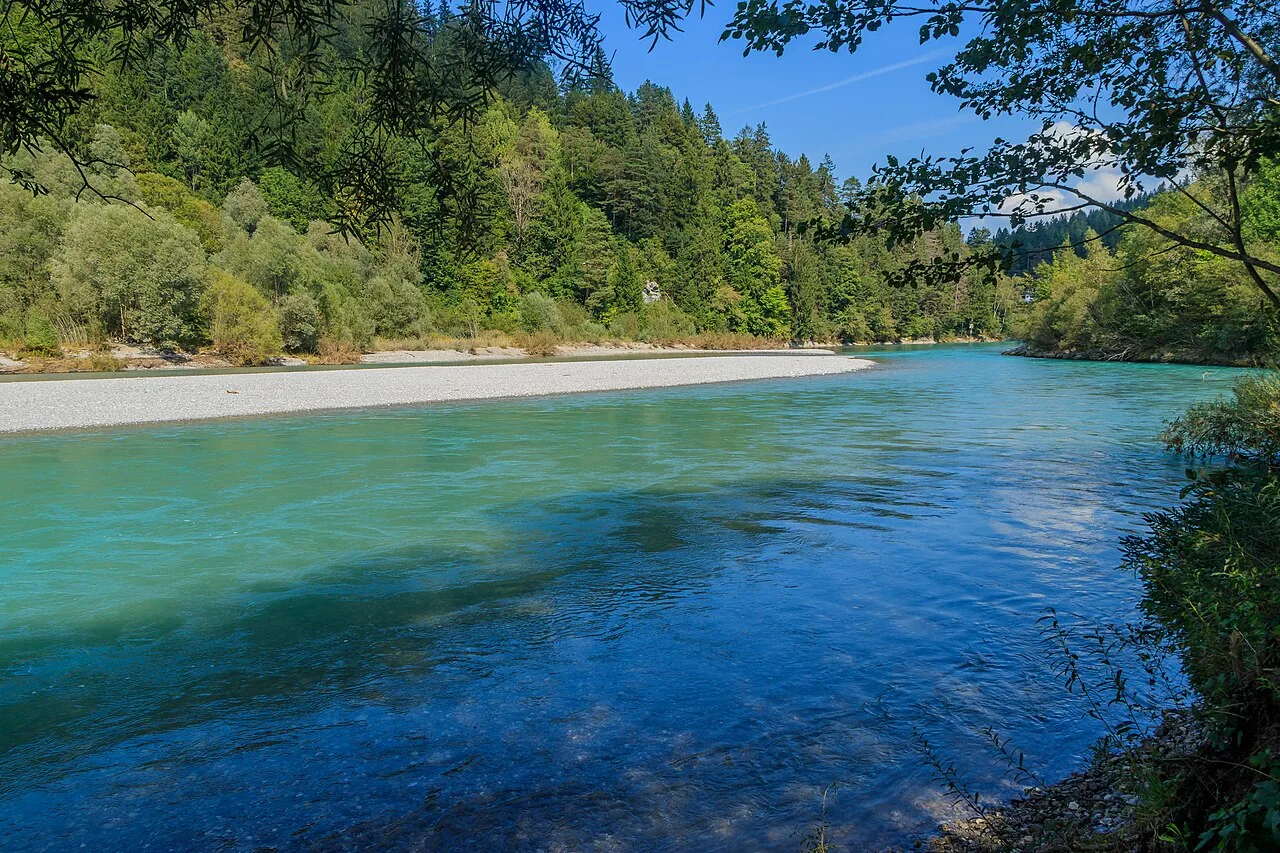
From the monastery, the Lech is the natural next step. The town's position on the river is central to its history as a transhipment point for goods crossing the Alps, which is why a short riverside stretch belongs in any evening loop. No specific riverside route or distance is published for visitors, so walk until the light or your mood says turn back, and keep the old town within sight.
A quieter reading stop sits inside the monastery complex itself: the town library, which the town's culture pages describe as a hidden insider tip, with a reading café in the orangery where newspapers and magazines are available. It is a genuinely different way to spend part of an evening in Füssen, and worth knowing about even if you only note it for a return visit.
Beyond the Core: the Baumgarten and Bad Faulenbach
When the old town starts to feel busy, the Baumgarten is the obvious release valve. The town describes it as an idyllic green oasis a short walk from the city centre, with a variety of trees, plants and flowers that provide a colourful spectacle in every season. In the evening it is a place to slow down rather than to see anything specific, which is exactly its value after the density of the lanes.
If you want a longer walk rather than a pause, Bad Faulenbach is the alternative. Füssen's own pages describe this district as a largely car-free valley where six Faulenbach lakes sit one after another, ending at the Alatsee, and note that it is a mineral and moor spa as well as a Kneipp resort. That makes it a different kind of evening entirely: quieter, greener and further from the town's lit facades.
The trade-off is straightforward. Staying in the old town gives you the Quaglio View, the painted street and the riverbank within a short walk of each other; heading out to Bad Faulenbach trades that concentration for space and quiet. Choose based on how much walking you want and whether you plan to come back into town afterwards.
Timing Your Evening: Sunset First, Late Night Second
The single most useful planning decision is to treat sunset, not a fixed hour, as the anchor. Arrive in the old town while there is still light to see the facades and the view from Franziskanerplatz, then let the loop through Reichenstraße and down toward the Lech fill the blue hour. This sequence gets you the best of both and does not depend on any schedule the town has not published.
The old town holds more than 2,000 years of documented history in a small area, according to the town's own old town pages, so walking distances are short even when the content is dense. That is why a suggested two hours for the core loop is realistic rather than rushed; add time at Franziskanerplatz or by the river as it suits you.
What you should not assume is that everything stays open late. The town does not publish tavern closing times, last orders or an illumination schedule, and evening access to the Hohes Schloss or the museums is not confirmed on the culture pages, so check the operator's current information for any specific building you want to enter. Assume the atmosphere is the attraction and the interiors are a daytime matter.
Getting back to your accommodation is the last piece of the puzzle. Füssen's tourism site states that overnight guests travel free on local transport in Füssen and the surrounding area with the guest card, which removes the parking problem if you are staying outside the centre. Confirm the current scope and conditions on the official mobility pages, since the terms are set by the operator.
Guided Evening Options in the Old Town
If you would rather follow someone who knows the lanes, the town's event calendar lists a guided evening tour through the historic old town of Füssen, alongside night walks through the old town that appear in the family and holiday programme. These are listed as dated events on the calendar, so open it and look at the current entries rather than relying on any date quoted elsewhere.
A guided walk changes the character of the evening: you get the historical layering of the town explained in place, and you cover the core streets without deciding where to turn next. The cost is flexibility, since you move at the group's pace and on its schedule. It suits a first evening, when orientation is worth more than spontaneity.
For a general daytime version of the same ground, the Füssen old town walking tour page sets out the route through the historic centre, which you can also use as an evening template if no tour is running. Booking details, prices and availability for guided tours belong on the operator's own listing and should be verified there on the day you plan to go.
Winter Evenings and the Christmas Lighting
Winter is the one season when Füssen's evening atmosphere is explicitly described by the town itself. Its winter pages present the season as strolling through the romantic lanes of the town with its Christmas lighting, so the light is part of the destination rather than a backdrop. Nothing in that description commits to a switch-on time or a nightly schedule, so plan around dusk and check locally for what is running.
Advent changes the town's rhythm as well, with a Christmas market listed among the town's event highlights and an Advent market appearing in its event navigation. The town does not publish dates for these on the pages consulted, so consult the official calendar for the current year rather than planning around a remembered week. Expect the old town to feel more purposeful in December than on a quiet shoulder-season evening.
Cold-weather evenings also make the compact loop more attractive, because you can move between the street, the viewpoint and a warm interior without a long exposed walk. Dress for standing still at Franziskanerplatz, where the view is the reason you are outside in the first place.
The Castles Are Not an Evening Option
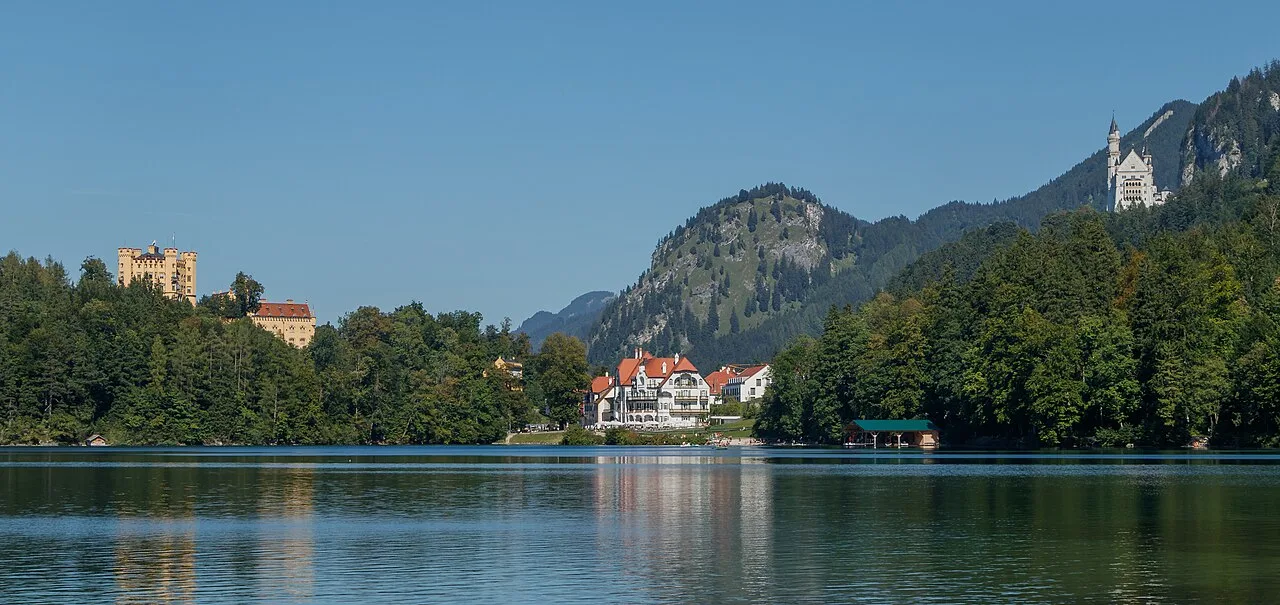
The most common planning mistake is assuming Neuschwanstein and Hohenschwangau are part of a Füssen evening. They are separate destinations near the neighbouring village of Schwangau, and they are presented as daytime visits rather than evening options. There is nothing in the town's or the route's published material to support a night visit or a nightly illumination you could plan around, so do not build an evening itinerary that depends on either castle.
Keep them as a distinct day in your trip instead. If you are staying more than one night, a 2 days in Füssen itinerary is the natural place to slot the castles into daylight hours and leave the evening for the town itself. Pairing the two wrongly is what leaves people standing in the wrong place at dusk.
The same logic applies to the higher ground around town. The Tegelbergbahn and the viewpoints above Füssen are daytime propositions, and treating them as an evening extension would misread how the valley works after dark. If you have three days, a 3 days in Füssen itinerary gives you room for the mountains, the castles and a proper old town evening without cramming.
Practical Decisions for a Smooth Evening
Decide about food before you start walking rather than during the walk. Because the town does not publish reliable closing times or last orders, the safer sequence is to eat early in the evening and then treat the old town walk as the main event, with a drink or dessert as an optional extra if somewhere is still open. That way the evening does not depend on a venue's decisions.
Walking back is the other decision worth making in advance. If you are staying in the centre, the return is trivial; if you are staying in one of the outlying districts, plan the walk or the bus before you set out. The Füssen: Landmark Visitor Guides collection is a useful reference for the specific sights and their settings if you want to lay out the next day's plan as well.
Finally, check the day's notices. Füssen's tourism site carries a news ticker with construction and transport disruptions, and the town has had roadworks affecting access around the bus station and nearby routes. A quick look before you leave avoids discovering a closed street on foot in the dark.
If you enjoy comparing how different European towns handle their evenings, Dresden at night offers a useful contrast, with a larger illuminated centre and a very different late-night culture. Reading the two side by side makes Füssen's early-quiet character easier to plan for.
Plan Your Füssen Evening
Füssen at night is a short, walkable loop through a lit old town, not a nightlife district. Anchor the evening to sunset, start on Reichenstraße, make Franziskanerplatz and the Quaglio View your single deliberate stop, and finish along the Lech beneath the former St. Mang monastery.
Keep the castles for daylight near Schwangau, use the Baumgarten or Bad Faulenbach when you want quiet, and let the guest card handle the trip back if you are staying outside the centre. Check the town's current event calendar, winter pages and transport notices before you go, since those are the details that change.
Frequently Asked Questions
What is there to do in Füssen at night?
The realistic answer is a walk rather than an itinerary. Stroll the pedestrianised Reichenstraße, take in the Quaglio View from Franziskanerplatz in front of the Franciscan monastery, and follow the old town to the high bank of the Lech below the former St. Mang monastery. If you want structure, the town's event calendar lists evening guided tours and night walks through the old town; check the current listings rather than assuming a tour runs every night.
Is Füssen old town worth visiting in the evening?
Yes, if you value atmosphere over entertainment. The historic centre is compact, so the castle above the town, the painted facades and the monastery complex sit within a short walk of each other, and the light at dusk suits exactly that kind of wandering. Come expecting a quiet town that winds down early rather than bars and late venues, and you will get more out of it.
Is Neuschwanstein Castle open or illuminated at night?
Treat both castles as daytime destinations. Neuschwanstein and Hohenschwangau sit near the neighbouring village of Schwangau rather than in Füssen itself, and nothing in the town's or the route's published material presents them as an evening option. If you want to visit either, plan it as its own day and check the castle operator's own pages for current opening and ticketing information.
How long does an evening walk through Füssen old town take?
As a suggestion rather than official guidance, allow around two hours for the core loop of Reichenstraße, Franziskanerplatz, St. Mang and a stretch of the Lech bank. Add time if you stop to eat or linger at the viewpoint. The distances are short because the old town is compact, so the length of your evening depends more on how often you pause than on how far you walk.
Is Füssen quiet at night?
Yes, generally. Füssen is an Alpine resort town rather than a city with a nightlife economy, and its evening appeal is the illuminated lanes, the view from Franziskanerplatz and the riverbank. Because the town does not publish reliable closing times or last orders, plan to eat earlier and treat any later stop as a bonus rather than something to count on.
Does Füssen have Christmas lighting in winter?
The town's own winter pages describe the season as strolling through the romantic lanes with their Christmas lighting, and a Christmas market and Advent market appear among its event highlights. What is not published is a switch-on time or a nightly schedule, so plan around dusk and confirm the current programme on the official event calendar before you travel.


