Dresden is unusually well suited to an evening on foot: the Altstadt is compact, the floodlit baroque facades sit within a few minutes of each other, and the Elbe gives the whole route a natural spine. The trade-off is that fewer interiors stay open after dark, so the best evenings mix outdoor landmarks with one planned indoor stop. Treat everything here as a planning framework, and confirm opening hours, performance calendars and prices with each venue before you commit.
One practical fact shapes the whole night: tickets for most events at the Saxon State Theatres carry the VVO KombiTicket, which covers S-Bahn trains, regional trains, trams, buses and Elbe ferries from four hours before the event until eight hours after it. The Semperoper lists exceptions, including free and low-price events in categories ZU1 to ZU3 and complimentary, sponsor or press tickets. In other words, a performance ticket can double as your ride home, but only if your ticket shows the VVO logo.
Why Dresden After Dark Feels Different
Daytime Dresden is a coach-tour city; evening Dresden belongs to people walking between lit facades. The rebuilt Semperoper, the cathedral and the Zwinger courtyards sit close enough that you can drift between them without a plan, which suits an unhurried first night. The catch is that the courtyards and squares are open public space, while the museums and galleries inside them are separate, ticketed collections.
Before dark, the Zwinger, Theaterplatz and the Frauenkirche draw the heaviest foot traffic. National Geographic's suggested day route puts the Zwinger first thing in the morning precisely to beat those crowds, then moves to the Fürstenzug mural and the Frauenkirche. Reversing that order in the evening gives you the same landmarks with thinner crowds and a stronger atmosphere.
The cost of that atmosphere is access. Interior visits to the Zwinger collections, the Albertinum or the Frauenkirche's own programme generally belong to daylight hours, so treat the evening as a streetscape experience rather than a museum one. If a specific gallery matters to you, check that venue's own site for the day you are in town. Use our Dresden landmark visitor guides to plan individual interior visits.
A Walkable Altstadt Evening Loop
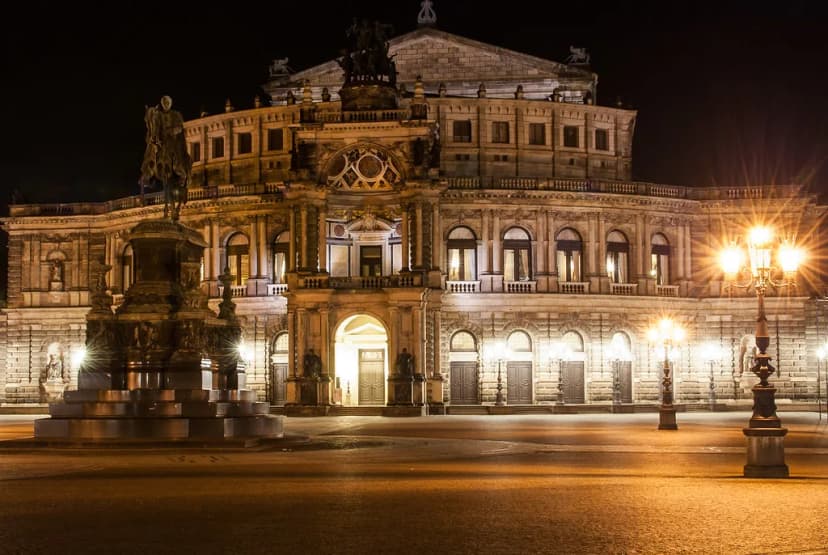
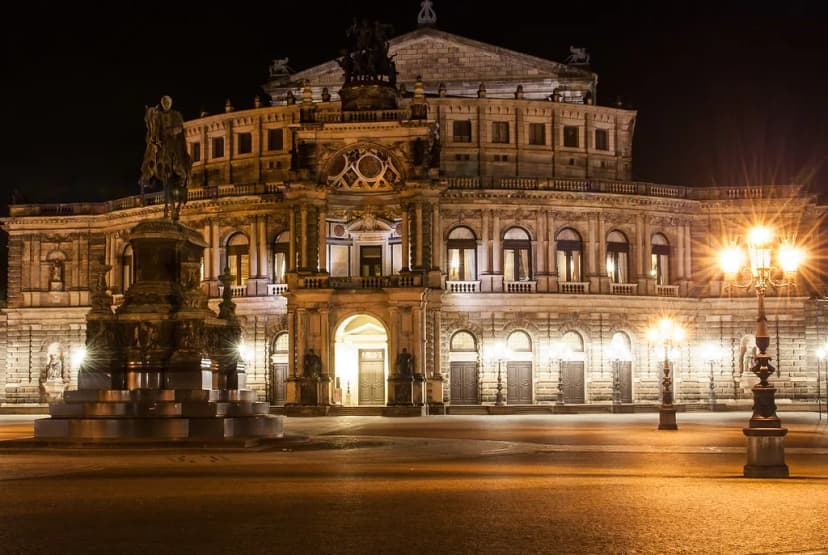
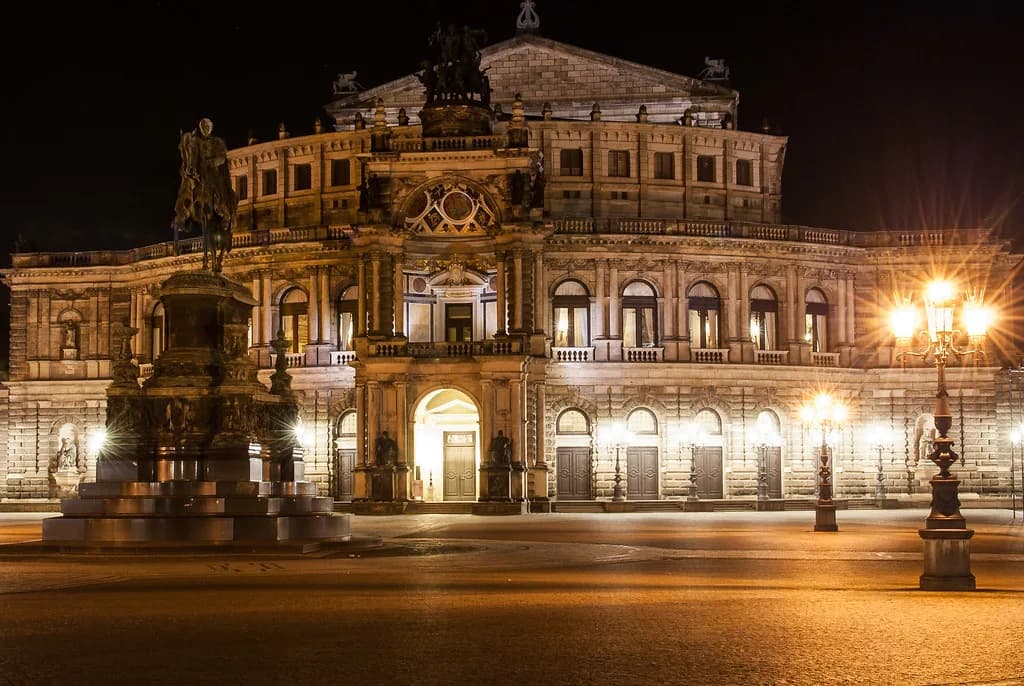
Start at Theaterplatz, where the Semperoper exterior and the Catholic cathedral frame one of the city's most photographed squares. Walk through the Zwinger's colonnaded courtyards without buying anything, then cut south toward the Fürstenzug, the long porcelain mural that traces Saxony's rulers. It is a short, flat sequence that works well as a loop before or after dinner.
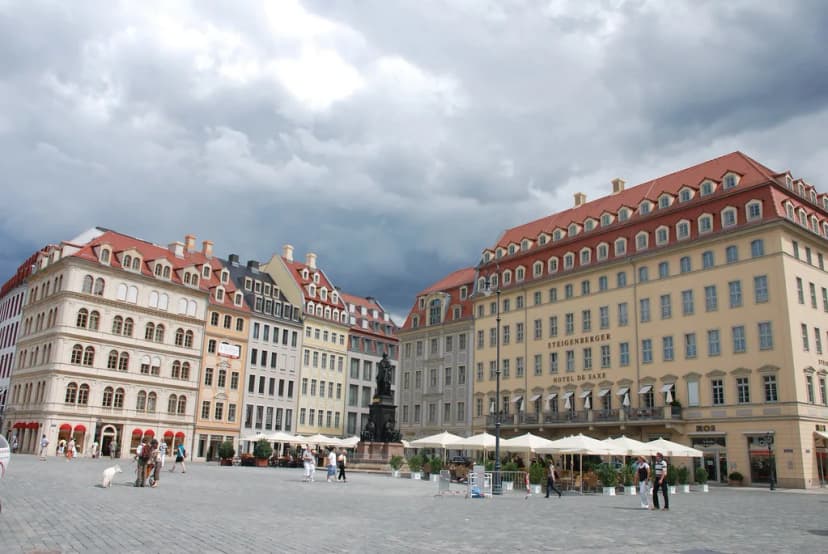
The Frauenkirche anchors the eastern end: a Lutheran church rebuilt after the Second World War and consecrated in 2005, it now dominates the old-town roofline. The same source notes organ demonstrations during the day and evening performances, so it is worth checking the church's own listings if music in that setting appeals. Otherwise the square in front is free to linger in.
The Albertinum sits near the Frauenkirche and holds work by Dresden artists including Gerhard Richter, along with East German pieces by figures such as Karl-Heinz Adler. It is a modern art museum with its own ticket, not part of the Zwinger complex, so budget a separate visit rather than assuming one pass covers both. Plan it for daytime and keep the evening for the streets.
The River and the Terraces
Brühl's Terrace and the Elbe embankment give you the classic elevated view back across the river toward the Altstadt skyline and the bridges. This is the natural close to an evening loop: walk east along the water, then cross the Augustus Bridge if you are heading to Neustadt. Keep expectations loose about boats, because late-night ferry and cruise operation is not something you should assume.
If a river trip is part of your plan, book it as a daytime or early-evening activity and confirm the operator's own timetable rather than relying on a stroll past a pier. The bank itself is free, walkable and arguably the best-value viewpoint in the city. The KombiTicket's inclusion of Elbe ferries applies to holders of qualifying theatre tickets, not to everyone standing on the terrace.
An Opera or Concert Night, Done Properly
The Semperoper's own guidance is refreshingly plain: dress so you feel comfortable while respecting the festive atmosphere, and long trousers are expected for entry. The cloakroom is free for all visitors, and the house asks guests to leave coats and large bags there, with no food or drink in the auditorium. Photography and sound recording are not permitted during performances.
If you want to see the building without committing to a full opera, there is a 30-minute short guided tour before selected performances, priced at 13 euros per person, starting 75 minutes before curtain. The meeting point is the entrance facing the Elbe, and tour tickets are only valid alongside a ticket for that same performance. Everything else about the tour schedule and booking runs through the operator's own pages.
Most operas carry supertitles in German and English, and some performances are preceded by short introductory lectures held in the basement, though not every event includes one. The house also notes that tickets are sometimes still available shortly before a performance, including from the evening box office. Check the current season's programme directly, since availability and pricing are not fixed facts you can plan around in advance.
Kraftwerk Mitte and the Theatre District
West of the old town, the former power station at Kraftwerk Mitte has been converted into a cultural complex with theatres, cafes and restaurants. It hosted illegal techno parties in the 1990s before its rebirth, which gives the red-brick site a different flavour from the baroque centre. If you want a performance-led evening that is not the Semperoper, this is the obvious alternative.
Staatsoperette Dresden stages operettas and musicals within the same complex, and the Puppentheatersammlung next door holds puppets from Saxony and beyond. The puppet collection tells the story of how puppetry once carried politics, fashion and satire to ordinary Saxon communities. Each of these venues runs its own programme and ticket, so check what is on rather than assuming a shared admission.
Crossing to Neustadt
North of the Elbe, Neustadt is where Dresden's evening energy settles after the old town quiets down. Despite the name it is old, much of it rebuilt after a fire in 1685, and it has been home to artists, squats and counterculture for decades. The walk from the Altstadt across the river takes you straight into the bar-lined grid.
One of the district's artiest addresses is Raskolnikoff, a bar, restaurant, hotel and gallery in a listed 19th-century building that has served as flats, an iron foundry and a dance hall before becoming an art-collective squat in the 1980s. The Kunsthofpassage courtyards nearby are decorated with colourful street murals. Both are worth wandering through rather than treating as fixed stops on a schedule.
Allow more time than you think for the Neustadt, because the appeal is drifting between courtyards and side streets rather than ticking off sights. If you want a broader view of the city's layout before committing to a district, the Dresden: Landmark Visitor Guides collection maps out the major sites. Keep the river as your reference point so you can always find the bridge back.
Dinner and Drinks: Timing Your Night
Neustadt's Villandry is a laid-back, seasonal restaurant where the menu changes regularly and has included beef tongue with cornbread, vegetable strudel and venison goulash alongside Japanese soba bowls. The thread running through it is hearty cooking suited to cold east German evenings, with Saxon beers and wines from near Meissen. Reserve ahead if you are eating before a curtain time.
The real decision is sequencing: eat early and walk the Altstadt afterwards, or walk first and eat late in Neustadt with no fixed end time. Performance nights normally force the first pattern. On free evenings, the second gives you the floodlit skyline on the way across the bridge and a relaxed table at the end of it.
A Suggested First Evening
For a first visit, a two-to-three-hour loop is realistic and deliberately modest: Theaterplatz, the Zwinger courtyards, the Fürstenzug and the Frauenkirche square, then the Elbe terraces for the skyline view. This is a suggestion, not an official route, and it leaves room for a late drink in Neustadt if you still have energy. It also assumes good weather, since the whole value of the loop is being outdoors.
If you prefer a slower close, end on the riverbank with one last look at the illuminated silhouette rather than pushing on to another venue. The comparison to a daytime visit is straightforward: fewer open interiors, smaller crowds and a far stronger sense of atmosphere. If you want to catch specific viewpoints before dark, the city's best viewpoints are worth comparing first.
Practical Timing and Access Notes
Dresden's Old Town and Neustadt are best explored on foot, but the cobbled streets can make movement difficult for travellers who use wheelchairs. There are no published guarantees here about tram lines or journey times, so treat any specific route advice you find elsewhere with caution. The one transport fact worth relying on is the KombiTicket window of four hours before to eight hours after a qualifying event.
Opening hours for the Zwinger, Frauenkirche, Albertinum, Kraftwerk Mitte and Puppentheatersammlung are not fixed facts you can plan around, so check each venue's own site for the date you are in Dresden. Likewise, river cruise and ferry schedules should come from the operator rather than from a general guide. Build the evening around confirmed opening times and one booked performance, and the rest of the route will flex around it.
Plan Your Visit
Dresden rewards an evening that commits to one indoor plan and lets the rest be walking. Book the performance or tour you actually want, check that venue's current hours and prices directly, and confirm your transport window if you hold a qualifying theatre ticket.
Use the city guide collection to choose between a single evening and a fuller stay, and keep the cobblestone caution in mind if anyone in your group has mobility concerns. The city's night-time appeal is real, but it lives outdoors, so dress for the weather and the walk.
Frequently Asked Questions
Is Dresden worth visiting at night?
Yes, if you value atmosphere over museum access. The compact Altstadt puts the floodlit Semperoper, the Zwinger courtyards, the Fürstenzug and the Frauenkirche within a short walk of each other, and the Elbe terraces give you the skyline view. Most ticketed interiors close in the evening, so plan the cultural stops for daylight and treat the night as a streetscape and riverside experience.
What is there to do in Dresden at night besides bars?
A performance at the Semperoper or one of the theatres at Kraftwerk Mitte is the obvious non-bar option, and the Semperoper runs a short pre-performance guided tour on selected dates for ticket holders. You can also walk the illuminated old-town loop, cross the Augustus Bridge into Neustadt to see the Kunsthofpassage courtyards, or simply end on the riverbank. Check each venue's own programme for what is actually scheduled during your stay.
Can you visit the Semperoper in the evening without booking a performance?
Only in a limited way. The short guided tour the house describes runs before selected performances and its ticket is valid only together with a ticket to that performance, so it is not a stand-alone evening visit. The building's visitor service and opera shop operate separately, and the box office opens ahead of each performance. If you want to be inside the auditorium, the practical answer is to book a performance ticket and check the current programme directly.