A suggested one-day walk in Dresden can realistically cover the Altstadt on foot, from Neumarkt in the morning to Altmarkt in the evening, with one museum or tower added if you protect the time for it. The assumption to drop before you start is that a day trip means seeing everything: the old town is compact, but its interiors are separate attractions with their own tickets and their own opening patterns. Treat this route as a suggested walking sequence, not an official schedule, and adjust the pace to your own energy and interests.
You can plan the wider trip around this day using the Dresden: Itineraries and City Travel Guides hub, which collects route options for different trip lengths. The city's own tourism pages describe a well-developed local network of trams, buses, Elbe ferries and two mountain railway lines, plus a signed pedestrian wayfinding system with information pillars at major arrival points such as stations and car parks. That matters for a one-day visit because it means you rarely need a vehicle inside the centre; the map pillars alone can orient you between sights.
Why the Altstadt Works for a Single Day
Dresden's historic core packs its headline buildings into a walkable cluster: Neumarkt, the Fürstenzug mural, Theaterplatz, the Zwinger and the Residenzschloss all sit within a short stroll of one another, with Brühlsche Terrasse and Altmarkt close by. Published city guidance notes that the main squares function as transport hubs as well as sightseeing space, so you can move between them on foot and only use public transport for deliberate hops such as crossing to Neustadt or heading out to Loschwitz. Wear shoes with grip, because much of the old town is cobbled and uneven underfoot.
This route suits walkers who accept a slower pace, short layovers, and anyone who would rather see six exteriors properly than queue for two interiors. It suits less well travellers who want deep museum time, because a single gallery can absorb the whole afternoon. One independent weekend guide recommends at least one full day for the famous sights and two full days to go deeper into the museums, which is a fair benchmark for judging your own pace.
Morning: Neumarkt and the Frauenkirche
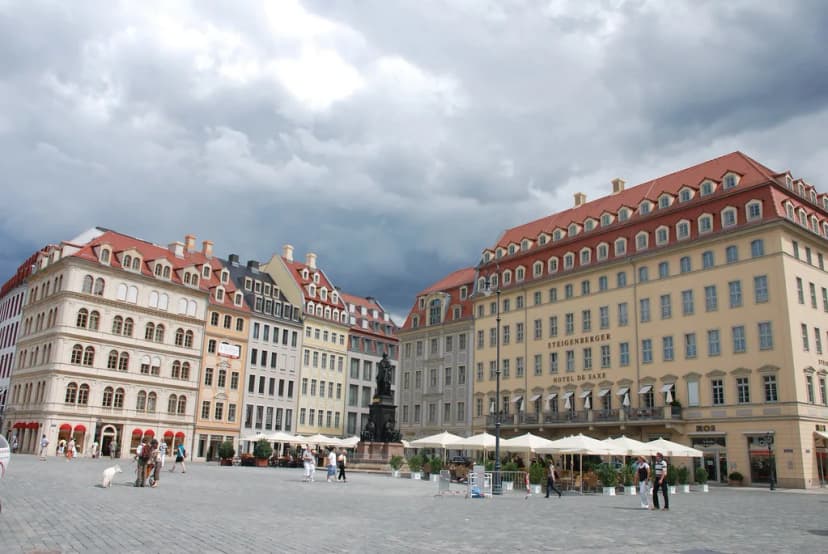
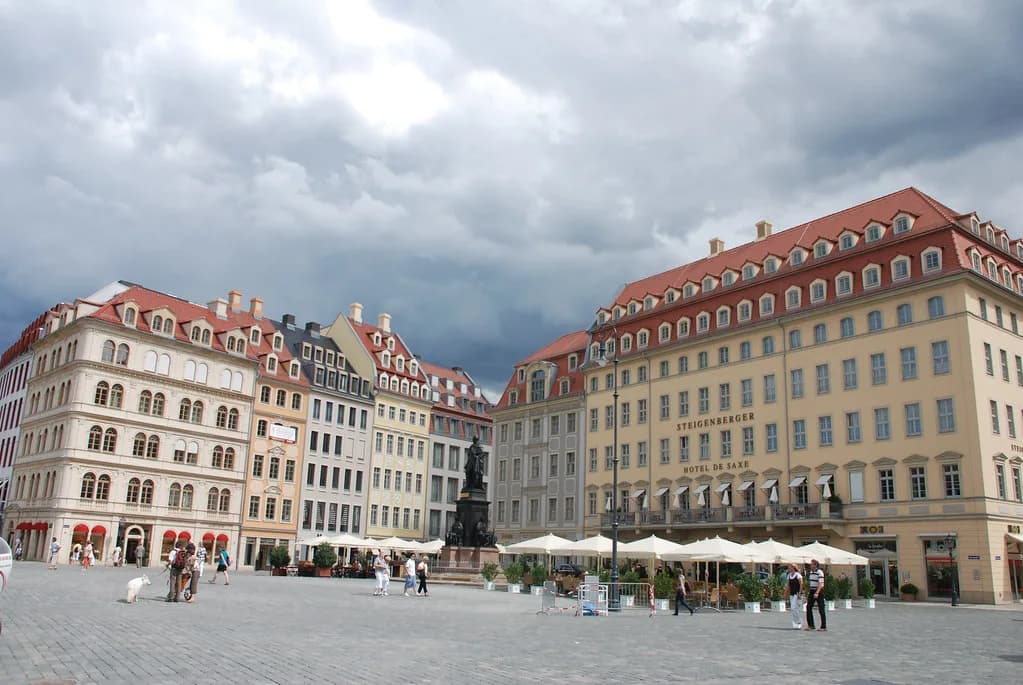
Start at Neumarkt, the square around the Frauenkirche, where the church's dark and light stonework records the reconstruction that followed its wartime destruction. The square itself, the surrounding rebuilt townhouses and the Luther statue cost nothing and take perhaps twenty minutes to absorb at an unhurried pace. Decide early whether you are going inside or up the dome, because the tower climb is a physical trade-off rather than a default stop: it is stair-based, exposed to height, and will consume time you might prefer to spend elsewhere.
For the interior, the dome ascent and any current access rules, check the Frauenkirche Dresden visitor guide before you travel, and confirm details with the church's own published information, since the congregation sets conditions such as visitor silence, photography limits and any short closures for services. Outdoor photography of the facade and square costs nothing and works at any hour. If stairs or heights are a concern, choose the Kreuzkirche tower later in the day instead, where independent guides describe a comparable climb; both towers involve steps.
Morning Add-On: The Fürstenzug Mural
A few minutes from Neumarkt, the Fürstenzug runs along the outer wall of the Residenzschloss complex as a long procession of Saxony's rulers on horseback. It is free, outdoors and available at any time of day, which makes it the ideal stop while you wait for a timed entry or for companions to finish a church visit. Independent guides describe the mural as roughly 102 metres long and made up of thousands of porcelain tiles, so allow time to walk its full stretch and to read the names beneath the figures.
Because the mural sits on the castle's exterior, you can pair it with your first look at the Dresden Residenzschloss without buying anything. Note the scale of the building and the entrances, then decide later whether an interior visit fits your day. If you are sequencing several German cities and want to see how another compact old town handles similar time pressure, a one day in Berlin itinerary makes a useful comparison, though Berlin's centre is far more spread out than Dresden's.
Midday: Theaterplatz, the Zwinger Courtyard and the Semperoper
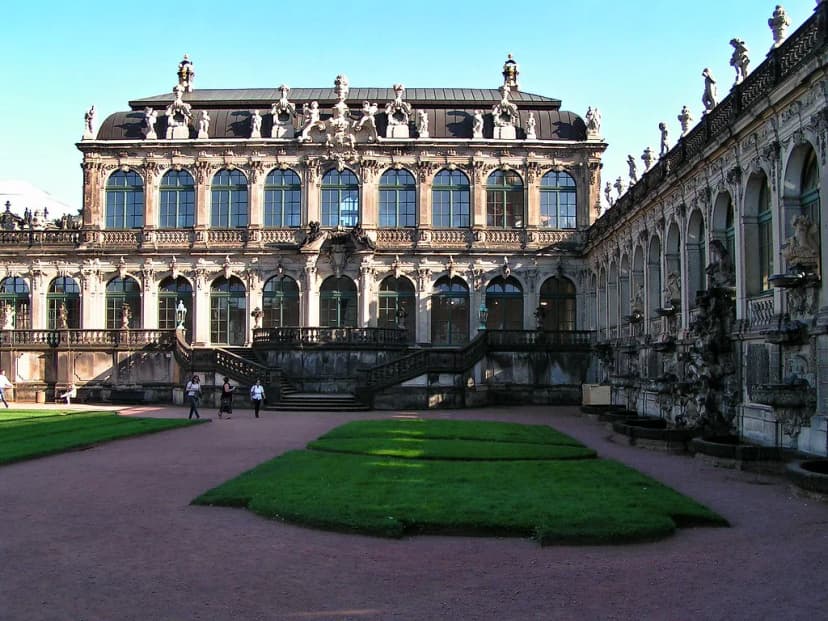
Walk to Theaterplatz, the square framed by the Semperoper, the Catholic Hofkirche and the Zwinger, and use it as your orientation point for the middle of the day. The square is a working transport hub as well as a viewpoint, so it is easy to reach on foot from the mural. From here the Zwinger's courtyard, gardens and fountains are free to enter, and walking through them is one of the best-value experiences in the city. The surrounding sculptures and fountains reward a slow loop rather than a shortcut.
The Semperoper itself is a landmark from the outside at no cost; performances and guided tours are separate offerings whose current availability changes, so check the opera house's own schedule before assuming a tour will run during your visit. For a closer look at the palace complex's exhibits and interiors, see the Visiting the Zwinger in Dresden guide, then confirm current conditions, ticket scope and opening times with the operator. Do not assume a single ticket covers every collection in the complex; treat each museum decision separately.
Lunch: Placing the Meal Break So the Afternoon Survives
Eat before your afternoon museum block rather than after it. A proper seated lunch between Theaterplatz and the Residenzschloss protects the rest of the day from the two familiar failure modes: a late lunch that collides with an interior's final entry, and a rushed snack that leaves you flagging by Brühlsche Terrasse. The old town gives you a dense choice of cafés, breweries and bakeries within a few minutes of the squares, so pick a place by sight rather than by a fixed booking.
Alternatives for later in the day include Altmarkt, where restaurants and cafés cluster around the square, and Neustadt across the river, which independent guides consistently describe as the livelier café and restaurant district. For hearty Saxon cooking, city guides point to long-established vaulted restaurants in the old town, but menus and reservation policies change, so check a current listing or the venue directly before counting on a table. In short: lunch in the Altstadt, coffee wherever you find a seat, and dinner either at Altmarkt or in Neustadt if you still have energy.
Afternoon Option A: One Zwinger Collection, Not All Four
If you want one serious museum stop, the Zwinger complex is the most convenient place to spend it, because you are already standing in the courtyard. The complex holds several distinct collections, including the Old Masters Picture Gallery with European paintings from the fifteenth to the eighteenth century and a porcelain collection of international scale. One collection done properly is a better use of a one-day visit than skimming three; the Old Masters gallery alone can absorb a couple of hours at a normal pace.
Do not plan around an assumption that one ticket opens every museum in the complex, because ticket structures and inclusions can change; verify the current scope, timing and any combined offers with the operator or the state art collections before you commit. Check whether a city card, such as the Dresden City Card, would offset your transport and museum spending if you expect to use both heavily, since that calculation depends on your museum choices. If a second Dresden day is possible, give the palace and its treasury rooms their own visit instead of cramming them into this afternoon.
Afternoon Option B: Residenzschloss Exterior and the Separate-Ticket Question
Dresden Castle, the Residenzschloss, is among the oldest buildings in the city and served as the residence of Saxony's rulers; today it houses museum spaces including the Green Vault treasuries. Its courtyards and facade can be seen for free as you walk between Neumarkt, the Fürstenzug and Theaterplatz, so you lose nothing by leaving the interior for a future visit. If you do go in, expect the historic and new Green Vault spaces to be treated as distinct from the general castle ticket, and confirm the current arrangement with the operator before you rely on a single purchase covering everything.
Because the palace sits in the middle of the old town, it is also your best rainy-day fallback: an interior visit here keeps you dry while leaving Neumarkt and Brühlsche Terrasse for clearer hours. Compare the palace against the Zwinger collections and pick one, not both, unless you are staying overnight. Refer to the Dresden Castle Residence visitor guide for the layout and collection structure before deciding.
Late Afternoon: Brühlsche Terrasse and the Elbe
Save Brühlsche Terrasse for late afternoon, when low light falls on the river and the Baroque skyline across it. The elevated promenade above the Elbe bank runs between the Augustusbrücke and Carolabrücke bridges, and independent guides describe it as the Balcony of Europe for its views over the water. The terrace, the adjacent Brühl Gardens and the riverbank paths are free, so this is the stretch where a one-day itinerary can slow down without spending anything.
The Augustusbrücke crosses the Elbe between the old town and Neustadt and has carried a bridge at that location since the twelfth century, though the present sandstone structure dates to the early twentieth century. Mid-bridge, the view back towards the old town is the classic photograph, and the light before sunset is the reason to time it here rather than in the morning. Local transport in Dresden includes trams, buses, Elbe ferries and two mountain railway lines, so if your legs are done you can ride rather than walk onward.
Evening: Altmarkt, Kreuzkirche and an Optional Wind-Down
Finish at Altmarkt, the older of the two main squares, where the Kreuzkirche tower and the surrounding cafés provide a natural end point. The square is also the historic home of Dresden's Striezelmarkt, a Christmas market whose origins independent guides trace to the fifteenth century, so if you visit in Advent this is where the day's centre of gravity shifts. Outside the festive season, the square serves as an evening dining and strolling area rather than a sight in itself.
For a wind-down, either walk back along the Elbe or cross Augustusbrücke into Neustadt, where the café and restaurant scene is livelier later in the evening; the Golden Rider statue and the Kunsthofpassage courtyards are the usual landmarks if you explore further. The one day in Munich itinerary shows how a similarly compact centre is paced, which is useful if you are collecting German city comparisons. Keep the evening optional rather than fixed, so that a slower afternoon does not force you to skip dinner.
Getting Around Without Memorising a Timetable
Almost everything in this itinerary is reachable on foot within the Altstadt, which is why the day works at all. Dresden's city tourism pages confirm a dense local network of trams, buses, Elbe ferries and two mountain railways, plus a tourist wayfinding system of information pillars placed at stations, stops and car parks with overview maps of the inner ring and directional signage. Use those pillars and station information to find your route, and check current connections and ticketing with the local transport authority or the Dresden Information office rather than relying on a printed plan.
The Dresden City Card bundles public transport over one to three days with discounts at museums, city tours and selected sights, which can simplify decisions if you plan to ride often; whether it saves money depends on your museum choices, so compare it against single tickets before buying. If your interests extend to the landmarks themselves, the Dresden: Landmark Visitor Guides hub collects individual attraction guides for the buildings on this route. For overviews of the city's sights and how they fit together, see Dresden: Itineraries and City Travel Guides.
Adapting the Day: Rain, Children and Limited Mobility
In rain, drop Brühlsche Terrasse and the river walk first, since they are the most exposed parts, and substitute one interior: the Zwinger collections, the Residenzschloss or a city museum. With children, favour the free outdoor stops, the courtyard fountains and the funiculars in the Loschwitz district, which independent guides describe as a rewarding side outing; the porcelain and painting galleries are harder work for short attention spans. A hop-on hop-off bus loop is a low-effort way to see the spread of the city if walking is limited.
For limited mobility, note that cobblestones, church stairs and terraces make the classic route uneven, so plan fewer stops and check step-free access and lift availability directly with each venue before you go, because accessibility arrangements change and are not standardised across churches, palaces and museums. Anyone with two days should move the Residenzschloss and one Zwinger collection to day two, leaving day one as the outdoor walk. A 2 days in Dresden itinerary gives you the structure to add an Elbe river trip or a half-day in Saxon Switzerland National Park without cutting the old town short.
Common Mistakes That Wreck a One-Day Plan
The biggest mistake is budgeting for interiors as if they were quick stops; a palace treasury or picture gallery can consume the entire afternoon, so choose one and accept that the rest are for another trip. The second is treating the Frauenkirche tower as compulsory: the climb is stairs, height and time, and the view from Brühlsche Terrasse or the Augustusbrücke is free and often better for photographs. The third is leaving the meal break until everything has closed, which turns a relaxed afternoon into a rushed one.
A fourth is assuming a single ticket covers an entire complex; collections within the Zwinger and the castle can be ticketed separately, so verify inclusions with the operator before you buy. Finally, do not over-schedule: the old town rewards wandering, and the squares, courtyard and terrace cost nothing to enjoy slowly. Build in slack, and a one-day visit to Dresden still leaves you with the sense that you saw the city rather than sprinted past it.
Plan Your Visit
A workable one-day Dresden itinerary is an Altstadt walk with one paid interior chosen deliberately: Neumarkt and the Frauenkirche in the morning, the Fürstenzug and Theaterplatz before lunch, the Zwinger courtyard and the Semperoper exterior at midday, then either one Zwinger collection or the Residenzschloss in the afternoon, Brühlsche Terrasse in the best light, and Altmarkt or Neustadt in the evening. Keep the free spaces free, and check every price, opening time and tour availability with the operator or Dresden Information shortly before you travel, because those details are the ones that change.
If you have a second day, give the palace interiors and a second Zwinger collection their own hours and add a river trip or Saxon Switzerland; if you only have the one day, accept the Altstadt overview and enjoy it at walking pace. Comfortable shoes, a flexible lunch slot and a willingness to swap one stop for another will do more for your day than any fixed minute-by-minute plan.
Frequently Asked Questions
Is Dresden walkable for a one-day visit?
The main old-town sights sit within a compact, largely pedestrianised area, so you can walk between Neumarkt, the Fürstenzug, Theaterplatz, the Zwinger courtyard, the Residenzschloss exterior, Brühlsche Terrasse and Altmarkt without needing transport. The practical caveat is the surface: much of the centre is cobbled, so comfortable shoes matter, and the full loop plus one interior adds up over the day. Use trams, buses, ferries or the mountain railways only for deliberate trips to districts such as Neustadt or Loschwitz, and confirm current access to any monument with its operator before you rely on it.
Should I climb the Frauenkirche tower or the Kreuzkirche tower?
Both involve stairs rather than lifts, so choose by what you want to see rather than by convenience. The Frauenkirche dome gives the classic overview of the reconstructed old town and the Elbe, while the Kreuzkirche tower looks over Altmarkt and is the better choice if you want the Christmas market in view during Advent. Check current access, any admission charge and any closure for services with each church directly, and skip both if stairs or heights are a problem, since Brühlsche Terrasse offers a free elevated view.
Can I add Neustadt or Saxon Switzerland to a single day?
Neustadt fits naturally at the end of the day: cross Augustusbrücke and spend the evening among its cafés and courtyards, then return by tram or on foot. Saxon Switzerland does not fit comfortably alongside the Altstadt, because reaching the national park and walking any meaningful trail consumes most of a day. If your time is limited to one day, keep the itinerary to the old town and treat the park as a reason to return, then check current transport connections with the local operator when you plan it.