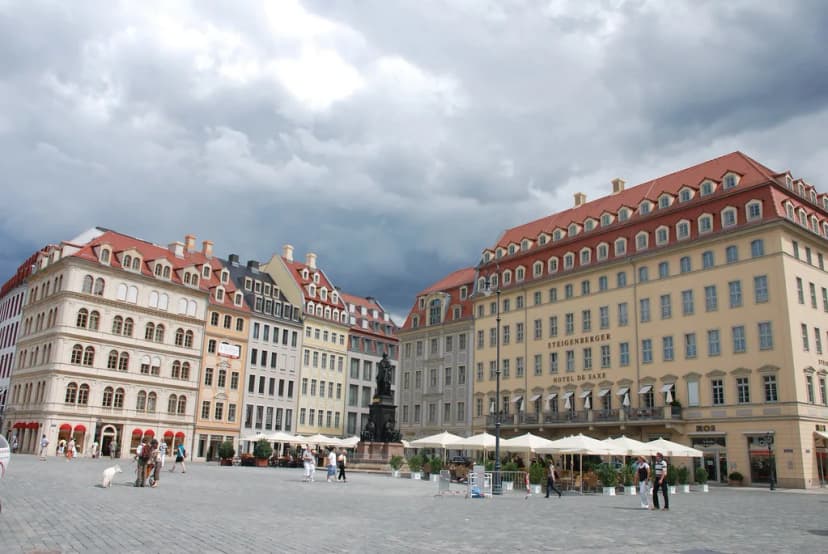
Three days is enough to see the Baroque core of Dresden without sprinting, provided you accept one structural fact: the city splits cleanly into a dense, walkable Altstadt and a looser ring of outlying sights. The Old Town clusters so tightly that a single focused day covers the Residenzschloss, the Zwinger, the Frauenkirche and the riverside terrace on foot, with no transport needed between them. Any suggested three-day duration here is a planning suggestion, not an official figure, and it assumes most museums and churches keep broadly similar daytime openings.
The decision that shapes the whole trip is the Historic Green Vault, the treasure chamber inside the Residenzschloss. The collections there are not covered by one shared ticket, and one visitor reported in 2023 that no day tickets were available for the Historic Green Vault and that booking ahead was necessary, so it is worth opening the official ticket shop before you fix anything else. Treat that as a dated visitor experience rather than a permanent rule and confirm the current booking policy, entry windows and prices directly with the operator.
How to Pace Three Days in Dresden
The Old Town rewards density rather than spread. Because the Residenzschloss, the Zwinger, the Frauenkirche, the Fürstenzug mural and Brühl's Terrace sit within a few minutes of each other, one full day on foot handles the core without trams. Front-loading that dense day means later days can breathe and absorb a day trip without feeling rushed.
The temptation with three days is to repeat the same landmarks at a gentler pace, which wastes the third day. Give day three a different texture instead: the courtyard art of the Neustadt and the modern museums east and south of the centre. That structure keeps each day distinct and gives you a reason to return for a slower look at the free, always-open layer of courtyards, terraces and riverside paths.
If you only have a shorter window, the shape changes. A 2 days in Dresden itinerary drops the day trip and keeps two dense city days, while a one day in Dresden itinerary compresses everything into the Old Town alone. Knowing which version you are planning prevents the common mistake of overloading a short visit.
Day 1: The Old Town Core on Foot
Start at the Residenzschloss, the royal palace whose mix of Renaissance and Baroque wings frames a courtyard that opens a little earlier than the ticketed interiors. Inside, the collections span prints and drawings, armour, Ottoman art, state rooms and the two Green Vaults. Budget most of the morning here if you want more than a walk-through, and check the operator's site for which sections need separate timed entries.
From the palace, cross to the Zwinger, the former royal pleasure complex inaugurated for a wedding in 1719. Its courtyard and gardens give you a free, open-air pause, while the ticketed museums around it include the Old Masters Picture Gallery, a scientific instruments collection and a porcelain collection. The gallery holds roughly 750 paintings from the fifteenth to eighteenth centuries, so pick two or three rooms deliberately rather than trying to see everything.
Finish the loop at the Frauenkirche on Neumarkt, then walk the short distance to the Fürstenzug mural and out onto Brühl's Terrace above the river. The mural, completed on porcelain tiles in the early twentieth century to resist weather, survives as one of the few originals in a rebuilt centre, and the terrace is free and open at any hour. This stretch is where the day ends, not where you squeeze in an extra museum.
Residenzschloss and Zwinger Ticketing: What Trips People Up
The single most common planning error is assuming a royal palaces day runs on one ticket. The Zwinger courtyard is free to walk through, but the museums around it are separate, and the Residenzschloss likewise splits into several collections rather than a single admission. Map each paid interior you actually want before you commit to a day, because a small ticketing detail can quietly derail a tightly packed schedule.
The Historic Green Vault is the most in-demand piece, and the New Green Vault, holding over 1,000 original treasures, is the realistic fallback if a timed slot has gone. One 2023 visitor described booking a timed Historic Green Vault slot with same-day access to the other collections, which is the kind of combination worth checking for on the operator's booking page. Prices and availability change, so verify both on the official ticket shop rather than relying on older trip reports.
Day 1 Evening: Crossing into Neustadt
After a museum-heavy day, cross the river into the Neustadt for the evening rather than adding another church. The walk between the two halves of the city is short, and the change of atmosphere is the point: the New Town's grid of bars, courtyards and small venues gives a looser, more local night than the Altstadt does. It is also the natural antidote to a day spent indoors.
Venue programmes shift constantly, so decide the evening the same way you would in any city: check a couple of listings on the day and pick by what is actually running. One long-standing live venue reopened in September 2026 with a varied programme of concerts, parties, readings and comedy, with a mix of free and ticketed events, which shows how quickly a schedule can change. Confirm hours and entry on each venue's own calendar before you set out.
Day 2: Saxon Switzerland and the Bastei Bridge
The Bastei Bridge and the surrounding Saxon Switzerland landscape make the standout day trip, and they sit outside Dresden in the regional sandstone hills. The established access pattern is the S1 suburban rail line from Dresden toward Saxon Switzerland, getting off at Kurort Rathen, then a five-minute walk to the Elbe ferry. Treat that as a routing principle rather than a timetable, and check connections on the day with the local transport operator.
The Elbe ferry at Rathen is the part people forget to plan for, because it is not covered by regular local transport fares and needs its own separate ticket. A 2026 trip report described the yaw-ferry crossing as a small paid hop and the walk up from the village as a moderate nature walk rather than a serious hike. Fares are set locally and change, so check the price at the ferry rather than budgeting from an older figure.
The alternative is an organised tour that handles the transport and the trailhead logistics for you, trading independence for time saved. Tours covering the Bohemian and Saxon Switzerland region commonly run around eight to nine hours, which effectively makes this a full day rather than a half day. Whichever you choose, keep the evening light, because you will have covered a lot of ground.
Day 2 Build-Out: Panometer and Grosser Garten as Options
If you would rather not give the whole day to Saxon Switzerland, the Panometer in the Reick area is a strong alternative. Housed in a former gasometer dating to 1880, it wraps a vast panoramic artwork around the interior, with an introductory exhibition and a viewing platform. A 2023 visitor described seeing the Baroque panorama of the city alongside the destruction panorama, with the artwork cycling through simulated day and night.
Immediately south, the Grosser Garten offers a free, open park that has been public since 1814, with a summer palace and space that rewards an unhurried walk. Both the Panometer and the park sit away from the Old Town, so pairing them means using a tram or bus rather than walking. Treat them as optional add-ons that flex around energy and weather, not fixed stops.
Day 3: Neustadt Courtyards and the Eastern Museums
Day three should feel different, and the Kunsthofpassage in the Neustadt delivers that. The run-down backyard was renovated into an art centre built around five themed courtyards, and one 2026 visitor singled out the Courtyard of Element, where water runs through a network of pipes on a turquoise facade. The passages are free to wander, which makes them a reliable low-cost hour on any day.
For a genuinely different museum, the German Hygiene Museum counters the Baroque mood with a modern, social-history focus on bodies and health. It opened in 1912 and tells the story of the human adventure rather than royal treasure, with a design that families and locals respond to. It is a large building, so allow more time than a quick look if the subject interests you.
If you want an afternoon of open air after the museum, the Grosser Garten, an Elbe ferry crossing or a stretch of the Elberadweg riverside path all work. The cycling network totals more than 360 kilometres in the city, with the Elberadweg running off-road along the river, so a short rental ride is an easy way to see a different Dresden.
Getting Around Dresden
Dresden has a genuinely well-developed local transport network of trams, buses, Elbe ferries and two mountain railway lines, and the city's tourism pages point visitors to a tourist wayfinding system of steles marking routes to the main sights. The Old Town itself needs no ticket at all, because everything worth seeing there is within walking distance. Save public transport for the Neustadt and the outlying sights.
A 2026 trip report described standard single and day tickets for the Dresden fare zone, but those figures are dated and change, so check current fares and zone boundaries on the operator's site before you travel. The two Bergbahn lines and the Elbe ferries may sit outside standard fare coverage, so verify each separately. The wayfinding steles, with a city-centre overview map and directional targets, are a useful low-tech backup when a phone signal fails.
When to Go and How the Weather Reshapes the Plan
Spring and summer change what works, because the river, the gardens and the day trip all improve with daylight and dry weather. A wet day, by contrast, pushes the plan indoors toward the Residenzschloss, the Old Masters Picture Gallery and the Panometer, which are all comfortable rainy-day options. Build one wet-weather day into the structure so a bad forecast does not wreck the trip.
If photography drives your visit, the rebuilt Old Town, the river terraces and the Neustadt courtyards each offer a different register of light, and a photography walk can be slotted into day three without adding transport. Keep the free, always-open layer separate from the ticketed interior layer in your plans, so a closed museum never leaves you with nothing to do.
Practical Decisions Before You Book
Book the Historic Green Vault slot first, then arrange everything else around it, because it is the one element that can be genuinely unavailable. Museums, churches and the tower climb broadly share the same daytime window, which compresses how much you can realistically stack into a single day. Grouping sights by district rather than by interest avoids wasted crossings.
The Old Town, the Neustadt and the eastern and southern sites are close enough that transport is never a major obstacle, but they are far enough apart that walking everywhere adds up. Solo travellers can move fastest, while groups need more slack in the schedule. Decide the Green Vault slot, then build the rest of the three days around it.
Plan Your Visit
Three days in Dresden works best when you treat the Old Town as one dense day, Saxon Switzerland as a second, and the Neustadt and eastern museums as a slower third. That structure avoids the repetition that undermines longer stays in a compact city, and it keeps the free, always-open layer of courtyards, terraces and riverside paths in play when a museum closes.
Decide the Green Vault slot before anything else, then confirm every current price, opening time and transport fare with the official operator rather than an older report. With that one booking settled, the rest of the three days falls into place around the walking core and the day trip.
Frequently Asked Questions
Is three days in Dresden too much or just right?
It is a comfortable allowance for most visitors rather than an official recommendation. Three days lets you give the compact Old Town a full day on foot, take a Saxon Switzerland day trip, and still spend a slower third day in the Neustadt and the eastern museums. Shorter stays work if you drop the day trip and concentrate on the city itself.
Is Dresden walkable enough to do without a day ticket?
The Old Town core is walkable, with the Residenzschloss, the Zwinger, the Frauenkirche, the Fürstenzug and Brühl's Terrace all within a few minutes of each other. You will want public transport for the Neustadt, the Panometer and the eastern museums. Check current single and day ticket options on the local transport operator's site, since fares change.
Do I need to book the Green Vault in advance?
The Historic Green Vault is the most in-demand part of the Residenzschloss, and a visitor in 2023 reported that no day tickets were available and that booking ahead was necessary. That is a dated experience rather than a permanent rule, so check the official ticket shop for current entry windows, booking policy and prices. The New Green Vault is the sensible fallback if a slot is gone.
Is the Bastei Bridge doable as a day trip from Dresden without a car?
Yes, it is a common car-free day trip. The usual pattern is the S1 suburban line toward Saxon Switzerland with a stop at Kurort Rathen, a short walk to the Elbe ferry, then a marked path up to the bridge. The ferry needs its own separate ticket and is not covered by standard local transport fares.
What should I do in Dresden when it rains?
Shift the plan indoors. The Residenzschloss collections, the Old Masters Picture Gallery inside the Zwinger complex and the Panometer in the Reick area all work well in poor weather. Keep one rain day flexible in your three-day structure so a bad forecast does not derail the whole trip.
What can I see in Dresden for free?
The free layer includes the Zwinger courtyard and gardens, the Fürstenzug mural, Brühl's Terrace above the Elbe, the Neumarkt around the Frauenkirche and the courtyards of the Kunsthofpassage. Entering the Frauenkirche during open church hours is generally free, while the dome ascent is ticketed and priced separately. Confirm current access arrangements before you go.