

For a concrete starting detail, Füssen's own tourism office says children can climb the tower of the Hohes Schloss and enjoy a fantastic view over the town and the mountains, listing it in its family pages. That makes the castle ridge the town-centre vantage point to know about, even though the rest of the Hohes Schloss is a guided, ticketed interior rather than open ground.
Füssen sits in the far south of Bavaria, wedged between the Ammergauer and Tannheimer Alps and the Austrian border, so the town offers at least three genuinely different kinds of view. You can look down on a medieval roofscape, follow a river gorge, or ride up to a summit where the castles and lakes spread out below. Knowing which of those you actually want is the whole decision.
This guide groups the viewpoints by the view they give rather than by fame, because fame is a poor guide here. The old town and the Lechfall are public ground you can wander without paying, while the cable-car ascent and castle interiors are ticketed experiences with their own constraints. The suggested timeframes below are ours, not official figures.
Quick Comparison: What Each Füssen Viewpoint Actually Shows You
Think in three categories. Rooftop views come from the old town and its elevated corners, river views come from the Lechfall bridge and the riverside paths, and summit views come from the Tegelberg above Schwangau. Each one answers a different question, and none of them substitutes for the others.
The row below summarises the trade-offs. Suggest a half day for the old town plus Lechfall on foot, and allow a separate block of several hours if you add the Tegelberg ascent, since the cable car and the summit paths deserve unhurried time.
Access differs sharply. Town squares, the river bridge and the outdoor paths are free public space, while the Tegelbergbahn cable car and the interior collections of the castles are paid. Do not assume a castle complex shares one ticket across every collection it houses.
Old Town Rooftops and the Hohes Schloss
The classic Füssen view is over the Altstadt itself: pastel facades, the former Benedictine monastery of St. Mang, and the Alps rising behind the roofs. Füssen's own tourism office describes the Hohes Schloss on its ridge above the town and the monastery beside it as the frame for that roofscape, with the town's history readable in the buildings below.
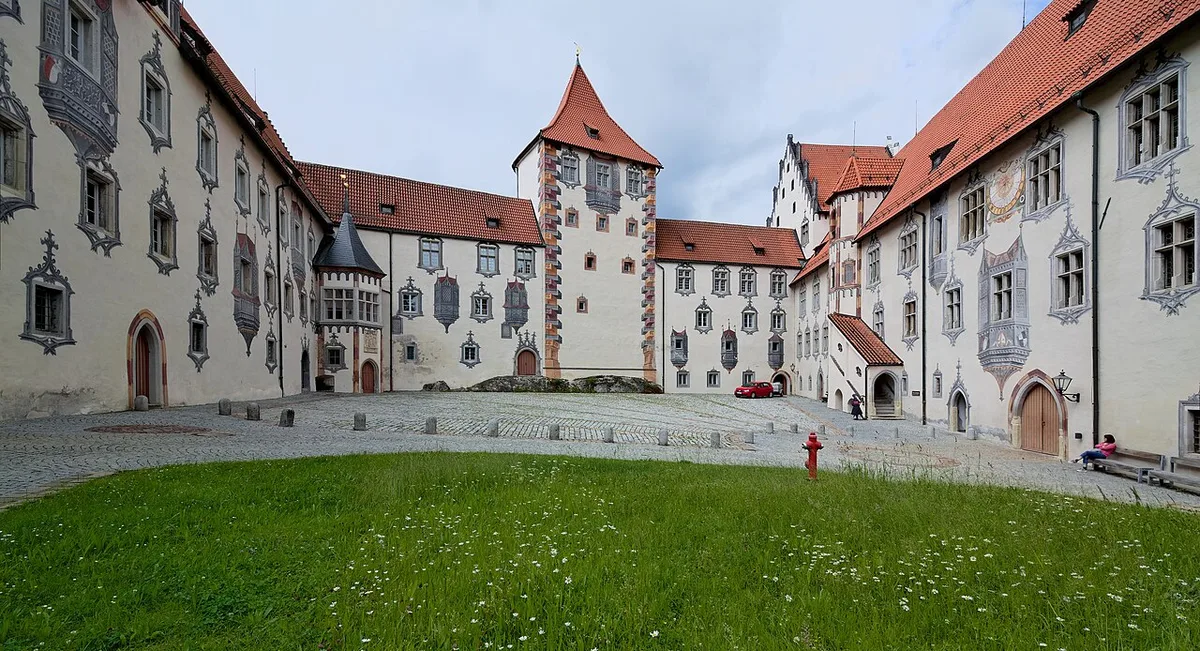
The practical loop is a walk through the old town squares, past St. Mang and up towards the Hohes Schloss, using the streets themselves as the vantage point. Treat the climb as a suggestion rather than a fixed route, and let the weather decide how long you linger.
One caution matters here. The Hohes Schloss houses a branch of the Bavarian State Collections of Paintings and is visited by guided tour, so a paid interior visit should not be conflated with the free outdoor streets and squares around it. The tourism office publicises the tower view in its family pages, but do not assume any tower access is open or free at a given time; check the castle's current visitor information before you plan around it.
If photography is the real goal, the roofscape rewards a slower walk than a checklist stop. Our companion guide to the best photo spots in Füssen covers where the light and framing tend to work, which pairs naturally with an old town wander.
Lechfall Bridge and the Riverside Paths
The Lechfall is a weir rather than a natural cascade, built in the 18th century to control flooding on the Lech, and it now functions as a viewpoint in its own right. A bridge crosses the river directly at the falls, and paths run along the banks so you can look back at the water from several angles rather than just one.
Walk a little further and the character changes from a built weir to a wooded gorge with the river running through it, which is why following the paths for a while is worth more than a quick bridge stop. The bust of King Maximilian II set into the rock on the opposite bank is an easy detail to miss if you only look at the water.
Because the Lechfall area is public and unenclosed, it fits neatly into a short window before or after other plans, and it costs nothing to visit. Paths beside moving water can be uneven or slippery after rain, so use your own judgement on footwear and ask the tourist office about current conditions.
Tegelberg Summit: the Castle-Facing Panorama
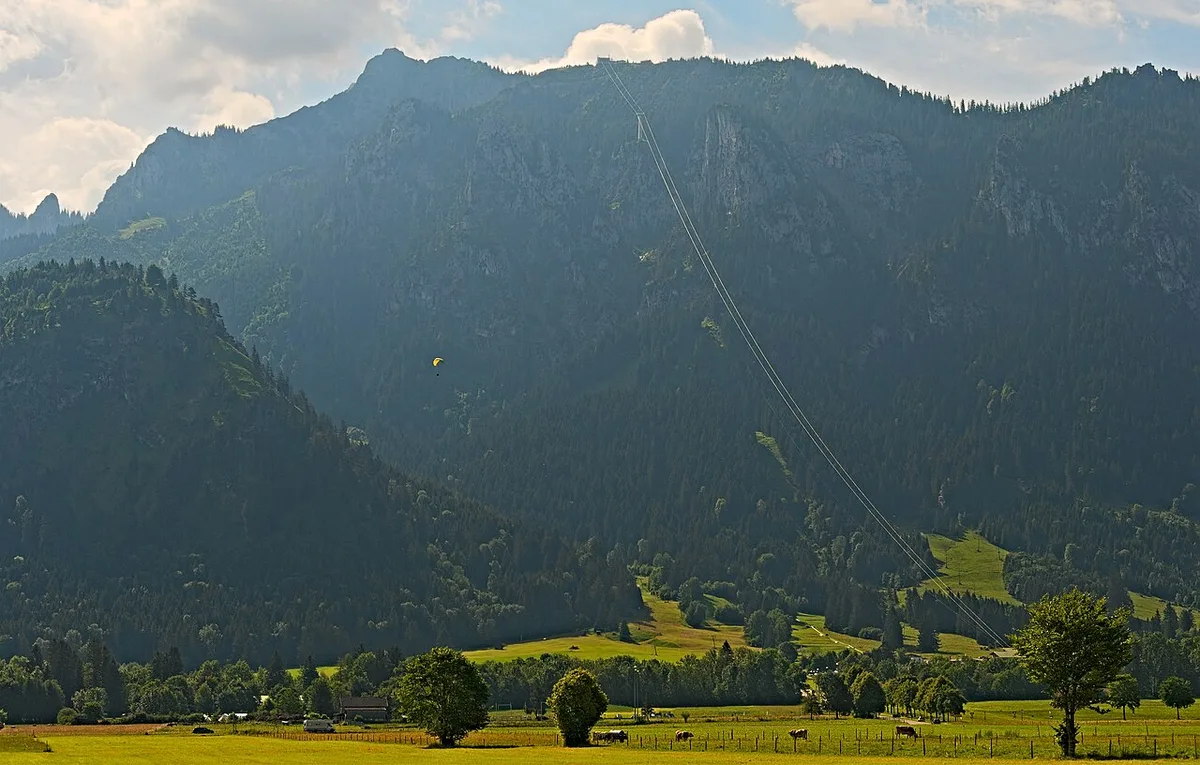
The Tegelbergbahn cable car climbs from near Schwangau to a summit station where, as the operator puts it, the ascent itself opens a view towards Neuschwanstein Castle. From the top, the Königsrunde panorama path, the Ort der Besinnung and the sun terrace offer different ways to take in the Ammergau Alps and the lakes of the castle park.
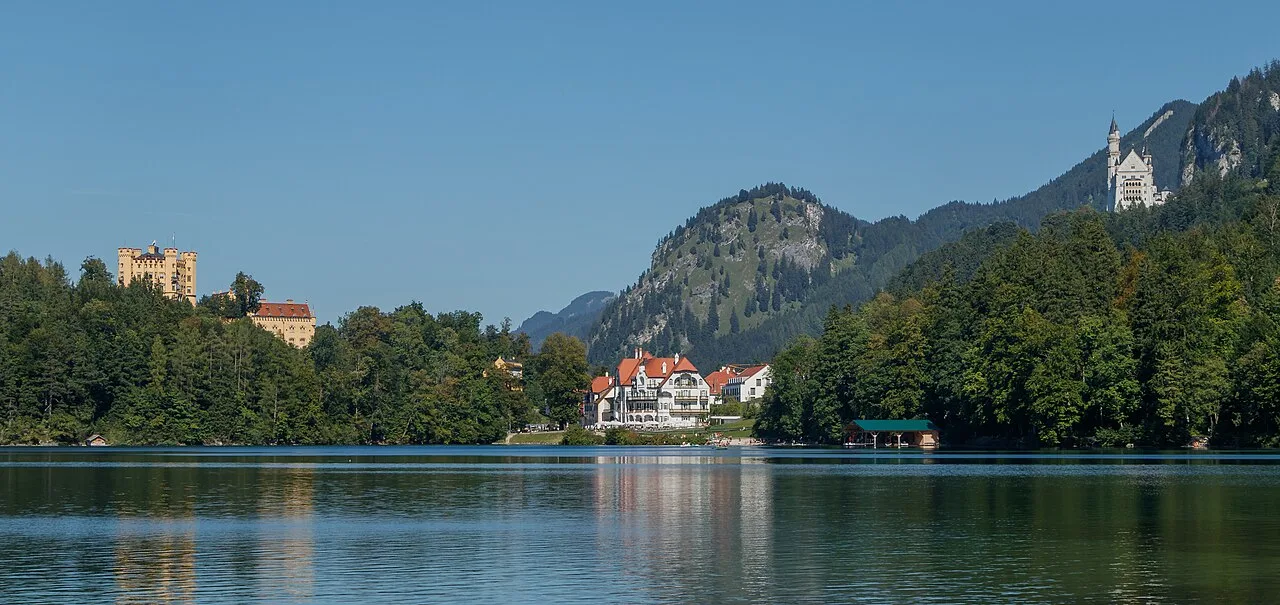
The summit is not only a lookout. The operator lists marked climbing routes, a paragliding and hang-gliding centre, and a network of mountain and hiking trails into the wider Ammergebirge, so the cable car can serve as either a viewpoint trip or the start of a longer day on foot. Bookings for flights and courses are handled by the operators themselves, so confirm availability directly rather than assuming it is offered on the day you want.
Cable cars run to seasonal timetables, and the operator publishes current operating hours and closure notices such as revision periods on its own site. Check the day's status before travelling, especially outside the main summer weeks. Our Tegelberg cable car guide walks through the ascent and summit in more detail.
Weather at the summit station can differ markedly from the valley, and the operator maintains a live summit webcam and forecast, which is the most reliable way to judge whether the castle view will actually be visible. If cloud is sitting on the ridge, the old town or Lechfall options make a far better use of the same hours.
Free Outdoor Views Versus Paid Ascents and Interiors
The clearest distinction in Füssen is between ground you can walk on for nothing and experiences that require a ticket. Town squares, the Lechfall bridge, riverside paths and the outdoor streets below the Hohes Schloss fall into the first group, while the cable car and castle interiors fall into the second.
Prices and opening times for the paid options change, and neither the town's tourism pages nor the cable-car operator publishes a permanent figure worth quoting here. Check the operator's ticket page and booking system for current prices, and the relevant castle administration for interior tour tickets and their specific scope.
Accessibility varies by site and by season, and no general guarantee can be made for any of these viewpoints. Füssen's tourism office maintains a dedicated accessibility section covering paths and facilities, which is the appropriate place to check specific needs before you commit to a route.
Choosing Between Rooftops, Gorge and Summit
Start with how much time you have and what you want to look at. Half a day suits the old town roofscape plus the Lechfall on foot, both of which can be strung together without any ticketed transport. A summit day needs its own block, because the cable car and the paths above deserve more than a rushed hour.
If you are combining a viewpoint with a castle visit, keep the two separate in your planning. Castle interiors near Füssen are ticketed with their own admission arrangements, so a morning at the Lechfall does not imply anything about castle ticket availability.
Mobility and weather should decide more than ambition. Cable-car operations are weather-dependent, and paths along the river can be slick; if either is in doubt, fall back on the town's flat squares and the bridge, which deliver a strong view with minimal exposure.
For a longer stay, evening light is worth planning around rather than leaving to chance. Our guide to where to watch sunset in Füssen is a useful companion when you are deciding which viewpoint to hold back for the end of the day.
Fitting Viewpoints Into a Füssen Day
A sensible sequence for a single day is old town first, Lechfall second, and the Tegelberg only if you have a reliable weather window and enough hours left. The order keeps you close to the centre while conditions are uncertain, and moves you out to Schwangau once you know the summit is clear.
Füssen's tourism site carries a mobility and public transport section noting that overnight guests travel free with the guest card in Füssen and the surrounding area, which is worth confirming for your own accommodation before you plan bus legs. Check the operator's current timetables rather than relying on memory.
If you are spreading the trip over several days, it becomes easier to be selective and wait for the right conditions rather than forcing every viewpoint into one outing. Our 3 days in Füssen itinerary shows how the viewpoints can be spaced out across a longer stay.
Why the Best View Depends on the Day
There is no single best viewpoint in Füssen, because the rooftop, river and summit views do different jobs. The old town gives you architecture and a medieval setting, the Lechfall gives you water and a gorge, and the Tegelberg gives you altitude and a castle-facing panorama.
Decide by hours, weather and whether you want to pay, then confirm the changeable details with the people who run them. The town's tourism office publishes the live picture for Füssen, and the cable-car operator posts its own operating status each day.
Frequently Asked Questions
Which Füssen viewpoints are free to visit?
The old town streets and squares, the Lechfall bridge and the riverside paths are public space and cost nothing to walk. The Hohes Schloss is a different matter: it houses a branch of the Bavarian State Collections of Paintings and is visited by guided tour, so treat any interior or tower access as a separate, ticketed question and check the current visitor information rather than assuming it is open or free.
Can you see Neuschwanstein from the Tegelberg cable car?
The cable-car operator describes the ascent as opening a view towards Neuschwanstein Castle, and the summit station and the Königsrunde panorama path offer wide views over the Ammergau Alps and the lakes of the castle park. Whether the castle is actually visible on your visit depends on cloud and visibility, so check the live summit webcam and forecast before travelling up.
What can you see from the Hohes Schloss area?
The ridge above the town looks down over Füssen's historic centre, the former Benedictine monastery of St. Mang and the pastel rooftops, with the Ammergauer and Tannheimer Alps behind them. The castle itself holds art collections and is toured with a guide, while the streets and squares around it are ordinary public ground.
Is the Lechfall worth visiting in Füssen?
It is a short, free stop if you are already in town, and it gives a different kind of view from the roofscape. The weir was built in the 18th century to control flooding on the Lech, and a bridge plus paths along both banks let you look at the falls and the gorge from several positions. Allow extra time if you want to follow the riverside paths rather than just cross the bridge.
How do you choose between the old town, the Lechfall and the Tegelberg?
Base the choice on how much time you have and what you want to look at. Old town and Lechfall combine easily on foot in a half day and cost nothing, while the Tegelberg ascent needs its own block of several hours and a workable weather window. If conditions on the ridge are doubtful, keep to the town and the gorge and save the summit for another day.
What should you check before setting out?
Confirm live operating status for the cable car and any closure or revision notice, check current opening arrangements for paid interiors, and look at the summit forecast rather than the valley forecast. Füssen's tourism office publishes visitor information and accessibility details, while the cable-car operator posts daily opening status and its own ticket information.


