

Füssen lies between Alpine peaks and a lake landscape, and the town's own tourism site notes that six lakes sit within the municipal area alone, which is why a sunset outing here is really a question of direction and timing rather than one spot. As a concrete starting point, one walking route describes the Lechfall as roughly a ten to fifteen minute walk south of the town centre, which makes it the most manageable option when your window before dark is short. That is a suggested approach, not an official figure.
Three areas cover most sunset moods. The Alpsee shore near Hohenschwangau offers calm water and mountain reflections a short trip from town. The elevated lanes around Hohes Schloss and the Franciscan Monastery of St Stephen give rooftops, the old town and Alpine silhouettes. The Lechfall and Lech gorge deliver rushing water and intense colour close to the centre.
This guide compares those three by compass direction, walking access and atmosphere. Sunset timing depends on season and cloud cover, so treat any timing suggestion as a personal recommendation rather than an official schedule, and check the city noticeboard for road works before setting out.
Why Füssen Works for Sunset
Few German towns of this size give you a lake, a mountain-backed castle view and a river gorge within roughly the same evening. Füssen lies in the Allgäu at the very south of Bavaria, directly on the border with Tirol in Austria, and its districts reach from the historic centre out to Bad Faulenbach, Hopfen am See and Weißensee. That geography means the light behaves differently depending on which way you look.
The tourism office is also the fastest place to confirm what is actually open and reachable, because it publishes a live noticeboard of closures and construction. Its current notices cover street works in Füssen-Ziegelwies, a closure of the B17 through Schwangau and construction at the Füssen bus station, all with published date ranges. Checking that page before you leave is more reliable than assuming a path or road is clear.
A second reason Füssen suits an evening outing is that the walkable centre is small and mostly pedestrian, so you can compare one area one night and another the next without long transfers. If you are building a wider trip, the Füssen: Landmark Visitor Guides hub collects the individual sights, while the Füssen: Itineraries and City Travel Guides page handles the city-level planning.
Alpsee Shore: Calm Water and Mountain Reflections
The Alpsee lies below Hohenschwangau Castle a few kilometres outside Füssen, and its still surface is what makes it a classic evening stop. Hohenschwangau Castle sits directly above the lake, and one firsthand account of a weekend in the area describes the water as calm, reflecting the surrounding mountains beautifully, and calls the stop the most peaceful moment of the trip. That calm is exactly what you want when the sun drops behind the ridge.
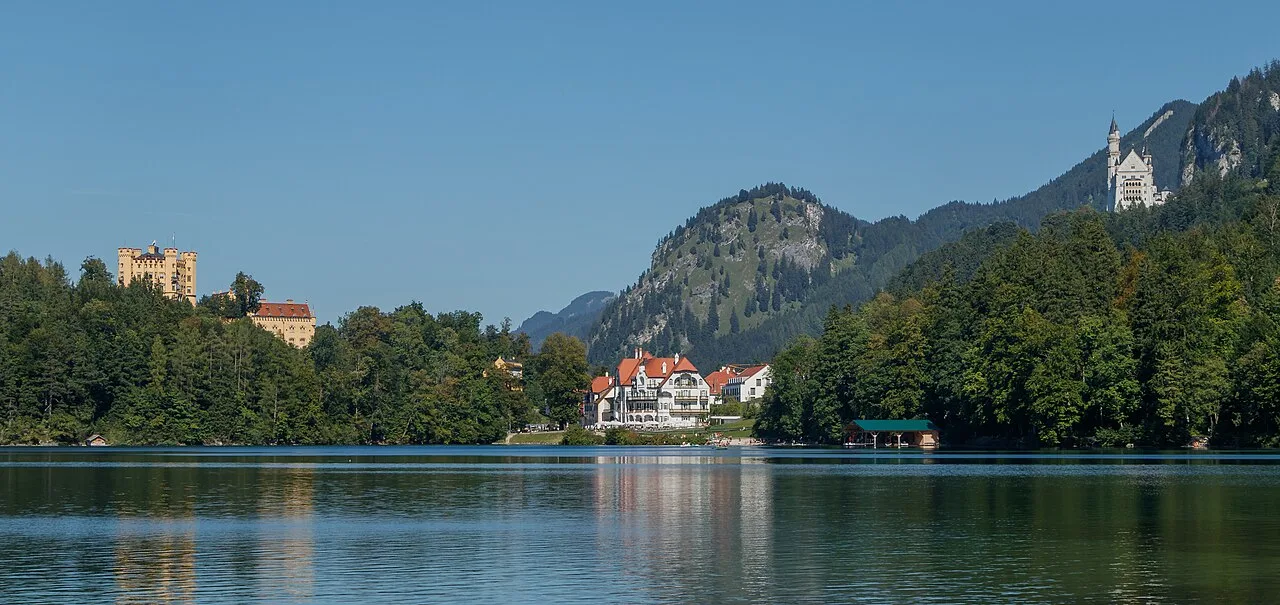
Plan the Alpsee as a two-part evening: a walk along the shore, then a stroll on the castle grounds. The area around Hohenschwangau is described as easy to navigate and pleasant for a leisurely stroll even if you skip the interior tour, with views of the lake and mountains that reward you in themselves. That means you can enjoy the setting without committing to a timed ticket.
Separate the free grounds from the paid interiors here. Hohenschwangau and Neuschwanstein are both visited by guided tour only, and photography and filming are not permitted inside them, so any interior visit is a ticketed, guided affair rather than a sunset activity. If you want the castle interior, book directly through the official castles website rather than through resellers.
Getting to the Alpsee without a car takes planning, and this guide intentionally does not quote schedules. The city publishes a guest card scheme under its mobility section that lets overnight guests use local transport free of charge, so ask your accommodation whether your card applies before you rely on it. Walking from Füssen to the castle area is possible but adds time in the dark.
Elevated Castle-View Paths Above the Old Town
If you would rather look down on rooftops than across water, the lanes climbing to Hohes Schloss and the Franciscan Monastery of St Stephen are your area. One walking route notes that the climb to the castle courtyard from the river is short and worth the effort, and that it is free to walk all the way up and into the courtyard, with a fee only if you go inside. The view over the town and surrounding mountains is the reward.
Read the ticket structure carefully, because it changes how late you can linger. A walking-tour guide lists Hohes Schloss as open April to October, Tuesday to Sunday, 11am to 5pm, with an adult entrance fee of six euros or a combined ticket including the Füssen Museum for nine euros; the same page gives winter hours of Fridays to Sundays, 1pm to 4pm. Treat those as dated figures rather than current 2026 prices and confirm on site.
The Franciscan Monastery of St Stephen sits on its own hill and is another good elevated stopping point for evening light over the town. Füssen's tourism site notes that children can climb the tower of the Hohen Schloss for a view over the town and the mountains, which confirms the tower viewpoint as a family-friendly option. A loop that links the castle, the monastery and the old walls keeps you on paved surfaces most of the way.
Ziegelberg is the modest extension if you still have daylight. The same walking route describes it as a short climb from near the station through a pleasant little park, with wide views toward the high Alps and the lakes beyond on a clear day. It is an easy add-on while waiting for a train rather than a full outing in its own right.
Lechfall and the Lech Gorge: River Atmosphere Close to Town
Lechfall is the closest of the three areas to the old town, which makes it the easiest option when your window before dark is short. One travel account puts the walk at roughly ten to fifteen minutes south from the town centre before you reach the point where the Lech plunges into the gorge over a man-made fall, and suggests the bridge gives the best angle over the water. Budget a short visit rather than a long evening.
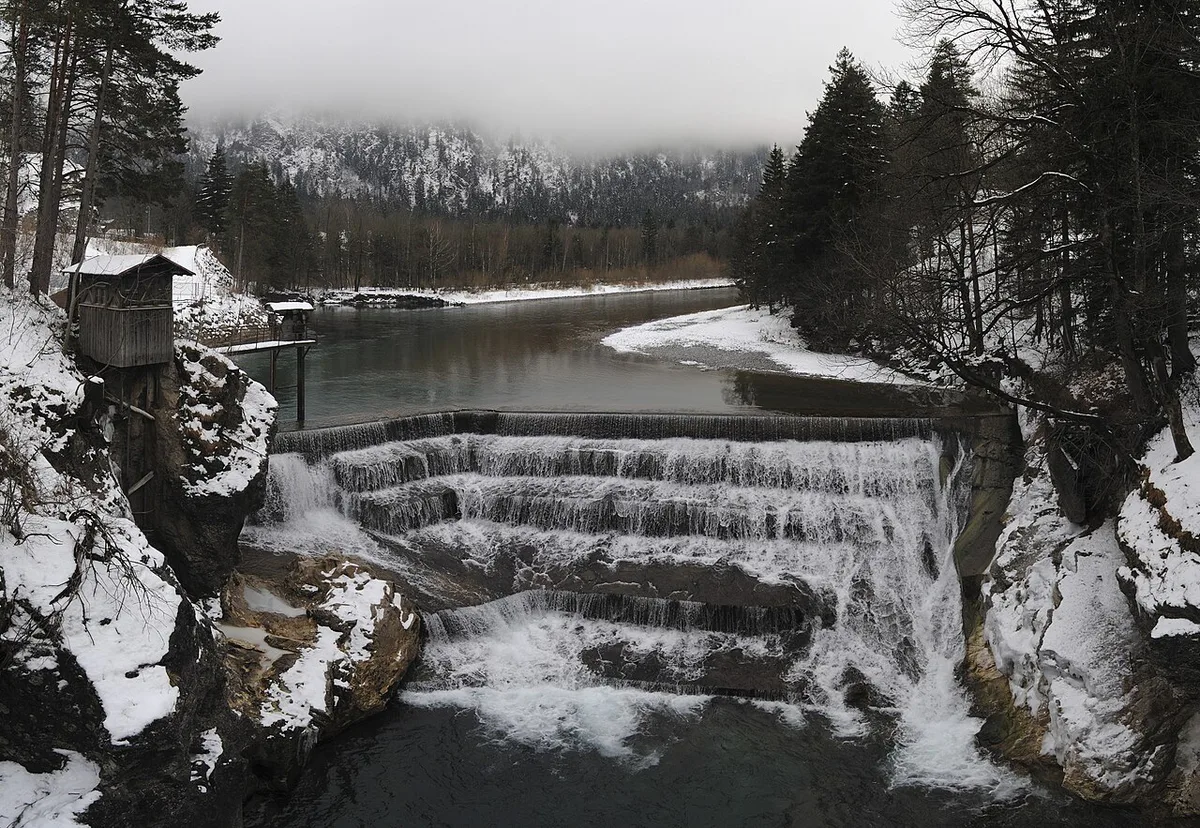
The colour is the draw. The same account attributes the unusually bright, opaque turquoise water to cold temperatures, low plankton content, high mineral content and reflected limestone particles, and notes the effect is strongest on a sunny day. On an overcast evening, expect a flatter, greyer river rather than the postcard turquoise.
A walking-tour guide adds useful structure: the waterfall is man-made, while the gorge beyond it is largely natural, formed roughly ten thousand years ago when the ice caps melted at the end of the last Ice Age. Upstream of the fall the Lech runs wild through a steep, forested valley. Knowing that helps you decide whether to stay at the bridge or continue along the river path.
Lechfall is a strong choice on a cloudy night because the rushing water carries the scene even without a dramatic sky. If you are planning several nights in town and want a structured sequence, the 3 days in Füssen itinerary and the 2 days in Füssen itinerary each cover a different duration.
Direction and Light: Which Way to Face
The Alpsee is your water-facing option, and its main gift is reflection: calm surface, mirrored mountains and the castles above. It works best when you want a wide, still composition and do not mind a longer approach from Füssen. On windy days the mirror effect disappears and the lake becomes less distinctive.
The elevated paths above the old town face across the rooftops toward the Alpine silhouette, so they reward you with layered depth: foreground roofs, mid-ground abbey and castle, mountains behind. This is the area to choose if you want the town itself in the frame rather than open scenery. The climb is short but real, so wear shoes that handle cobbles and steps.
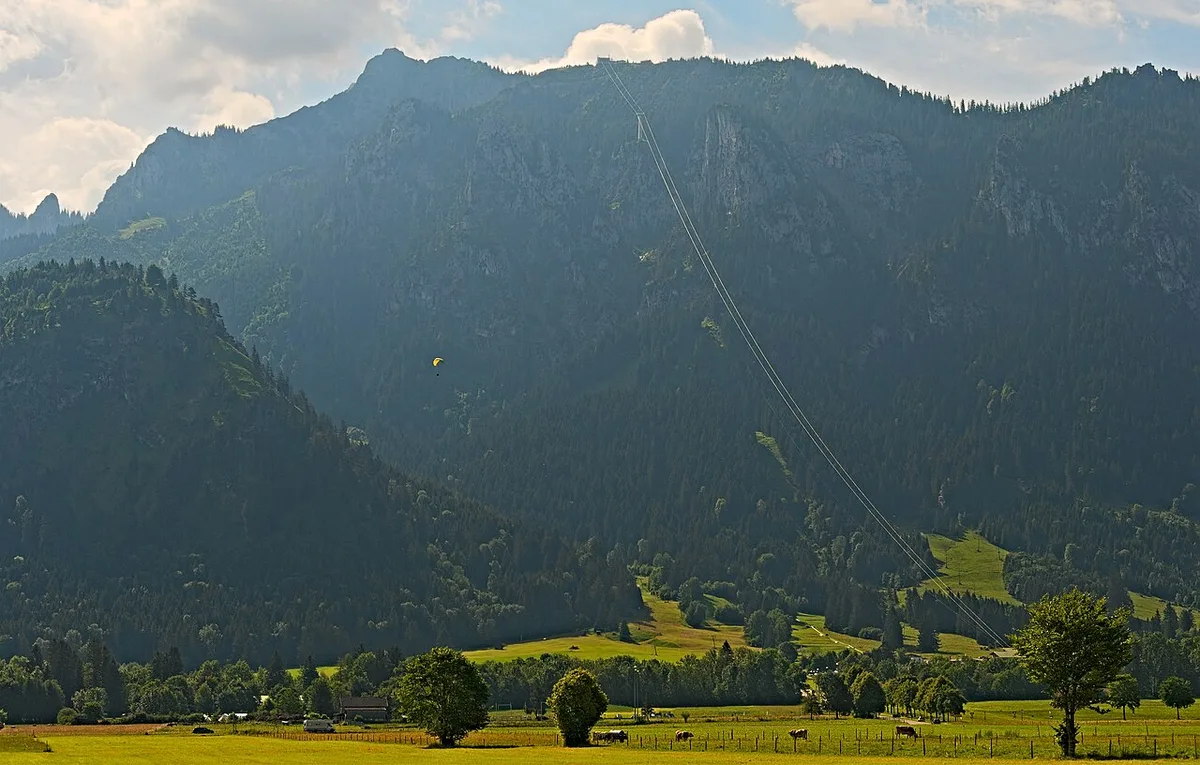
The Lech gorge faces along the river rather than out across a panorama, so the drama comes from motion, colour and the narrow valley walls. Choose it when the sky is unremarkable but you still want a striking scene, or when you have under an hour. If you want a higher, wider panorama instead, the Tegelbergbahn is the cable-car option above Schwangau for a different scale of view.
Access: Getting to Each Area Without Guessing
The old-town areas are walkable and the Lechfall is the shortest walk, but the Alpsee requires either a bus, a bike or a longer walk out toward Schwangau. Because timetables change with the season, this guide does not quote bus or train times; instead, check the official Füssen site and its mobility pages, and confirm with your accommodation which transport your guest card covers.
Road works are the variable most likely to disrupt an evening plan. The city noticeboard has recently listed construction on the B17 through Schwangau, a closure on Königsstraße in Füssen-Ziegelwies and works at the bus station, all with published date ranges. Read the current notices rather than relying on an older guidebook, and allow extra time if your route crosses any of them.
Parking is another detail to verify locally rather than assume. One guide reports a small free car park across the Lech bridge about a ten-minute walk from the old town and describes other, larger paid car parks in town, but availability and fees change. Ask your accommodation where guests normally park, or leave the car behind entirely.
Choosing by Season, Cloud and Time
If you have under an hour before dark, take the Lechfall; if you have two hours, climb to the castle and monastery viewpoints; if you have a half-day, go to the Alpsee and combine it with the castle grounds. That ranking is a recommendation based on walking distances, not an official hierarchy of viewpoints.
Weather decides more than any list. Mountain weather here can turn cold and cloudy quickly even in shoulder season, and one account of an April visit describes low cloud hiding the Alps, with Mary's Bridge closed and no reason to ride the cable car for views. On a day like that, the river gorge usually holds up better than a panorama.
Cloud cover also dictates whether a reflection is worth the trip. A calm, clear evening favours the Alpsee; broken cloud favours the elevated paths, where gaps in the cloud light the town and mountains in layers. For an evening format you already know, the where to watch sunset in Munich guide and the where to watch sunset in Berlin guide show how the same decision logic shifts in a city.
Safety and Etiquette After Sunset
Assume paths will be dark once the light goes, and carry a torch or use a phone light on the way back. Steps, cobbles and riverside tracks are the main hazards after dusk, and the elevated lanes around the castle and monastery involve both uneven surfaces and drops. Stay on marked ways rather than improvising shortcuts through fields or gardens.
Respect private property around the monastery, the castle and the residential lanes below them; some of the best-looking alleys are people's front doors. Keep noise low in the old town, and keep a distance from the water at Lechfall, where the current is fast and the gorge sides are steep. This guide deliberately does not claim any viewpoint is safe at dusk, so judge conditions on the night.
Finish with something warm. Füssen's old town has cafés and restaurants within a few minutes of both the Lechfall walk and the castle climb, and the town's own blog covers eating options around the water. A late meal also solves the practical problem of waiting out the darkest part of the walk back.
Plan Your Sunset Evening in Füssen
Pick your area by direction first: water at the Alpsee, rooftops and mountains from the elevated old-town paths, or the river gorge at Lechfall. Then match it to the time you actually have before dark, and check the city noticeboard for road and construction news that could change your route.
Confirm anything volatile before you go, including museum entry prices, castle ticket arrangements and transport details; treat older figures as historical rather than current. Carry a light, wear shoes for steps, and keep to marked paths on the way back.
Frequently Asked Questions
Where can you watch sunset in Füssen without paying for a ticket?
The Lechfall and Lech gorge area, the walk up to the Hohes Schloss courtyard, and the paths around the Franciscan Monastery of St Stephen are the practical free options, since you can reach the viewpoints without entering a museum. The Alpsee shore near Hohenschwangau is also open scenery, and the castle grounds are pleasant for a stroll even without a tour. Paid interiors, such as the castle museum rooms or a guided castle tour, are separate from the viewpoints themselves, so check before you assume a ticket is needed.
How do you get to the Alpsee shore from Füssen for sunset?
The Alpsee lies a few kilometres outside Füssen below Hohenschwangau, so most visitors reach it by local bus, by bike, or on foot via the castle area. This guide does not quote timetables because they change with the season. Instead, check the official Füssen tourism site and its mobility pages, and ask your accommodation whether your guest card covers local transport, since the city publishes a guest card scheme for overnight visitors.
Is the Lechfall area worth visiting in the evening?
Yes, particularly if you have limited time before dark, because Lechfall is the closest of the three areas to the old town. The appeal is the combination of a man-made waterfall dropping into a largely natural gorge, the fast-moving Lech upstream, and the striking turquoise colour that shows best in sunlight. Allow a short visit rather than a long one, and stay back from the water and the gorge edges.
Can you see the sunset from Hohes Schloss or the old town walls?
The climb to the Hohes Schloss courtyard is free, and the elevated lanes around the castle and the Franciscan Monastery give wide views over the town and the surrounding mountains. Going inside the castle and its tower is a separate, ticketed matter with seasonal opening periods, so check the official information on the day. Lighting and conditions after dark vary, and this guide does not claim any viewpoint is open or safe at dusk.
How long does it take to walk from Füssen old town to Lechfall?
One travel account describes it as roughly ten to fifteen minutes on foot south from the town centre to the point where the Lech drops into the gorge. Add time for the return walk in the dark and for stopping at the bridge. Because routes can be affected by construction, check the city noticeboard before setting out.
Is the walk back from sunset spots safe after dark?
Paths are generally unlit once the light fades, so carry a torch or use a phone light, wear shoes that handle cobbles and steps, and keep to marked ways rather than taking shortcuts through fields or private grounds. Be especially cautious near the Lech, where the current is fast and the gorge sides are steep. Conditions change night to night, so judge the situation yourself rather than relying on a general assurance.


