

The Alte Hofhaltung is best understood as a courtyard rather than a museum you tour from room to room. It stands on the Domberg beside Bamberg Cathedral and the Neue Residenz, and most of what you see from the entrance is open ground you walk through on the way to something else. That distinction matters, because the complex contains several separate parts that are easy to blur together.
For orientation, picture three layers: the courtyard itself, the rooms of the Historisches Museum Bamberg within the building group, and the small Katharinenkapelle chapel. Visit Bamberg publishes courtyard timing as daily from 09:00, with the inner courtyard closed at sunset, so plan this as a daylight stop. The same listing gives the address as Domplatz 7, 96049 Bamberg, and names the cathedral, the Neue Residenz, the Diözesanmuseum and the Historisches Museum as immediate neighbours.
Where the Alte Hofhaltung Sits on the Domberg
The Alte Hofhaltung stands on Domplatz, the square that forms the heart of Bamberg's hilltop old town. Visit Bamberg records the address as Domplatz 7, 96049 Bamberg, which puts you at the top of the climb rather than in the lower town. That position is why the site works as part of a walking circuit of the Domberg rather than a separate excursion.
Two neighbours frame the courtyard almost immediately: the cathedral on one side and the Neue Residenz on the other. The Neue Residenz is the later episcopal palace, and its own ticketing and rooms are separate from anything you see in the Alte Hofhaltung courtyard. Reading a Neue Residenz Bamberg tickets page before you climb the hill helps you decide whether to add that interior to the same afternoon.
Because everything sits within a few minutes of each other, the practical question is not how to get here but in what order to see the Domberg. A short walk up from the town centre delivers you to the square, and the courtyard's entrance is effectively on the way past. If you want broader context for the city's landmarks, the Bamberg landmark visitor guides collect the main sights in one place.
What You Actually Walk Through: The Renaissance Courtyard
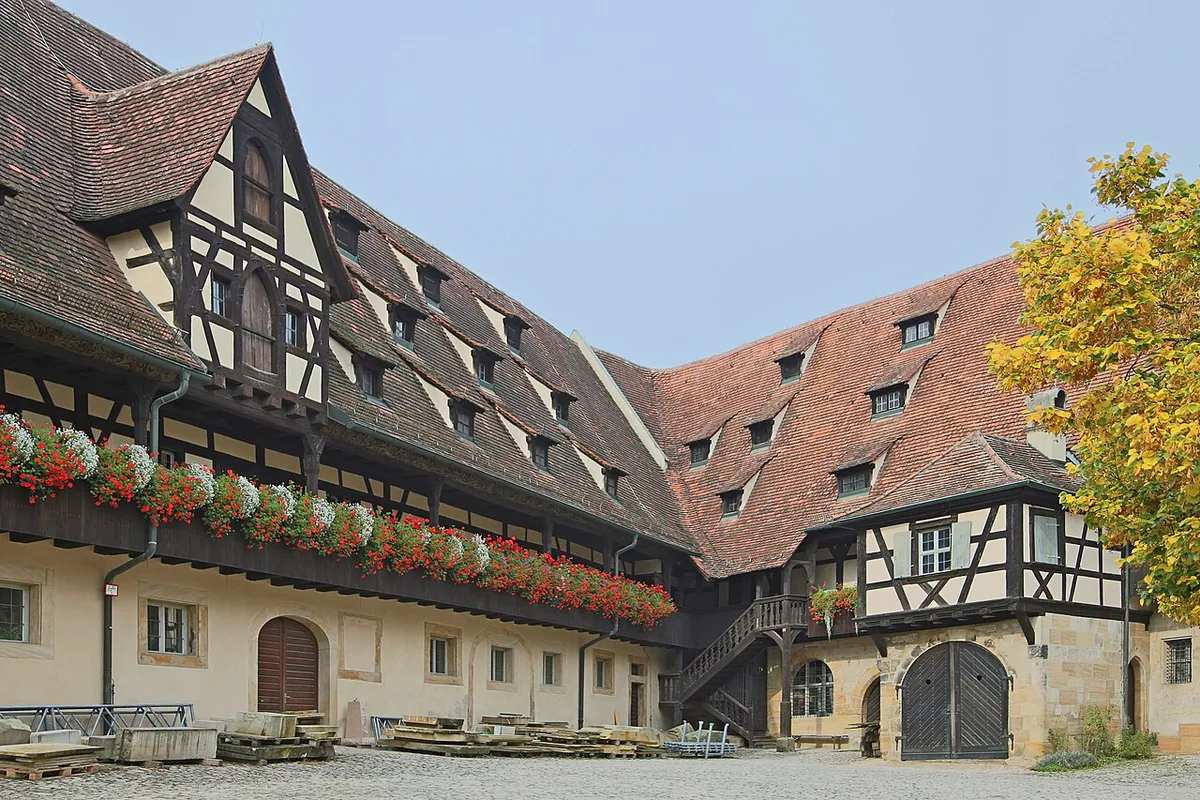
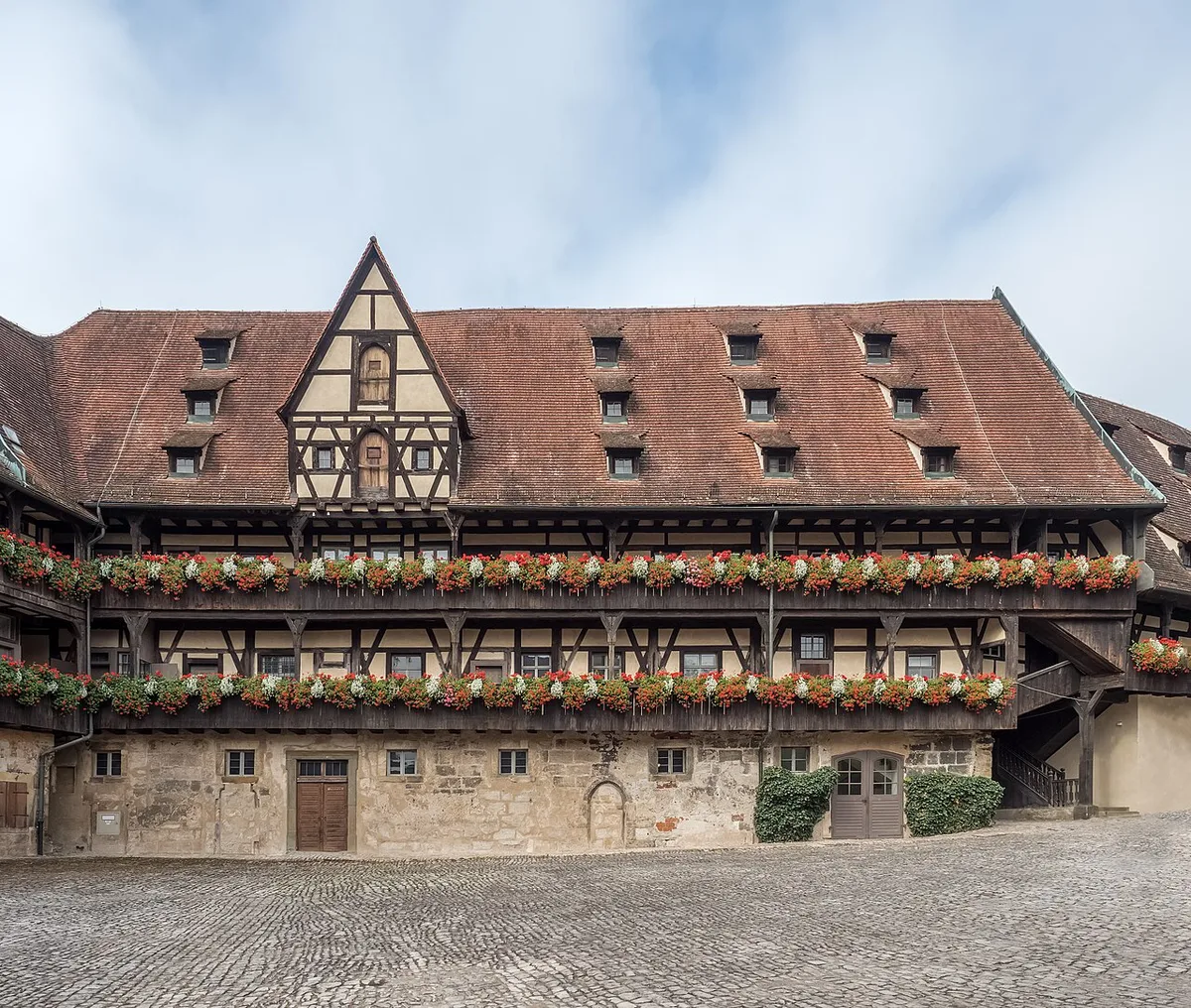
The courtyard is the main event for a short visit, and its character comes from the Renaissance rebuilding rather than from any single object inside. Visit Bamberg describes the Alte Hofhaltung as a complex built in the Renaissance style on the site of the former Castrum Babenberg. Timber-framed galleries and arcades enclose the open space, which is why the courtyard reads as a piece of architecture rather than an exhibition.
Walkers consistently mention the seating: a Komoot contributor notes that the courtyard offers enough places to sit and pause during a city walk. That makes it a natural mid-route break rather than a destination you build an hour around. If you are following a longer town circuit, this is the kind of stop where a short rest resets the walk.
The courtyard is also used for events and gatherings, which is worth knowing if you arrive and find part of the space occupied. Neither Visit Bamberg nor the city pages set out a fixed public calendar for courtyard use, so check locally if a specific date matters to you. Arriving without a fixed expectation protects you from disappointment if access is briefly restricted.
The Origin Story Behind the Facade
The site's importance long predates the Renaissance building you see today. According to Visit Bamberg, the complex was erected on the location of the former Castrum Babenberg, a fortified palace that served as the seat of Emperor Henry II and, from 1007, also as a residence of the bishops. That double role explains why the hilltop carried both imperial and episcopal weight for centuries.
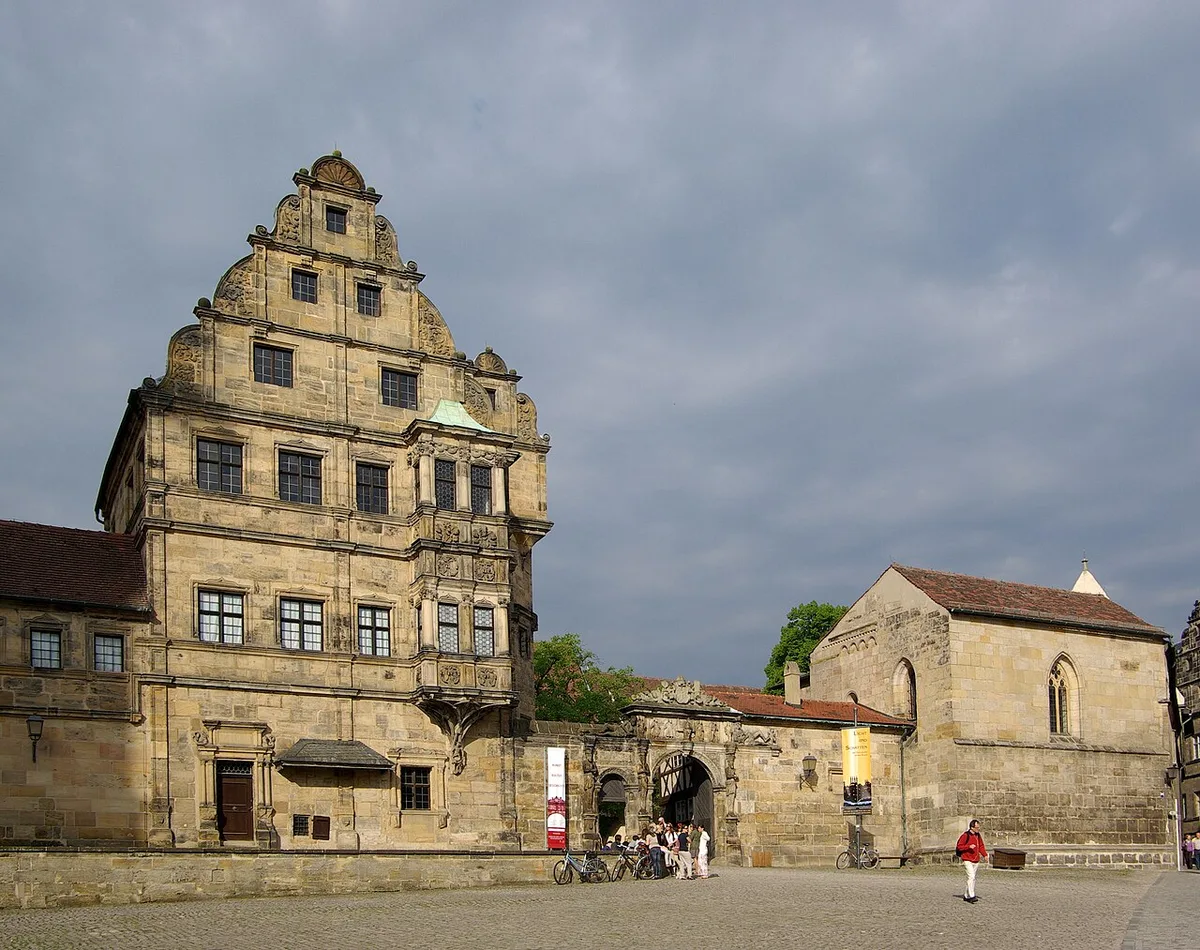
The same account records that a single-storey palace was built on Domplatz in 1185, immediately after the second catastrophic cathedral fire. Knowing this helps you read the square as a series of rebuilds rather than one continuous design. The cathedral's own long history is worth reading alongside it, and a Bamberg Cathedral visitor guide covers that parallel story.
The Renaissance look dates to the late sixteenth century. Visit Bamberg states that the earlier building was demolished on the orders of Bishop Veit II von Würzburg and replaced with a new Renaissance structure. That single decision is the reason the courtyard's galleries and arcades look as they do, and it is the detail that explains the building rather than simply describing it.
Access and Timing: What Is Published and What to Confirm
Visit Bamberg lists the courtyard as open daily from 09:00, with the inner courtyard closed at sunset. Treat those times as indicative rather than guaranteed, because seasonal daylight shifts and occasional events can affect the gate. Photographers should note that sunset closure means the courtyard is a daytime stop only.
What is less clear is the money question. It is widely assumed that walking into the courtyard costs nothing while the museum interiors are ticketed, but the published sources here do not state courtyard admission as a current rule, and they do not confirm a single combined ticket covering courtyard and museum. Rather than rely on that assumption, check admission terms on the city tourism pages before you travel.
The same caution applies to practical facilities. There is no verified information here about barrier-free access, toilets, cafés or guided tours within the complex, so you should not plan around any of them. If step-free access or a guided tour matters, ask the tourist information office directly rather than assuming the courtyard is fully equipped.
How Long to Allow: A Labelled Suggestion
As a suggestion rather than an official figure, allow around ten to fifteen minutes for the courtyard alone. That is enough time to take in the galleries and arcades, read the space, and sit for a few minutes. Anyone expecting a room-by-room visit will find the courtyard itself shorter than they imagined.
If you add the surrounding Domberg, the calculation changes completely. A circuit that includes the cathedral, the square and the approach from the lower town can comfortably fill an hour or more of walking and looking, even without entering any ticketed interior. Building the courtyard in as a pause, rather than a headline stop, produces a more realistic schedule.
For a fuller day in the city, pair the Domberg with lower-town sights so the two halves of Bamberg balance each other. The Bamberg itineraries and city travel guides set out route options if you want a structure to hang the day on. Decide first how much time you have, then choose the route that fits it.
What Else Shares the Complex
Two other elements sit inside or alongside the complex, and both are easy to confuse with the courtyard. The Historisches Museum Bamberg occupies part of the building, and the Katharinenkapelle is a chapel within the same group. Neither should be treated as part of the same free walk-through, so separate them mentally before you arrive.
If the museum is the reason for your stop, treat it as its own visit with its own admission terms. Opening hours and ticketing for the Historisches Museum Bamberg in the Alte Hofhaltung are not published in the sources here, so the reliable move is to check ahead. That also lets you judge whether the museum or the courtyard deserves the larger share of your time.
The chapel serves a very different function. A Komoot contributor reports that the Katharinenkapelle is used for civil wedding ceremonies, which explains why you may find it occupied or closed without warning. Because the source is a walker's report rather than an official schedule, treat the wedding use as a local detail to confirm rather than a fixed fact.
Katharinenkapelle and the 'Licht und Schatten' Performances
The Katharinenkapelle has a second life beyond weddings. The same Komoot contributor reports that a production titled 'Licht und Schatten', described as a thousand-year city history, has been staged there on weekends from May to October since 2004. This comes from a walker's note rather than an official programme, so it should be read as an unverified local detail rather than a scheduled event.
That distinction matters for planning, because a seasonal performance with weekend-only dates can close the chapel on the day you visit. No official source here gives current performance dates, contents or ticket arrangements, so check with the Bamberg tourist information before arranging a trip around it. If the chapel doors are shut, the courtyard remains accessible on its own terms during published daylight hours.
Fitting It Into a Domberg Circuit
The efficient order is to arrive at the top, take in the cathedral first, then move through the Alte Hofhaltung courtyard, then continue to the Neue Residenz. That sequence keeps you moving across the plateau in one direction instead of doubling back. It also puts the courtyard's benches at a natural midpoint, just when a pause is welcome.
If the walk down into the lower town is part of your plan, the Old Town Hall island bridge makes a strong contrast with the hilltop. The Altes Rathaus Bamberg sits on its own island in the river, and crossing to it gives you a second, very different piece of the city's architecture. Save it for after the Domberg so the descent has a purpose.
Plan Your Visit
The Alte Hofhaltung rewards a modest expectation. Come for the Renaissance courtyard, take a seat if the weather is kind, and treat the museum and chapel as separate questions with their own terms. Visit Bamberg's published courtyard timing of daily from 09:00 until sunset is the figure to plan daylight around, with a quick confirmation before you climb the hill.
If you want the wider city in one frame, the Bamberg hub collects routes and guides that put the Domberg in context. A short stop in the courtyard, an hour on the hill, and a walk down to the river is a sensible shape for a first visit.
Frequently Asked Questions
Is the Alte Hofhaltung courtyard free to enter?
Many visitors treat the courtyard as open ground you walk through while the museum interiors are separately ticketed, but the published sources used here do not state courtyard admission as a current rule. Rather than assume it, check the current admission terms on the city and tourism pages before you travel, and expect the museum to have its own arrangement.
How long should you spend at the Alte Hofhaltung?
As a suggestion rather than an official figure, allow around ten to fifteen minutes if you only want the courtyard. Walking the surrounding Domberg, including the cathedral and the approach from the lower town, can easily take an hour or more. Decide first whether you are stopping or sightseeing, then budget accordingly.
Is the Alte Hofhaltung the same as the Historisches Museum Bamberg?
No. The Alte Hofhaltung is the Renaissance courtyard complex on the Domberg, and the Historisches Museum Bamberg occupies part of that building group alongside the Katharinenkapelle chapel. The courtyard and the museum are distinct experiences, so do not assume that one visit covers both or that a single admission arrangement applies.
When is the Alte Hofhaltung courtyard open?
Visit Bamberg lists the courtyard as open daily from 09:00, with the inner courtyard closed at sunset. Treat that as indicative and confirm before you go, because seasonal daylight and occasional events can affect access. The sunset closure means this is a daytime stop rather than an evening one.
What is the 'Licht und Schatten' performance?
A Komoot contributor reports that the Katharinenkapelle has hosted a production called 'Licht und Schatten', described as a thousand-year city history, on weekends from May to October since 2004. That comes from a walker's note rather than an official programme, so check current dates and arrangements with the tourist information before planning around it.
Can you get married in the Katharinenkapelle?
A Komoot contributor reports that the chapel is used for civil wedding ceremonies, which can mean it is occupied or closed when you visit. Because that detail comes from a walker's report rather than an official schedule, confirm current arrangements with the Bamberg authorities if a ceremony is your reason for visiting.


