

The Borusseum is Borussia Dortmund's own club museum, housed within the Signal Iduna Park complex, and it traces the club from its founding-era roots at Borsigplatz through the decades to the present squad. Before you plan anything else, pin down the detail the operator changes most often: the opening hours. The club publishes weekday, weekend and public-holiday times, a last-entry cut-off of 30 minutes before closing, and a home-matchday rule that closes the museum at kick-off.
As a planning estimate rather than an official figure, most visitors should allow roughly 60 to 90 minutes inside the exhibition space, though supporters who read every panel and linger at the trophy cabinet will take longer. The museum sits at the stadium rather than in the city centre, so build in time for the walk from the nearest public transport stop and for the approach to the correct entrance. If you also want the stadium tour, treat it as a separate booking made through the club rather than something folded into your museum ticket.
Where the Borusseum Sits in the Signal Iduna Park Complex
The museum is integrated into the stadium grounds, not run as a standalone building elsewhere in Dortmund. Its published navigable address is Strobelallee 50, 44139 Dortmund, which is the address to type into a satnav rather than a postcode for the city centre. Because the stadium dominates the surrounding streets, the practical challenge is not finding the arena but finding the right side of it on foot.
Treating the museum as part of a stadium day makes sense if you are already coming for a match or a tour, but it complicates a short city break. If your priority is Dortmund's broader football storytelling, the city also has a separate national collection, and a German Football Museum visitor guide is worth reading before you commit your limited hours. The two are independently run and independently ticketed, so budget for both if you want both.
What the Museum Actually Covers
The narrative arc runs from the club's origins in Dortmund's Borsigplatz district through the founding decades, the early national titles, the European successes and the leaner years, up to the modern Bundesliga era. That structure means the displays function as social history as much as sporting record, connecting a working-class neighbourhood club to the industrial identity of the Ruhr. Anyone expecting only match footage and shirts will find considerably more context than that.
The operator frames the visit around unique exhibits, emotional stories and fan culture you can get close to, which is a useful signal about the tone. The collection is presented as an experience rather than a static archive, so reading is mixed with watching and, in places, handling. A German Football Museum Guide is the obvious companion if you want the national game rather than one club, and Dortmund's broader guides can help you weigh football history against art, industry and nature collections.
The Exhibition in Practical Terms
The permanent exhibition covers around 800 square metres, and the operator describes memorabilia, films and installations arranged across that space. The centrepiece, as the club presents it, is the trophy cabinet where the major silverware is displayed. That combination means a comfortable visit is a walk-through with several stopping points rather than a single long gallery, which is why a rough hour or so usually suffices for a general visitor.
Ticket validity is tied to a single admission during opening hours, so leaving and re-entering on the same ticket is not something to assume. Temporary exhibitions can sit alongside the permanent display, which means repeat visitors may see something new even though the core story stays the same. Neither the layout nor the content should be treated as fixed, because the club rotates and updates displays over time.
Children's Trail and the Interactive Gamezone
Families get two distinct features beyond the display cases: a Children's Trail narrated by the voice of the stadium announcer, and an interactive Gamezone for hands-on play. The trail turns the chronology into a guided route children can follow at their own pace, which is helpful when adults want to read longer panels. The Gamezone works as a release valve at the end of the visit, particularly for younger children who have reached their museum limit.
Supervision matters here, and the operator's rule is explicit: children up to the completion of their fourteenth year are admitted only when accompanied by an adult. Plan for one adult per group of children rather than assuming older siblings can supervise, because the age threshold is stated in years, not by school stage. If you are building a family day around the stadium district, Dortmund with kids is a useful companion for balancing museum time with outdoor attractions.
Opening Hours as the Operator Publishes Them
The club lists a weekday window from 09:30 to 18:30 and the same 09:30 to 18:30 window on Saturdays, Sundays and public holidays. On home matchdays the museum closes at kick-off, so an afternoon visit can evaporate on a matchday, and last entry is set 30 minutes before closing. The operator also notes closure on 24 December, 25 December and from 14:00 on 31 December, and warns that individual days can deviate at short notice.
Because those deviations are published only on the club's own pages, the sensible routine is to check the Borusseum opening-hours section in the days before you travel and again on the morning of your visit. If a home game falls on your only available day, either arrive well before kick-off or move the museum to a different date. Nothing in a third-party listing or a review should be treated as more current than the club's own page.
Ticket Prices, Concessions and Who Qualifies
The club's published entry prices are tiered rather than flat: 9 euros for adults, 7 euros reduced, 6 euros for members, a 27 euro family card covering two adults and three children, and 7 euros per person for groups of nine or more. All listed prices include statutory VAT. Because these figures are set by the operator and can be revised, confirm the current amounts on the club's own pricing section before you buy.
The reduced rate covers students, school pupils, unemployed visitors, pensioners, severely disabled visitors and young people who have not yet turned 18. Children under seven enter free, which is worth knowing if you are travelling with a toddler in a larger family group. Commercial listings note that students are asked to bring a valid student card and that disabled visitors should bring their disability pass, so carry the documentation that proves your status.
Group organisers should note that the group rate applies from nine people upwards, so a party of eight pays individually and may find the family card a better deal depending on its composition. There is no published reason to assume discounts stack, so decide which single tier fits your group before reaching the counter. Members should check the club's own guidance on how membership is verified, since that is not something a third party can confirm.
Finding the Entrance and Arriving by Car
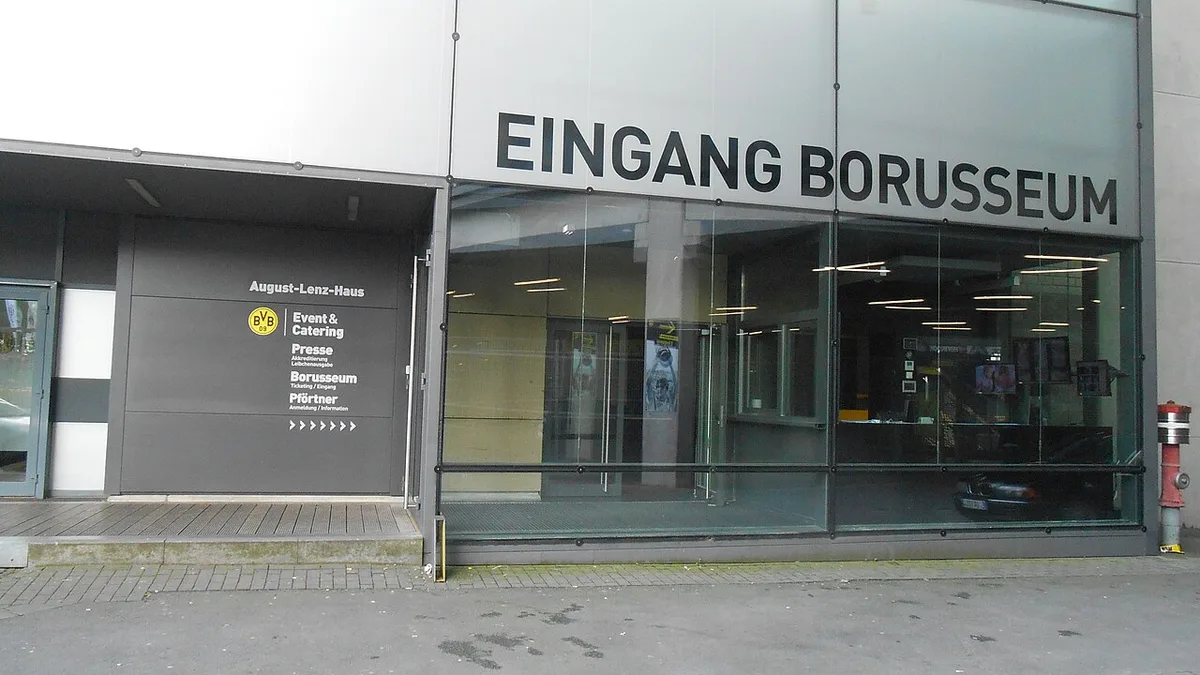
The entrance is at the rear of the August-Lenz-Haus on the north-east corner of the stadium, which is not the side most first-time visitors naturally approach. The operator states that a barrier-free entrance is available, and a commercial listing describes reaching the museum via the lift at the rear of the building, opposite the players' entrance. If you need step-free access, ask staff on arrival rather than assuming a specific route through the complex.
Drivers can use parking directly along Strobelallee and at the Luftbad car park, and the operator states that parking there is free. To reach the Luftbad car park, use the underpass that runs from Strobelallee beneath the FanWelt. For satnav purposes, enter Strobelallee 50, 44139 Dortmund, then follow signage on foot once you have parked.
Museum Ticket or Stadium Tour: Two Separate Products
The most common planning mistake is assuming one purchase covers both experiences. The operator makes clear that a museum ticket does not include the stadium tour, and the two are sold as distinct products with their own pricing and availability. Choose the museum if you want the club's story, the objects and the trophy cabinet; choose the tour if you want to see the stands, the tunnel and the interior spaces that a matchday crowd fills.
For a fuller picture of what the stadium visit involves, the Signal Iduna Park visitor guide covers the arena context, and pairing it with the museum gives football-minded travellers both halves of the story. Tour timings, prices and availability are not something to take from an old page, so check the club's tour section for current details. Doing the museum first often works better, because the history makes the stadium spaces more legible.
Matchday Timing and the Home-Game Rule
Home matchdays compress the museum day sharply, because opening runs only until kick-off. If your trip coincides with a Bundesliga, cup or European fixture, the safest plan is to visit the museum in the morning and keep the pre-match hours for the stadium district itself. The atmosphere around the ground builds well before kick-off, but the museum will not be open through it.
This is also the main reason not to trust a printed schedule or an old blog post. Fixture dates move for television and cup draws, and the operator's matchday rule follows the actual kick-off time rather than a fixed clock. Before you travel, check both the club's fixture list and the museum's opening-hours section, and if they conflict, treat the museum page as authoritative for the museum.
Is the Borusseum Worth It for Non-Football Fans?
This is a judgement call rather than a published fact, so weigh it against your own interests. The museum's subject is a football club, but its material covers a century of a Ruhr industrial city, migration, working-class identity and the way a neighbourhood institution became a global brand. Visitors who enjoy social history, design and the mechanics of fandom generally find more here than they expect; visitors who want fine art or natural history should look elsewhere in Dortmund.
If you are travelling with someone who has no interest in the sport, the sensible compromise is a shorter museum slot paired with something else in the city, rather than a full football-themed day. The 800-square-metre scale means the commitment is modest, so it is easy to sample and move on. Set expectations honestly: the trophy cabinet and the fan-culture displays carry the emotional weight, and that resonance depends on how much the club means to you.
Special Formats and Inclusive Visits
The club has announced an inclusive guided format in cooperation with its fan affairs department, held in the evening and designed so that everyone feels welcome. A distinctive element is the chance, on that occasion, to touch or feel selected exhibits, which opens the club's history to blind and visually impaired fans while remaining interesting for other participants. Announcements like this run to specific dates, so check the club's news section rather than assuming a regular schedule.
Beyond that format, the operator's accessibility statement is limited to confirming that a barrier-free entrance exists, so avoid planning around assumptions about lifts, routes or assistance that have not been published. If you have specific access requirements, contact the museum directly before your visit and describe what you need. That conversation is more reliable than any third-party summary, including this one.
Pairing the Museum With the Rest of Dortmund
The stadium district is only one part of a city that wears its industrial past openly, from converted factory sites to the lake at Phoenix See, and the Borusseum slots naturally into a football-focused afternoon. If you want to keep the theme going, the German Football Museum Guide is the obvious next stop on another day, since it covers the national game rather than one club. For non-football balance, Dortmund's itinerary guides help you build a day that does not revolve entirely around the sport.
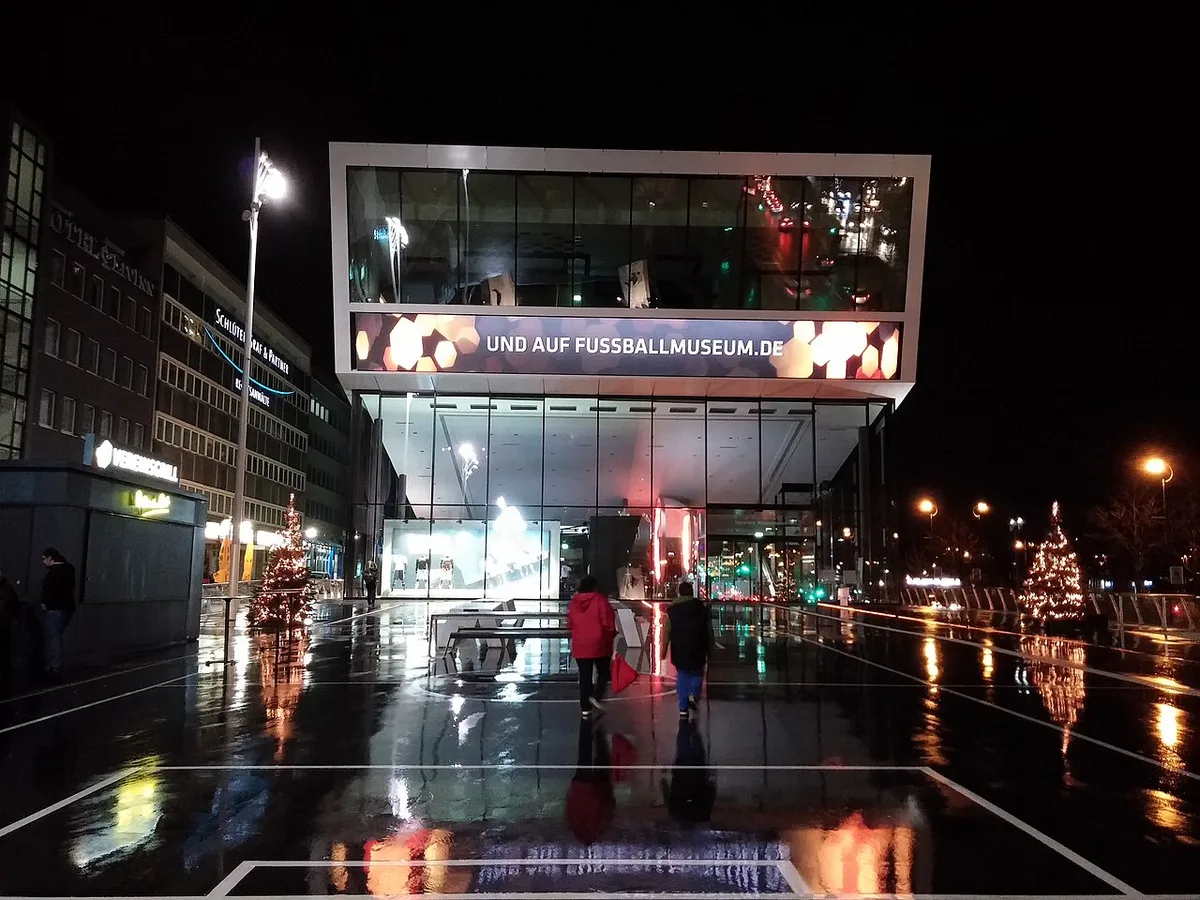
A realistic combination is the museum in the morning and the stadium surroundings on foot afterwards, with a look at the FanWelt retail area if you are already passing underneath it. Keep the itinerary flexible around fixture dates, because a home game will change what is accessible and how crowded the area feels. City-level itineraries are a better place to sequence several sights across a day than a single attraction page.
Practical Mistakes to Avoid
The three recurring errors are assuming a stadium tour ticket covers the museum, arriving within half an hour of closing, and trusting a saved schedule. Last entry is 30 minutes before closing, so a late arrival leaves little or no time in the exhibition. Buying the museum as an add-on to a tour booking without checking is the fastest way to end up disappointed at the entrance.
Two smaller traps are worth mentioning. Bring the documentation for any concession you intend to claim, and do not assume other paid attractions within the stadium complex share the museum's ticket, because they do not. Confirm prices, hours and any special closures on the club's own pages before you set out, and treat everything else as background reading.
Plan Your Visit
The Borusseum rewards a little preparation more than most museums, mainly because its hours bend around home fixtures and its ticket is not interchangeable with the stadium tour. Check the club's own page for current opening times and prices, decide whether you want the club story or the stadium interior, and bring the pass that supports any concession you plan to claim. Allow roughly an hour to ninety minutes if you are visiting casually.
If football is the reason you came to Dortmund, the museum and the stadium sit naturally together across a day, and the city's other collections fill the rest of a short break. If football is not the reason, the museum still works as an hour of Ruhr social history, provided you go in knowing what it is. Either way, verify the volatile details close to your travel date and let the rest of the plan stay flexible.
Frequently Asked Questions
Does a Borusseum ticket include the stadium tour?
No. The operator states that museum admission does not include the stadium tour, and the two are sold as separate products with their own pricing and availability. If you want both, book them individually and check the club's pages for current tour options, because tour details are not published alongside the museum ticket information.
What are the Borusseum opening hours?
The club publishes weekday times, weekend and public-holiday times, a last-entry cut-off 30 minutes before closing, and a home-matchday rule that ends opening at kick-off. It also lists closures on 24 and 25 December and an early close on 31 December, and warns that individual days can vary at short notice. Check the museum's opening-hours section shortly before your visit rather than relying on a saved copy, because the published times can change.
Where is the Borusseum entrance?
The entrance is at the rear of the August-Lenz-Haus on the north-east corner of Signal Iduna Park, not on the main approach side. The operator confirms that a barrier-free entrance exists, and commercial listings describe access via the lift at the rear of the building opposite the players' entrance. For navigation, use the published stadium address on Strobelallee and follow on-site signage on foot.
Can you visit the Borusseum on a matchday?
Yes, but with a strict limit: on home matchdays the museum is open only until kick-off. That makes matchday visits viable in the morning, not in the hour before the game. Because fixture times can move for television and cup draws, check the club's fixture list and the museum's own opening-hours page together before deciding which day to go.
Is the Borusseum suitable for children?
Families have specific provisions, including a Children's Trail guided by the voice of the stadium announcer and an interactive Gamezone. The operator's supervision rule is that children up to the completion of their fourteenth year are admitted only with an adult present. Children under seven do not pay for admission, so a family visit with very young children is relatively low-risk if the adults are also interested.


