

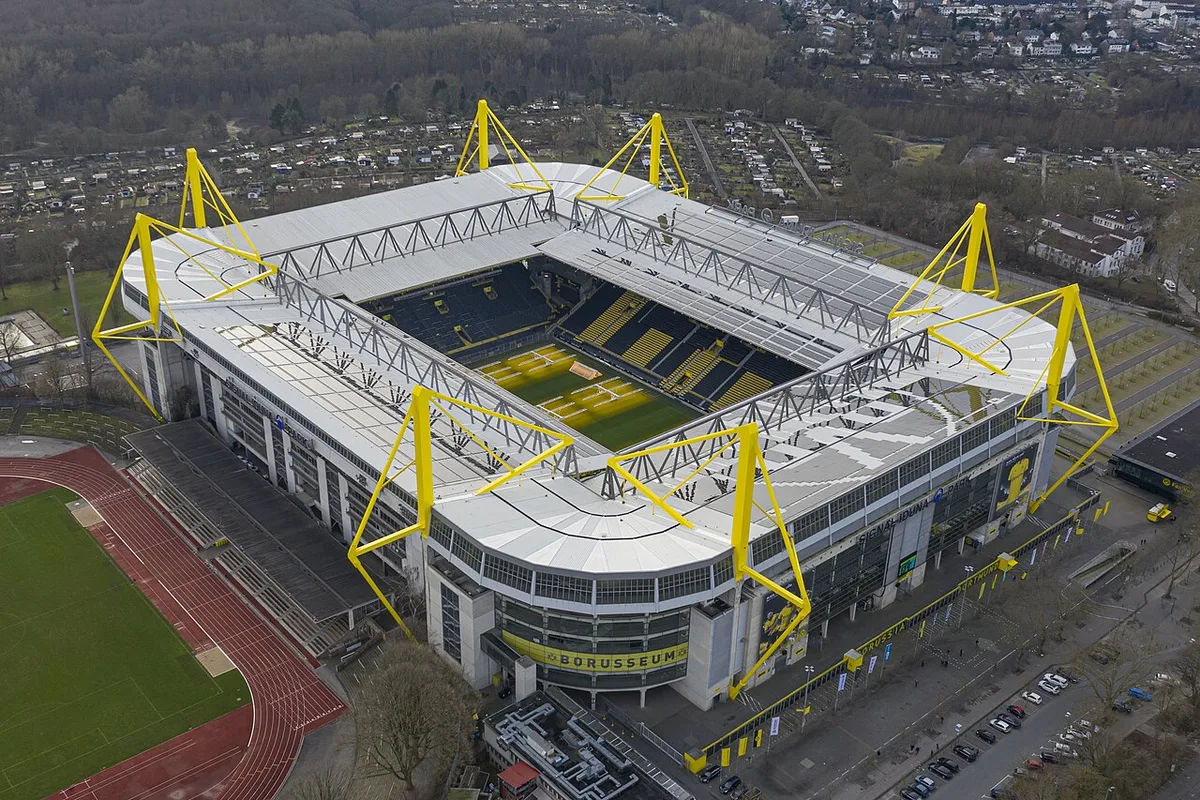
Signal Iduna Park is the current name of Borussia Dortmund's home ground, the stadium many fans still call the Westfalenstadion. Its identity rests on the Südtribüne, the standing terrace behind one goal, and on the matchday culture that fills it. The most important planning fact is also the least glamorous: under BVB's stadium regulations, only people with a valid ticket, day ticket or other authorization may stay inside the stadium and its facilities. This is a working football ground with controlled access, not an open city monument.
Those same regulations set age conditions that matter for families: children up to 14 are admitted only when accompanied by an adult, and children up to 7 are not permitted in the standing areas even with an adult. Visitors who depend on a companion may enter only with a companion who is at least 16, does not need technical or mechanical aids, and also holds entry authorization. Check these clauses against your group before buying anything.
This guide keeps the three main products apart: the stadium bowl on an event day, the stadium tours the club lists in its own navigation, and the BORUSSEUM club museum. It also treats volatile details such as prices, tour times and availability as things to confirm with BVB rather than figures to quote second-hand from older travel writing.
What Signal Iduna Park Is and Where It Sits in Dortmund
Signal Iduna Park stands in the south of Dortmund, close enough to the centre that a stadium visit pairs naturally with the city's other sights. It is owned and operated by Borussia Dortmund, and the club's own stadium regulations state that the ground is primarily intended for hosting football matches, with other sports events and additional events permitted under applicable legal regulations. That framing is useful: this is an event venue first, and public access organises itself around those events.
The historic name Westfalenstadion still appears in fan speech and older travel writing. Sponsorship naming means the official name changes on commercial cycles, so match the name you search for to the club's current usage. If you are assembling a broader football-themed day, the German Football Museum covers German football history as a separate, independently run attraction in the city centre.
The One Rule That Shapes Every Visit
BVB's stadium regulations are explicit that the right to be present inside the stadium and its facilities is tied to a valid ticket or comparable authorization, which is why the ground cannot be treated as a free public building. Tickets and authorization documents must be presented to police or security staff on request, spectators must occupy the seat or block shown on their document, and the stadium uses an electronic admission system. Entrance checks, ID checks for personalised tickets, and searches at entrances are all described in the same document.
The regulations also constrain how tickets circulate. Commercial and unauthorised resale or transfer is prohibited, and private resale above ten per cent of the original ticket price can lead to tickets being blocked without compensation. For a visitor, the practical consequence is straightforward: buy through channels the club recognises, and treat unofficial resale offers as a risk rather than a shortcut.
Age and companion rules sit in the same section of the regulations and are worth reading before booking for a family group. Children up to 14 need an accompanying adult, under-7s cannot enter the standing areas even with an adult, and visitors who need assistance may enter only with a companion who is at least 16 and holds their own entry authorization. These are conditions of entry, not suggestions.
Matchday Versus Non-Matchday: Two Different Visits
On a matchday the stadium is a controlled event venue: entry windows, block allocations, searches and the rhythm of a Bundesliga, DFB-Pokal or UEFA fixture govern your time there. The stadium regulations tie admission and staying inside to the event and to your authorization document. The atmosphere around the ground builds before kick-off and disperses afterwards, but the experience is inseparable from holding a valid ticket.
On a non-event day the situation changes. The regulations state that stays at the stadium on non-event days fall under separate arrangements or agreements made by Borussia Dortmund. In practice, a stadium tour day is not a matchday with fewer people: it is a different product with its own conditions. Treat a tour booking and a match ticket as two separate purchases rather than assuming one implies the other.
Stadium Tours: Guided, Self-Guided and Variants
BVB's navigation lists a family of tour products, including public stadium tours, a guided stadium tour, themed guided options such as an After-Work tour, a Morning Pint tour, a barrier-free tour and a Meet EMMA tour, plus a stadium walk without a guide and private stadium tours. Because formats and schedules are commercial decisions that change, confirm the current line-up and any booking requirement with the club before you build a day around a specific tour.
An older third-party account described a Dortmund stadium tour that combined a self-guided stadium walk with a museum visit and quoted a price of nine to eleven euros. That snapshot dates from 2022 and should not be treated as current; it is useful only as evidence that combined tour formats have existed. Check the club's own pages for what is offered and what it costs today rather than working from dated travel blogs.
When comparing options, decide first whether you want a guide narrating the route or the freedom to move at your own pace. A guided format suits visitors who want context about the ground's history and the club's identity, while the stadium walk without a guide appeals to anyone who prefers flexibility. Private tours exist as a separate category, so groups with specific timing needs should ask the club directly rather than assuming a public slot can be adapted.
BORUSSEUM and the Stadium Tour Are Separate Things
The BORUSSEUM is the club museum, listed in BVB's navigation as its own attraction with its own visit information, exhibitions and access details. A stadium tour and a museum visit can be experienced on the same trip, but you should not assume a single booking covers both or that one ticket type grants entry to the other. Plan them as two products with two sets of conditions, then check current admission details with the club and in a dedicated Borusseum visitor guide.
The distinction matters most on short trips, where a mismatch between what you booked and what you expected can consume an afternoon. If club history is the priority, give the museum its own slot; if the stadium bowl is the priority, book the tour format that actually enters it. For a broader football-history fix, the German Football Museum Guide covers a separate national collection elsewhere in the city and is not part of the BVB campus.
Seeing the Ground Without a Ticket
There is no general right to enter the stadium and its facilities without authorization, so any interior or pitch-side view depends on a tour booking, an event ticket or comparable permission. What you can realistically do without a ticket is approach the ground from the surrounding streets, look at the exterior and the scale of the structure, and get a sense of the venue's place in the city. Do not plan a trip expecting a free look inside the bowl.
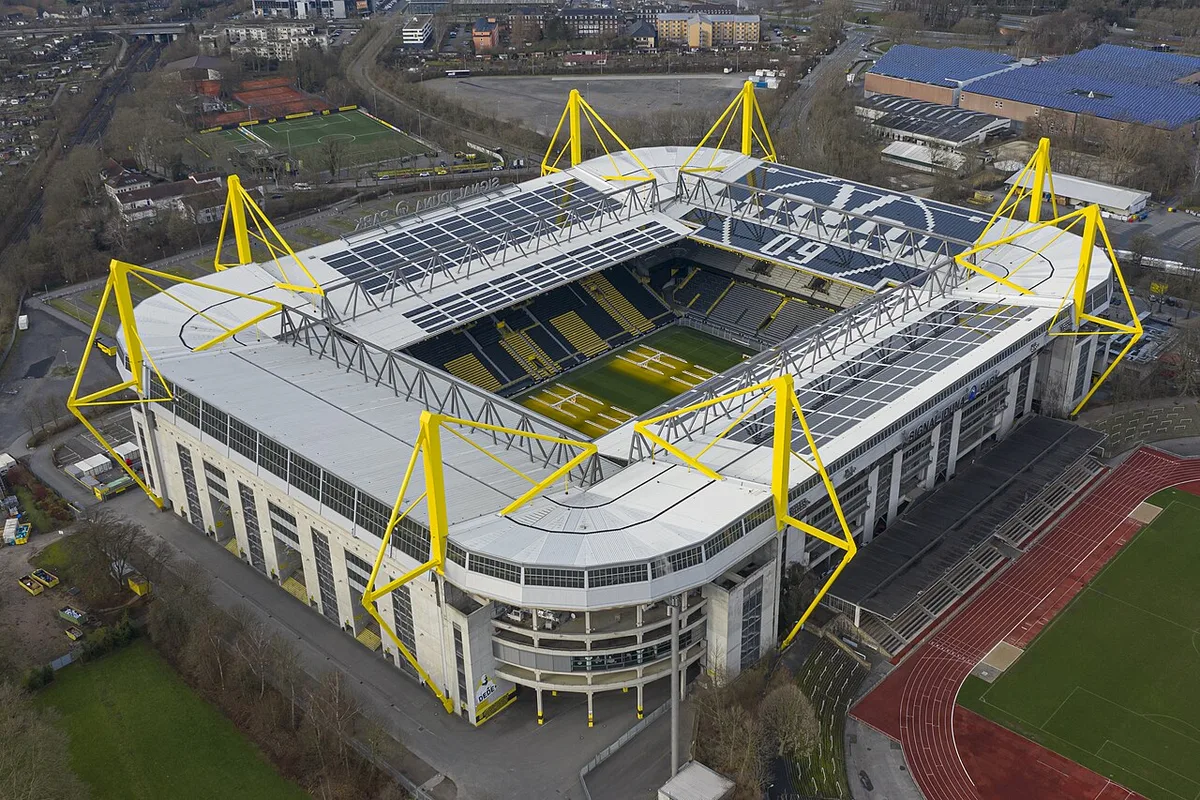
The Südtribüne is the element most visitors want to see, and it is also the hardest to see properly without being inside on an event day. The terrace's character comes from standing crowds in full voice, which is precisely the situation that requires a valid ticket and, per the regulations, excludes children under seven from the standing areas entirely. Exterior views convey the structure's size, but they cannot substitute for the experience, so be honest with yourself about what a non-ticket visit can deliver.
Arrival and Parking: Why There Is No Fixed Answer
BVB's regulations state that parking opening hours vary and depend on the event schedule, with visitors expected to observe posted notices. The maximum parking duration is up to three hours after an event ends unless a written special agreement or separate notice says otherwise, and camping, vehicle cleaning and repairs are not allowed. That combination means the honest answer to when you can park is: check the schedule and the notices for your specific date.
Parking is also at the visitor's own risk, and vehicles can be moved or removed at the owner's expense in defined situations such as expired authorization or improper parking. Anyone staying in Dortmund for several days is often better served by public transport than by trying to park around event traffic; a Dortmund public transport guide explains ticket zones and connections so you can plan the last leg without guessing. Leave extra time on matchdays regardless of your mode of arrival.
Practical Checks Before You Travel
Confirm three things directly with Borussia Dortmund before committing to dates and travel: whether the fixture calendar puts a home game in your window, which tour products are actually bookable, and what the current admission conditions are for the museum and tours. BVB's official site is the authoritative surface for these answers, and it updates as schedules and products change. Working from a cached blog post is how visitors end up at a closed gate.
If accessibility shapes your planning, note that BVB publishes dedicated accessibility information and separate ticket categories for wheelchair users and for visitors with visual, hearing or other impairments. Read those pages before booking rather than after, because companion arrangements and entry authorizations are part of the admission rules. The club's listing is the baseline; specific questions should go to the club's own contact channels.
Who This Visit Suits
Football-first travellers get the most from a matchday, where the ground's reputation is made and where the ticket requirement is simply part of the deal. Families with young children should read the age rules carefully before choosing a matchday over a tour, since standing areas are closed to the youngest visitors and under-14s need an adult. A stadium tour or a museum visit can be the better family option when match tickets are scarce or the fixture list does not cooperate.
Visitors with limited time in Dortmund should decide early whether the stadium is the centrepiece or one stop among several. If it is one stop, pair it with a city itinerary that includes the centre and its museums rather than making two separate trips to the same district. If you need ideas for mixing landmarks, attractions and neighbourhoods across a longer stay, browse the Dortmund city travel guides before fixing your dates.
Plan Your Visit
Treat Signal Iduna Park as a ticketed venue with three distinct doors: event admission, stadium tours, and the BORUSSEUM. Confirm which door you are walking through before you book travel, and read the stadium regulations so age rules, entry checks and parking conditions hold no surprises. For a family day with a science and industry angle instead of football, the DASA Working World Exhibition in Dortmund is a separate and equally bookable alternative.
The single most useful habit for this trip is to verify volatile details at the source. Prices, tour times, availability and event dates change, and the club publishes the current position on its own pages; a two-minute check before departure is worth more than any cached guide. Once the fixture list and your booking line up, the ground itself tends to deliver.
Frequently Asked Questions
Do you need a ticket just to look around Signal Iduna Park?
Under BVB's stadium regulations, only people with a valid ticket, day ticket or other authorization may stay inside the stadium and its facilities, so there is no general right to walk in and look around. You can approach the ground from outside and see the exterior, but any interior or pitch-side view requires a tour booking, an event ticket or comparable permission. Check the current options with the club before you travel.
Is the Dortmund stadium tour guided or self-guided?
BVB lists both guided tour formats and a stadium walk without a guide, along with themed, barrier-free and private variants. The right choice depends on whether you want narration or flexibility, and the available formats can change. Confirm which tours are currently offered and how to book them through the club's own stadium tour pages rather than relying on older travel articles.
Is the BORUSSEUM included in a stadium tour?
Do not assume one booking covers both. The BORUSSEUM is presented by the club as its own attraction with its own visit information, while stadium tours are a separate product line. Even where a combined experience has existed historically, verify what the current tour includes and what the museum charges separately before you plan your day.
Can children visit Signal Iduna Park on a matchday?
Yes, but with conditions. BVB's stadium regulations state that children up to 14 are only admitted when accompanied by an adult, and children up to 7 are not permitted in the standing areas even with an adult. Families should factor those rules into seat selection and ticket booking, since they affect which parts of the ground are open to younger visitors.
When can you park at Signal Iduna Park?
There is no fixed daily parking time. The stadium regulations say parking opening hours vary and depend on the event schedule, and visitors must observe posted notices, with a maximum stay of up to three hours after an event ends unless a written special arrangement applies. For a specific date, check the schedule and the notices rather than assuming a standard window.
What is the difference between a matchday visit and a non-matchday stadium tour?
A matchday is a controlled event: you need a valid ticket or authorization, you sit or stand in the block shown on it, and searches and entry checks apply. Non-event-day stays are governed by separate arrangements made by the club, which is why a tour booking is a different product from a match ticket. Treat them as two separate plans rather than interchangeable versions of the same visit.


