

Dortmund is best known for Borussia Dortmund, and much of the city's public life circles that club, so the first family decision is simple: are you a football family or not? If yes, the stadium area and the football museum near the main station shape the whole trip. A family travel account that visited with children describes the children's museum as free to enter, with knight armour to try on and a large Playmobil setup on the top floor, and reports it as a hit with the under-tens. Treat that as a reported detail rather than an official rule and confirm admission with the operator before you build a day around it.
That same account says the working-world exhibition unexpectedly filled half a day with its children, and that the subway stop for it, Dorstfeld Süd, looks farther on a map than it is in practice. The useful contrast for planning is this: one museum is a short stop, the other is a commitment. Use the city's official information to confirm what is running during your dates before you commit, and treat any suggested duration here as a suggestion, not an official opening time.
City Break or a Slow Week: Framing a Dortmund Family Trip
A family travel account that spent five days in Dortmund concluded that, without the football connection, a weekend city break would be ideal: one museum plus one park on the first day, then either a football activity or the second museum on the second full day. That shape also works if you stretch it to three days without much empty time left over. Longer stays only pay off if you want laundry, grocery shopping and picnic downtime rather than more sights, which is exactly what that account valued. The broader Dortmund overview on this site sets out how the city's stops fit together before you lock dates.
The trade-off is depth against travel overhead. A short break forces you to choose between the children's museum and the working-world exhibition rather than seeing both comfortably, and it leaves the Oberhausen Lego day out entirely. A longer stay lets you add that outside excursion, but the source frames it as a full-day effort that competes with, not complements, a Dortmund day. Decide your trip length first, because almost every other choice here follows from it.
Kid-Friendly Museums: Two Very Different Half-Days
The children's museum sits in a reconstructed tower of what the source account believes was the medieval outer wall, and it is deliberately small. Its draw for younger children is physical: trying on knight armour and playing with a big Playmobil set upstairs. The same account reports free entry and small gems given to children as souvenirs, but because that is a single personal report with no date, confirm admission and opening days with the operator before building a day around it. Assume a short visit rather than a half-day.
The DASA Working World Exhibition is the opposite proposition: a large hands-on museum about professions, from typewriters to firefighting, and from weaving machines to medical devices. The account's favourite element was a short ride themed on factory safety, showing accidents that could happen, and there is a small outdoor playground for a break. Getting there by public transport means the subway to Dorstfeld Süd, which that author notes looks farther on a map than it is in practice. The DASA Working World Exhibition visitor guide explains what the exhibition covers in more detail.
The decision angle is age and stamina, not quality. Under-fives do better at the small children's museum, where the visit is short enough to end before a meltdown, while school-age children who like buttons, machines and noise get more from the larger exhibition. Do not stack both into one day: the exhibition alone consumed half a day for the family that reported on it, and adding a second museum on top crowds out the park that would otherwise balance the day.
Parks: Big, Convenient and One with a Zoo
Westfalenpark is the large park families travel for, Westpark is the small one valued for its proximity to the train station and downtown, and Romberg Park combines a zoo with a botanic garden. The same family account observed that most parks in the city have playgrounds, which makes any of them a workable afternoon. Check each park's own pages for current access and any seasonal closures rather than relying on a description, since green spaces change with events. The city's own events calendar is the reliable place to see what is on in the parks during your dates.
The bigger planning trap is assuming one ticket covers a complex. Park grounds and separately ticketed collections are not the same thing, so budget your day around the free outdoor space and treat any indoor collection as a second, optional decision. For families, the practical version of this is to plan a park morning with a picnic and playground time, then decide on the spot whether the paid interior is worth the additional cost and time. Confirm what each site currently charges at the entrance or on its official information page rather than from third-party summaries.
Football in Dortmund: Museum, Stadium Area and the Ticket Question
For families with older children or teenagers, football is probably the main reason to come. The source account places the German Football Museum right by the main train station and identifies the club museum at Signal Iduna Park as another option, alongside stadium tours and a large fanshop. It also states the obvious caution plainly: if you cannot get match tickets, those alternatives are the fallback. Do not assume a match ticket, a stadium tour slot or the club museum is available on your dates, because availability moves with the season. Check the club and the German Football Museum visitor guide for current opening and tour arrangements.
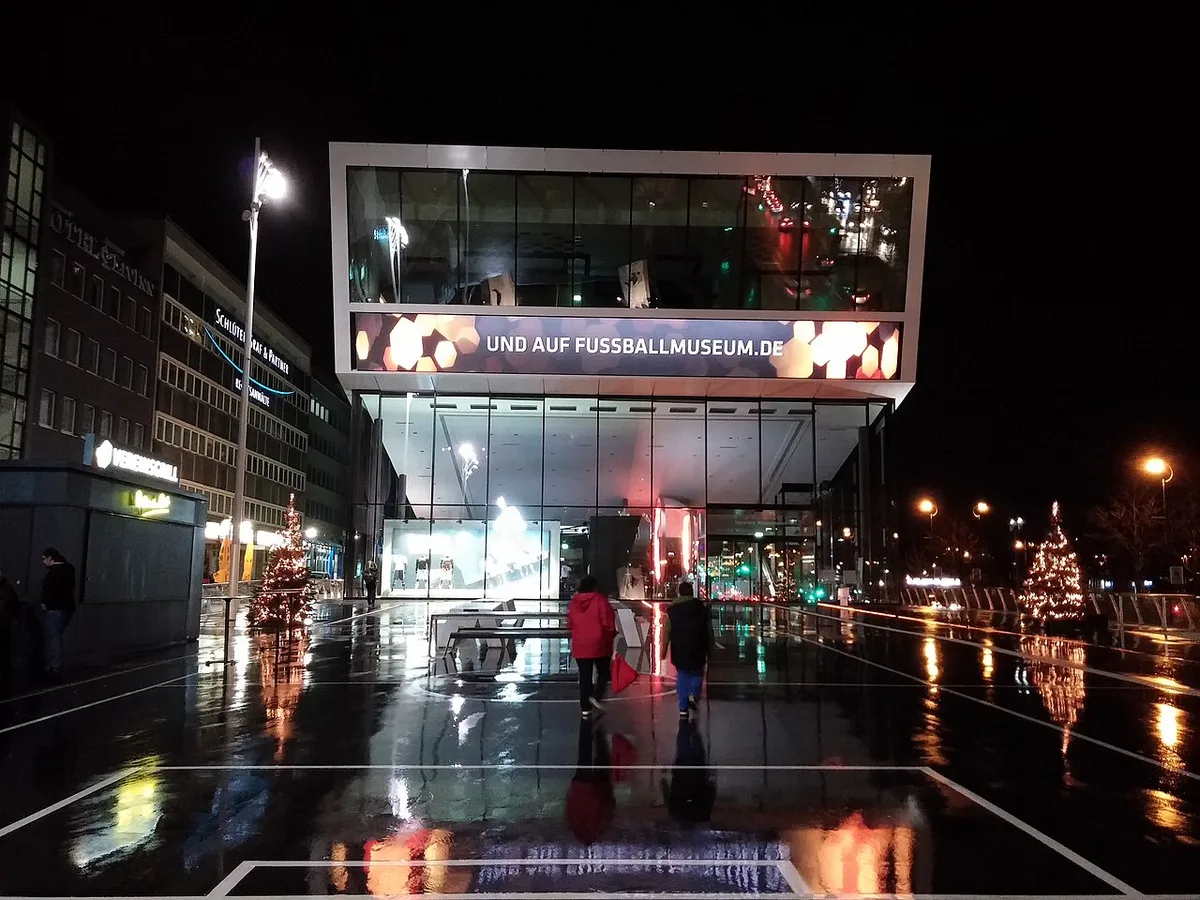
The trade-off worth stating to a football-mad teenager before you book: a stadium tour and a club museum visit are not a match, and a city whose identity is tied to its club can feel hollow to that teenager without one. If tickets are the whole point, consider whether Dortmund belongs in a short trip at all, or whether it becomes a two-night stop with a game as the fixed anchor. For everyone else, the football museum near the station is the low-risk version, because it can be slotted into an arrival or departure day without reorganising the rest of the trip.
Oberhausen: A Lego Day Trip That Replaces, Not Adds To, a Dortmund Day
The Lego Discovery Centre in Oberhausen is outside Dortmund, and the source account treats it as a full-day excursion rather than an afternoon add-on. Getting there without a car means a train from Dortmund Hauptbahnhof, possibly a change in Essen, then a bus or light rail from Oberhausen station to the Neue Mitte area; the author describes the journey as taking around an hour, which should be treated as an approximate figure rather than a timetable. At the Neue Mitte there is also Sea Life, a water park, a carousel, restaurants and shopping, so the area can absorb a whole day.
The source gives an age opinion, not an official policy: it suggests Lego fans aged roughly four to eleven get the most out of it, with peak interest around six to eight, based on the author's own children. It also notes the centres follow a similar format everywhere, so the value for your family depends on whether you have been to one before. Confirm current admission prices, height or age rules and booking requirements directly with the operator or on the city's tourism pages before you commit a full day.
Getting There: Airports, Trains and the Deutschlandticket Question
The source account names Düsseldorf and Cologne-Bonn as the closest airports to Dortmund, with Frankfurt and Amsterdam as larger but more distant alternatives, and describes onward travel from Düsseldorf airport as involving the airport's own transport link to the station and then a train to Dortmund. Treat any journey duration you read as approximate and check the operator's timetable for your date, because schedules change. If you are arriving by train, the same account recommends staying near Dortmund Hauptbahnhof for arrival-day convenience, which matters most with luggage and tired children.
The Deutschlandticket is the pass the source describes: regional trains in second class plus local transport such as subways and buses, sold on a monthly subscription that starts on the first of the month and is only obtainable by app if you have no German address. That account cites a 2026 monthly figure for adults and describes cancelling before leaving to stop the recurring charge, but prices and terms in this scheme change, so verify the current cost and cancellation rules with the transport authority or the city's own information pages. The practical point is that whether the pass pays off depends on your trip length and how much you move around, not on one headline figure.
For children, the source states that under-sixes travel free and that children aged six to fifteen pay a reduced ticket, quoting a local fare for North Rhine-Westphalia at the time of writing. Because fares are revised and regional rules differ, confirm the current child rule for your ticket type before you buy, especially if you are mixing regional trains with city transport. The account's own conclusion was that buying individual child tickets for a week cost less than a monthly pass would have, which is a sensible way to frame the choice.
Where to Base Yourself and How to Shape Two or Three Days
Basing near the central station is the arrival-day answer: you step off a long train and into your room, with grocery stores, a pharmacy and some restaurants nearby, and Westpark within reach for a wind-down. The trade-off the source account flags honestly is that the immediate station area includes a homeless shelter, which families may want to weigh when choosing an exact address. There is no shortage of hotels across the city and all the major chains are represented, so read recent reviews for the specific street rather than the district name.
A two-day shape: one museum in the morning and one park in the afternoon on day one, then a football or second-museum activity on day two, which matches the weekend structure the source account recommends. A three-day version adds the working-world exhibition if you skipped it, or absorbs the Oberhausen Lego day in place of a city day. The 2 days in Dortmund itinerary and the 3 days in Dortmund itinerary show how these pieces fit together at different trip lengths.
What to defer on a short trip: the Oberhausen excursion, because it costs a full day and duplicates a Lego visit many families can do closer to home, and any second industrial museum if you have already done one. Families who have planned a similar short break elsewhere, such as Berlin with kids, will recognise the pattern of choosing one anchor per day and letting the rest flex.
Plan Your Visit
Decide two things before you book anything: whether football is the point of the trip, and whether you have two days or five. Football families should anchor on a match or, failing that, the museum and stadium area, and accept that match tickets are the uncertain part. Everyone else should build the trip from one museum plus one park per day and treat the Oberhausen Lego day as a separate, optional excursion.
Then verify the volatile details: current opening days, admission prices and any park or museum closures on the operator or city pages, plus the current transport ticket rules for your children. Keep a wet-weather backup museum in reserve, and if you are travelling to more than one German city, compare how a similar family stop plays out in Dresden with kids before you fix the order.
Frequently Asked Questions
Is Dortmund worth visiting with kids if you do not follow football?
Yes, but the trip changes shape. Without football, the city works as a short break built around one hands-on museum, one large park and a smaller park close to the centre, with a children's museum that suits younger kids. Families who do not care about the club usually find two to three days is enough, because the strongest family attractions are comparatively few and the Oberhausen Lego centre is a separate day outside the city.
How many days do you need in Dortmund with children?
A weekend is a workable minimum: one museum and one park on the first day, then either a football activity or the second museum. Three days lets you add the larger working-world exhibition or a slow park morning without rushing. Beyond that, extra days only help if you want downtime, laundry and picnic-style meals rather than more attractions. Check current opening days before you commit, because a closed museum can erase a planned day.
Do children need their own transport ticket in Dortmund?
Rules depend on age and ticket type, so confirm the current position with the transport authority before you travel. As reported by one family travel account, children under six travel free and those aged six to fifteen pay a reduced fare, with the local fare changing over time. That account also found buying individual child tickets for a week cost less than a monthly pass, which is worth checking against your own trip length.
Which Dortmund museums are best for young children?
The small children's museum suits under-tens because the visit is short and physical, with armour to try on and a large toy setup upstairs. The working-world exhibition is bigger and more varied, covering professions from typewriters to firefighting, and reported to hold attention for about half a day, which is a lot for a toddler. Choose one per day rather than both, and confirm opening days and current admission before you go.


