

Westfalenpark is Dortmund's best-known green space, and it is a large one: it covers roughly 70 hectares in the Innenstadt-Ost district, at An der Buschmühle 3. That scale matters when you plan, because the park holds several different experiences inside one boundary rather than a single sight. The Florianturm rises above the grounds, and the Deutsches Rosarium is one of the park's flagship plantings.
Dortmund itself earns the phrase green metropolis honestly: well over half of the city's municipal territory is green space, which is remarkable for a place built on coal and steel. Westfalenpark sits at the centre of that reputation, alongside woods, waterways and other parks. Treat it as the anchor of a green half-day rather than a quick photo stop.
Before you commit a day to it, sort out the practical details, because our available sources do not settle admission, opening hours or current tower access. The park's operator publishes that information directly, and it is the only source you should trust on the day. Everything below is about what to see and how to structure the visit, not about ticket prices.
What Westfalenpark Is and Where It Sits
Westfalenpark occupies a broad site east of the inner city, addressed at An der Buschmühle 3 in Innenstadt-Ost. It was laid out on the grounds of earlier nineteenth-century parkland and rebuilt and expanded with the 1959 Federal Garden Show as the catalyst. That exhibition history explains why the park has the shape of a display garden as well as the loose feel of a municipal park.
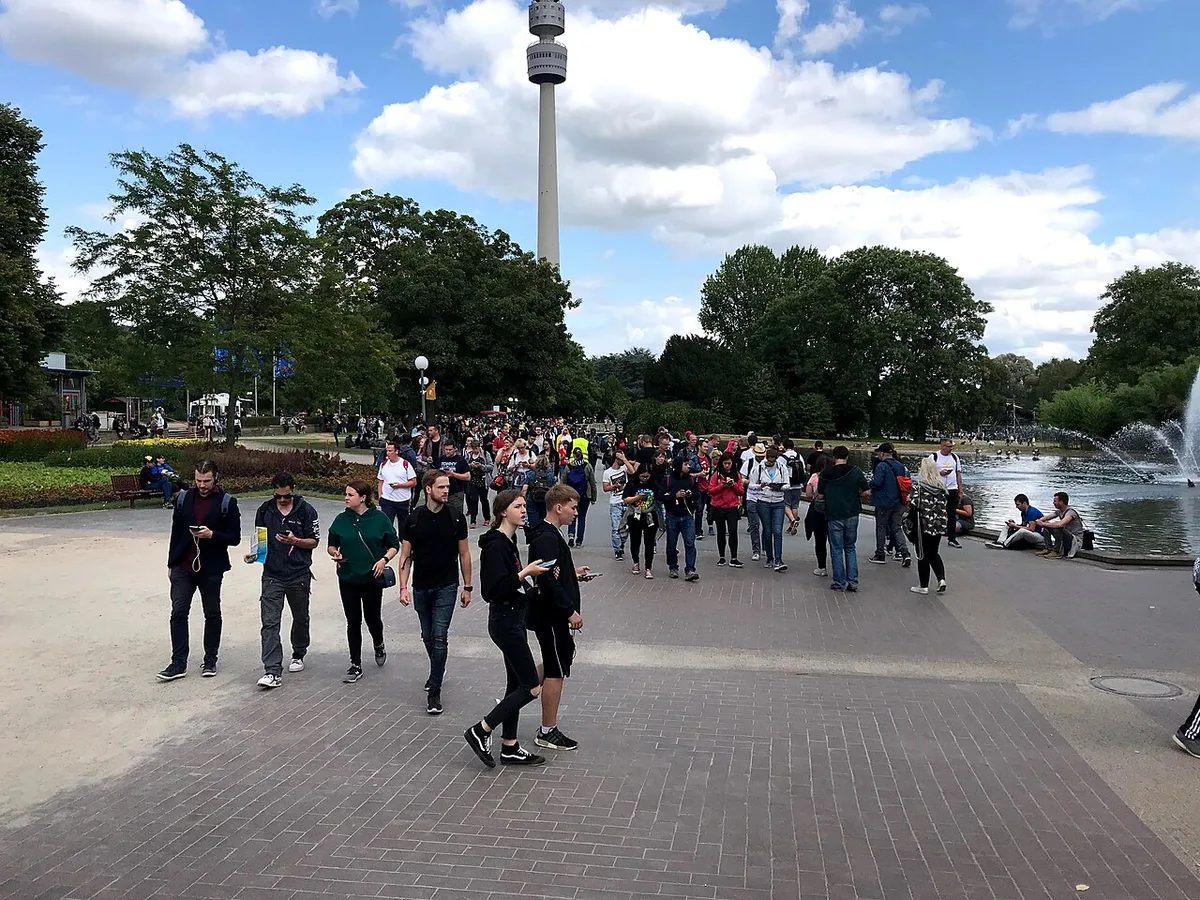
The park's position is useful for walkers, because the Stadewäldchen green belt links the inner city to the park's edge, so you can arrive on foot from the centre rather than treating it as a suburban trip. The corridor is modest but pleasant, with benches and open grass along the way. If you are coming from the Hauptbahnhof, this is a realistic approach on a dry day.
One caution about the approach: sources disagree on which public transport lines serve the park, so do not rely on a remembered line number. Check the current route with the local transport operator or the park's own site before setting out. Walking from the centre or taking a taxi removes that uncertainty entirely.
The Florianturm: A Viewpoint, Not a Full Day Out
The Florianturm is the park's landmark and Dortmund's most recognisable vertical structure, built for the 1959 Federal Garden Show. Published height figures vary between roughly 210 and 220 metres depending on the source and the antenna installed at the time, so treat any exact number you read as approximate. What matters for planning is that the tower offers observation decks over the city and the wider Ruhr area, and that it sits inside the park grounds.
Budget your time at the tower as a short vertical detour rather than an attraction in its own right. A lift ride, a circuit of the deck and some photographs is a compact experience, and it pairs naturally with a walk through the gardens below. If city panoramas are not something you seek out, the park's grounds are the stronger reason to come.
What you cannot assume is that the deck is always reachable or separately ticketed. The park's own visitor information is the place to confirm current tower access, any lift restrictions and how entry works before you build an itinerary around it. A revolving restaurant has long been associated with the tower, but its present operation is not something to promise yourself in advance. For wider planning, see Rombergpark Botanic Garden in Dortmund.
The Deutsches Rosarium and Seasonal Planting
The Deutsches Rosarium, opened in 1972, holds a collection of around 3,000 rose varieties and is one of the park's principal reasons to visit in the warmer months. The planting is arranged in beds and trained forms rather than as a single block, so it rewards a slow loop rather than a glance. Visitors consistently rank it among the park's strongest features, and it is also the setting for rose-season events.
Rose displays peak across the warmer half of the year, which in practice means late spring through early autumn, with a strong showing in early summer. Outside that window you still get structure, evergreens and the park's other gardens, but not the colour that photographs tend to promise. Plan the season deliberately: a rose trip and a winter-lights trip are genuinely different visits.
Beyond the roses, the park includes cottage-style plantings with herbs, fruit and vegetables, plus an Asian garden with bamboo, azaleas, stepping stones and a tea house. These smaller gardens are where the park feels most designed and least like open municipal grass. They also give you somewhere to go when the roses are finished.
Lake, Lawns and Where to Sit
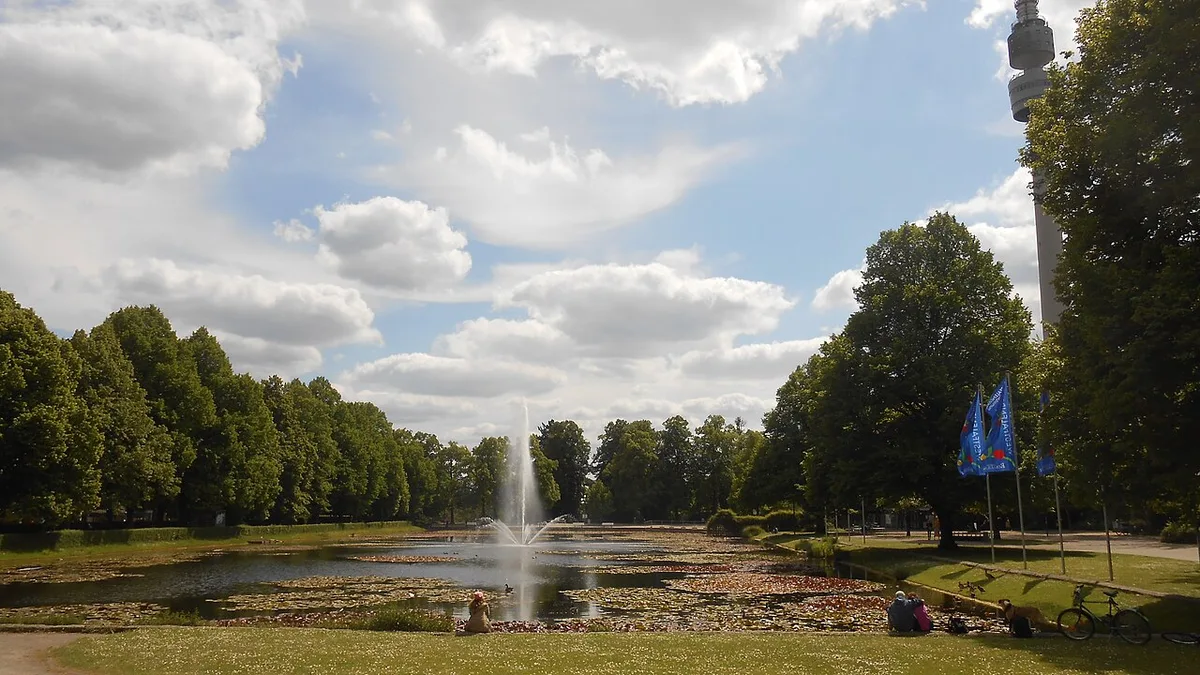
The Buschmühlenteich gives the park its water and its informal centre, with a lakeside stage used for concerts during event periods. Around it, broad lawns and paths create the park's slow core: this is where you sit, read or eat rather than tick off sights. A picnic here is one of the most straightforward uses of a visit.
For a quieter alternative in the same city, the Rombergpark Botanic Garden offers a different proposition: a landscape park with a large arboretum, greenhouses, a cherry blossom avenue and a medicinal herb garden. Choose Westfalenpark for scale, views and seasonal displays, and Rombergpark for botanical collections and woodland calm. If you have time for only one, decide which of those two you actually want.
There is wildlife in the grounds as well, and the lake and wetland edges attract birds. Bring patience rather than expectations: animal sightings in a city park are a bonus, not a schedule item. Photography works best around the water in soft light, whether early or late in the day.
Family Facilities and the Events Calendar
The park has a long-standing family layer: a playground, a miniature railway, a cable car and mini-golf have all been part of the offer over the years, alongside seasonal festivals. Because these are operated features rather than fixed monuments, their availability changes with the season and with maintenance. Ask at the park entrance or check the operator's pages rather than promising children a specific ride.
Events are a major part of the park's identity, from summer music to light festivals that draw crowds after dark. Germany's national tourism board highlights the park's flower displays and its annual light festival as reasons to come. If an event is your motivation, confirm its dates directly, because a festival calendar is exactly the kind of detail that changes year to year.
Dortmund's wider green plans include the International Garden Exhibition, known as IGA 2027, which is regional rather than a Westfalenpark event and centres on a different site around the Kokerei Hansa. It is worth knowing about if you are planning a Ruhr trip around that period. It is not a reason to expect changes inside Westfalenpark itself.
How Long to Allow and Who the Park Suits
As an editorial suggestion rather than any official figure, allow about two to three hours for the grounds, adding roughly half an hour to an hour if you go up the tower. A short stop of an hour works if you only want the tower and a lap of the rose beds. Half a day suits anyone combining gardens, lake and a picnic.
The park rewards people who like walking, plants and open space, and it works well for families with children given the lawns and play areas. It suits less well anyone hoping for a compact, high-intensity attraction: distances between the tower, the rose garden and the lake are real. If walking is difficult for you, plan a shorter loop rather than trying to cover the whole site.
If you are short on time in Dortmund, the city's own suggestions pair the park with the Dortmunder U and the German Football Museum. Those two sit closer to the centre and take different kinds of time, so a mixed day is easy to assemble. Build the park in as the outdoor half rather than squeezing it between indoor stops.
Practical Planning and What to Verify
Admission, opening hours and tower entry are the three things you must confirm yourself, because the sources used for this guide do not agree or do not cover them. Older trip reports describe different arrangements at different points in time, which is precisely why they cannot be relied on now. Check the operator's site before you travel and again on the day.
Accessibility is another area where specifics matter and where you should not take a generic claim on trust. If you need step-free routes, lift access or assistance, ask the operator directly about your requirements. A short message in advance is far more reliable than a blog post written years ago.
For the rest of the city, Dortmund's tourism contacts and the municipal site cover transport, events and current closures. Use those rather than aggregator pages for anything time-sensitive, and keep a backup plan for wet weather. The former port area and the U-Tower district both work as indoor alternatives.
Plan Your Visit
Westfalenpark gives you a rose collection, a lake, themed gardens and a landmark tower inside one large site, which is why it works as either a short stop or a half-day. Decide in advance which of those you want, and let the season guide the choice. Then check the current details with the park before you set out.
Frequently Asked Questions
How long does it take to visit Westfalenpark?
As a rough editorial suggestion rather than an official figure, allow two to three hours for the grounds and add around half an hour to an hour if you also go up the Florianturm. A quick visit covering just the tower and a walk past the rose beds fits into about an hour. Because the site covers roughly 70 hectares, walking between the tower, the Rosarium and the lake takes real time, so a fuller loop is best treated as a half-day.
When is the best time to see the roses in Westfalenpark?
The Deutsches Rosarium is at its best across the warmer half of the year, with flowering strongest from late spring into early summer and further colour into early autumn. Outside that window the garden keeps its structure and other plantings but loses the mass of bloom. Because flowering shifts with the weather each year, check the park's own updates shortly before you travel if roses are your main reason for visiting.
Is the Florianturm worth it if you are not interested in city views?
Honestly, probably not. The tower's value is its observation decks and the panorama over Dortmund and the Ruhr area, and the visit itself is short. If that does not appeal, spend the time in the rose garden, the Asian garden or along the lake instead, where the park's character actually lives. Anyone planning to go up should confirm current access and lift arrangements with the operator first, since these details change.
Sources
- Startseite | dortmund.de
- Dortmund Travel Guide | Dortmund Tourism - KAYAK
- Visit Dortmund: 2026 Travel Guide for Dortmund, North Rhine-Westphalia | Expedia
- Dortmund Tourism
- Top sights in Dortmund: come and be amazed! - Germany Travel
- The 46 best parks and gardens in Dortmund
- 10 Dortmund, Germany Tourist Attractions To Add To Your Itinerary
- [2026 Dortmund Attraction] Westfalenpark Travel Guide & Travel Experiences | Updated Oct | Trip Moments
- Westfalenpark in Dortmund | Travelinos.com
- Florian Tower in Dortmund: Visiting Guide & Tickets


