

Dortmund is usually introduced through steel, coal and football, yet a large share of the city is given over to waterways, woodland, agriculture and green space, with Rombergpark as one of its anchors.
The garden sits in the Hombruch district at Am Rombergpark 35a, and the Ruhr tourism board lists its opening hours as always open.
For a first visit, plan around two separate experiences: the freely wandering park landscape, and the enclosed plant exhibition houses that give the site its botanical name.
What Rombergpark Actually Is
Rombergpark is an English landscape park first and a plant collection second. The Schondellenbach stream carved the broad meadow valley that shapes the whole layout, and the ground rises in finely structured steps on both sides, so a walk naturally moves up and down through side valleys rather than along one flat axis.
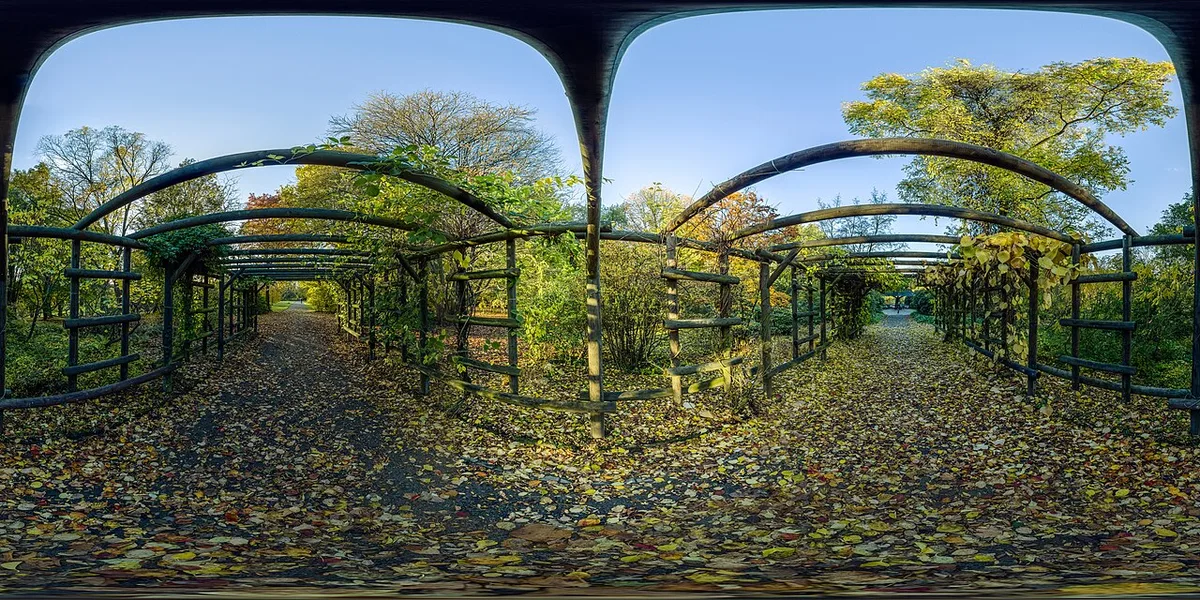
That topography explains why the park feels larger than its mapped boundaries suggest. Venerable old trees, some with ivy climbing to the crown, stand as solitary features, in groups, or inside taller woodland, and they set the calm tone that visitors consistently describe.
Treat the place as a landscape to read slowly rather than a checklist of themed gardens. No official source publishes a fixed count of garden zones, so ignore any confident number you see quoted online and let the paths decide your route.
The Landscape Park: Meadows, Water and Old Trees
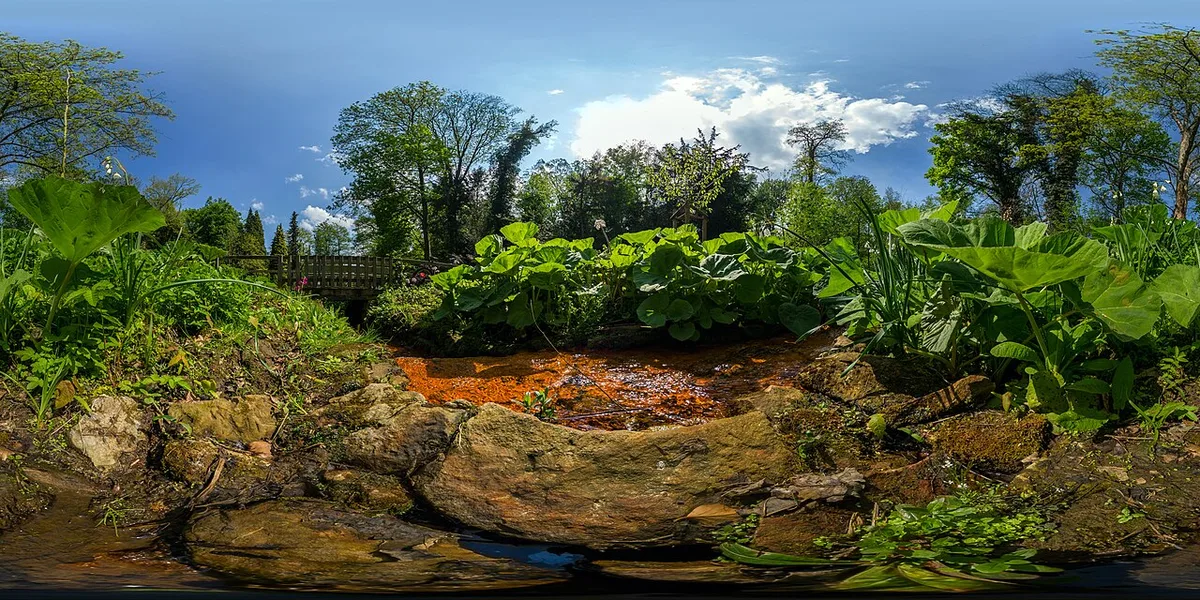
The open meadow valley is the park's main room, and the side valleys off it are where the walking gets interesting. Small and large pools, springs and ponds are scattered through the grounds, and they support a noticeable population of water birds.
Photographers tend to gravitate to the same handful of setups: forest paths lined with ancient trees, the stream crossed by a small stone bridge, and the quietly flowing lake. Arriving early gives you softer light and emptier paths, which matters more here than chasing a specific viewpoint.
Because the grounds are broad and mostly unpaved in character, wear shoes that handle damp grass and leaf litter rather than city footwear. Benches and open lawns make it easy to break a walk into short stages instead of covering everything in one push.
Trees and Shrubs: Reading a Living Collection
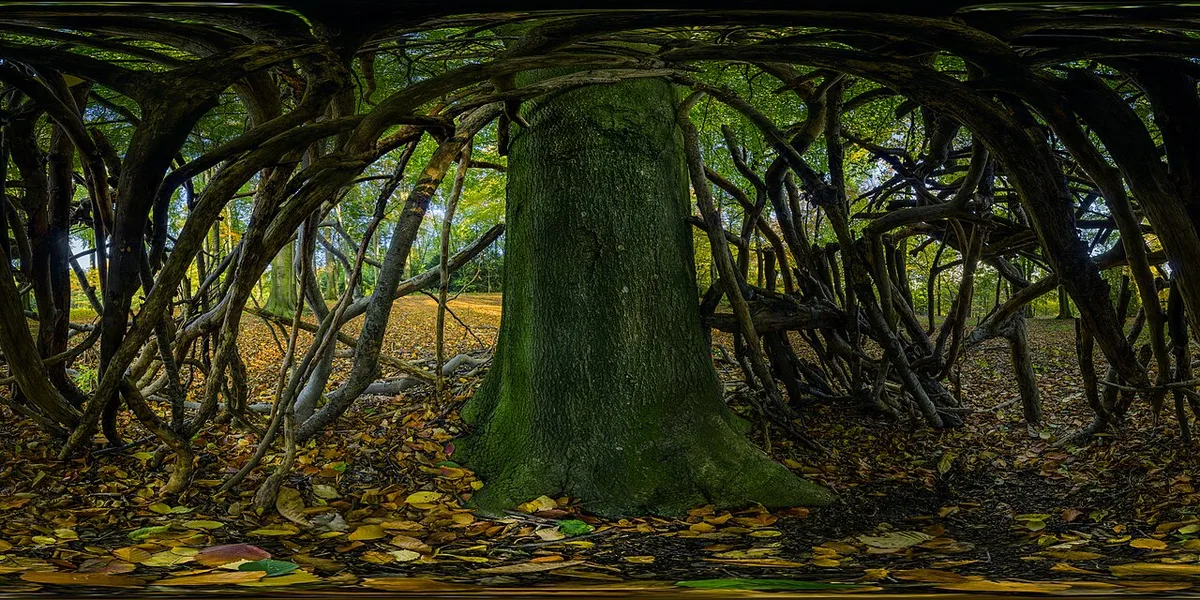
Visitors often describe Rombergpark as a living botanical library, and the comparison is useful when you are walking it. The collection gathers trees and shrubs from many regions, with rare specimens from North America and East Asia that are unusual to find this far north in Germany.
Labels and signs are a helpful starting point, not a verification tool. If a species name matters to you, cross-check it against the operator's own pages at the Botanic Garden Rombergpark site before repeating it as fact.
Reading the collection well means slowing down in one or two areas rather than pacing the whole park. Pick a section, look at bark, leaf shape and habit, then move on; that approach leaves you with more than a photograph of a trunk.
The Show Greenhouses and Their Climate Zones
The plant exhibition houses are the reason Rombergpark holds up as a cold-season destination. Inside, visitors walk through tropical, subtropical and desert plant zones, so the temperature and humidity shift as you move between rooms and the experience feels like crossing several continents in a few minutes.
Expect cacti, orchids and palms that would not survive a Dortmund winter outdoors. The warm, humid air is the point: on a grey afternoon the greenhouses deliver a completely different visit from the meadow walk outside.
Before you travel, check whether the exhibition houses are currently open and whether any admission applies. Neither the city portal nor the tourism board publishes a ticket price for them, so confirm directly with the operator rather than assuming the grounds and the glasshouses work the same way.
Cherry Blossom Avenue and Seasonal Timing
The cherry blossom avenue is the park's signature seasonal moment, turning it into a corridor of pink and white in spring. Because blossom timing shifts year to year, watch for local reports in the weeks before you travel rather than booking around a fixed calendar date.
Summer brings dense shade and a lush green canopy, and the park remains comfortable even on warm days thanks to the tree cover. Autumn is arguably the strongest season for colour, when the mix of species turns the whole valley into shifting golds, reds and browns.
Winter strips the park back to structure: bare branches, visible ground contours, quiet water. That is when the greenhouses earn their place in your plan, giving you a warm stop in the middle of an otherwise cold walk.
Free Grounds Versus Enclosed Spaces
The park grounds are widely described as open for free wandering, and the tourism board lists the opening hours as always open. That is a useful planning signal, but it is not the same as an official ticketing rule, so treat it as broadly reported rather than guaranteed.
Keep three things mentally separate: the open landscape park, the enclosed plant exhibition houses, and the small information point near the greenhouse entrance. Time restrictions, if any exist, would apply to the enclosed spaces rather than the grounds.
Rather than repeating a blanket free-admission claim, verify the current position for anything behind a door. The operator's own pages are the only place to confirm what applies to the greenhouses on the day you visit.
How Long to Allow
A visitor listing suggests one to two hours as a recommended sightseeing time, which is a reasonable third-party estimate rather than an official duration. That window covers a loop through the meadow valley and a pass through the greenhouses without rushing.
If you want to read the tree collection properly, double it. A half-day shape works well: arrive in the morning, walk the valley and side paths first, then use the greenhouses as a warmer, slower second act.
A short visit is still worthwhile when you are short of time. Head for the meadow valley, take one side path, and finish near the information point rather than trying to cover the whole site.
Practical Decisions: Entrances, Information Point and Café
The small information centre sits next to the greenhouse entrance, and it is the obvious place to deepen your visit before walking the collection. Ten minutes there can turn a pleasant stroll into something you actually understand.
The Orchidee park café provides food and drink on site and doubles as a meeting point, so it works as a natural midpoint or endpoint. The address to enter into navigation is Am Rombergpark 35a in 44225 Dortmund.
The city's own portal is the place to check for broader visitor services, transport information and any current notices affecting the site before you set out.
Combining Rombergpark With Nearby Sites
Dortmund Zoo sits next to the park, which makes a combined day straightforward and gives families a strong second stop. Check the zoo's own published hours and ticketing directly, since they operate independently of the garden.
Rombergpark was once part of Brünninghausen moated castle, and the historic gatehouse survives as a gallery. It is a short detour that adds a built structure to an otherwise green itinerary.
If you would rather keep the day free of admission costs, there are plenty of free things to do in Dortmund that pair easily with an afternoon here, and Westfalenpark makes a logical second green stop on another day.
Where Rombergpark Fits in a Dortmund Itinerary
For a first trip, give Dortmund two or three days and treat Rombergpark as one half-day among several. Use the city itineraries and city travel guides to slot the garden alongside the centre rather than treating it as a standalone trip.
If you are choosing between green spaces, note that the region has a big horticultural moment ahead: the International Garden Exhibition opens in the Ruhr region on 23 April 2027, according to dortmund.de.
Beyond the parks, Dortmund rewards a mixed itinerary. The Hohensyburg and Kaiser Wilhelm Monument visitor guide covers a hilltop viewpoint south of the city, and the DASA Working World Exhibition visitor guide adds an indoor, work-and-industry counterpoint for wet days.
Football fans can round out the same trip with the Borusseum visitor guide at Signal Iduna Park, which suits an afternoon before or after a park morning.
Plan Your Visit
Rombergpark works best when you accept its two-part character: an English landscape park you wander freely through, and enclosed plant houses that carry the botanical content. Build your day around that split instead of expecting a single continuous attraction.
Confirm the details that can change before you travel, especially anything about the exhibition houses, and use the operator's pages rather than secondhand summaries. Then give the place at least a couple of hours, more if the trees are the reason you came.
Free things to do in Dortmund are easy to find, and this garden is one of the strongest. Pair it with the zoo or the gatehouse gallery for a complete day out in Hombruch.
Frequently Asked Questions
Is Rombergpark Botanic Garden free to visit?
The park grounds are widely described as open for free wandering, and the regional tourism board lists the opening hours simply as always open. That is a broadly reported pattern rather than an official ticketing rule. The enclosed plant exhibition houses are a separate matter, and no published source confirms whether admission currently applies there, so check with the operator before you rely on it.
How long should you spend at Rombergpark?
A visitor listing suggests one to two hours as a recommended sightseeing time, which is a third-party estimate rather than an official duration. That covers a walk through the meadow valley plus a look inside the greenhouses. If you want to read the tree and shrub collection properly, allow closer to half a day so you can slow down in individual sections rather than pacing the whole park.
What is there to see in the Rombergpark show greenhouses?
The show greenhouses are laid out as tropical, subtropical and desert zones, letting visitors pass through different climate conditions in a single walk. They hold cacti, orchids and palms that could not survive outdoors in this climate, and the warm humid air makes them the obvious draw in the colder half of the year. A small information centre next to the greenhouse entrance is the place to learn more before you start.
When is the best time to visit Rombergpark?
Spring brings the cherry blossom avenue into colour, summer offers dense shade, and autumn is the strongest season for foliage thanks to the mix of tree species. Winter is quiet and structural, which is exactly when the greenhouses become the main reason to come. Blossom and leaf timing shift each year, so watch local reports in the weeks before your trip instead of fixing a date months ahead.
Can you combine Rombergpark with Dortmund Zoo?
The zoo sits next to the park, so a combined day is straightforward and works well for families. The two operate independently, so check the zoo's own published hours and ticketing separately rather than assuming a shared arrangement.
Where is the information point in Rombergpark?
The small information centre is located next to the greenhouse entrance, which makes it a natural first stop if you want context before walking the collection. It is also a useful landmark for regrouping on a longer visit.


