

Dortmund is a large city in western Germany, in North Rhine-Westphalia, and it developed as one of the country's major industrial centres, with a heritage shaped by steel, coal and machinery. That matters for budgeting, because the most dependable no-cost experiences here are public spaces: squares, promenades and waterside paths you simply walk into. Paid museums and attractions exist in numbers, and no single free-admission rule covers them, so treat each one separately.
The practical consequence is that a cheap day in Dortmund works best when you anchor it to one or two open-air places and let ticketed sights be optional add-ons rather than the plan itself. Cover your free anchors on foot in the centre where possible, then decide on the day whether a paid interior is worth the entry. As a suggestion, not an official figure, half a day is enough for the central squares plus one green space.
What Free Actually Means in Dortmund
Free in Dortmund almost always means open public space rather than a free attraction. Streets, squares and waterfront promenades cost nothing because they are part of the city, not because an operator has waived a fee. Museums, exhibitions and stadium experiences sit in a different category, each with its own admission model decided by its own operator.
That distinction protects your itinerary. If you build a day around an assumption that a named museum is free and it is not, you have lost the centrepiece. If you build it around a square or a lake path, nothing can be cancelled or charged. Check the operator or city page for any interior you care about before you commit to it.
It also changes how you read price information you find online. Ticket prices shown by resellers and travel articles are set at a moment in time and are often not current, and those figures reflect the seller rather than necessarily the on-site price. Use official pages for requirements, and treat any quoted number as something to verify on the day you plan to buy.
Free Squares and Public Spaces in the Centre
The compact core gives you several zero-cost stops within an easy walk of one another. Alter Markt is the historic market square, with cobblestones underfoot and a setting that recalls the trading life of earlier centuries. Dortmund's town hall stands in the heart of the city and makes a natural companion stop on the same wander, with late Gothic and Renaissance facades and a spire topped by a statue of Emperor Wilhelm I.
Friedensplatz functions as one of the city's main public squares and a focus of civic life in the centre. Around it you will find buildings in Art Nouveau and Neoclassical styles, plus cafes, restaurants and shops that make the square a comfortable place to pause. In summer it also hosts festivals and fairs, so the square can be busier and livelier than on a quiet weekday.
The Reinoldikirche cathedral garden sits beside the church and works as a small green breathing point rather than a headline sight. Expect benches, flower beds and trees creating a calm pocket close to the shopping streets. It is the kind of stop that costs nothing and takes fifteen minutes, which is exactly why it fits well between two paid activities.
Phoenixsee: The Clearest Free Recreation Area
Phoenixsee is the best example in Dortmund of a genuine free recreation area, and it comes with an unusual origin story. After the steelworks closed, the site was redeveloped: 110 hectares became a business park and a further 98 hectares became a residential quarter, with an artificial lake at the centre of the living and working environment. The lake is equipped for recreation and sport, with a pier, a promenade with restaurants, and jogging and cycling paths running over three kilometres.
Practically, this is a place where the activity is the walk itself. The water shifts between deep blue and lighter turquoise through the day, which rewards a slow loop rather than a quick photo stop. Bring a bike or walking shoes, and plan your food around the promenade if you want a sit-down break.
Two cautions are worth keeping. The residential and business areas around the lake are lived-in space, so treat the promenade as a shared neighbourhood rather than a resort. And note that the city handles boat-use permissions for the lake through a formal application, so any model-boat or similar activity is a regulated matter rather than a casual one.
Industrial Heritage on a Budget: Outside Versus Inside
Industrial monuments are central to why people visit Dortmund, and they are also where budget planning goes wrong most often. The Zollern II/IV mine site began operations in 1904 and closed in 1966, and in 1969 the mine area was turned into a museum of industrial culture that preserves original buildings and equipment, including the main mine building, engine rooms and forge. Those are museum interiors with their own admission terms, not open ground you can assume is free.
The same logic applies at the city's largest industrial sites, where an outside view and a paid interior are two different products. Walking the perimeter, looking at the architecture and reading an information panel can be a genuine highlight without buying anything. Always check the operator's own page for what the ticket covers, because a single ticket rarely opens every building in a complex.
For industrial-heritage walkers, Hansa coking plant is the obvious add-on, and it belongs in the same category: go for the structures and the scale, and verify separately what, if anything, is ticketed. If you want more unusual corners of the city beyond the headline industrial names, a short list of lesser-known stops helps you avoid duplicating the obvious ones.
One forward-looking note: the city portal describes an International Garden Exhibition running from 23 April to 17 October 2027 across the Ruhr region, with a Dortmund Zukunftsgarten developed around Kokerei Hansa. That is a future regional event, not a free attraction today, and the city publishes its own information about participation and tickets. If your trip falls in 2027, check the city pages rather than assuming open access.
Westfalenpark and Green Space: Check Before You Go
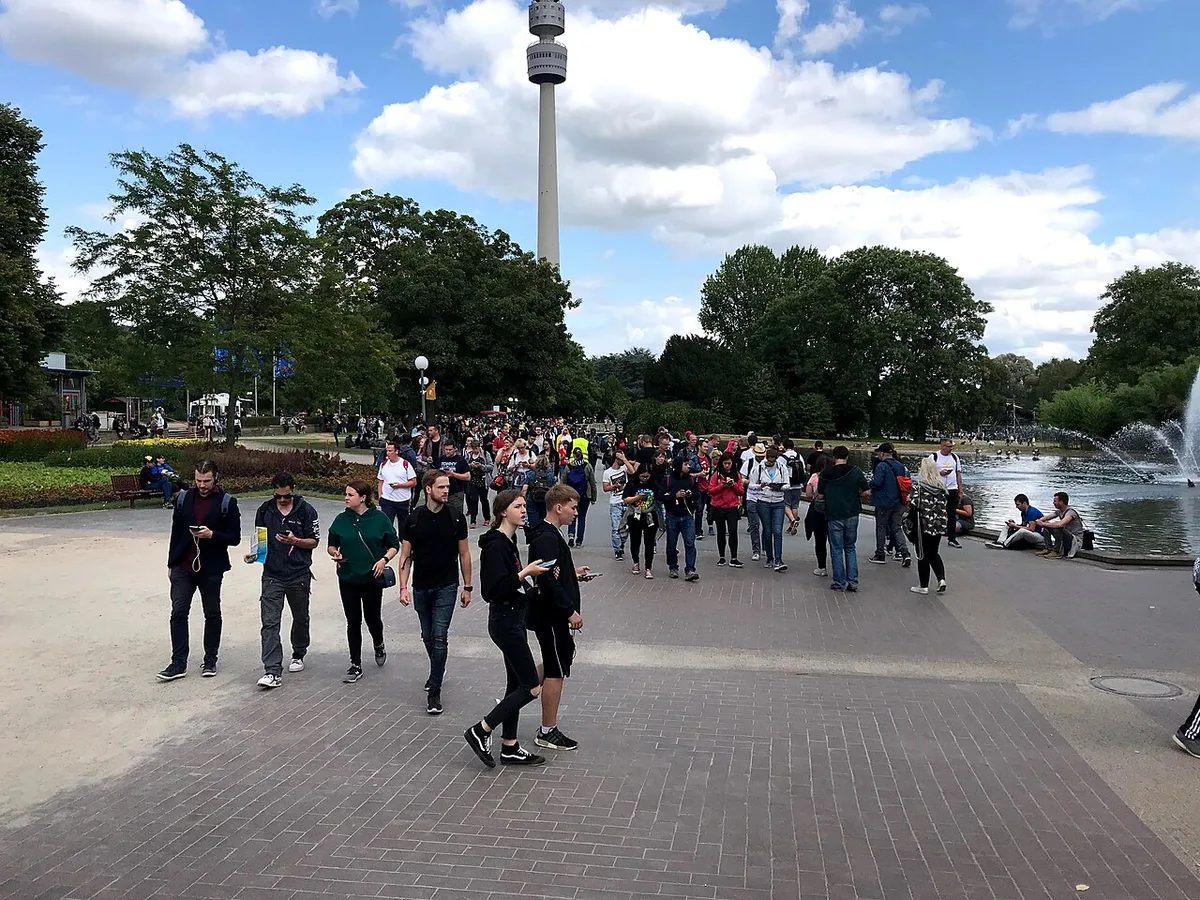
Dortmund has substantial green space, and Westfalenpark is the name visitors ask about first. Do not assume free entry for all visitors: treat the admission policy as something you verify with the operator for your specific date, since parks of this kind frequently change what is included and when. A park can be free to enter on one day and ticketed for an entire event on another.
If you want a garden visit that requires less planning, Rombergpark is the other major green name in the city, and the same advice applies: check current arrangements before travelling. Our Rombergpark Botanic Garden visitor guide covers what the grounds offer so you can decide whether it fits your day. Neither park should be treated as a guaranteed free headline for your budget until you have confirmed it.
The wider point is that green space in Dortmund is not a single category. Some areas are everyday public city space, others are managed attractions with events, and a few are civic projects that will change character as they develop. The city portal is the sensible starting point for what is currently open and what is scheduled.
Museums and the Free-Entry Question
There is no reliable blanket answer to which Dortmund museums are free, and that is the honest planning position. Names that come up repeatedly in visitor material each have separate operators, separate collections and separate admission rules. Some, like the Dortmunder U building, house cultural venues, but a venue's presence in a building tells you nothing about whether entry is charged.
Reseller listings are useful for seeing what experiences exist, but they are not an admissions policy. A ticketing platform in Dortmund currently shows paid experiences including a Borussia Dortmund museum ticket, a German Football Museum ticket, and a permanent exhibition entry ticket at Phoenix des Lumières, among others. Those listings confirm that these are ticketed products, not that anything similar is free.
The workable method is to choose your two or three candidate museums, then check each operator's own page for its current admission terms shortly before your visit. Also confirm what a ticket includes, because complexes with several buildings sometimes sell separate tickets for separate collections. Budget for at least one paid interior and treat anything free as a welcome surprise.
Match-Day Atmosphere Without a Ticket
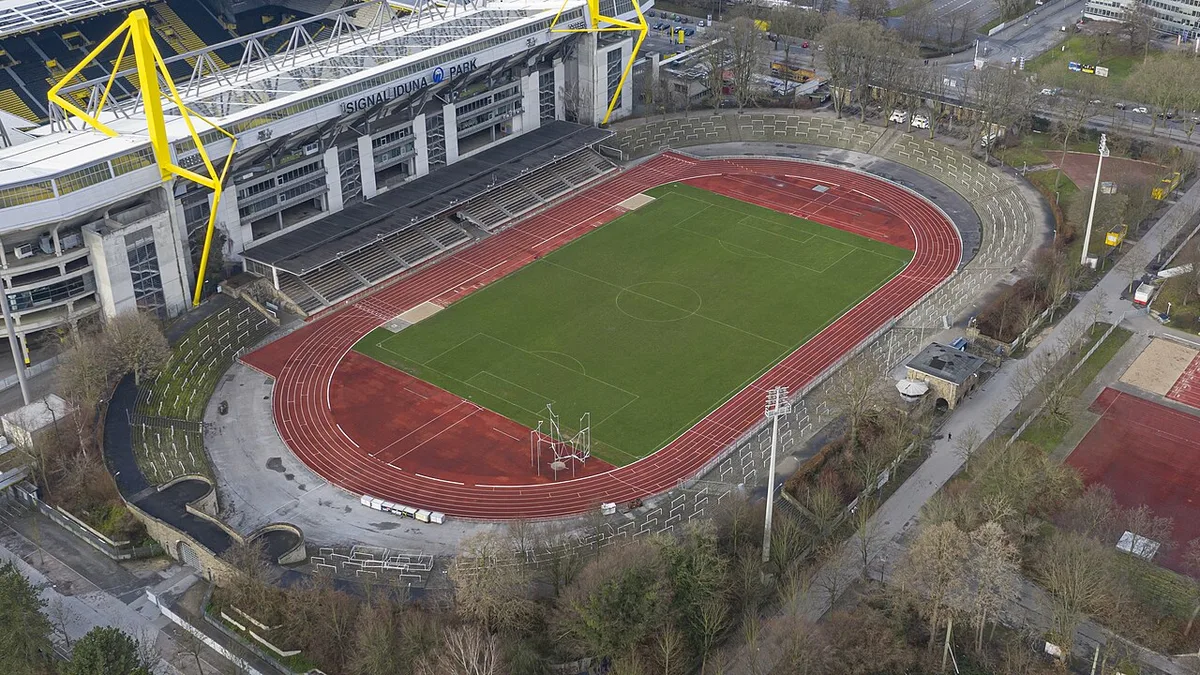
Football is part of Dortmund's identity, and Borussia Dortmund is one of the best-known clubs in Germany. If you are in the city on a match day, the atmosphere around the stadium area and across the city is the free part; being inside Signal Iduna Park is not. Do not plan a trip on the assumption that you can simply visit the stadium without a match ticket or a booked experience.
A realistic no-ticket plan is to enjoy the build-up in the centre, watch the crowds move, and find a screen or a public space where people gather. Note that the stadium also hosts non-football events, so on some dates the area will be busy for entirely different reasons. Check what is on before you travel toward the ground.
Suggested Free Half-Day and Full-Day Outlines
These are suggestions, not official itineraries. For a half day, start at the central squares and the Reinoldikirche garden, walk the historic core including Alter Markt and the town hall, and finish at Friedensplatz. That sequence needs no tickets and no transport, and it leaves the afternoon free if you decide to pay for one museum interior.
For a full day, add Phoenixsee in the morning for the waterside loop and the industrial-to-neighbourhood story, then return to the centre for the squares in the afternoon. If industrial heritage is your priority, swap the central block for a walk around the Hansa coking plant area and check separately whether any interior you want is ticketed. Both versions keep the fixed costs near zero and leave the paid choices to you.
If you have longer, the free anchors work as filler around paid highlights rather than as a complete trip, which is usually how visitors budget. A two-day version lets you keep one paid museum and still cover the squares, the lake and a market. Use the longer itineraries to see how the paid and free pieces fit together. For wider planning, see 2 Days in Dortmund. For wider planning, see 3 Days in Dortmund.
Practical Money Savers and Timing
Transport is where a budget day quietly leaks money, so decide in advance how you will move between the centre and the lake. Public transport in German cities is normally ticketed per zone or per period, and Dortmund is no exception, so check the local network's current fare structure and day-ticket options rather than guessing. Do not rely on route numbers or journey times copied from older articles.
Timing affects both crowds and costs. Weekday mornings in the centre are calmer, while summer weekends bring festivals and fairs to the public squares, which adds atmosphere at no charge but also more people. Check the city's event calendar for your dates so you are not surprised by a large event in the middle of your walking route.
Before you travel, confirm three things on official pages: which interiors you actually want and what they cost, whether any park you plan to visit has an admission requirement on your date, and whether anything is closed for works or a private event. If you are comparing this city with other German destinations for a low-cost break, our guides to Free things to do in Berlin and free things to do in Munich show how the same approach plays out elsewhere.
Pick Two or Three Free Anchors and Build Around Them
Dortmund rewards a plan that does not depend on free entry to anything. Choose a waterside loop, a central square and a church garden, and you have a day that cannot be undermined by a ticket policy you did not check. Add paid interiors only where the collection genuinely interests you.
Then verify the volatile details directly: admission terms on the operator's page, any park requirements for your date, and current transport fares from the local network. With those confirmed, the free half of a Dortmund trip is the easiest part of the budget to control.
Frequently Asked Questions
Are there free attractions in Dortmund?
There is no dependable list of free attractions, and Dortmund's own city sources do not present a simple set of no-charge sights. What reliably costs nothing is public space: the central squares such as Alter Markt and Friedensplatz, the Reinoldikirche cathedral garden, and the promenade and paths around Phoenixsee. For anything with a door, a collection or a guided element, check the operator's own page before you plan around it.
Is Phoenixsee free to visit?
Phoenixsee is a public recreation area with a promenade, a pier and jogging and cycling paths, so walking and cycling there does not require a ticket. It is also a lived-in district with homes and businesses around the water, so treat it as shared neighbourhood space. Any activity that needs a permit, such as launching a model boat, is a separate regulated matter to check with the city.
Which Dortmund museums are free?
No safe blanket answer exists, because the museums named most often by visitors have separate operators and separate admission policies, and policies change. Names such as the venues in the Dortmunder U building or the industrial museum at the Zollern II/IV site should be treated as potentially ticketed until you have confirmed the current terms. Look up each museum's own page and check what a ticket covers, since complexes sometimes sell separate tickets for separate collections.
Can you visit Signal Iduna Park without a match ticket?
Do not plan a trip assuming you can walk into Signal Iduna Park without a match ticket or a booked experience. The free part of a match day is the atmosphere in the city and around the stadium, not access to the ground. Check the club's official information for what is currently offered and on which dates before travelling to the stadium area.
How do you spend a cheap day in Dortmund?
Build the day from public spaces and let paid sights be optional. A workable pattern is the central squares and the church garden in the morning, then Phoenixsee for a waterside loop, with one paid museum or exhibition added only if it genuinely interests you. Check transport fares from the local network in advance, and confirm opening and admission details on official pages, since those are the costs that change.


