

The Dortmunder U is the landmark that tells you where you are in Dortmund: a former brewery high-rise capped with a golden U that now works as a centre for art and creativity rather than beer production. When you arrive, the first decision is a simple one: the building is not a single museum with one entrance fee, so you need to work out which floors you actually want before crossing town. The operator lists some recurring formats, including the weekly Kleiner Freitag, as free. Knowing that the building mixes institutions, event spaces and public areas is what turns a quick photo stop into a sensible half day.
The basics are easy to fix before you go. The U stands at Leonie-Reygers-Terrasse in the city centre, and NRW Tourism lists an opening-hours pattern of Tuesday and Wednesday 11:00 to 18:00, Thursday and Friday 11:00 to 20:00, Saturday and Sunday 11:00 to 18:00, closed Mondays and 11:00 to 18:00 on holidays; treat that as a pattern to reconfirm rather than a promise, because dates around exhibitions can shift. Germany Travel calls the U-Tower the city's landmark and notes its roof terrace views, which is a useful signal that the building as a whole, not only its exhibitions, is the draw.
Budget roughly two hours for the building itself and its free circulation areas, or three to four hours if you add a ticketed exhibition floor and a film or workshop slot; that is a suggestion, not official guidance, and event evenings naturally run longer. If you are short on time, decide between art and city views first, because those two priorities pull you to different corners of the building. If art is the main pull, the Museum Ostwall visitor guide covers the collection floors in detail so you do not duplicate that planning here.
Why the Dortmunder U Matters for a Dortmund Trip
The U is not a decorative landmark you tick off from the pavement; it is a working cultural centre that doubles as the city's most recognisable silhouette. NRW Tourism describes it as a new-style cultural centre that combines art, research, cultural education and creativity, and as a sign of structural change in the Ruhr region. That framing matters for visitors: you are looking at a building that once served industry and now houses institutions, workshops and public programming.
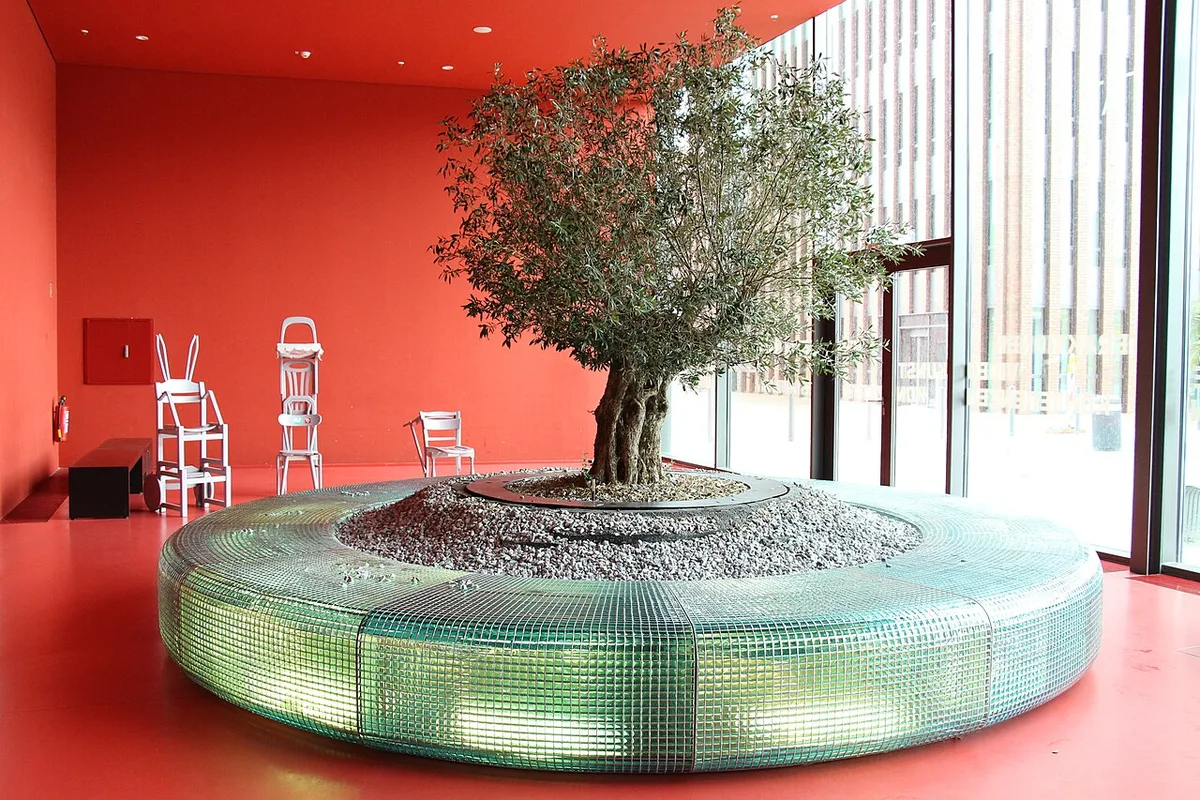
It also sits in a city that rewards a little curiosity beyond the obvious. Wander-Lust treats the Dortmunder U as a culture stop with the enormous golden U, and notes the surrounding quarter as a convenient base because the city's sights are spread out. A compact trip to Dortmund works best when you accept that the centre is not walkable end to end in one sweep and that the U anchors one end of a useful cluster.
If you are travelling as a group with mixed interests, the U is an unusually forgiving stop because nobody has to buy the same ticket to spend time there. One person can wander the free areas and study the architecture while another visits a ticketed floor, and you can regroup at an agreed time. If you want to rank alternatives elsewhere in the city, the best museums in Dortmund worth visiting page helps you prioritise without crossing the city twice.
The Building: Brewery Origins and the Golden U
Start with the shell, because the U's identity comes from what it used to be. NRW Tourism states that the building was originally constructed in 1926 as a fermentation and storage cellar for the Dortmunder Union brewery, and elsewhere dates the industrial brewery to 1926/27. That brewery-era skeleton explains the tower's proportions and the way the exhibitions feel slotted into an industrial frame rather than purpose-built galleries.
The operator frames 2026 as a centenary year for the U-Tower, describing a programme marking one hundred years since construction of Emil Moog's high-rise began. Treat the centenary as historical context for your visit rather than as a reason to expect any single fixed event, since individual dates and formats change throughout the year. If you want to know what is running on your dates, the operator's own programme listing is the only reliable place to check.
The golden U on the roof crown is the detail everyone photographs, and it is also your best orientation tool when you emerge from the city centre streets or the station area. If you are approaching from another part of town, look up before you look at a map: the letter is visible from a distance, which makes it a practical waypoint. First-time visitors often spend longer than expected simply circling the building and reading it from different angles.
What Is Actually Inside the U
The U is a shared building, not one institution's headquarters. NRW Tourism lists a cooperation that includes the Museum Ostwall, the Hartware MedienKunstVerein, the city's cultural office, Dortmund University of Applied Sciences and Arts, TU Dortmund, the european centre for creative economy, the Kino im U association running the RWE Forum, and a catering company. Reading that list before you arrive saves confusion, because each partner programmes its own floors and formats.
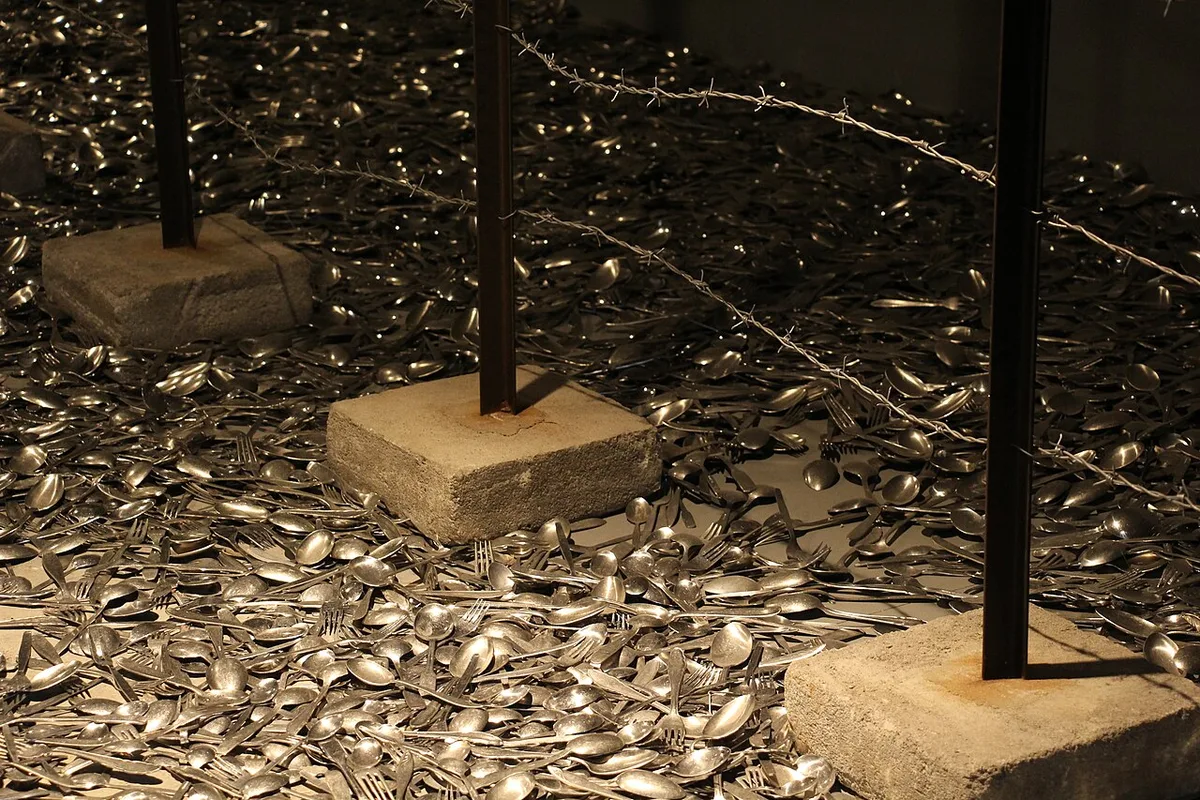
In practice this means you can encounter very different things on the same afternoon. The operator names Museum Ostwall, Kunsthalle Dortmund, uzwei and TU Dortmund storyLab kiU among the institutions in the house, and groups its own programme into exhibitions, workshops and recurring formats. If you want only one anchor point, pick the institution that matches your interest and check its own page, because not every floor is open at every hour the building is.
Museum Ostwall and its ticketing sit inside the U but deserve their own research, since its collection floors operate separately from the building's free areas. Germany Travel notes that the tower offers contemporary art exhibitions and cultural events, which is a fair summary of the whole house rather than of any single gallery. Plan the Ostwall as its own stop with its own time slot so you are not caught deciding at the lift.
Free Versus Paid: Reading the Building Correctly
The most common planning mistake at the U is assuming one ticket opens everything. The operator describes some recurring formats as free, including Kleiner Freitag, which it says offers free concerts, readings, poetry slams, artist talks, workshops, lectures, tastings and films in different locations in and around the building; that description does not extend to ticketed exhibition floors. For the specific exhibition you want, check the ticket information published by the operator or the institution running it.
The building also states plainly that at least one exhibition floor is subject to a charge; its Turkish-language tour notice says the entrance to Level 6 is payable and that tickets can be bought at reception or online. That is a useful reminder that levels inside the U differ in status, so read the signage rather than assuming a ground-floor welcome desk covers the whole tower. Because prices and ticket scopes change, do not rely on second-hand figures.
Even on a no-ticket day the U is worth the walk. Wander-Lust recommends it even to people who are not museum-goers, pointing to the rooftop view as the reason, while Germany Travel highlights the roof terrace's wide views over the city and surroundings. Make the free circulation areas your default plan and treat any ticketed floor as an upgrade, then you never leave disappointed by a closed desk.
Recurring Formats Worth Timing Your Trip Around
The U's weekly rhythm is its strongest practical feature. Kleiner Freitag runs every Thursday at 19:00 in different locations in and around the building and mixes concerts, readings, slams, talks, tastings, workshops and films, so a Thursday evening often gives you more variety than a standard weekday. Check the operator's programme page on the day, because the individual line-up changes from week to week even when the slot is fixed.
Film is a second regular option. Kino im U programmes curated films on Tuesdays and on the first Friday of the month, according to the operator, and NRW Tourism confirms that Kino im U e.V. runs the RWE Forum in the building. Tuesday evenings are therefore a reasonable target if you want a film plus time in the building beforehand, but confirm the current schedule because seasons change.
Families should note the monthly pattern rather than a daily one. The operator describes Familiensonntag as taking place on the first Sunday of every month across all levels, with special tours for younger and older children, free hands-on activities, craft and painting workshops, gaming, rallyes and children's book readings. Pair that with a weekday afternoon if you want calmer floors, and read the operator's page for the family workshop rooms.
Summer changes the geometry of the site. As the operator describes it, Sommer am U turns the forecourt into an open-air stage for roughly three months, with free concerts, DJ sets and poetry slams on two days a week. Because that programme ends before autumn, a visit in late October falls outside it; check the operator's seasonal pages rather than planning around a past season's dates.
The Rooftop Terrace: A Programmed Space, Not a Guaranteed Viewpoint
The roof is the U's most talked-about feature and also the one most often misdescribed. Germany Travel says the roof terrace offers wide views over the city and its surroundings, and Wander-Lust likewise treats the view as the reason to visit even without museum interest. Neither source supports a fixed daily public opening time, so plan the roof as a bonus rather than the fixed centrepiece of your day.
The roof doubles as an event and workshop station, which is exactly why access varies. The operator lists formats that move through the building, including a Kleiner Freitag bootcamp that runs from the ground floor up to the roof terrace, and Familiensonntag activity that spreads across all levels. On days when a format uses the roof, general access may be different from a quiet weekday, so ask at reception when you arrive.
Do not assume a lift will take every visitor to the roof at any time. The building's accessibility listing covers step-free access to evaluated guest rooms and lift travel within the building, but it does not promise open-air roof access for all visitors, and staff may restrict the terrace during events or bad weather. The reliable move is to contact the U before your trip and confirm the roof situation for your specific date.
Workshops, Media Labs and Learning Formats
If you are travelling with teenagers or want to do rather than look, the U's workshop programme is the reason to check the calendar before choosing a date. The operator lists recurring youth sessions in the media workshop area, including an open maker space on Tuesdays and photography, manga drawing and audio production on Wednesdays, generally outside school holidays. Adults are not left out, with a regular art course described as combining looking, talking and making.
Booking mechanics vary by format, so do not assume you can simply turn up. The operator labels some programmes as registration required and others as drop-in, and at least one recurring series has been listed as fully booked, which shows demand can outrun capacity. Use the operator's booking pages and the contact details attached to each format to confirm whether you need a place in advance.
Guided tours are another variable element. The operator lists public tours through current presentations on a weekly pattern and an after-work tour on selected Thursdays, while NRW Tourism notes that guided tours are offered for visitors with walking disabilities, for visually impaired and blind visitors with touching integrated, and in easy language for visitors with cognitive impairments, with advance reservation required for some of these. If a specific tour is essential to your visit, confirm it with the U directly rather than relying on a general listing.
Accessibility at the Dortmunder U
The U publishes unusually detailed accessibility information through NRW Tourism, which is worth reading if anyone in your group has mobility needs. That listing describes a step-free, threshold-free entrance, all evaluated guest rooms reachable at ground level or by lift, and passageways and doors at least 90 centimetres wide, with the lift cab given as 190 by 300 centimetres. It also notes a designated disabled parking space and a 120-metre level path between the car park and the entrance.
Cinema and toilet arrangements are covered in the same listing, which is helpful because these are the details that usually decide whether an evening visit works. It reports designated wheelchair places in the cinema hall that are steplessly accessible and reachable at a maximum inclination of six percent, plus a public accessible toilet on the ground floor that requires a Euro key. Because these arrangements can change, call ahead if a specific room matters to you.
Visitors with hearing or visual impairments get their own section in that listing, including an audio induction loop in the cinema, a flashing signal alongside acoustic alarms, assistance dogs permitted, tactile and high-contrast guidance on the approach, and an audio guide that can be operated independently. The listing is candid about gaps too, noting for example that stopping positions in the lift are not announced by spoken commands and that there is no Braille signage. Use it as your starting point and then confirm the specific service you need with the house.
Getting There and Orienting Yourself
The U's address is easy to note before you travel: Leonie-Reygers-Terrasse, 44137 Dortmund, with a published telephone contact for the house. NRW Tourism lists that contact information alongside the opening-hours pattern, so it is the practical page to open on the day if you need to ask about the roof, tours or access. Save it before you leave rather than relying on mobile signal at the building.
Because the U is a skyline landmark, arrival is more about orientation than navigation. Germany Travel treats it as the city's landmark and the starting point for exploring Dortmund, and Wander-Lust places the area around the U in an A-location for sightseeing because the city's attractions are spread out. If you are staying centrally, walk to the tower first and let the golden U reset your sense of direction before heading elsewhere.
For arrival by public transport, use a current journey planner on the day rather than trusting lines or times described in older articles, since services and stopping patterns change. Ticket machines and payment methods also vary, so check what the local operator accepts before you rely on card payment. If you are unsure, the tourist information office can confirm the current best stop for the U.
Combining the U With the Rest of Dortmund
Dortmund's sights sit far enough apart that a single day needs a spine, and the U is best used as one half of it rather than the whole. Germany Travel pairs the U-Tower with the German Football Museum and Westfalenpark as the city's headline stops, so a football-and-culture day is a realistic pairing if you plan transport between them. If you want a ready-made structure, the one day in Dortmund itinerary gives you a sequence to adapt rather than invent.
If sport is your priority rather than art, the Borusseum is a natural sibling stop, and giving it its own slot keeps the U from being rushed. A Borusseum visitor guide is the sensible place to check before you commit an afternoon to club history. Splitting culture and football across two halves of a day works better than trying to see both thoroughly in one stretch.
For a wider shortlist, Wander-Lust recommends the Kreuzviertel neighbourhood for wandering and the Zeche Zollern mining museum as a trip beyond the centre, which are useful if you have more than one day. Keep the U anchored to your city-centre time and treat longer excursions as separate half days. That way a change in the U's programme never unravels your whole plan.
Practical Checklist Before You Set Off
Before you travel, open the operator's site and check the day's programme, the current opening pattern and whether the roof or a specific format is running, then confirm any ticketed floor's ticket scope separately. Call or email the house if the roof, a guided tour, a workshop place, or an accessible facility is essential to your visit, because those are the elements most likely to vary. Never treat an older article's prices, hours or transport details as current.
Pack for a building with several levels and a possible outdoor stop: comfortable shoes, a layer for the terrace and enough time buffer if you are catching a film or a Thursday format. On arrival, take the lift or stairs once to understand the floor layout before choosing where to spend your hours. If you leave with only the golden U photographed and the roof skipped, you have still seen the city's landmark; anything beyond that is a bonus.
Frequently Asked Questions
Is the Dortmunder U free to visit?
It is not a single-ticket building. The operator describes some recurring formats, such as Kleiner Freitag, as free, and some areas of the house are used as public circulation space, while at least one exhibition floor is explicitly subject to a charge and tickets can be bought at reception or online. Because ticket scope and prices change, check the operator's own ticket page for the specific exhibition or floor you want before you travel, and do not assume one ticket covers the whole tower.
Can you go up to the rooftop terrace of the Dortmunder U?
The roof terrace exists and is praised for its city views, but access is not a guaranteed daily public offer. The building uses the roof for programmed formats and events, and the accessibility information published for the house covers step-free access within the building without promising open-air roof access to every visitor at all times. Ask the house directly about your date, especially if the roof is the main reason for your visit.
What can you see inside the Dortmunder U besides Museum Ostwall?
Quite a lot, because the U is a shared building rather than one gallery. The operator names Museum Ostwall, Kunsthalle Dortmund, uzwei and TU Dortmund storyLab kiU among the institutions in the house, alongside workshop and media-lab spaces and a cinema run by the Kino im U association. The operator also programmes exhibitions, workshops and recurring formats such as Kleiner Freitag, Familiensonntag and seasonal open-air events on the forecourt, so check the current programme for what is open during your dates.
How long do you need at the Dortmunder U?
As a suggestion rather than official guidance, allow around two hours for the building and its freely accessible areas, and three to four hours if you add a ticketed exhibition floor plus a film or workshop slot. An event evening such as a Thursday format will naturally take longer. Build in slack if you are catching a specific screening or tour, since floors open on different schedules and you may need time to find the right entrance.
Is the Dortmunder U wheelchair accessible?
The house publishes a detailed accessibility listing through NRW Tourism. It describes a step-free, threshold-free entrance, evaluated guest rooms reachable at ground level or by lift, door and passage widths of at least 90 centimetres, a large lift cab, a designated disabled parking space and a level path from the car park. The same listing covers cinema wheelchair places and an accessible ground-floor toilet that requires a Euro key. Read it fully and confirm any specific requirement with the house before visiting.


