

Zeche Zollern is the LWL industrial museum in the Dortmund district of Bövinghausen, built around a colliery whose brick facades and glazed art-nouveau machine hall earned it the nickname Schloss der Arbeit, castle of labour. Because it is a museum site rather than a walk-in monument, the practical questions matter more than the scenery: what a ticket covers, what stays open to everyone, and when the buildings close. This guide works through those decisions so you can plan a visit without surprises.
The museum belongs to the LWL-Museen für Industriekultur, a network of eight industrial heritage museums run by the Landschaftsverband Westfalen-Lippe across the region. It is also an anchor point on the Route der Industriekultur and part of ERIH, the European Route of Industrial Heritage, which makes it a sensible starting point if you want to compare several Ruhr sites. The same operator publishes the visiting rules, so the operator's own pages are the ones to trust for anything that changes.
Why Zeche Zollern Matters
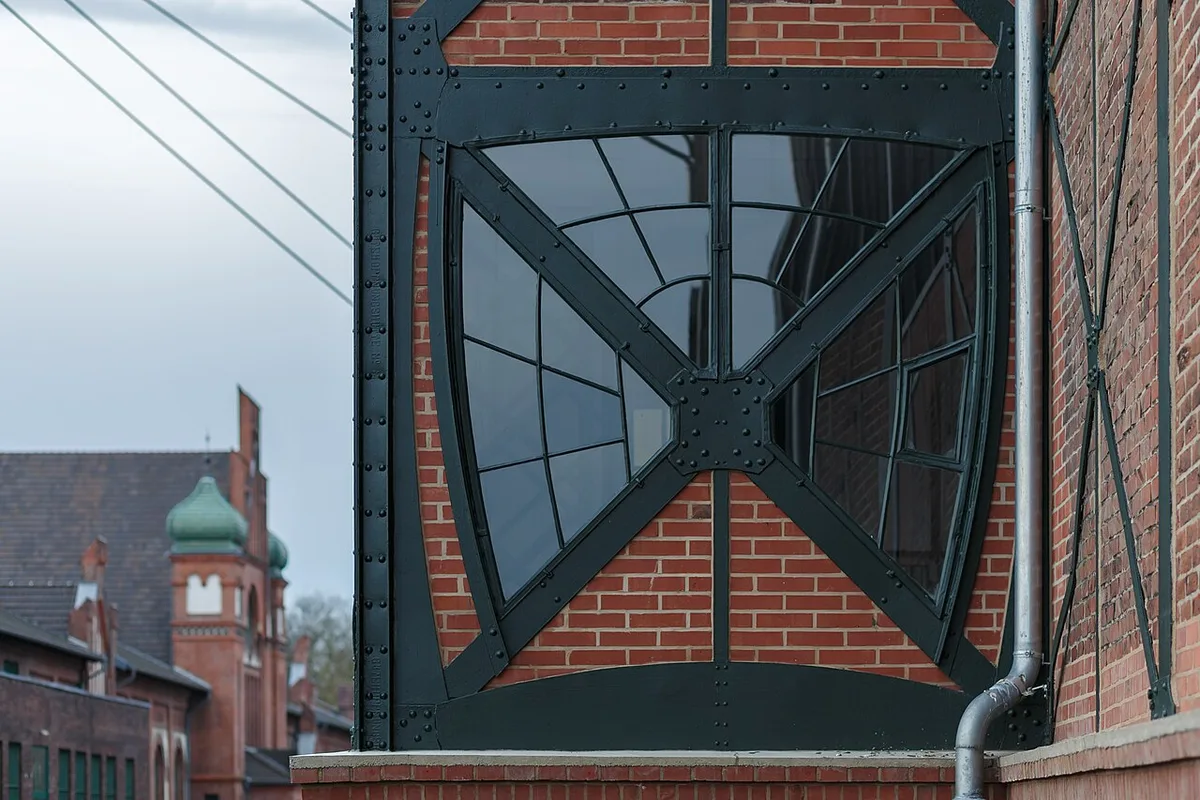
What sets Zeche Zollern apart from other Ruhr collieries is the architecture: the operator describes the machine hall as an icon of industrial culture with a colourful art-nouveau portal, and the surrounding surface buildings read more like a country estate than a pit. The complex is over a century old, and its brickwork and steel-and-glass hall are the reason the site is often called the most beautiful colliery in the region. Plan to look at the facades first, because the decorative detail is easiest to read in daylight before you go inside.
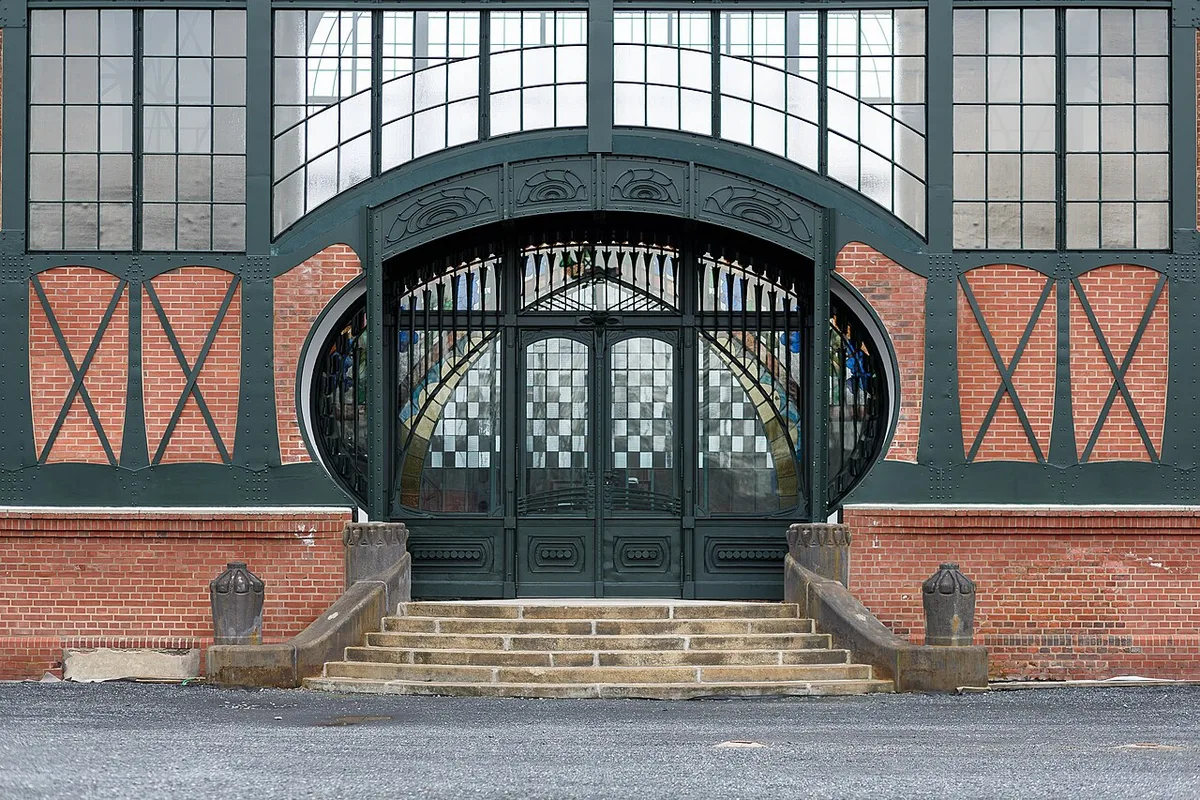
The nickname Schloss der Arbeit is not just marketing. The colliery's builder deliberately dressed a coal mine in mansion-like brickwork, and the machine hall once generated electricity for the mine and, in the simple-language version of the site's own story, supplied power to much of the surrounding city. That technical role is what the hall explains today. If you only have time for one building, make it the machine hall.
What You Actually See on Site
The grounds hold the headframes, the miners' change house known as the Kaue, the machine hall and the Old Administration building, with the Path of Coal exhibition threading the site's story together. Exhibitions listed by the operator include the machine hall itself, Montanium, Old Administration, No Easy Years, A Light in the Night and Path of Coal. Treat that list as the current offering rather than a fixed programme, because special exhibitions change.
The Old Administration building is documented as an exhibition venue, but the operator's visitor pages do not state whether it carries a separate ticket. Do not assume it is included just because it sits inside the complex, and do not assume it costs extra either. If that distinction matters to you, ask at the ticket desk or by email before you travel, since the published pages leave the question open.
The design decision worth making is sequence. Walk the outdoor grounds and headframes while the light is good, then move into the machine hall and the exhibitions, and finish with the Path of Coal if you still have energy. That order keeps the architecture as the opening act rather than something you rush at the end of the day.
Free Versus Paid at Zeche Zollern
Admission is not free for everyone, which is the single most common misunderstanding about the site. The operator's ticket page lists adults at €8, adults in groups of 16 or more at €7, a reduced rate of €4, and free entry for children and young people aged 17 and under as well as pupils in school groups. Anyone can print the tiers, but the numbers are the operator's and can change, so confirm before you go.
The reduced rate is defined by the operator rather than by discretion. It applies to recipients of ongoing benefits under the German social codes II and XII, students under 30, apprentices, volunteers, people with a disability rating of 50 or more, and holders of the NRW Volunteer Card. Free admission is also granted to holders of named passes, including the LWL-Museum Card, LVR-Museumskarte, Deutscher Museumsbund, ICOM and the RuhrtopCard on a one-time basis. Bring the document that proves your category, because the discount is checked at the desk.
The site also participates in free-admission days across the LWL museums, and the simple-language version of the museum's own page directs visitors to the online list of those days. That list is the right place to check whether your travel dates coincide with one. It is also the honest answer to whether Zeche Zollern is free: sometimes, for some visitors, not always for everyone.
Opening Hours and the Monday Closure
The museum opens Tuesday to Sunday and on public holidays from 10 a.m. to 6 p.m., with the shop opening at 11 a.m. and last admission at 5.30 p.m. It closes on Mondays except public holidays and during the gap between Christmas and New Year. Those are the two closure rules the operator actually publishes, so plan around them rather than around assumptions about seasonal shutdowns.
A late-afternoon arrival is the main trap. With last admission at 5.30 p.m., an hour is not enough for the machine hall, the exhibitions and the grounds, so treat the final entry time as a deadline for entering, not for seeing everything. If you are visiting in winter, check the operator's page on the day, because holiday-period opening can differ from the standard week.
The Pferdestall Restaurant Rule
The Pferdestall restaurant, with its beer garden and a function room for up to 110 people, serves Westphalian specialities and international dishes and is listed as open Tuesday to Friday from 1 p.m. to 10 p.m. and Saturday and Sunday from noon to 10 p.m., closed on Mondays. The kitchen pattern is published, so it is one of the few food details you can plan against. After 6 p.m. the restaurant opens to the general public.
Daytime access is the part visitors get wrong. The restaurant serves museum guests during the day, and even visitors who only want to eat must pay the museum admission fee unless they reserve a table at least one day ahead by calling the restaurant. With that prior reservation, restaurant-only admission costs €1 per person without a museum visit. So the decision is simple: reserve the day before, or budget for a full museum ticket.
Getting There and On-Site Rules
For drivers, the operator's directions begin with the navigation address Rhader Weg 5 for the car park, with the site itself at Grubenweg 5. Access from the A 40, A 42 and A 45 follows signed exits, and those signs are what you should follow once you leave the motorway. For public transport, the operator publishes specific options: bus line 462 to the Industriemuseum Zollern stop, bus line 378 to Bövinghauser Straße with a roughly one-kilometre walk, or railway line RB 43 to Dortmund-Bövinghausen followed by a ten-minute walk. Reaching Huckarde is possible on underground line 47 before switching to bus 462.
This is a former industrial site, so surface conditions deserve attention. Beyond the operator's route notes and its accessibility page, no source here documents step-free access inside the machine hall or the Old Administration building, so visitors with mobility needs should contact the museum directly rather than assume. The same applies to any guided-tour schedule, which the operator lists separately and updates as events come and go.
Dogs may accompany visitors on the outdoor grounds on a leash, excluding the playground area, while only guide and assistance dogs are allowed inside buildings. Personal photography is welcome and the museum asks visitors to share images with its hashtags, but commercial photography needs prior consent. Those rules are published on the operator's information page in English.
Zeche Zollern in the Ruhr Industrial Heritage Network
Zeche Zollern is one of eight LWL museums of industrial culture, alongside Zeche Hannover in Bochum, Zeche Nachtigall in Witten, Henrichshütte in Hattingen, the Schiffshebewerk Henrichenburg in Waltrop, the Textilwerk in Bocholt, the Ziegelei Lage and the Glashütte Gernheim in Petershagen. That is the honest comparison set if you enjoy this kind of site, because they are run by the same organisation and share a membership structure. The LWL-Museum Card gives annual admission to the 31 museums of the LWL and LVR, sold as an individual ticket, a discounted individual ticket for students, apprentices and volunteers, or a two-adult version.
The site's status as an anchor point on the Route der Industriekultur and as part of ERIH matters mostly for trip planning, because it signals that the colliery sits on signposted routes rather than in isolation. Cyclists get a concrete hook: the Zollern Colliery is junction 59 on the radrevier.ruhr network, and the Black Gold regional route, which traces the history of coal over 41 kilometres, starts here. If you prefer two wheels to the car, that route is the most structured way to connect the site to the surrounding landscape.
Zeche Zollern or Zollverein?
The two names get confused constantly, but they are different places in different cities. Zollverein is the UNESCO World Heritage Site in Essen, run by the Zollverein Foundation, with its own pricing, opening hours and rules; Zeche Zollern is the LWL museum in Dortmund, run by a different operator with a different ticket logic. Nothing transfers between them, so a Zollverein price or closure is not evidence about Zollern.
The contrast is useful when choosing. Zollverein's outdoor site is open to the public at all times and free of charge, with individual attractions such as the Ruhr Museum and the Red Dot Design Museum ticketed separately by the Zollverein Foundation. Zeche Zollern instead works as a museum complex where the machinery and exhibitions sit behind one admission structure, with free entry limited to defined groups. Pick Zollern for a concentrated look at a single colliery's architecture and story, and Zollverein for scale, sprawl and a wider mix of institutions.
If you want Dortmund rather than Essen as your base, the city's industrial and cultural museums make their own half-day pairings. The DASA Working World Exhibition in Dortmund approaches labour from a different angle, and the Dortmunder U covers art and creativity in a converted brewery building. Checking those alongside Zollern gives you a coherent day without crossing into another city.
Suggested Time and How to Plan the Day
As a suggestion rather than an official figure, allow two to three hours for the machine hall, the main exhibitions and a walk around the grounds; add an hour if you eat at the Pferdestall or join a guided tour. The operator does not publish a recommended duration, so treat this as a planning estimate and adjust it once you see how long the architecture holds you. A half-day is a comfortable fit for most visitors arriving from central Dortmund.
Check opening hours, the current exhibition list and the free-admission days on the operator's pages shortly before travelling, because those are the details that move. If your schedule is tight, the Monday closure and the 5.30 p.m. last admission are the two hard constraints to design around. Confirm anything else by phone or email using the museum's contact details.
Plan Your Visit
Zeche Zollern rewards visitors who separate the free experience from the ticketed one. Plan the machine hall and the exhibitions as your paid core, use the grounds and facades as the free framing, and decide early whether you want the restaurant option that requires a reservation a day ahead. Check the operator's own pages for hours, ticket tiers and free-admission days immediately before you travel, since those are the details most likely to shift.
If this is one stop on a longer Ruhr itinerary, the most useful comparison is Zollverein in Essen, which belongs to a different operator and therefore has different rules and pricing. Keep the two distinct in your plans and you will avoid the most common planning error at either site.
Frequently Asked Questions
Is Zeche Zollern free to visit?
Not for all visitors. The operator publishes free entry for children and young people aged 17 and under as well as pupils in school groups, and for holders of named passes such as the LWL-Museum Card, the LVR-Museumskarte, the Deutscher Museumsbund card, ICOM and the RuhrtopCard on a one-time basis. Other visitors pay the published adult, group or reduced rate, subject to change. The LWL museums also run free-admission days listed on the operator's website, so it is worth checking whether your date falls on one before you travel.
What are Zeche Zollern's opening hours and is it closed on Mondays?
The operator lists opening Tuesday to Sunday and on public holidays from 10 a.m. to 6 p.m., with the shop from 11 a.m. and last admission at 5.30 p.m. The museum is closed on Mondays except public holidays and during the period between Christmas and New Year. These are the only closure rules the operator states, so confirm on the official site close to your visit date in case holiday arrangements differ.
How long should you allow for Zeche Zollern?
As our suggestion rather than an official figure, allow two to three hours for the machine hall, the main exhibitions and a walk around the grounds. Add roughly an hour if you want to eat at the Pferdestall or join a guided tour. The operator does not publish a recommended duration, so treat this as a planning estimate and adjust it based on how much time the architecture and exhibitions take.
Is Zeche Zollern the same as Zollverein?
No. Zeche Zollern is the LWL industrial museum in the Dortmund district of Bövinghausen, while Zollverein is the UNESCO World Heritage Site in Essen operated by the Zollverein Foundation. They belong to different organisations with different admission structures and rules, so prices, opening hours and free-access conditions do not transfer between them. Plan each site using its own operator's information.
Can you visit the Pferdestall restaurant without a museum ticket?
During the day, the restaurant is otherwise open to museum guests who pay full admission. Visitors who only want to eat should reserve a table at least one day in advance by phone so that restaurant-only admission can be arranged. After 6 p.m., the restaurant opens to the general public. Confirm current practice with the restaurant when you make the reservation.
What is included in the Zeche Zollern admission price?
The operator's pages describe a museum complex where the machine hall, the exhibitions and the grounds form the visitor experience under one admission structure. The Old Administration building is documented as an exhibition venue, but the operator's published pages do not state whether it is separately ticketed, so do not assume either way. Ask at the ticket desk or by email if that detail affects your plans.
Does the LWL-Museum Card cover Zeche Zollern?
Yes. The LWL-Museum Card is listed among the passes that grant free admission, and it is sold as an annual pass to the 31 museums of the LWL and the LVR in individual, discounted and two-adult versions. It is a strong option if you plan to visit several industrial heritage sites in the region. Check the current price and conditions with the operator before purchasing, since these are the terms that can change.
Are dogs allowed at Zeche Zollern?
Dogs are allowed on the outdoor grounds on a leash, but not in the playground area. Inside the buildings only guide dogs and assistance dogs are permitted. The museum asks owners to clean up after their dogs, and the same rules apply whether you are visiting the exhibitions or just walking the site. These rules come from the operator's own visitor information page.


