

Dortmund sits at the edge of a region where medieval ruins, industrial monuments and large parks lie within reach, which makes it a practical base rather than a place you leave only to reach Cologne or Düsseldorf. The Hohensyburg site on the Syberg plateau between Hagen and Dortmund shows what that heritage looks like: the castle lies on a roughly triangular promontory towering about 140 metres above the Ruhr, between the river in the south and the valleys of smaller streams to the west, northwest and east, so there is only one easy approach to the plateau, from the northeast.
The honest trade-off is that a Ruhr day trip is rarely about distance and often about timing, because one closed hall or a reduced timetable can wreck a three-stop plan. Suggested durations in this guide are our editorial suggestions, never official visiting windows, and every price or opening time belongs to the operator. Build the day around one anchor, then add a second stop only if the first leaves you time and energy.
How to Choose a Ruhr Day Trip from Dortmund
Decide first whether you want a rail excursion or a city day, because the two demand different preparation. Rail days depend on connections and opening windows, while city days depend mostly on your pace and the weather. If you have only one full day, one well-chosen target usually beats a hurried circuit through two or three towns.
Rail infrastructure across the Ruhr is dense and largely regional, so most sensible trips from Dortmund use regional trains rather than long-distance services. Plan around a timetable rather than a schedule you invented, and accept that some good destinations need a bus connection at one end. The Dortmund public transport guide explains how the local network is organised if you want to understand your options before booking, and you can browse Dortmund landmark visitor guides for individual sights.
Ask one question before committing: what happens if the main thing I came for is shut or full? A heritage landscape with open grounds still gives you a walk and a view, while a site that is entirely interior can become a wasted journey. That asymmetry should shape which stop you treat as the anchor of the day.
Rail Basics: bahn.de, Regional Tickets and the Deutschland-Ticket
Deutsche Bahn's own site is the right place to confirm timetable, connections and ticket types, and it is also where you check whether a journey uses regional or long-distance services. Because the Ruhr is served by several operators and fare structures, do not assume one ticket type covers everything you might want to do. Look up your specific route rather than extrapolating from a previous trip.
Deutschland-Ticket is listed there as a regional public transport option priced from 63 euros per month, and regional offers are advertised separately from long-distance fares, so check the conditions attached to whichever product you buy. Coverage, validity periods and what counts as a qualifying service can change, and the operator's own wording is the only reliable version. Read the conditions for your exact ticket before relying on it.
For a single day out, the simpler decision is usually to travel to one destination and return from the same place rather than chain three towns, because chaining multiplies the chance that one delayed train ruins the rest of the plan. If you do want two stops, keep them on the same line so a delay does not force a rewrite of the whole day.
Option 1: Hohensyburg and the Syberg Plateau
Hohensyburg is a ridge-top heritage ensemble rather than a single building, which is exactly why it suits a slower day. In 775 Charlemagne took the Saxon rampart and fort on the plateau above the Ruhr valley, used it for defence, founded a church there and set up a royal court at the river crossing below. Parts of the wall and ditch of that early core survive, so expect a layered landscape rather than a tidy reconstruction.
The Vincketurm gives the plateau its clearest landmark: an octagonal, 26-metre lookout tower of Ruhr sandstone in neo-Gothic forms, built in 1857 and named for Ludwig Freiherr von Vincke, owner of the Syburg from 1810 and first Oberpräsident of the Prussian province of Westphalia created in 1815. The Wehrmacht used it for artillery observation in the Second World War, Allied troops shelled it heavily, and it was reconstructed in 1955.
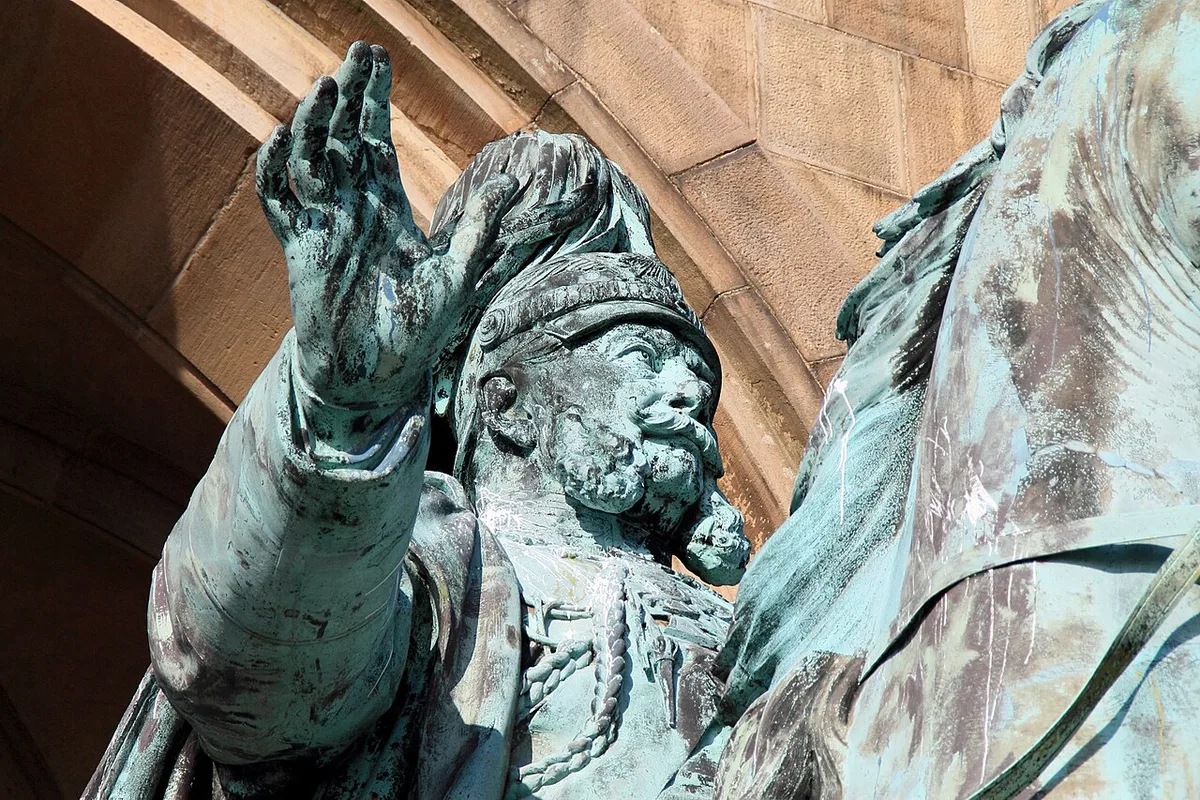
The Kaiser Wilhelm monument, opened in 1902, was designed as a monumental three-tower group with rich neo-Gothic architectural decoration by the architect Hubert Stier, with an equestrian statue of Wilhelm I and accompanying figures by the Stuttgart sculptors Adolf and Karl von Donndorf. It belongs to a 19th-century commemorative culture that gave the old fortification a new purpose. What you can see from outside and what you can enter inside are different questions, and interior access should be confirmed with the operator rather than assumed.
The Peterskirche stands in the outer bailey and is characterised by its Romanesque tower, and excavations there revealed the remains of an earlier church building. The outer bailey also produced early medieval pottery, including ball-pot ware and imported types from the Rhineland, with comparable finds of the 8th and 9th centuries from small excavations in the 1980s. This is why the plateau rewards a slow walk rather than a quick photo stop.
Free Grounds vs Ticketed Interiors on the Syberg
The most useful distinction at a site like this is between open landscape and managed, ticketed products. The castle ruins, wall remains, ditches and grounds can be treated as freely viewable heritage, while interior spaces, tower access and any other enclosed element follow their own arrangements. Grouping them into one visit as if they shared a single ticket would be a mistake, because complex sites frequently do not.
Two cautions follow. First, expect that understanding the site requires reading beforehand or on arrival, because the surviving archaeology is fragmentary and the walls have been altered by later landscaping, including a casino and additional construction. Second, do not infer any current opening hours, admission arrangement or internal access rule from a general description of the place; the managing body is the source for that. If interior access matters to you, verify it before travelling.
There is also no reliable substitute for checking the terrain yourself in advance, and no responsible way for a guide to promise a specific walking distance from any station. Look at a map, note that the plateau is approached from the northeast, and plan for a walk rather than assuming a doorstep arrival. That single habit prevents most disappointment on this kind of excursion.
Option 2: Industrial Heritage in the Ruhr
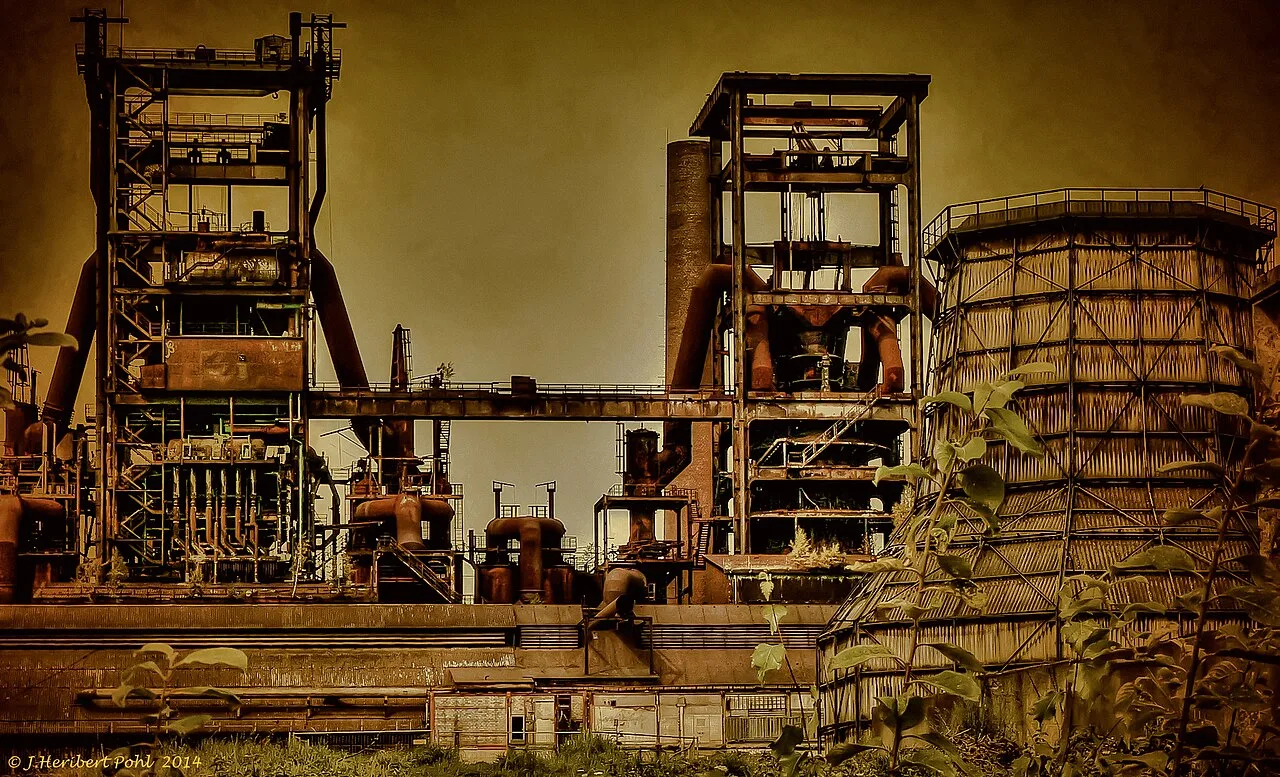
The Ruhr's converted coal and steel sites are the region's signature day-trip category, and they are also where assumptions cause the most trouble. Each site is run by its own operator, with its own ticket scope, opening pattern and mix of free outdoor areas and paid indoor exhibitions. A ticket for one part of a large complex does not imply entry to the rest, so read what a ticket covers before you buy.
Do not carry a heritage designation claim from one site to another. If a designation matters to your reason for going, confirm it with the site's own operator or the relevant official body rather than repeating a label from a third party. That discipline keeps your plan honest and saves you from building a day around a status you cannot verify.
Closures are a real risk even at major sites, which is the strongest argument for checking ahead. Dortmund's own DASA working-world exhibition states on its homepage that the hazardous-substances hall is closed until further notice because of construction, and it publishes seasonal opening hours on its visitor-information pages. That is a useful reminder that a large, well-known museum can be partly closed while otherwise operating normally.
If you would rather keep the day inside the city while still touching recent cultural history, Dortmund's own converted sites give you a lower-risk alternative. The Dortmunder U occupies the tower of a former brewery whose construction began a hundred years ago, and it houses several institutions alongside a changing programme, which makes it a useful fallback when a rail plan looks fragile.
Option 3: A Grand Park Day
A park day is the lowest-logistics option available from Dortmund, because it removes the timetable variable and lets the weather shape the outing instead of a connection. Westfalenpark and the Florianturm belong to the city rather than to the excursion category, so treat them as a relaxed in-city day and not as a rail trip to somewhere else. That reframing matters, because a park day carries almost no risk of arriving to find a ticket window shut.
The Florianturm rises 211.4 metres and was built in 1959 for the Federal Horticultural Show, after which its height was reduced from an original 219.6 metres when a new antenna was installed in 2004; it is named after Saint Florian, patron of gardeners and firefighters, and offers observation decks and a revolving restaurant. Access rules and opening arrangements for the tower are separate from the park itself, so confirm both and do not assume that being in the park gives you access to the tower.
If you want to pair the park with art, the Museum Ostwall occupies the fourth and fifth floors of the Dortmunder U, with the sixth floor reserved for temporary exhibitions, and the fourth floor is devoted to Fluxus works by artists such as Joseph Beuys and Wolf Vostell, alongside a classical modernism collection with a Jawlensky holding second only to Wiesbaden in Germany. Its schedule and ticketing are published separately from the building's other institutions, so treat the museum as one more thing to verify rather than a bundled inclusion.
Suggested Durations: Half Day, Full Day or Slow Day
These are our suggestions, not official visiting windows, and they assume an unhurried pace with time for reading panels and stopping. A half day suits a single compact target where travel is short and the site is walkable from the station. A full day suits one substantial destination plus a meal, and a slow day suits a heritage landscape where the walking itself is the point.
Build in slack rather than filling the schedule, because regional services can run less frequently than you expect and a missed connection costs more than the delay itself. If you are visiting a site whose grounds are open but whose buildings are not, that slack lets you still enjoy the walk. If you are booking any interior or guided element, that is where the day becomes fixed and where an early start helps.
A practical rule is to keep one anchor per day and to decide the second stop once you are on the ground. That approach makes a park day, a heritage day and a museum day genuinely different experiences rather than the same rushed itinerary with different names, and it makes it easy to swap in the fallback you prepared.
Practicalities: Tickets, Construction Works and City Events
Book only what you must book, and check the conditions attached to anything you reserve, especially cancellation terms and whether a ticket is date-specific. For rail, confirm your route and ticket type on the operator's own site rather than a reseller, and check construction notices before you leave. For museums and towers, check opening hours and prices on the operator's own pages, since these change.
City events can change how pleasant a day feels, from crowded services to closed squares, and Dortmund's municipal portal publishes a rolling events and news stream that is worth a quick scan before you finalise a plan. Use that city source for civic and event information, not for facts about destinations outside Dortmund.
If you want to combine a rail day with in-city sightseeing on other days, spreading landmarks across two or three days gives you room to absorb a delay without losing a whole trip. The 3 days in Dortmund itinerary is a sensible frame for that kind of stay and keeps the rail excursion as one component rather than the entire plan.
Who Each Trip Suits
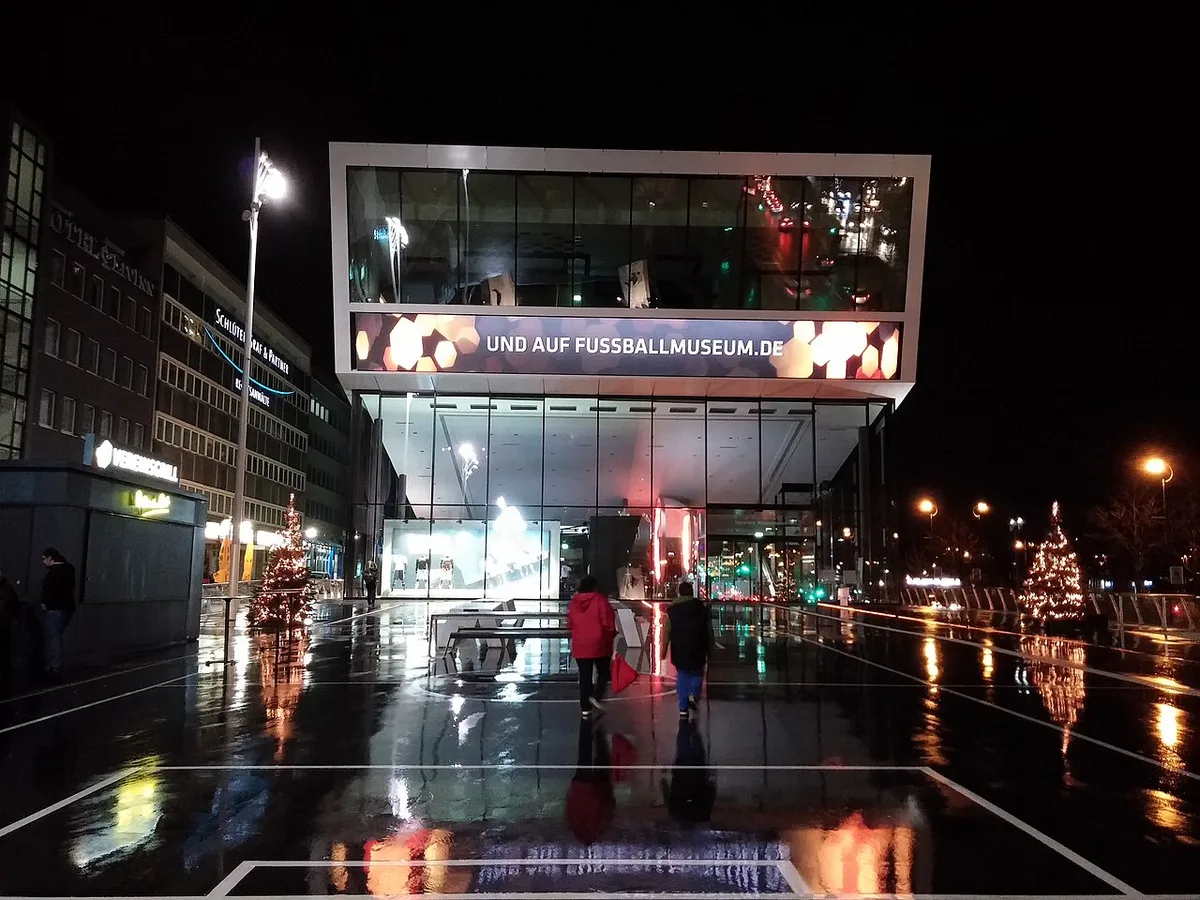
Families generally do best with the park day or a large interactive museum, because those formats tolerate interruptions and do not depend on a tight connection. Industrial-history fans get the most from a regional heritage day, but only if they accept that the best sites require reading and that some halls may be closed. Football-focused visitors should build their plan around the city, since the stadium, the football museum and the club's own visitor information form an obvious cluster.
If walking is a concern, choose a single site with short internal distances and confirm lift access, seating and surface conditions with the operator rather than assuming it. Ridge-top heritage on uneven ground is the least suitable option for anyone with limited walking tolerance, while a park with paved paths and an optional tower is a safer default.
For anyone unsure, the deciding question is not which destination is most famous but which one leaves you with the fewest things that could go wrong. A shorter, calmer day almost always creates a better memory than a rushed itinerary that depended on everything running to plan. Choose accordingly and keep a fallback in your pocket.
Plan Your Visit
If your stay in Dortmund is short, pick at most two trips and give each a proper half day or full day rather than trying to fit the whole region into a single outing. A heritage day in the Ruhr and an in-city park or museum day pair well because they fail in different ways, so poor weather or a closed hall never leaves you stranded. Everything volatile, from connections to opening hours to what a ticket includes, belongs to the operator's own pages and should be checked in the week you travel.
Use Dortmund's own tourism and municipal portals for city-specific information, and use the transport operator for anything to do with trains and tickets. That split keeps your planning grounded in sources that actually control the facts you rely on, rather than in secondhand summaries that age quickly.
Frequently Asked Questions
Which day trips from Dortmund can I do entirely by train without a car?
Most Ruhr destinations are reachable by regional rail from Dortmund, and several are then a short onward walk or bus ride from a station. The reliable method is to look up your exact origin and destination on the transport operator's site, check whether the final leg is a rail or bus connection, and confirm the conditions of the ticket you intend to use. Because timetables and service patterns change, treat any specific connection you read elsewhere as unverified until you check it yourself close to your travel date.
Is Hohensyburg worth visiting from Dortmund, and what is there to see?
It is worth it if you want a landscape rather than a single attraction. The Syberg plateau above the Ruhr holds the remains of a fortification taken by Charlemagne in 775, later stone castle ruins in the southeast corner of the main fort, the Peterskirche with its Romanesque tower, the Vincketurm lookout tower built in 1857 and reconstructed in 1955, and the Kaiser Wilhelm monument opened in 1902. The ruins and grounds can be treated as freely viewable heritage, but interior access and any managed visiting conditions should be confirmed with the managing body before you go.
Is the Kaiser Wilhelm monument on Hohensyburg open to visitors inside?
That is not something to assume either way. The monument is documented as a monumental three-tower group designed by Hubert Stier and opened in 1902, and it is described as an element of the site that can be viewed, but a description of a monument is not a statement about interior access. Check with the body responsible for the site shortly before your visit, and plan the day so the grounds and ruins still work for you if the interior is unavailable.


