

Dortmund is the largest city in the Ruhr region, and its sights sit far enough apart that a single day forces a choice. The Dortmunder U is the simplest anchor: it stands close to the main station, houses Museum Ostwall on its upper floors, and, as the Wander-Lust city guide notes, you can go to the rooftop for free and enjoy the city view even if museums are not your thing. Everything below is a suggested sequence, not an official route, and the time estimates are ours.
A realistic suggested duration for the plan in this article is six to eight hours of sightseeing, excluding meals and travel into the city. That covers one big museum, one central walk and one evening neighbourhood, or two sights plus a park if you move briskly. Adding DASA, Westfalenpark and both football stops to the same day is where most visitors run out of time.
Pick Your Spine Before You Pick Your Sights
Dortmund's day-trip options sort into three spines: industrial art around the U-Tower, football around the German Football Museum and SIGNAL IDUNA PARK, or green space at Westfalenpark. Choose one spine and treat the rest as optional, because the clusters sit in different parts of the city. A football-led day and an art-led day barely overlap, and pretending otherwise means spending the afternoon in transit.
The art spine keeps you central: the Dortmunder U, the Westenhellweg shopping axis and the Reinoldikirche are all within a walk of the main station. The football cluster works best when you commit to it, especially on a matchday. The park spine takes you out to Westfalenpark and the Florianturm, where park entry and tower access are separate questions to confirm before you travel. The German Football Museum and DASA sit at opposite ends of that spread, so the section below weighs them against each other rather than treating both as compulsory.
Stop 1: Dortmunder U and Museum Ostwall
The Dortmunder U is a protected former brewery building turned centre for art and creativity, marked by the giant golden U on its roof. Its upper floors hold Museum Ostwall: the Ruhr tourism region's listing states that the fourth and fifth floors carry the collection, while the sixth floor offers space for temporary exhibitions. That floor split matters for budgeting, because the venue's own listings describe entry to the sixth floor as chargeable and note that tickets can be bought at reception or online. Do not assume one purchase covers every institution in the building.
The free rooftop also keeps the building worthwhile for travellers skipping museums. Museum Ostwall's own opening information lists Monday as a closing day and notes that special exhibitions carry separate rates, so confirm current arrangements on the venue's pages before you go. The museum's Fluxus holdings, with works by Joseph Beuys, Wolf Vostell and others, give the collection floor a specific character rather than a general survey.
Allow roughly ninety minutes if you visit the collection and the temporary show, less if you only go up for the view. The U also runs formats such as guided tours and evening events, but which ones fall on your date is something only the venue's calendar can tell you.
Stop 2: City Centre, Reinoldikirche and Borsigplatz
From the U-Tower you can walk into the centre, where the Westfalenpark's own operator is not your concern and the Reinoldikirche and Westenhellweg form the core of a short loop. This is the least demanding block of the day and the easiest to cut if you are running late, and it works in bad weather. The city's own portal is the place to check current events and seasonal programmes before you commit to an evening plan.
Borsigplatz, north-east of the centre, is the historical birthplace of Borussia Dortmund and a point of pilgrimage for supporters rather than a conventional sight. It rewards fans with context, not architecture, so treat it as a detour only if the club's history is why you came. Pairing it with the football museum is more efficient than tacking it onto an art-led day.
Stop 3: DASA Arbeitswelt Ausstellung
DASA describes itself as Germany's largest working-world exhibition, spread across a hall nearly the size of two football pitches and organised into ten themed worlds. It is a serious half-day on its own. Because it sits west of the centre, well away from the U-Tower and the stadium district, pairing it with a museum morning in the middle of town costs you real travel time.
One current operational detail affects planning: the operator's site states that the hazardous-materials hall is closed for conversion until further notice, so part of the permanent display is unavailable. Its published visiting windows also differ by day, with shorter weekday hours than weekend hours, so confirm current times on the DASA site before you build a route around it. Choose DASA as your single big indoor stop, or leave it for a longer trip.
Stop 4: German Football Museum or a Stadium Visit
The German Football Museum and a stadium visit answer different questions, so pick one unless football is the entire point of your day. The museum is a fixed-schedule indoor exhibition telling the national story of the sport, which makes it the safer choice when the weather is poor or your timing is tight. A stadium visit is a club-run product tied to BVB's own conditions, calendars and access rules.
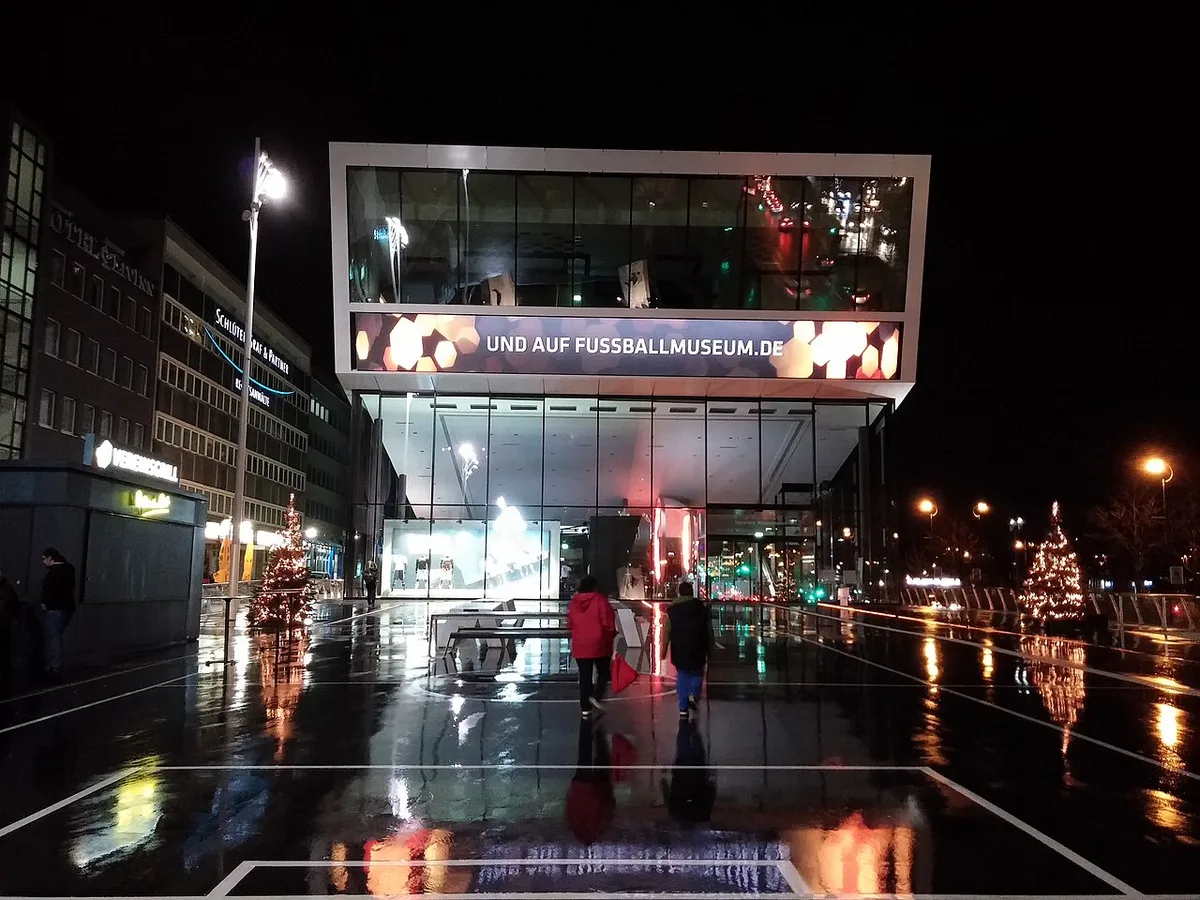
Borusseum, the club museum at the stadium, sells admission covering its permanent and temporary exhibitions but explicitly does not include the stadium tour, so the two are separate purchases. Access to the museum is via the lift at the rear of the August-Lenz-Haus, opposite the players' entrance. Read the ticket description carefully rather than assuming one football ticket covers everything on the site.
Stadium tours are sold by the club and run under its own arrangements, so availability varies with the fixture list. Go to Borussia Dortmund's own pages for current tour options, prices and dates instead of relying on older summaries, and read the stadium regulations if you are attending a match, because they set out entry, ticket and conduct rules that visitors accept on entering.
Matchday Changes Everything
On a matchday, SIGNAL IDUNA PARK stops being a sight and becomes an event with its own procedures. The club's stadium regulations state that only persons with a valid ticket or other authorisation may stay in the stadium, that children up to 14 are admitted only with an adult, that children up to seven are not permitted in the standing areas even when accompanied, and that unauthorised commercial resale of tickets is prohibited. Anyone planning a matchday visit should read those rules directly rather than trusting second-hand summaries.
If you are not attending a match, a stadium tour or the Borusseum is the practical alternative, and both are best arranged through the club rather than improvised on arrival. League-match tickets are a separate matter, and availability is not something you can plan around with confidence. Build the rest of your day so that football is optional, not load-bearing.
Stop 5: Westfalenpark and the Florianturm
Westfalenpark is one of the city's main green spaces, and the Florianturm broadcasting tower rises from its grounds as one of Dortmund's most recognisable structures. The park and the tower are two separate things to plan: park access and tower access are separate questions, and you should confirm both with the operator before travelling out. Do not assume that arriving at the park means you can go up the tower.
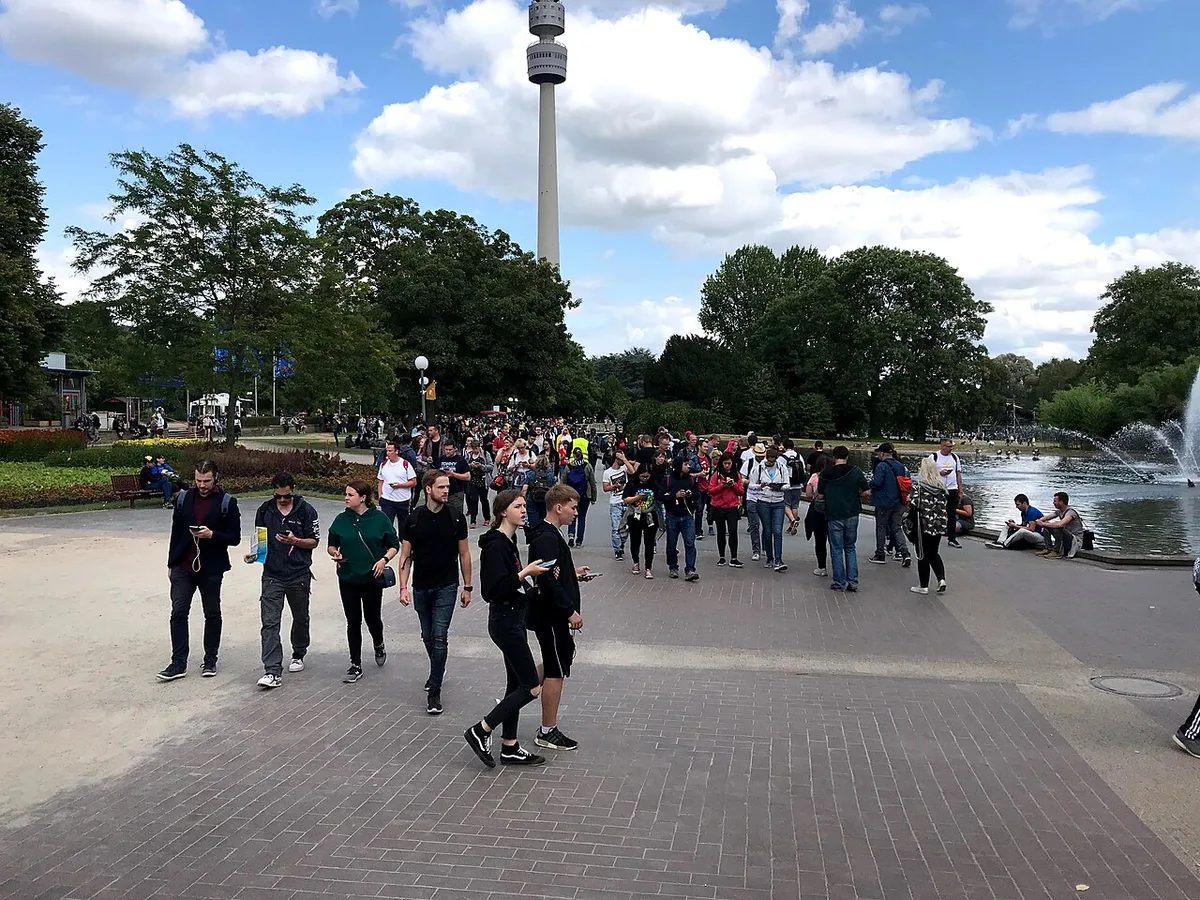
Third-party listings for the tower contradict each other on opening days and describe facilities such as a revolving restaurant that may not be operating, so no single page should be trusted. Confirm current arrangements and whether tower access is available at all through the city tourism site or directly with the park. If the tower is closed, the park walk still stands on its own as an afternoon stop, and the city's own portal carries current park events.
Kreuzviertel as the Wind-Down
Kreuzviertel is described as Dortmund's most charming neighbourhood in the Wander-Lust city guide, a compact grid of small shops and cafés west of the centre. It is the natural end to a museum-heavy day because it asks nothing of you except walking and ordering something. Arrive with time to wander rather than with a list, since the appeal is street-by-street discovery.
Because Dortmund lost most of its historic building stock in the Second World War, the city's character comes from contemporary quarters as much as from old streets. Kreuzviertel and the area around the U are where that shows most clearly. Note that individual cafés open and close, and naming a specific venue today risks sending you to a closed door, so check what is actually open on the day.
Getting Between the Clusters
Dortmund has a dense metro network, buses and regional trains, and a day ticket is the usual answer if you are making more than a couple of journeys. The Wander-Lust guide notes that the city's metro is smooth but that ticket machines have not accepted cards, so carry coins as a fallback rather than assuming contactless payment everywhere. App-based rental bikes and e-scooters are another option if you prefer to stay above ground.
Do not zig-zag. The centre, the U-Tower and the stadium district form a loose south-central band, while Westfalenpark and DASA sit outside it in different directions. Grouping stops by geography rather than by importance saves more time than any route optimisation. If you only have one day, accept that one of the outer stops will probably not happen.
Suggested One-Day Sequences
The culture-first version: start at the Dortmunder U for the rooftop and the museum floors, walk into the centre for the Reinoldikirche and Westenhellweg, then finish in Kreuzviertel. This keeps almost all movement on foot and leaves the evening free. Add DASA only if you are prepared to give it three hours of its own.
The football-first version: German Football Museum or Borusseum in the late morning, the stadium district around lunchtime, then the centre in the afternoon and Kreuzviertel in the evening. If a match is on, the museum becomes a pre-match stop and the rest of the day flexes around kick-off. The low-cost version strips out the ticketed interiors entirely: the U rooftop, a centre walk, the park grounds and Kreuzviertel, with money spent mainly on transport and food.
Whichever spine you choose, decide the following morning what you will drop rather than trying to hold everything. A single fixed anchor plus two flexible stops is a more comfortable day than five timed appointments. If one day feels thin, a second-day plan lets you keep the art and the football without choosing between them. For wider planning, see 2 Days in Dortmund.
What to Cut and What to Check
The most common mistake is assuming tickets are shared across a site: at the U, at the stadium and at Borusseum, the ticket scopes are narrower than visitors expect. The second is treating route order as fixed when the real constraint is opening days, which vary by venue and season. The third is over-stuffing: three substantial stops plus a park is usually too much for one day.
Season changes the day more than any route decision. Daylight in winter ends the outdoor blocks early, while the Christmas market period fills the centre in the evenings and shifts where you will want to be. In summer the opposite applies, and outdoor stops such as Westfalenpark deserve the later slot.
Accessibility arrangements and entry rules are venue-specific and change over time, so check each site individually rather than assuming one standard applies across Dortmund's museums and stadium. The operator's own page is the only reliable source for lift access, reduced tickets and assistance provisions. If a venue's guidance is unclear, contact it before you travel rather than arriving and hoping.
Where to Go Deeper
Once you have chosen your spine, the individual landmark guides answer the detail questions this overview deliberately leaves open. If football is your focus, the German Football Museum visitor guide covers that stop properly, while the DASA material is best read alongside the venue's own pages. A longer version of this plan is the easiest way to see both the art and the football without rushing either.
For a wider set of options across the city, the Dortmund: Landmark Visitor Guides collection groups the major stops by theme and makes it easier to swap one stop for another when something is closed. If you are comparing compact German city days rather than staying put, a one day in Dresden itinerary shows how a tight old-town route is structured, which is useful context when Dortmund's more spread-out layout feels unfamiliar.
Give Dortmund two or three days and the trade-offs largely disappear, because DASA, the football sights and the park can each have their own slot. A third-day version of the plan is the better fit if you want all three without spending the day in transit. For wider planning, see 3 Days in Dortmund.
Plan Your Visit
Build your day around one anchor and let the rest bend to your energy and the weather. Confirm opening days, ticket scope and any closures on each venue's own page the week you travel, because that is where changes appear first. Everything in this itinerary is a suggestion about sequence, not a claim about timetables.
If you have six to eight hours, the art-and-centre version is the safest bet, with Kreuzviertel as a wind-down. If football is why you came, swap the museum morning for the football cluster and accept that the park may not fit. Either way, leave one thing undone so the day stays enjoyable.
Frequently Asked Questions
Is Dortmund worth visiting for one day?
Yes, provided you accept that one day covers a slice of the city rather than all of it. Dortmund's sights sit in different clusters, so a single day works best with one anchor such as the Dortmunder U or the football district, plus one walkable neighbourhood. Trying to add DASA and Westfalenpark as well usually means spending the afternoon travelling rather than looking at anything.
Is the Dortmunder U rooftop free to visit?
The rooftop terrace is the low-cost way to use the building, and the Wander-Lust city guide describes going up to the rooftop for free to enjoy the city view. The museum floors are a separate matter: Museum Ostwall's collection occupies the fourth and fifth floors, while the sixth floor hosts temporary exhibitions and is the level described as chargeable. Check the venue's own site for current arrangements before you go, since exhibitions rotate.
Should I visit the German Football Museum or do a stadium tour?
They answer different questions, so pick the one that matches your interest. The German Football Museum is a fixed-schedule indoor exhibition about the national game, which makes it the more predictable option. A stadium visit is a club-run product with its own conditions, dates and access rules, and the Borusseum ticket does not include the stadium tour. Check the club's own pages for current tour options.
What is free to do in Dortmund?
Walking the city centre around the Reinoldikirche and Westenhellweg costs nothing, and the Dortmunder U rooftop is the classic free viewpoint. Wandering Kreuzviertel and the Westfalenpark grounds are also free ways to spend time, though tower access and ticketed exhibitions are separate paid questions. Confirm current arrangements individually, because closures and access rules vary by venue and season.
How much of Dortmund can you cover without a car?
The centre, the U-Tower and the stadium district are manageable by public transport and on foot, and the network also covers the park and outlying sights. What limits you is distance between clusters, not the absence of a car. Grouping stops by area is more useful than trying to optimise individual journeys, and rental bikes or e-scooters are an option for shorter hops.


