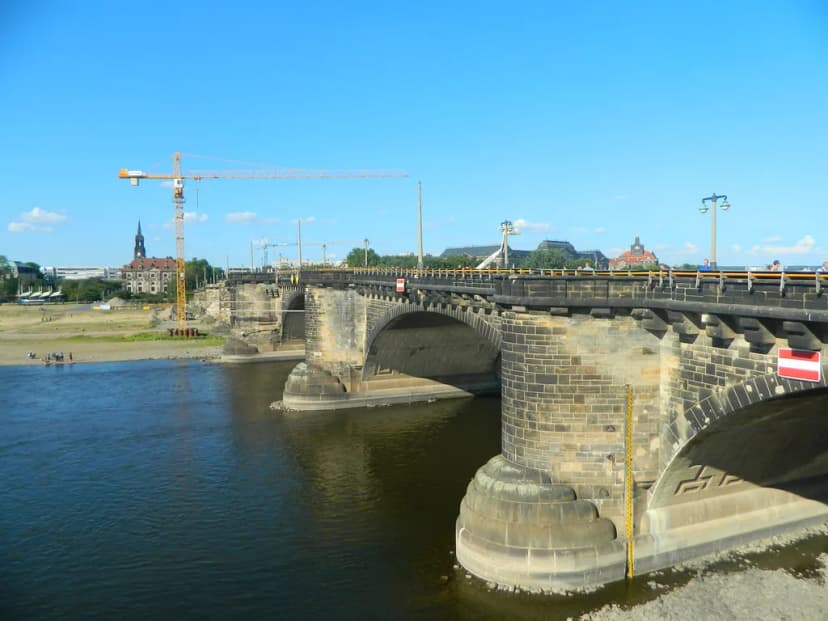
Dresden packs its best family assets into a compact stretch of the Elbe valley. The historic centre, the river meadows and the city's largest park sit close enough that you can combine a museum, a short mechanical ride and an outdoor afternoon without long transfers. The city has a strong tram and bus network, so a car is unnecessary for the core sights. What you need is a plan that separates free outdoor time from paid interiors and keeps one flexible afternoon in reserve.
The single most useful planning fact for families is the admission scheme run by the Museums of the City of Dresden. Children under 7 enter free at all of them, and Dresden Pass holders also get in free, alongside other concessions. That applies to the city-run museums, not to the state-run collections in the Zwinger or the Royal Palace, which set their own tickets. Checking which operator runs a museum before you promise it to your children saves both money and disappointment.
On the official museums page you can compare the whole group at once, including addresses and the Friday free admission windows. Treat that page as your live reference rather than a printed itinerary, because opening times and closures change.
How the City of Dresden Museum Fees Work for Families
The Museums of the City of Dresden form one administrative group with a shared fee scheme. It covers the Dresden City Museum, the Municipal Gallery, the Technology Collections, the Art Museum, the Leonhardi Museum, the Kraszewski Museum, the Kugelgenhaus, the Palitzsch Museum and the Schiller Cottage. The Carl Maria von Weber Museum belongs to the same group but remains closed until, it is expected, 2028, so leave it off any current list. The group shares a fee schedule that came into force on 1 January 2026, published in the Dresden Official Gazette, which is the document to consult if you want the formal wording.
The practical lever for families is the free-admission rule. Children under 7 pay nothing at these museums, and the same free entry applies to Dresden Pass holders, with further concessions available for other visitors. At several of the sites the standard adult ticket is in the single-digit euro range, so a family with young children pays mainly for the adults. Do not extend this rule to the Zwinger galleries, the Royal Palace or other state-run collections, which operate separate tickets and separate fee rules.
If you want the operator's own list of conditions, the museum overview page lays out the group, the addresses and the free and concession terms together. It is also where the schedule of fees is linked, which matters if you are travelling with a Dresden Pass or claiming a reduced rate.
Friday Free Admission: Building a Day Around It
The city museums run free admission windows on Fridays, which is the cheapest way to see several of them in one trip. The Dresden City Museum and the Municipal Gallery open free from 12:00, as do the Kraszewski Museum, the Kugelgenhaus and the Palitzsch Museum. The Leonhardi Museum starts its free window later, from 14:00, and the Art Museum has free entry on Fridays as well. The Technology Collections also participates, though its own operating window differs from the city-centre sites.
Friday afternoons are busy for exactly this reason, so it is worth choosing two museums rather than four. The City Museum and the Municipal Gallery share the same address on Wilsdruffer Strasse, which makes them the easiest pair to combine with a single short walk. Save the outlying sites, such as the Kraszewski Museum in the Neustadt or the Palitzsch Museum in the south, for a separate day when you are not trying to cover ground.
Confirm the Friday windows before you travel, because the operator lists them alongside normal opening hours that also note special closures around public holidays, 24, 25 and 31 December, and 1 January. The same page carries the contact details for visitor service if you need to ask about a specific date.
The Technology Collections and the 2026 Closure
The Technology Collections on Junghansstrasse is the most hands-on of the city museums and the one most likely to hold a child's attention, with interactive science displays and a broad technical collection. It sits east of the centre in Johannstadt, reachable on the tram network, and its weekday opening starts earlier in the morning than the city-centre museums. Its weekend hours run later into the afternoon, which makes it a reasonable Saturday or Sunday stop.
The critical planning point is that the operator states the museum will close from 2 November 2026 for energy-efficiency refurbishment. During that work, the interactive Science Centre activities are to move to the Landhaus on Pirnaischer Platz, with the opening there scheduled for the second quarter of 2027. If your trip falls after the closure date and before the Landhaus opens, treat the Technology Collections as unavailable and pick another indoor option instead.
The closure notice sits on the museum's own entry in the city museum list, so check that page rather than relying on older guides. The same listing confirms the standard adult and concession rates and the Friday free window. If the timing is tight, the Dresden Transport Museum visitor guide covers a separate operator whose family programming is unaffected by this refurbishment.
The Schwebebahn: A Ride That Counts as an Attraction
The Schwebebahn is an inverted suspension railway climbing the slope above the Elbe, and it works as a family stop in its own right. Children generally find the hanging carriage more memorable than another gallery room, and the ride gives you a viewpoint over the river valley without a long hike. Treat it as an activity rather than transport and you will pace the day better.
It is operated by DVB, the city transport company, and is listed among their mountain railways. Because it is part of the transport network rather than a museum, ticketing and operating arrangements follow the operator's rules rather than the city museum fee scheme. Check the DVB page before travelling for current operating information, since the operator's published material does not state Schwebebahn opening hours.
The companion funicular, the Standseilbahn, runs on the same hillside area, so the two are often paired. Neither should be scheduled to the minute; leave a buffer because queues build on fine weekends and school holidays. The operator's own page is the place to confirm what is running on your dates.
Three Smaller City Museums Worth a Family Detour
The Kraszewski Museum in the outer Neustadt is a small literary house with a garden, and it opens Wednesday to Sunday and on public holidays in the afternoon. The family calculation here is simple: it is free for under-7s and free on Fridays from 12:00, so it costs little to include. Its out-of-centre location makes it a good pairing with a wander through the Neustadt rather than a dedicated trip.
The Kugelgenhaus on Hauptstrasse sits in the middle of the baroque Neustadt and keeps shorter hours than the main museums, opening Wednesday to Friday in the morning and weekend afternoons. It is free for under-7s and from 12:00 on Fridays. Because the morning window is limited, it works best as a short stop slotted between outdoor time on the Neustadt bank.
The Palitzsch Museum in the southern district of Prohlis opens Wednesday to Sunday and public holidays in the afternoon and has the same free entry terms. It is the least central of the three and rewards families already heading south. The museum listing gives current opening times and closures for all three, including holiday exceptions.
Leonhardi Museum Access and Pushchair Planning
The Leonhardi Museum sits on Grundstrasse in the Loschwitz hillside area, high above the river and close to the mountain railways. Its opening pattern is atypical: it closes on Mondays and opens Tuesday to Friday in the afternoon and weekends from mid-morning. Its Friday free window begins at 14:00 rather than noon, so it is not a morning option on the free day. Adult and concession rates are lower than at the larger city museums.
The operator states that the upper exhibition rooms are currently not accessible to visitors with reduced mobility. For families, that translates directly into a pushchair decision: plan to leave the buggy at the entrance or carry a child, and expect to skip the upper floor if anyone in your group cannot manage stairs. This is the kind of detail worth reading before you climb the hill rather than after.
If you want a full list of the city museums with their individual access notes, the operator's overview page is the most reliable single source. It lists each museum, its address and its admission terms.
Grosser Garten: Free Space Between Museum Stops
The Grosser Garten is Dresden's largest park and the obvious place to let children run between cultural stops. It offers paths, ponds, lawns and a zoo within the grounds, and it costs nothing to enter. That free access is the reason it belongs in a family plan as a full outdoor block rather than a twenty-minute detour.
Because the park is large and its features are spread out, the sensible approach is to pick one entrance, one direction and one destination rather than trying to see all of it. Cycling and walking along the Elbe River is another easy way to spend free time, and the riverside paths connect naturally with the park. Note that the zoo inside the grounds is a separate, ticketed attraction with its own arrangements, so do not assume it is part of the free park.
For families who want a second free outdoor option, Dresden Heath is a large forest area suited to hiking and biking beyond the built-up centre. Together with the park and the riverbanks, it gives you three free blocks that can absorb an afternoon each. Details of these green spaces come from general destination material rather than an operator page.
Getting Around Dresden with Children
Dresden has an extensive network of trams, buses and trains, and the Hauptbahnhof connects the city to the rest of Germany. For families, the tram is usually the simplest way to cover the gap between the historic centre, the Neustadt and outlying museums, because you board at street level and you do not hunt for parking. Walking along the Elbe is a genuine alternative for the central sights, where distances are short.
This guide does not quote fares, tram lines or journey times because those change and the operator publishes them directly. Check DVB's own information for current ticketing, including any child fare rules, before you rely on a number. The same applies to the mountain railways, which are run by the same transport operator and follow its conditions.
If you plan more than a day of travel, a broader Dresden guide will help you decide which districts to group together so you are not crossing the city repeatedly. A two-day Dresden itinerary can also show you how the central sights cluster.
Pacing a Family Day: One Museum, One Ride, One Outdoor Block
A workable rhythm for families in Dresden is one indoor stop, one short mechanical ride and one long outdoor block. As a suggestion rather than official guidance, that pattern keeps a child's tolerance for standing still in balance with the need to move. A morning museum followed by the Schwebebahn and an afternoon in the Grosser Garten is realistic without rushing. Trying to add a second museum usually costs you the outdoor time.
Over two or three days, you can shift the balance. Give one day to the city museums on the free Friday window, one day to the river and the park, and keep the mountain railways and the hillside museums for a separate outing. If you are planning a longer German family trip and comparing cities, Berlin with kids and Munich with kids offer useful contrasts in how much free outdoor space each city delivers.
Use the city or landmark hubs to check individual venues before you commit a slot in the plan, and confirm anything time-sensitive on the day you book. The Dresden Hygiene Museum visitor guide is a good example of a separately operated venue with its own rules.
Splitting Free from Paid: What Actually Costs Money
Dresden's family budget splits cleanly into paid interiors and free exteriors. The riverbanks, the Elbe paths, the Grosser Garten and Dresden Heath all cost nothing, and that is where most of a child's energy should go. The paid side is the museum interiors, the mountain railways and any separately ticketed attraction such as the zoo inside the park.
Within the city museum group, the adult ticket is modest and young children enter free, so the cost per family is driven by how many adults are travelling and how many museums you enter. The Friday windows remove even the adult charge at the participating sites. What you should not assume is a shared ticket across all Dresden museums: the city group and the state collections are administered separately, and no evidence supports a combined pass across them.
Check the current fee schedule on the operator's museum page for the exact amounts applying to your date, since the schedule in force from 1 January 2026 is the effective one. Anything you read elsewhere may describe older rates.
Plan Your Visit
Dresden works well for families because the expensive parts are optional and the free parts are genuinely good. Build the trip around the under-7 free entry at the city museums and the Friday free windows, then fill the rest with the river, the Grosser Garten and Dresden Heath. Add the Schwebebahn as an activity in its own right, and check DVB for its current operating information rather than relying on a schedule you read elsewhere.
The one date that changes a family plan is the Technology Collections closing from 2 November 2026 for refurbishment, with the Science Centre expected to reopen at the Landhaus in the second quarter of 2027. Before you travel, confirm opening times, free windows and access notes on the operator's own museum listing, and verify transport arrangements directly with DVB. If you want to compare city strategies, look at how other German cities handle family days before you commit your itinerary.
Frequently Asked Questions
Is Dresden a cheap city to visit with children?
It can be, because the city's biggest family assets are free to use. The Elbe riverside paths, the Grosser Garten with its paths and ponds, and Dresden Heath cost nothing to enter, so outdoor time does not consume budget. The paid side is museum interiors and the mountain railways. Within the city museum group, children under 7 enter free and Dresden Pass holders also enter free, and several sites drop the adult charge during their Friday free windows. Check the operator's current fee schedule for amounts that apply on your dates.
Which Dresden museums are free for young children?
Children under 7 enter free at the museums run by the City of Dresden, which include the City Museum, the Municipal Gallery, the Technology Collections, the Art Museum, the Leonhardi Museum, the Kraszewski Museum, the Kugelgenhaus and the Palitzsch Museum. The same free entry applies to Dresden Pass holders, and further concessions exist for other visitors. This rule does not extend to separately administered collections such as the Zwinger galleries or the Royal Palace, which set their own admission terms. Confirm the list on the operator's site before you travel.
Is Dresden Castle worth visiting with kids?
The Royal Palace is part of Dresden's historic core and sits close to the other central sights, so it is easy to include on a walking day. It is not part of the City of Dresden museum group, which means the under-7 free entry and Friday free windows that apply to the city museums do not apply there. Whether it suits your children depends on their tolerance for interiors and on the tickets available at the time. Check the palace's own operator for current admission terms and family arrangements.
What is Dresden famous for that children will recognise?
Children often respond to the Frauenkirche, whose rebuilt dome dominates the skyline, and to the Zwinger with its courtyard and galleries. The Semperoper is recognisable as a grand opera house even from outside, and the Royal Palace holds treasures and historic interiors. The Elbe itself is part of the identity, along with the surrounding green spaces. These landmarks come from general destination background, so check each operator for visiting terms rather than assuming they all work the same way.
How do you get around Dresden with a family?
Dresden has an extensive network of trams, buses and trains, and the Hauptbahnhof connects the city to the rest of Germany. Cycling or walking along the Elbe River is a realistic option for the central sights, where distances are short. For mountain railways such as the Schwebebahn, ticketing and operating arrangements follow the transport operator's conditions rather than the city museum scheme. Check DVB directly for current fares, routes and running information, because those details change.
Are there free things to do in Dresden with kids?
Yes. The Grosser Garten is free to enter and offers paths, ponds, lawns and space to run, though the zoo within the grounds is a separate ticketed attraction. Dresden Heath is a large forest area suited to hiking and biking, and the Elbe riverbanks work well for a walk or cycle. On Fridays, several City of Dresden museums open their doors free from midday, including the City Museum and the Municipal Gallery. Children under 7 enter the city museums free on any open day.
When does the Dresden Technology Collections close for refurbishment?
The operator states that the Technology Collections will close from 2 November 2026 for energy-efficiency refurbishment. During that work, the interactive Science Centre activities are to move to the Landhaus on Pirnaischer Platz, with the opening there scheduled for the second quarter of 2027. If your visit falls between those points, plan on the museum being unavailable and choose a different indoor stop. Confirm the current status on the operator's museum listing before you travel.