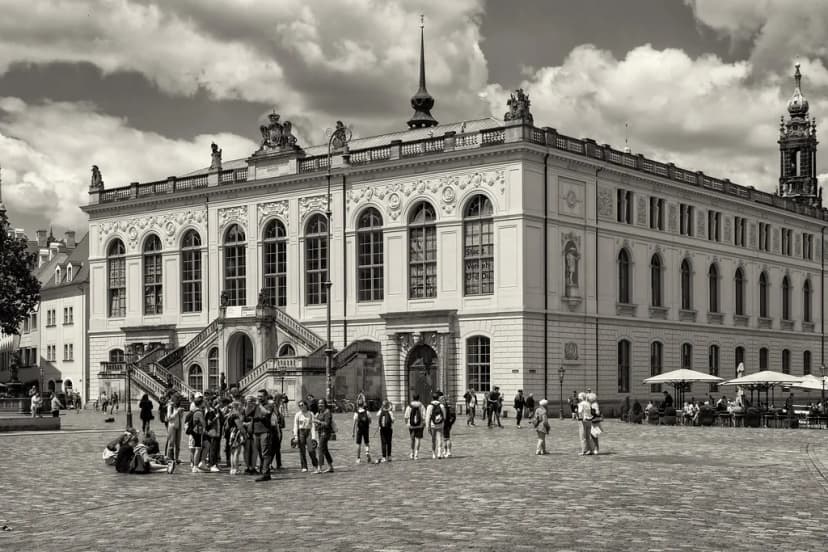
The Verkehrsmuseum Dresden sits in the Johanneum, a historic building at Augustusstraße 1 right by the Neumarkt in the old town. Because it is indoors and open through the week except Mondays, it works well as a wet-weather plan that still keeps you close to the Frauenkirche and the rest of the centre. The operator publishes its general hours and current access notes on its own pages, and those are the details worth checking on the day you go.
Inside, the museum groups its holdings into four permanent collection areas: road transport, railway transport, navigation and aviation. That structure makes it easy to plan a route through the building rather than wandering at random, and it helps you decide in advance which sections matter most to the people you are travelling with.
Where the Museum Is and How Access Currently Works
The operator gives the address as Verkehrsmuseum Dresden gGmbH in the Johanneum at the Neumarkt, Augustusstraße 1, 01067 Dresden. That places it a short walk from the Neumarkt square, which makes it simple to combine with the surrounding old town on foot rather than treating it as a separate trip across the city.
The museum currently states that construction work means access is via the rear entrance, with thanks for visitors' understanding. Plan for that entrance rather than assuming the main front door is the one you will use, and check the same notice again shortly before you travel in case the arrangement changes.
Because the building sits in the pedestrian core, arriving by public transport and finishing on foot is usually the least complicated approach. The museum publishes its own directions page, and that is where you should confirm the route, the entrance situation and any local notices rather than relying on a general map alone.
The Four Permanent Collections
The permanent displays are divided into road transport, railway transport, navigation and aviation. Rail visitors can look at historic locomotives and carriages, while the road section covers bicycles, motorcycles and cars, including vehicles associated with everyday motoring in Saxony. In the navigation area the focus is on ships and seafaring, and the aviation hall deals with flight and aircraft.
The aviation collection includes large aircraft exhibits and a viewing gallery, while the rail area has full-size locomotives that give a sense of scale hard to convey in photographs. A model railway installation adds a smaller-scale counterpoint, and hands-on stations are distributed through the building rather than confined to one room.
Treat the four areas as a menu rather than a checklist. If your group has a strong interest in one mode of transport, build the visit around that hall and dip into the others; if you are covering everything, moving through in the order road, rail, navigation and aviation gives the day a natural shape.
Family Features and the Bobby Car Traffic Park
The Bobby Car Traffic Park is the museum's dedicated traffic practice zone, aimed at children aged 3 to 6, where they ride bobby cars and small bicycles while learning road safety. The course includes signs and signals, a car wash where the vehicles can be cleaned, a gated level crossing that teaches children to wait, and garages where they park at the end of a lap. Nappy-changing facilities are available for families who need them.
The traffic park has its own opening times, listed separately from the museum's general hours, so it may not be running for the whole of your visit. Check the published times for the days you are in Dresden before promising a child a turn on the course, and treat the park as a timed slot in your plan rather than an area that is always available.
Two further family offerings broaden the appeal beyond the youngest visitors. The Aviation Experiments Room invites children to try experiments about air, and the Children's Route, led by a mouse character named Flitzi, leads through interactive stations in each permanent exhibition. Because the traffic park targets ages 3 to 6, families with older children should weight the model railway, the aviation experiments and the puzzle stations more heavily when planning where to spend time.
Opening Hours, Tickets and Checking Before You Go
The museum's general opening hours are Tuesday to Sunday from 10am to 6pm, as stated on its own pages, with special opening times listed separately. That pattern means a Monday in Dresden is better used for another attraction, and a Tuesday morning visit can be quieter than a weekend afternoon when the old town fills up.
The operator does not publish an admission price in the material reviewed for this guide, so no figure is quoted here. Ticket prices, concessions and any family rates should be confirmed on the museum's tickets page, which is also where combination offers would appear if they exist at the time of your visit.
For planning purposes, a suggested half day is a reasonable working assumption, but that is a recommendation rather than an official duration. Collections of this size often reward more time if you read the labels and stop at the interactive stations, so decide on the day whether to stay longer or combine the visit with something nearby.
The City Museums Network Is a Separate Thing
Museen der Stadt Dresden runs a family of municipal museums, among them the Dresden City Museum, the Dresden Municipal Gallery, the Dresden Technology Collections and the Dresden Art Museum. Those institutions publish their own hours and admission arrangements under a common city umbrella, and that network operates independently of the Transport Museum.
Because the two are separate, city museum free-admission days, concession rules and opening schedules do not carry over to the Transport Museum in either direction. A Dresden Pass or a Friday free-entry arrangement at a municipal site tells you nothing about what the Verkehrsmuseum charges or when it opens. Check each museum's own page separately.
One practical consequence is timing: the Dresden Technology Collections publish weekday morning opening from Tuesday to Friday alongside weekend hours, which differs from the Transport Museum's pattern. If you are trying to fit both into one trip, build the day around each venue's own schedule rather than assuming a shared rhythm.
Rainy Days and Family Itinerary Decisions
Indoor attractions matter in Dresden because the old town is best explored on foot, and wet weather makes a long walking circuit uncomfortable. The Transport Museum's position by the Neumarkt means you can duck in, spend time in the halls, and step back out to the Frauenkirche area without crossing the city. It is a rain-safe choice in a practical sense, not a claim about its ranking among the city's sights.
With younger children, aim for a morning arrival and head for the Bobby Car Traffic Park within its published hours before moving on to the Children's Route. With older children, start with the rail and aviation halls where the full-size exhibits and experiment stations hold attention longer, then use the road and navigation areas as a second half. Either way, treat the sequence as a suggestion and adjust to how the group is coping.
If you are comparing Dresden's indoor options for a wet day, it helps to know which venues are municipal and which stand alone. A wider look at the city's museums puts the Transport Museum's four-collection format into context alongside galleries and technology displays, so you can pick two that appeal to different members of your group.
For trips that mix landmark visits with time indoors, a broader Dresden guide helps you decide how much of the day to give to the old town and how much to a single museum. Children's energy and patience usually set the limit, so plan one substantial indoor stop rather than three rushed ones.
Combining the Museum with Nearby Sights
The Neumarkt location places the museum within easy walking distance of the Frauenkirche and the surrounding baroque streets. A natural half-day pairs the transport collections with the square outside, and the museum's own site has photographs of the building at night for a sense of how it sits against the church dome. Keep the route short and let the weather decide the order.
If your group wants an art stop in the same part of town, the Albertinum is another indoor option with its own ticket and hours, so check it separately rather than assuming any shared arrangement with the Transport Museum. Two indoor stops in one day is usually enough with children in tow.
Plan Your Visit
The Dresden Transport Museum is a straightforward indoor stop in the old town, with four permanent collections and a family zone that has its own schedule. Check the operator's pages for current opening hours, access arrangements and ticket details before you go, since those are the items most likely to change and the ones the museum controls directly.
Keep the city museums network separate in your planning, confirm the Bobby Car Traffic Park times if you are bringing younger children, and treat the rest of the day as flexible. That approach leaves room for the Neumarkt, the Frauenkirche and a second indoor stop without over-scheduling anyone.
Frequently Asked Questions
Is the Dresden Transport Museum good for children?
Yes, the museum provides several child-focused features. The Bobby Car Traffic Park is a traffic practice zone for children aged 3 to 6, where they ride bobby cars and small bicycles past signs, signals, a car wash, a gated level crossing and garages. There is also an Aviation Experiments Room and a Children's Route with interactive puzzle stations in each permanent exhibition. Note that the traffic park has opening times listed separately from the museum's general hours, so check those before promising a turn on the course.
What can you see at the Dresden Transport Museum?
The permanent displays are organised into four areas: road transport, railway transport, navigation and aviation. The rail section includes historic locomotives and carriages, and the road area covers bicycles, motorcycles and cars. The navigation collection deals with ships and seafaring, and the aviation hall holds aircraft exhibits and a viewing gallery. A model railway and hands-on stations are distributed through the building.
Is the Dresden Transport Museum open on Mondays?
The operator lists general opening hours as Tuesday to Sunday, 10am to 6pm, which means the museum is normally closed on Mondays. Special opening times are published separately, so if your trip falls around a public holiday, check the museum's own opening hours page for that specific date rather than assuming the standard weekly pattern applies.
Is the Bobby Car Traffic Park included and always open?
The traffic park is part of the museum's children's offerings, but its opening times are listed separately from the general museum hours. That means the park may not be available for the whole of your visit even on a day the museum is open, so check the published park times on the museum's website for the dates you plan to be in Dresden.
Is the Transport Museum part of the Dresden city museums ticket?
No. The Dresden Transport Museum is not one of the Museen der Stadt Dresden institutions, which include the Dresden City Museum, the Dresden Municipal Gallery, the Dresden Technology Collections and the Dresden Art Museum. Free-admission days, concessions and opening schedules published for the city museums do not apply to the Transport Museum, so check each museum's own pages.