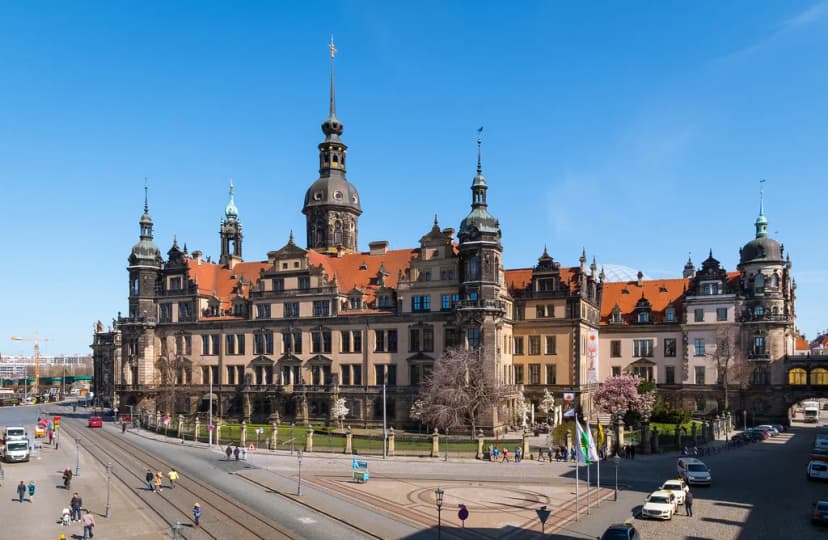
Dresden is a genuinely good rain city, not just a tolerable one. The historic core is compact enough to cross between covered stops in short bursts, and the museum network is dense enough that you never need to gamble on the weather. The useful decision is not whether to go indoors but which indoor option matches your interests and your tolerance for ticket queues.
One practical anchor before anything else: the Museums of the City of Dresden group publishes opening hours and admission on its own site, and its current fee schedule took effect on 1 January 2026. That matters because those figures apply only to the city-run museums, not to the state art collections, which operate separately. Treat any older third-party price you find online as unreliable.
This guide separates free grounds from paid interiors, flags what is closing in late 2026, and suggests how to build a half-day and a full-day plan without racing between too many collections. For broader trip structure, the Dresden: Itineraries and City Travel Guides covers multi-day planning.
Why Dresden Works Well When It Rains
The old town sits on the south bank of the Elbe, and most of its major sights cluster within a walkable zone. That density means a rainy day does not require long exposed walks between stops; you can duck from one interior to the next in a few minutes. The Brühlsche Terrasse is a riverside promenade that requires no ticket, but in heavy rain it becomes a quick transit route rather than a lingering viewpoint.
The city also has a museum layer that goes well beyond the famous names. The city's own museums cover local history, technology, art and several small historic houses, while the state art collections concentrate in the Zwinger and Residenzschloss. That split is the single most important thing to understand: two operators, two sets of rules, two ticket systems.
For orientation on the major landmarks themselves, the Dresden: Landmark Visitor Guides is a useful companion when you are deciding which building deserves your attention. It helps to know that the Frauenkirche, the Zwinger, the Semperoper and the Residenzschloss sit close enough to walk between, so rain rarely forces a change of district.
Start With the City's Own Museums
The Museums of the City of Dresden run ten sites, and several are well suited to a wet afternoon. The Dresden City Museum and the Dresden Municipal Gallery share the same building on Wilsdruffer Strasse and the same published hours and admission, which makes them easy to pair. Both are closed on 24, 25 and 31 December, and on 1 January they open in the afternoon.
The Dresden Art Museum operates from two locations, a former robotron canteen by a skate park and a garden art project site, with different hours at each. The Leonhardi Museum sits further out on Grundstrasse and is closed on Mondays, with a note that its upper exhibition rooms are currently not accessible to visitors with reduced mobility.
These are modest, locally focused museums rather than blockbuster attractions, which is exactly why they work on a rainy day: shorter queues, quieter rooms and enough substance for an hour or two. If you want the full list with addresses and current hours, check the operator's own museum page before you leave your hotel.
The Free-Admission Friday Window and Who Qualifies
Several city museums offer free admission on Fridays from midday, though the starting time varies by site, and the Leonhardi Museum's free window begins in the afternoon. Free entry with the Dresden Pass and for children under seven is also published, along with other concessions. These are genuine savings if your rainy day happens to fall on a Friday.
The important caveat is that the Friday free window applies to the city-run museums, not to the state art collections. Do not assume the same offer extends to the Zwinger galleries or the Residenzschloss. Each operator sets its own conditions, so verify on the relevant official page rather than relying on a general roundup.
Admission categories vary: some sites charge one rate for adults and a lower concession rate, while the Schiller Cottage is free for everyone. If you are travelling as a family or hold a pass, it is worth checking which specific museums honour it before you plan your route.
Zooming In on the Technology Collections Before the 2026 Closure
The Dresden Technology Collections is the city museum most likely to appeal to visitors travelling with children, because its interactive Science Centre activities are designed for hands-on engagement. It sits on Junghansstrasse in the eastern part of the city, with weekday morning openings and longer weekend hours. The operator publishes the current schedule on its museum page.
The significant planning point is timing. From 2 November 2026, the museum closes for energy-efficiency refurbishment, and during that period the interactive Science Centre activities are scheduled to move to the Landhaus on Pirnaischer Platz, with an opening there planned for the second quarter of 2027. If your rainy day falls after that date, do not expect the Junghansstrasse site to be open.
That closure applies only to this museum. The city's other museums continue on their published schedules, so a rainy day in late 2026 still leaves plenty of indoor options. Check the operator's page close to your travel date for any updates to the relocation timeline.
Smaller City Museums Worth the Trip Indoors
The Kügelgenhaus on Hauptstrasse in the inner Neustadt is a small museum in a historic house, open Wednesday to Friday in the mornings and weekend afternoons, with additional closures over the Christmas period. The Kraszewski Museum on Nordstrasse, also in the Neustadt, opens Wednesday to Sunday in the afternoons and has some alternative closure dates in November. Both are compact enough to combine with a Neustadt walk if the rain eases.
The Palitzsch Museum in the south of the city follows a Wednesday-to-Sunday afternoon schedule, and the Schiller Cottage in Loschwitz is a seasonal site open only on Saturdays, Sundays and public holidays from Good Friday to Reformation Day, with free admission. The cottage's limited hours mean it is not a reliable rainy-day fallback outside its season.
Taken together, these smaller museums reward a slower pace and a specific interest. They are not substitutes for the big collections, but they give a rainy day texture that a single large gallery cannot. Check individual pages on the operator site because the smaller sites have more irregular closures than the flagship museums.
Knowing What Is Shut: The Carl Maria von Weber Museum
The Carl Maria von Weber Museum on Dresdner Strasse in Loschwitz is described by the operator as closed until, it is expected, 2028. There is no published reopening date beyond that expectation. The museum's published admission rates remain listed, but a closed site cannot admit visitors, so do not build a rainy-day plan around it.
The broader lesson is that Dresden's museum landscape changes, and several smaller sites have seasonal or irregular schedules. Before you travel, check the operator's page for the specific museum you intend to visit rather than assuming a listed price means the doors are open.
Paid Versus Free Interiors in the Old Town
The Frauenkirche interior is free to enter, and the dome platform requires a separate ticket. That distinction matters on a wet day because the church itself is a genuine free indoor stop in the middle of the old town. The building is a reconstruction completed in 2005 rather than an original 18th-century structure, which changes how you read the interior.
The Zwinger courtyard is accessible without a ticket, while the galleries inside require admission. That means you can walk through the baroque complex and shelter under its arcades for free, then decide whether to pay for a collection. The Zwinger Dresden visitor guide explains how the courtyard, galleries and indoor cafe relate to each other.
The Residenzschloss houses multiple separately ticketed collections, and the Historic Green Vault uses timed entry that should be booked in advance rather than treated as a drop-in stop. The New Green Vault in the same building offers a more flexible alternative without that timed-entry constraint. Do not assume one ticket covers the whole complex; the collections are separate and the rules differ.
Choosing One Collection Instead of Four
Dresden's state art collections span a dozen museums, and trying to cover more than two or three in a single wet day usually produces fatigue rather than enjoyment. A better approach is to pick one collection that matches your interests and give it real time. Art-focused visitors will find the Old Masters Picture Gallery in the Zwinger the natural first choice, and Is the Old Masters Picture Gallery Dresden worth visiting walks through the collection's highlights and practical trade-offs.
If decorative arts and royal collections interest you more, the Green Vault justifies the advance planning. Visitors drawn to broader German history might prefer the Military History Museum instead. One focused museum visit per day is a realistic target, and it leaves energy for a covered walk or an indoor cafe stop afterward.
Old Town Under Cover: Arcades, Courtyards and Passages
The old town has more covered walking than visitors expect. The Zwinger's arcades and courtyard offer shelter without a ticket, and the complex includes a lesser-known indoor cafe on an upper level where you can pause over coffee and cake. That cafe is a practical wet-weather stop in the middle of the museum district.
Beyond the Zwinger, the compact layout of the old town means you are rarely exposed for long. Even a determined downpour only requires short dashes between buildings. Use the dry spells to move between districts and save the longer riverside stretch for a break in the weather.
Crossing the River: Indoor Options in the Neustadt
The Neustadt across the Elbe is often described as the city's living room rather than its showcase, and it holds most of Dresden's independent bars, cafes and music venues. On a wet day the Kunsthofpassage, a connected series of decorated courtyards among residential streets, is a short and worthwhile detour that takes under an hour to walk through.
The Kraszewski Museum and the Kügelgenhaus give the Neustadt two city-run indoor options on their respective afternoon and daytime schedules. If you are basing yourself north of the river, these are the closest museum stops. If the weather clears, the walk back across the Augustus Bridge completes the loop.
Building a Half-Day and a Full-Day Indoor Plan
For a half day, choose one anchor collection and one short walk. A morning at the Dresden City Museum or the Old Masters Picture Gallery, followed by a covered pause in the Zwinger cafe, uses the time well without exhausting you. Add the Frauenkirche interior because entry is free and it sits in the middle of the old town.
For a full day, split the time between a city-run museum and a state collection, then cross to the Neustadt for the late afternoon. Starting early helps with crowds around the Frauenkirche and Zwinger, and it gives you flexibility if one site turns out to be busier than expected. A suggested structure like this is a starting point, not an official itinerary.
If you want a broader framework to hang this on, A 2-Day Dresden Itinerary shows how indoor and outdoor stops fit together over a longer stay. The principle is the same: fewer stops, more depth.
If the Rain Wins: Day Trips and Indoor Alternatives
Heavy rain makes Saxon Switzerland a poor choice, since the appeal there is the sandstone formations and the walking between them. Meissen is a shorter and more sheltered alternative, reachable by regional train, with the porcelain manufactory offering indoor tours and a museum. That said, the packet does not support specific tour details or prices, so confirm current visitor options with the operator before you go.
If you would rather stay in the city, the Dresden Hygiene Museum is a substantial indoor attraction with a different subject matter from the art collections. The Dresden Hygiene Museum visitor guide covers what to expect and how to fit it into a wet day.
And if you are comparing rainy-day strategies across German cities, Berlin on a Rainy day and Munich on a Rainy day offer the same decision framework in different settings. The trade-offs around operator splits and timed entry repeat in each city.
Practical Wrap-Up: Tickets, Timings and What to Confirm
Before you go, check two sources: the operator page for the city museums and the relevant page for whichever state collection you plan to visit. The city museums' current fee schedule took effect on 1 January 2026, and the Technology Collections closes from 2 November 2026 for refurbishment. Those are the two facts most likely to change your plan.
The Historic Green Vault's timed entry is guidance to verify with the operator rather than an assumption you should carry over from an old blog post. The Frauenkirche interior is free, and the dome platform is a separate ticket, but do not rely on secondhand prices for either.
Build your day around one or two collections, keep a covered walk in reserve, and let the weather decide the rest. Dresden rewards a slower approach, especially when it rains.
Frequently Asked Questions
Which Dresden museums are open on a rainy day?
The Museums of the City of Dresden publishes opening hours for its own sites, including the City Museum, Municipal Gallery, Art Museum, Leonhardi Museum, Kuegelgenhaus, Kraszewski Museum and Palitzsch Museum. Several have seasonal or irregular closure dates, and the Carl Maria von Weber Museum is closed until an expected 2028. Check the operator's page for the specific museum and date before you travel.
Is Frauenkirche free to enter?
The Frauenkirche interior is free to enter, while the dome platform requires a separate ticket. That makes the church a straightforward free indoor stop on a wet day in the old town. Do not assume the same applies to the state art collections, which set their own admission rules.
Do Dresden museums have free admission days?
Several city-run museums offer free admission on Fridays from midday, though the starting time varies by site, and the Leonhardi Museum's free window begins in the afternoon. Free entry with the Dresden Pass and for children under seven is also published. These offers apply to the city museums, not to the separately operated state collections.
How many museums can you realistically visit in one rainy day in Dresden?
One or two collections in real depth is a more satisfying target than racing through several. Museum fatigue sets in quickly when you are moving between large collections. Choosing one anchor museum and adding a short covered walk or a free interior stop works better than trying to cover everything.
Is the Zwinger courtyard free to walk through?
The Zwinger courtyard is accessible without a ticket, while the galleries inside the complex require admission. That means you can shelter under the arcades and walk the courtyard for free before deciding whether to pay for a collection. The complex also has an indoor cafe on an upper level, which is a useful pause in wet weather.
Should you book the Green Vault in advance?
The Historic Green Vault is described as using timed entry, which suggests advance booking is wise rather than treating it as a drop-in stop. The New Green Vault in the same building is presented as a more flexible alternative. Confirm current entry rules directly with the operator, since ticketing conditions can change.
What can you do in Dresden's Neustadt when it rains?
The Neustadt has the Kraszewski Museum and the Kuegelgenhaus as city-run indoor options, plus the Kunsthofpassage, a series of decorated courtyards that takes under an hour to walk through. The neighborhood is also full of independent cafes and bars, which makes it a natural wet-weather base for an afternoon or evening.