
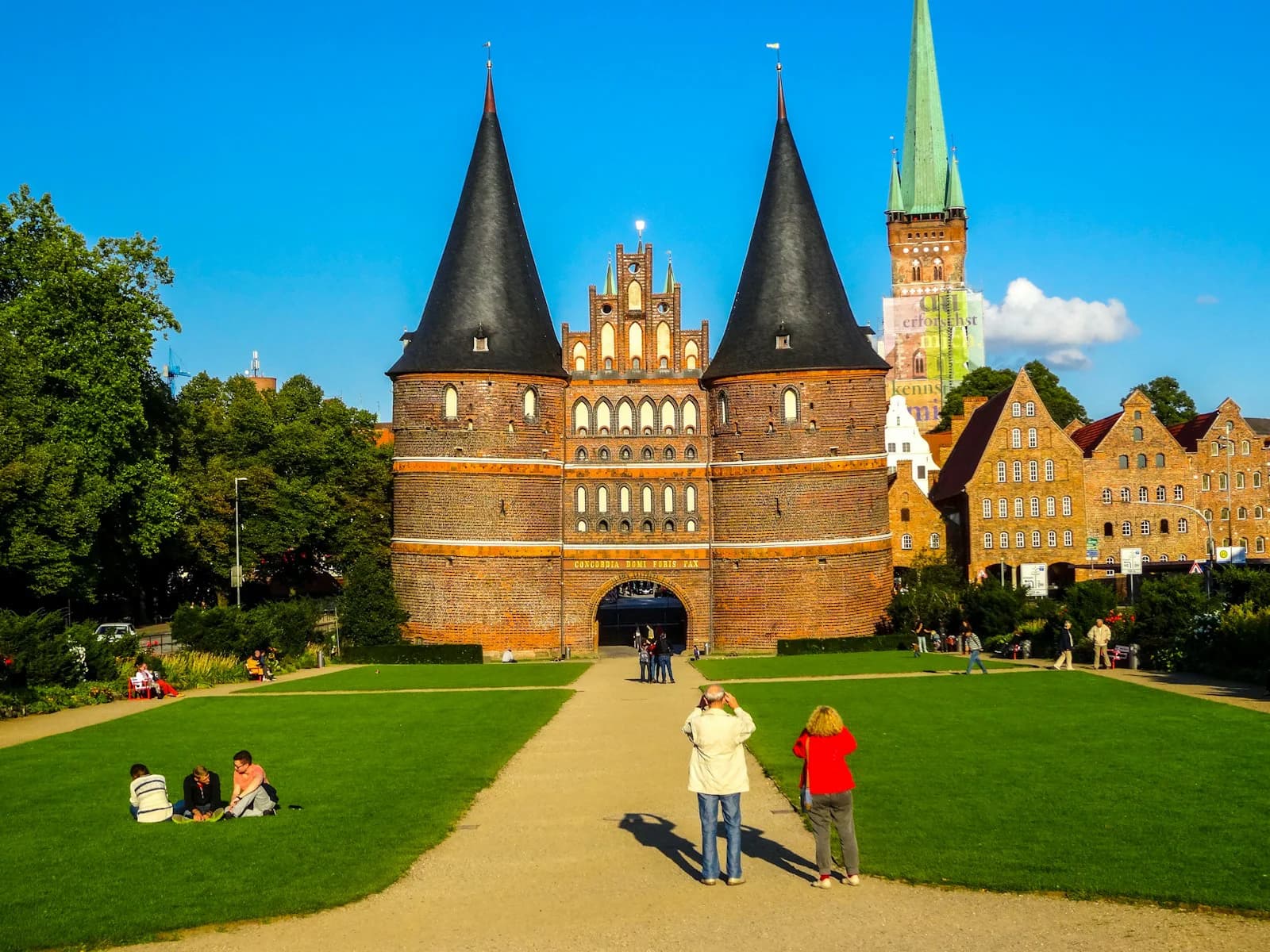
Lübeck is one of those cities where the transport decision is mostly made for you. The UNESCO-listed Altstadt occupies an island between the Trave and the Wakenitz, and it is only about one square kilometre in size, which is why so many visitors simply walk. Most first-time visitors arrive at Lübeck Hauptbahnhof and continue on foot.
That said, three separate decisions remain: the island walking day, a cross-town bus errand when knees, weather or luggage intervene, and the run out to the Baltic resort of Travemünde. Treat each on its own terms rather than assuming one ticket or one mode covers everything.
Two honest caveats shape this guide. Frequencies published in open data feeds change, and fares are volatile, so this page explains what is documented and where to verify the rest on the day you travel.
Arriving at the Main Station and Walking to the Old Town
Lübeck Hauptbahnhof sits at Am Bahnhof 4 and pairs turn-of-the-century architecture with modern facilities, including shops, cafes and supermarkets for a quick bite before you set off. The station is described as accessible, with ramps and spacious elevators, which matters if you are hauling a suitcase. That accessibility statement applies to the station itself, not to the medieval lanes beyond it.
From the station, the Old Town is described as roughly a ten-minute stroll, which makes the train-plus-walk combination the baseline plan for a car-free visit. Keep that estimate in mind backwards too: do not cut it fine before a departure, because ten minutes assumes you know the way and are not dragging luggage over cobbles.
The Old Town Island on Foot: What Compact Really Means
The Altstadt island is only about one square kilometre, which is why so many visitors never touch public transport once they arrive. Most people enter from the west, crossing the Puppenbrücke toward the Holstentor, whether they come from the station, the bus station or one of the larger car parks. Driving into the centre is not advisable, since many streets are narrow and large parts are pedestrian areas. Related guide: Lübeck Salt Storage (Salzspeicher): A Visitor Guide.
The realistic planning decision is therefore about ground covered per half-day, not about whether walking works. One square kilometre sounds small, but it holds a thousand-plus listed buildings, courtyards and church interiors, so a relaxed half-day rarely exhausts even the core. Build in time for sit-down stops rather than treating the island as a checklist.
For a structured first pass through the island, the one day in Lübeck itinerary arranges the major sights into a sequence you can adapt. If you are staying longer or arriving late, a 2 days in Lübeck itinerary spreads the same ground across two lighter days.
Bus Network Basics and Useful Central Stops
Lübeck's city buses are operated as the Stadtverkehr Lübeck network, serving both the centre and outer districts. A documented example is bus route 16, which links the ZOB/Hauptbahnhof with Lübeck Holstentorplatz and continues through stops including Lübeck Krähenstraße, Hüxtertorallee, Lübeck Mühlentor and onward toward Krummesse, Tannenweg. Use the stop sequence as the reliable part and treat timings as something to check fresh.
The same record publishes headway bands that vary widely across the day, from a few minutes at peak times to much longer gaps late at night and on weekends. These figures come from an open feed and can change, so do not build a tight connection around a number printed in an article. Check a live journey planner on the morning you travel.
The city's own mobility pages are the right place to confirm how ticketing and services currently work before you rely on them. Read them for the current rules rather than assuming a scheme described elsewhere still applies.
Which Stop to Use Near the Main Sights
If walking to Marienkirche does not appeal, the nearest documented stop is Lübeck Schusselbuden, served by bus routes 4, 10, 11, 21, 30, 31, 32, 39 and 40, and it sits just around the corner from St Mary's Church. That makes it a sensible fallback in rain or when you are carrying shopping. It is also a useful marker for the geography of the northern Old Town, even if you end up walking anyway.
For orientation across the whole city, the landmark visitor guides collect the major churches, museums and gates in one place, which helps you judge whether a named stop actually shortens your walk. Match the stop to your specific target before committing to a bus leg.
Bike Rental: What to Verify Locally
Cycling looks attractive on paper: the historic centre is flat and small, and the riverside stretches are pleasant. What this guide cannot honestly give you is a named rental operator, a daily rate, a docking system or a booking channel, because no source in our material documents any of that. Treat bike hire as something to sort out on arrival.
When you do ask, ask concrete questions: whether a deposit or identity document is required, whether the bike comes with a lock and lights, and where you are expected to leave it. Helmets and child seats are worth confirming in advance rather than assuming. Local tourist information is the most reliable starting point for current providers.
Day Trip to Travemünde by Train or Bus
Travemünde, Lübeck's Baltic resort, is reachable by train or bus, and one visitor guide describes the trip as about twenty minutes and roughly three euros twenty one way. That fare is an older figure from a travel write-up, so re-check the current price before you rely on it. Plan the return leg before you settle in for a long evening by the water.
What waits at the far end is a proper resort: seafood restaurants along the Trave, a beach promenade facing the Bay of Lübeck, and the Alter Leuchtturm lighthouse housing a maritime museum. The four-masted sailing ship Passat is also open for guided tours. These are reasons to give the trip a full day rather than squeeze it between other plans.
If you want to combine the resort with other excursions around the region, the wider set of day trips from Lübeck helps you see what is realistic in one outing. Compare travel times honestly before stacking two destinations into a single day.
Accessibility, Luggage and Timing Realities
The main station's ramps and elevators are a station-level feature, and that is as far as the documented accessibility information goes. Cobbles, kerbs, thresholds and narrow passages are part of the medieval centre's character, so step-free movement cannot be assumed once you leave the platforms. If mobility is a concern, plan your route around the sights you most want and expect some uneven surfaces.
Luggage changes the arithmetic. A wheeled suitcase on cobblestones is slower than a backpack, so if you arrive early and cannot check in yet, the station's shops and cafes are a reasonable place to pause. Otherwise, consider dropping bags first and walking the island unencumbered.
Timing deserves slack in both directions. Because published frequencies shift by time of day and day of week, and because a missed connection near a train departure is expensive in time, aim to be back near the station earlier than feels strictly necessary.
A Simple Decision Framework and Mistakes to Avoid
Choose walking for the island day, since almost everything worth seeing is inside that square kilometre. Choose a bus when you have a specific cross-town errand, heavy bags or a sudden downpour. Choose the train or bus for Travemünde, and treat the trip as a half-day minimum rather than an add-on.
The classic errors are easy to name. Do not assume a tram or metro exists, do not treat a fare quoted in an old travel article as current, do not cut the station-to-Old-Town walk too fine before a departure, and do not try to drive to a sight inside the narrow, partly pedestrianised centre.
Buy and validate tickets through official channels, and keep a paper or offline copy of your route in case mobile data is patchy in the old lanes. If a stop or service looks unclear, the city's mobility pages remain the place to check rather than a blog post.
Where Transport Fits a Longer Stay
If your visit runs beyond the Old Town, quieter green edges such as the Lübeck parks and gardens are easier to reach with a short bus leg than on foot from the island centre. They suit a slower afternoon when you have already covered the main churches.
Bookending the trip with a look at the landmark visitor guides helps you decide which sights justify their own journey and which cluster together on one walking loop. That ordering, more than any ticket type, determines how much of Lübeck you actually see.
Plan Your Visit
Lübeck works best as a walking city with public transport as backup rather than the main event. Base yourself near the Old Town or the station, walk the island, and keep a bus option in reserve for weather, luggage or tired legs.
For Travemünde, treat the journey as a proper outing and confirm the current fare and timetable through official channels the day before. Frequencies and prices move; the geography does not.
Check the city's mobility pages for current ticket rules, verify any bike hire locally, and allow margin around train departures. With those habits, moving around Lübeck stays simple.
Frequently Asked Questions
Can you walk from Lübeck Hauptbahnhof to the Old Town?
Yes. A visitor description of the station puts the Old Town about a ten-minute walk away, and that station-to-gate stroll is the standard arrival route for people coming by train. The estimate assumes you know the way and are not slowed by heavy luggage on cobbles, so allow a little extra time with bags.
Does Lübeck have a tram or metro?
No tram or metro service appears in the material used for this guide. The city's public transport in these sources is bus-based, with trains for longer journeys such as the run to Travemünde, and regional trains connecting Lübeck with other cities. Check the city's mobility pages for the current network before you plan around a specific mode.
How do you get from Lübeck to Travemünde without a car?
Take the train or a bus. One travel guide describes the journey as roughly twenty minutes with a one-way fare of about three euros twenty, but that is an older figure, so confirm the current price and timetable through official channels before you travel. Plan your return leg in advance, especially if you stay for dinner by the water.
Are there bike rentals in Lübeck for visitors?
The city is flat and compact enough to make cycling appealing, but no operator, rate or docking system is documented in the sources used here, so this guide cannot name one. Ask at local tourist information on arrival, and confirm deposit, lock, lights and return arrangements before you ride. Availability can vary by season.
Which bus stop is closest to Marienkirche?
Lübeck Schusselbuden is the documented stop for St Mary's Church, served by bus routes 4, 10, 11, 21, 30, 31, 32, 39 and 40, and it sits just around the corner from the church. Route numbering and stop details can change, so verify against a live journey planner on the day.
How long does the Old Town take to explore on foot?
The Altstadt island measures only about one square kilometre, but it contains over a thousand listed buildings along with churches, courtyards and museums. A relaxed half-day covers the core without rushing, while a full day lets you add interiors and a riverside pause. Treat any suggested duration as a suggestion, not an official figure.
Sources
- Lübeck Hauptbahnhof, Lubeck, Germany - Reviews, Ratings, Tips and Why You Should Go – Wanderlog
- Transitland • Stadtverkehr Lübeck - 16 • Bus route
- Official event website
- Marienkirche - History and Facts | History Hit
- LUBECK - a guide to Germany's most ravishing city | bye:myself
- Guide to Lubeck - A Culture and culinary experience - Finally Lost


