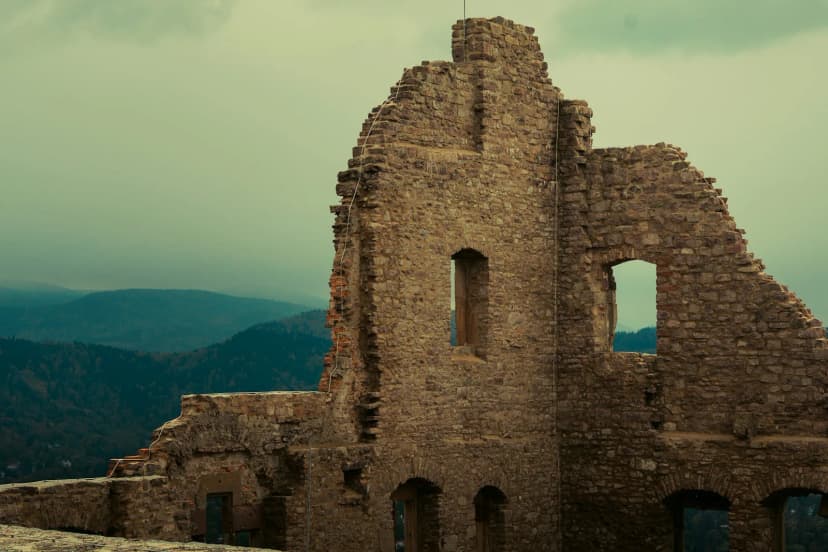
The Merkur is Baden-Baden's local mountain, and the MerkurBergbahn is the funicular that climbs it. Tourism sources call it Germany's longest funicular railway, which makes the ride part of the visit rather than just transport. The most useful planning fact is operational: the operator states that departures run on demand, so you press the departure button at the station or the car leaves automatically, and that place reservations are not possible.
The same operator page lists daily opening hours of 10:00 to 22:00. That window allows a morning ascent, a late-afternoon ride for softer light, or an evening trip, though weather at height can differ from the valley. For a first visit, a suggested duration of about two to three hours covers the ride, the tower platform, a short walk and a drink.
What the Merkur Funicular Is and Where It Starts
The MerkurBergbahn opened on 16 August 1913 and reopened as a fully automatic railway on 27 April 1979, according to the operator's history. A rebuild in 2019 and 2020 added new cars in a historic look and barrier-free access at both stations. The valley station is at Merkuriusberg 2 in Baden-Baden, the address to give a driver or enter into a navigation app.
The operator lists the track as 1,192 meters long, climbing from a valley station at 287 meters above sea level to a summit station at 657 meters, a height difference of 370 meters. Gradients range from 23 percent to a maximum of 58 percent. Those figures explain why walking the same vertical gain takes considerably longer than riding.
How the Ride Works and What to Expect
Two cars operate on the line, each carrying up to 38 people, with 12 seats and 26 standing places. The operator states the maximum speed can reach eight meters per second, and that the system runs automatically, with the passenger triggering departure by pressing a button or the car departing automatically when traffic requires. Place reservations are not possible, so you join the next available departure.
The ride itself is short; one tourism source describes it as taking a little over five minutes. The trade-off is straightforward: you gain almost 370 vertical meters in a few minutes, but you share the car with everyone else making the same trip. For a quieter car, aim for the first departures after opening or later in the evening.
Fares and Ticket Types
The operator publishes a fare table marked as valid from 1 July 2025, with return and single fares for adults and children, group rates from 20 people, annual passes and family cards. Those figures are a dated tariff, not a guaranteed current price, so reconfirm with the operator before you travel. Ticket machines at both stations accept cashless payment, and the valley station kiosk sells tickets when it is open.
The operator states that children under 6 travel free when accompanied by family members but are not carried unaccompanied. The child fare applies from age 6 up to completed age 14. Holders of a severely disabled pass pay the child fare, and if the pass carries the B marker, a companion also travels at that rate. Assistance dogs for severely disabled passengers travel free, while other dogs pay the child fare unless carried in a container.
The summit tower lift is separate from the paid ride: tourism sources describe it as free. One piece of luggage per person travels free, but large or bulky items are excluded. The Merkurstüble restaurant is a separate business, so food and drink are not covered by any funicular ticket.
Getting to the Valley Station and the Combination Ticket
Buses 204 and 205 connect the town center with the valley station, a distance of roughly two kilometers that is also walkable, according to a regional tourism page. A combined bus-and-funicular ticket can be bought from the bus driver, and the operator lists a KVV Citykarte duo option that bundles the bus with the return funicular ride. That combination only pays off if you actually arrive by bus; drivers pay for parking separately, and the operator notes paid parking at the base station is limited.
The operator states that the bus stop in front of the valley station was rebuilt for barrier-free access during the 2019 and 2020 works, both stations now have accessible entrances, and an elevator bridges the height difference at the summit station. That is not a blanket guarantee for every user, so travelers with specific access needs should confirm arrangements with the operator before visiting.
At the Summit: Tower, Restaurant and Picnic Areas
An elevator inside the Merkur tower leads to a 23-meter viewing platform, which tourism sources describe as free and which puts visitors at roughly 700 meters above sea level. Those sources list a panorama that can take in the Baden-Baden basin, the northern Black Forest, the Murg valley and the Rhine plain, with distant views toward the Vosges and Odenwald. Visibility varies with weather, so treat any list of visible landmarks as a possibility rather than a promise.
The Merkurstüble restaurant serves regional dishes and drinks indoors or outside, and the operator states it opens daily from 10:00 to 21:30, closing earlier than the funicular. Nearby are a sunbathing lawn with loungers and seating groups, a barbecue area, and a playground with a giant slide. A launch site for paragliders sits next to the summit station; flights depend on operators and conditions, so arrange those separately.
Hiking Up, Down or Around the Merkur
A marked path runs alongside the railway route for walkers climbing from the valley, and the second stage of the Panoramaweg Baden-Baden starts at the Merkur valley station, according to a Black Forest tourism page. Longer loops in that source link the Merkur with the Battert rock formations, Hohenbaden Castle and Ebersteinburg, so you can ride up and walk down or the reverse. Distances and difficulty vary by route, so check the specific trail description before setting out.
The decision between riding both ways and hiking one direction comes down to time and knees. A single fare lets you save the ascent and walk down, or walk up and save your legs for the descent. If you are combining the Merkur with other Baden-Baden sights the same day, riding both ways frees up the hours you would otherwise spend on the trail.
Best Time to Go
Midday brings the clearest light for long views but also the busiest cars, while late afternoon and early evening soften the light and thin the crowds. Since service is stated to run until 22:00, an evening ascent fits within the published hours, though check the weather at height first. Wind and cloud can change the summit experience entirely, and a cloudy valley does not always mean a cloudy summit.
Weekends and school holidays bring more walkers to the trails and more passengers to the cars. If your priority is a quiet ride and an uncrowded viewing platform, a weekday morning shortly after opening is the safer bet. If your priority is photography, the hour before sunset is usually the better trade-off.
A Suggested Half-Day Plan
This is a suggestion, not an official itinerary. Arrive at the valley station, buy your ticket, ride up, then walk the summit area and take the tower lift for the panorama. Eat at the Merkurstüble or use the picnic and barbecue areas, then either ride down or walk one of the connecting trails.
If you want to pair the Merkur with the town's spa culture, a morning on the mountain and an afternoon at the thermal baths works well. Booking your Caracalla Spa Baden-Baden tickets or Friedrichsbad Baden-Baden tickets for a fixed slot gives the day a shape. A Kurhaus Baden-Baden casino tour can fill an evening if you prefer to stay in town after descending.
Practical Mistakes to Avoid
Do not assume a fixed departure timetable. The operator states the system runs on demand and automatically, so you press the button or board when the car is ready. Do not assume the valley station kiosk is always open, because the operator describes it as only periodically open; ticket machines at both stations are the reliable fallback. Do not bring large luggage, which is excluded from carriage.
Do not budget from an old fare list. The published tariff is marked as valid from 1 July 2025, and prices for a later trip should be reconfirmed with the operator or at the ticket machine on arrival. Do not ignore the weather at height, and do not expect the restaurant to stay open as late as the funicular, since its stated closing time is earlier.
Plan Your Visit
The Merkur funicular is one of the simplest big-payoff outings in Baden-Baden: a short, steep ride, a free tower lift, and a choice of walking back down or continuing along the Panoramaweg. The operational quirk to remember is that departures are on demand within the stated daily window, so you do not need to plan around a timetable.
Check the operator page for current fares, because the published table carries a specific validity date and should not be treated as a permanent price. For more ideas on how the Merkur fits with the rest of the town, see Baden-Baden city guides and itineraries. Build in flexibility for weather at the summit, and the day will reward you.
Frequently Asked Questions
Do I need to book the Merkurbergbahn in advance?
No. The operator states that place reservations are not possible. Departures run automatically and on request: you press the departure button at the station or board when the car is ready. Tickets are sold at machines at both stations and at the valley station kiosk during its opening times.
How long does the funicular ride take, and how long should I allow at the top?
A regional tourism source describes the ride as taking a little over five minutes, but the operator does not publish an official journey time. For the summit, a suggested duration of about two to three hours covers the tower platform, a walk around the lawns and a drink, and longer if you plan to eat or hike onward.
Can I hike up and ride down, or ride up and hike down?
Yes. Tourism sources note a marked path along the railway route and describe the second stage of the Panoramaweg Baden-Baden as starting at the Merkur valley station. Longer loops connect the Merkur with the Battert rocks, Hohenbaden Castle and Ebersteinburg. Difficulty and duration vary by route, so check the specific trail description and choose a direction that matches your time and fitness.
Is the funicular barrier-free?
The operator states that the stations have barrier-free access, that a ramp serves the valley platform, and that an elevator bridges the height difference at the summit station. The valley bus stop was also rebuilt for accessibility. Because needs vary, confirm specific requirements with the operator before you visit rather than assuming every part of the journey is step-free.
Is a combined bus and funicular ticket worth it?
It can be, if you are arriving by bus. A regional tourism source lists buses 204 and 205 between the town center and the valley station, and says a combined bus-and-funicular ticket is available from the driver. The operator also lists a KVV Citykarte duo option for the bus plus a return ride. If you arrive by car, the combination does not apply and parking is limited and paid.