Baden-Baden packs an unusual amount of golden-hour potential into a small valley. Wooded slopes rise on both sides of the town centre, so a 668-metre summit panorama and a flat riverside promenade sit only a short ride apart. That compactness is the real advantage: you can choose an elevated view or an easy in-town stroll without committing a whole day to either.
The catch is that light here is seasonal and weather-dependent rather than fixed. A west-facing summit, a tree-lined avenue and north-facing castle ruins all behave differently as the sun drops, and the ruin site can close in ice, snow or storms. Treat any specific clock time as something to confirm locally on the day rather than a number to plan around weeks ahead.
This guide sorts the options by what they actually are: free open-air ground, paid indoor stops, and evening venues that keep running after dark. It also gives two route shapes, one entirely in town and one combining hill and valley, so you can pick deliberately instead of defaulting to the busiest spot.
Why Baden-Baden Works Well at Golden Hour
The town occupies a valley floor with hills close enough to reach before the light goes. Merkur Mountain rises to 668 metres and the Merkurbergbahn, described as Germany's longest funicular, climbs it, so the transition from street level to a wide panorama is short. From the top, the published description lists views over Baden-Baden itself, the highest peaks of the northern Black Forest, the Murg Valley and, further out, the Upper Rhine Plain and the Vosges.
Not every good sunset view requires altitude. Lichtentaler Allee runs along the Oos as a long, level park avenue, which makes it the obvious choice for anyone who wants warm light on trees, bridges and hotel facades without a climb. Because it is open ground rather than a ticketed attraction, you can walk it at whatever hour suits you and simply turn back when the colour fades.
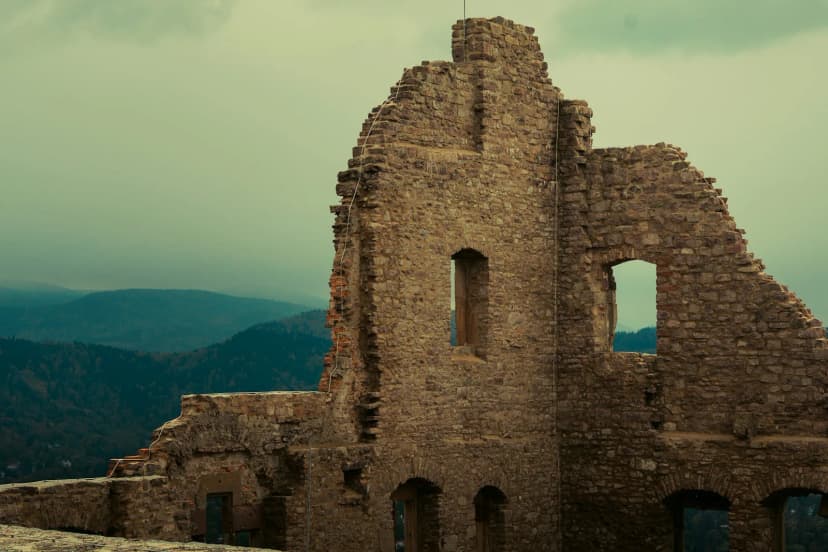
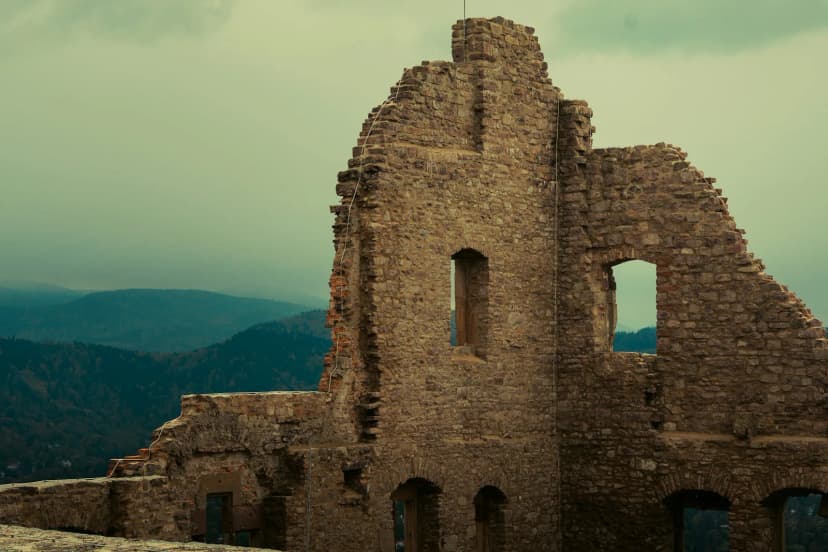
The third option sits at the opposite end of the day's rhythm. Hohenbaden Old Castle, the Altes Schloss, stands north of town above the valley and gives a ruined-architecture frame rather than a clean horizon. The operator states the castle is open to the public during daylight hours with free entry, which makes it a daylight proposition rather than a true after-dark one.
Merkur Mountain: The Strongest Elevated Option
Merkur is the headline sunset spot because the sightlines open up in almost every direction, including west toward the Rhine plain. The funicular runs from a valley station at Merkuriusberg 2, and the operator notes you decide when the ride starts by pressing a departure button rather than waiting for a fixed timetable slot. That flexibility matters at golden hour, when twenty minutes of delay can change the whole view.
Walking up is a genuine alternative, not a fallback. Signposted and, by the operator's description, safe hiking trails lead to the summit for anyone prepared for the climb, and marked walking routes, viewpoints, a game reserve and a Kneipp facility sit around the mountain. If you hike up for sunset, plan your descent while there is still usable light, since trails through woodland darken faster than the open sky suggests.
Once at the top, the reward is more than the view. A summit restaurant, the Merkurstüble, a sunbathing lawn and a barbecue area are all listed, along with a paraglider launch site. These facilities make an early arrival comfortable rather than a waiting game: you can eat, sit on the grass and let the light come to you instead of standing at a railing for an hour.
Practical Merkur Logistics: Funicular, Bus and Ticket Scope
The valley station sits roughly two kilometres from the town centre, which is walkable but adds distance to an already active evening. Buses on lines 204 and 205 and the white CityBahn cover the stretch, so you can save your legs for the summit or the descent. The operator also suggests buying a combined bus and Merkurbergbahn ticket from the bus driver, noting it can work out cheaper than buying separately. Fares and running times change, so confirm the current arrangement with the operator before you rely on it.
One honest caveat shapes the whole plan: the funicular is a transport service with operating hours, and those hours are not the same as daylight. If the last ascent or descent falls before your ideal light, the walk becomes your only option, or the trip becomes a daytime one. Check the operator's current schedule for your date rather than assuming a late-evening service in every season.
Weather exposure is the second variable. A 668-metre summit catches wind and cloud that the sheltered valley floor never feels, and low cloud can erase the very view you climbed for. Pack a layer even on a mild afternoon, and treat a clear forecast for the town as only a rough guide to conditions at the top.
Lichtentaler Allee: A Free In-Town Golden Hour
Lichtentaler Allee began as a track linking the town with the Lichtental monastery, and the description of its planting points to a seventeenth-century origin, which is why it now carries the character of an old established avenue rather than a municipal park. It runs along the little river Oos, with ornate bridges, mature trees, grand hotels and elegant mansions lining the route. Because it is open ground, there is no gate, no ticket and no closing time to work around.
The seasonal character changes what you actually see. Spring brings crocuses, daffodils and wild tulips, early summer adds red and purple rhododendrons, autumn turns the leaves through yellow to dark red, and winter leaves hoarfrost on the monastery meadow. If your trip is built around colour, the avenue rewards repeat walks at different times of year far more than a single fixed viewpoint would.
The avenue also anchors the town's evening geography. Museum Frieder Burda, designed by Richard Meier, opened beside it in 2004, and the museum's own published opening hours are Tuesday to Sunday, 10am to 6pm, so it is a daytime stop rather than a sunset one. Knowing that distinction saves a wasted detour: the park is the sunset venue, the museum is the afternoon one.
Hohenbaden Old Castle: Free Ruins With a Daylight Clock
Hohenbaden, also called the Altes Schloss, sits north of Baden-Baden in the direction of Ebersteinburg, with parking available below the ruins. Entry is free, so the only cost of getting this wrong is the trip itself. The operator's visitor information is unusually direct about the trade-off: the castle is open during daylight hours, which means a sunset visit is really an end-of-daylight visit.
This is the spot with the highest cancellation risk. The same visitor information states the site may be partially or fully closed in the event of ice, snow, thunderstorms or severe weather warnings. In winter and shoulder seasons, treat a castle sunset as a plan B until you have confirmed conditions, and keep the Lichtentaler Allee option in reserve for the same evening.
Ground conditions deserve their own thought. Ruins mean uneven surfaces, steps and unlit corners, and the operator directs accessibility questions to a separate disability access page rather than making a blanket promise. If you have mobility concerns, read that page and decide before you set out, because the practical answer depends on the individual route through the site.
Paid Indoor Stops: Roman Bath Ruins, Friedrichsbad and the Casino
Beneath the Römerplatz, the Roman Bath Ruins present roughly two thousand years of bathing history at close range, with a multilingual audio guide and a short computer-animated film for visitors who prefer to move at their own pace. Entry is through the Steinstraße or the Friedrichsbad underground car park, and it is a compact underground museum rather than an open-air viewpoint. Because ticket prices and opening hours change, check current details with the operator before you go rather than relying on older listings.
The Friedrichsbad is a bathing house, not a sunset terrace, and it should be planned as an after-dark activity in its own right. Its published schedule is daily from 9am to 10pm, with last admission three hours before closing, and it closes on 24 and 25 December while opening shorter hours on 31 December and from 11am on 1 January. Tradition governs dress on most days, with swimwear required only on Wednesday and Saturday, and admission is from age 14 with under-18s accompanied by an adult.
The Casino Baden-Baden, inside the Kurhaus, is the late-evening close to a golden-hour route. Its own opening-hours page lists classical roulette from 3pm daily and until 2am or 3am depending on the night, with slot machines running from 11am, and it also publishes closure days rather than implying year-round daily operation. Classic game admission is charged per person and slot machines are currently free of charge, though both the schedule and the fees can change, so confirm them directly before building an evening around them.
Timing the Light Without Guessing
Sunset in a valley town shifts noticeably across the year, and cloud, haze and the height of the surrounding hills all pull the usable light earlier than a flat-horizon chart suggests. Rather than memorising a fixed time, look up the current local sunset for your date on the day and subtract a comfortable buffer for travel. On the Merkur, that buffer includes the ride or climb; at Hohenbaden, it includes the walk from parking.
Direction matters as much as time. Merkur's published panorama faces out across the town, the Murg Valley and toward the Rhine plain and Vosges, giving genuinely open western sightlines. Lichtentaler Allee is enclosed by mature trees, so the light arrives filtered and dappled rather than as a wide horizon. At Hohenbaden you are looking over the town from ruins, which frames the view but also means the daylight-hours rule bites first.
A practical sequence for a single evening: start on Lichtentaler Allee while the light is still soft, walk toward the Kurhaus and Trinkhalle as the facades begin to pick up colour, then continue indoors to a bathing house or the casino. That ordering keeps you in the park for the best natural light and treats the indoor venues as the post-sunset chapter, which is what their own published hours support.
Access, Comfort and Low-Light Photography
The main trade-off is walking versus riding. Riding the funicular to the Merkur summit removes the climb but ties you to a service schedule; walking removes the schedule but adds elevation and descent in fading light. In town, the choice disappears entirely, because the avenue is level and open at any hour. Match the option to the least mobile person in your group rather than to the best view on paper.
What you carry shapes how long you stay out. Wind and cloud at 668 metres feel nothing like the sheltered valley, so a layer, a small torch for the descent and water cover most eventualities. At the ruins, footwear with grip matters more than warmth, because uneven stone and steps in low light are the real hazard.
For photographs, a steady surface beats guesswork. A tripod or any firm ledge helps with the long exposures that low light demands, and the fountains and illuminated facades along the promenade and around the spa quarter give reflections that add depth to night compositions. Arriving before the light peaks and staying twenty minutes past it usually produces better frames than chasing the exact moment.
Two Sunset Routes for Different Travellers
The in-town route suits families, anyone with limited mobility and travellers on a short stay. Walk or ride to Lichtentaler Allee roughly an hour before the light softens, follow the Oos past the bridges and lawns, then continue toward the Kurhaus and Trinkhalle as the facades warm up. A suggested duration of two to two and a half hours covers the stroll, a pause for photographs and the walk back into the centre.
The hill-and-valley route suits walkers and photographers who want the wide panorama. Take bus line 204 or 205 or the CityBahn to the Merkur valley station, ride or hike to the summit, and settle at the restaurant or on the sunbathing lawn with time to spare. Allow three to four hours in total if you ride both ways, and longer if you walk down, since the descent through woodland takes more care once the light has gone.
Choose by what you want from the evening rather than by reputation. If the goal is a broad, open horizon over the Black Forest and the Rhine plain, Merkur is the answer and the logistics are the price. If the goal is an unhurried walk with warm light on trees and old buildings, the avenue delivers it with no ticket, no timetable and no weather closure to check.
Whichever you pick, verify the two things that change: transport running times and any weather-related closure at the ruin site. Those are the only variables capable of turning a good plan into a wasted evening, and both are published by the operators rather than being guessable in advance.
Plan Your Visit
Baden-Baden's sunset appeal comes from proximity: a summit panorama, a free riverside avenue and a cluster of evening venues all sit within a short distance of each other. That means you rarely have to choose between a view and a comfortable evening, only between two different kinds of view.
Decide first whether you want elevation or ease, then confirm the practical details that actually change: current transport running times, any weather-related closure at Hohenbaden, and the opening hours and admission terms published by the venues you plan to finish your evening in. Building the plan around those facts rather than a fixed clock time is what makes a golden-hour visit work. For related planning, see Baden-Baden: Itineraries and City Travel Guides. For related planning, see Baden-Baden: Landmark Visitor Guides.
Frequently Asked Questions
What time is sunset in Baden-Baden, and how much does it shift between summer and winter?
Sunset shifts considerably across the year, and in a valley ringed by wooded hills the usable light fades earlier than an open-horizon chart suggests. Cloud, haze and the height of the surrounding slopes all affect how much colour you actually see. Rather than relying on a fixed time, check the current local sunset for your specific date shortly before you travel, and arrive with a buffer for walking or riding to your chosen spot.
Are the Merkur summit and Hohenbaden Old Castle open at sunset?
These are two different situations. Hohenbaden Old Castle is open during daylight hours with free entry, and the operator states the site may be partially or fully closed in ice, snow, thunderstorms or severe weather warnings, so an evening visit there is really a late-daylight visit and can be cancelled by conditions. Merkur's summit is open ground, but the funicular is a transport service with its own operating hours, so whether you can be up there at sunset depends on the current schedule, which the operator publishes. Check both before you commit.
Is Lichtentaler Allee free to walk at any time of day?
Yes. Lichtentaler Allee is an open riverside park avenue rather than a ticketed attraction, so there is no entry fee and no gate closing it. That makes it the most flexible option in town for late light, and a sensible fallback when hilltop conditions look uncertain. The adjacent Museum Frieder Burda keeps separate published opening hours of Tuesday to Sunday, 10am to 6pm, so it is a daytime stop and not part of an evening walk.
Do I need to pay to visit the Roman Bath Ruins, and can I visit in the evening?
The Roman Bath Ruins are a paid underground museum beneath the Römerplatz, reached via the Steinstraße or the Friedrichsbad underground car park, with an audio guide and a short animated film. Because ticket prices and opening hours change, confirm both with the operator before your visit rather than relying on older listings. Treat it as a daytime or early-evening indoor stop, not a sunset viewpoint.
What can I do in Baden-Baden after the sun goes down?
The Friedrichsbad publishes daily bathing hours from 9am to 10pm with last admission three hours before closing. The Casino Baden-Baden lists classical roulette from 3pm into the early hours depending on the night, with published closure days, and charges admission for classic game while slot machines are currently free of charge. Both sets of details can change, so check the operators' own pages for your date.
Sources
- Merkur Mountain and Merkur Funicular Railway | Black Forest
- Lichtentaler Allee | Black Forest
- Visitor information
- BADEN-BADEN BY NIGHT: ELEGANCE THAT GLOWS AFTER DARK 🇩🇪 | Trip.com Baden-Baden
- Opening Hours and admission fees
- Opening hours & prices » Friedrichsbad
- Museums Informationen - Museum Frieder Burda