
Baden-Baden is a compact spa town on the western edge of the Black Forest, where a riverside avenue, elegant colonnades and wooded hillsides sit within minutes of one another. That compression is the photographer's advantage: you can move between garden detail, street architecture and elevated valley views without long transfers. The town has drawn visitors for its thermal springs and grand nineteenth-century architecture rather than for any single monumental sight. Itineraries in the city link the baths, the Lichtentaler Allee park along the Oos River, the Frieder Burda art museum and the ornate casino quarter into a walkable circuit, which is exactly the geography a photographer should exploit.
Treat the town as several distinct lighting problems rather than one location. In the valley you are working with tree-filtered light, reflective water and pale stone facades; on the surrounding hills you are dealing with distance, haze and weather exposure. The practical entry point for most photographers is Lichtentaler Allee, a park promenade running for several kilometres along the Oos, lined with old trees, flower beds and bridges. Because it is linear, your direction of travel decides whether you shoot into the sun or with it at your back.
One concrete planning detail helps set expectations before you decide how long to stay. A widely used two-day Baden-Baden itinerary groups the first day around central attractions such as the Caracalla Spa, the Festspielhaus, the Trinkhalle, the Kurhaus and the casino quarter, and spreads them across roughly eight hours of walking, which shows how densely packed the centre really is. Use that as a scale for your own route rather than a schedule to copy. For a photo-focused visit, plan around light windows, not opening hours.
Reading the Seasons Before You Pack
Spring and autumn are described as the strongest seasons for walking and sightseeing in Baden-Baden, while summer suits nature outings and winter pairs with thermal bathing and seasonal markets. For photography, that translates into two different problems. Spring and summer give you long days and abundant greenery, but midday contrast in a wooded valley can be harsh and flat. Autumn narrows the light window and adds colour to the tree canopy, while winter shortens usable daylight but gives low, soft light for much of the day.
The town's own seasonal pattern is clearest along the riverside parks. Older travel writing about Lichtentaler Allee notes that both spring and autumn are spectacular there, with spring bringing a profusion of colour and autumn producing yellows, oranges, reds and russets, while winter has its own, quieter character. That description dates from a 2016 guide and should be read as background rather than a current forecast. The seasonal mechanics still hold: deciduous avenues change personality completely between April and November.
Summer brings the practical nuisance of crowds in the pedestrian centre and along the avenue, so early mornings are worth the effort. Winter rewards you with long shadows and fewer people, but also with bare branches that expose architecture you would otherwise half-see through leaves. Before you commit to a date, check current conditions and any seasonal closures with the town's own tourist information rather than relying on old articles.
Lichtentaler Allee and the Oos Corridor
Lichtentaler Allee is best understood as a corridor, not a single viewpoint. It runs along the Oos, a modest river rather than a broad one, so the water is usually a reflective ribbon between stone banks, benches and planted beds rather than a dominant foreground. The promenade is well shaded, which softens light but also flattens it; the bridges and openings along the route are where you get separation between subject and background. Travelling one direction in the morning and back the other in the afternoon gives you two entirely different light directions on the same material.
After rain, treat the surface itself as a subject. Wet paving and puddles give you a low, mirrored version of facades and trees that works well when you get close to the ground, and the diffused light under cloud removes the hard contrast that makes paved promenades look busy. Benches, railings and fence lines are reliable leading lines into the frame. Keep to the paths while you work, because this is a public park used by walkers, joggers and cyclists rather than a photo location.
Garden Detail: Gönneranlage and the Rose Garden
The Gönneranlage is an English-style garden with flowers, statues, water features and clipped hedge arches, and the Lichtentaler Allee corridor passes the rose garden area as part of its planted landscape. Both are close-focus landscapes rather than vista landscapes, which means your usual wide framing wastes them. A hedge arch, a single rose head against dark foliage, a fountain edge with a seated figure in the far background, or a statue framed through a gap in planting will all say more than another panorama of trees.
The Rose Society Garden, also known as the New Rose Garden, is a terraced garden with rose arches over the paths and meadows of blooms, and it also offers wider views across the valley. It is reached from the centre by a short walk and has parking nearby. Bloom depends entirely on the season and the year's weather, so if roses are the point of your visit, confirm the current state of the beds with the town's tourist information before travelling, rather than assuming a flowering window.
Kurhaus, Trinkhalle and the Casino Quarter
The colonnaded architecture around the Kurhaus and Trinkhalle is the easiest place in town to make clean, graphic photographs. The Trinkhalle is a nineteenth-century hall with Corinthian columns and a series of murals, and the Kurhaus is a neoclassical building that has anchored the town's social life since the eighteenth century, with the casino housed inside it. The facade, colonnade and the space under the arcades are the free, outdoor part of this quarter; what lies behind the doors is a separate, ticketed or guided experience with its own rules. Do not assume one ticket or one permission covers the whole complex.
Photographing the casino interior is not something to improvise. The building is described as an ornate belle epoque hall with gilded walls, chandeliers and gambling rooms on the one hand, and as a historic destination offering guided tours and operating a dress code on the other. Dress code and tour arrangements change, so check directly with the casino before you plan an interior shoot, and expect that photographing guests at tables or in gaming rooms is not appropriate. Exterior work along the colonnade and Kaiserallee can be done at any hour without those constraints.
Hohenbaden Castle Ruins: Free Grounds, Real Weather
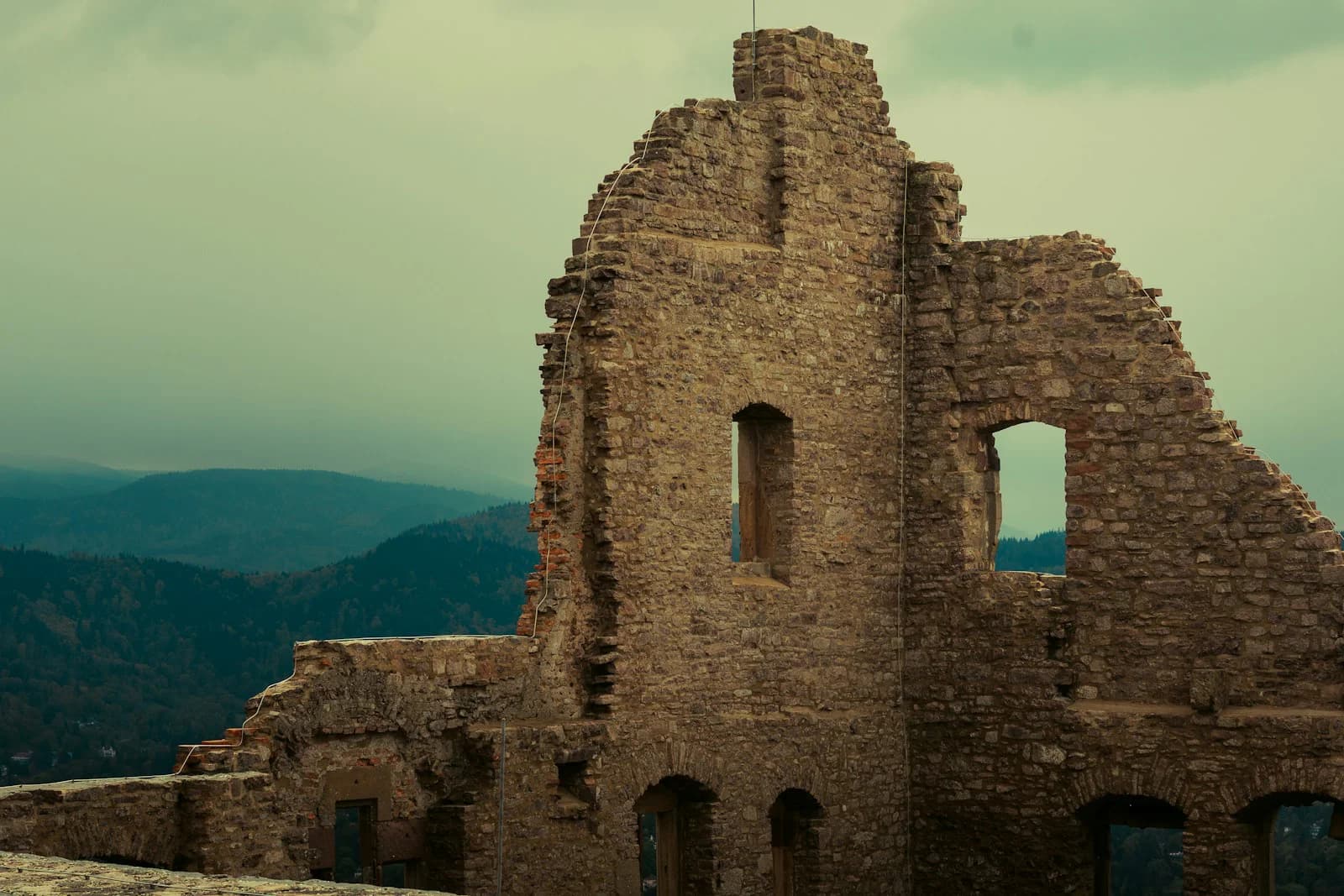
The Altes Schloss zu Hohenbaden sits on a hill above town with panoramic views over Baden-Baden and the surrounding Black Forest, and the site is widely described as free to enter, with the tower walls climbable for an even wider outlook. Reach it on foot or by car, but note that the onsite car park is small. Because the ruin is exposed, weather and footing decide the shoot far more than your lens choice: after rain the paths and stonework are slippery, and the elevation means wind and fast-moving cloud.
The trade-off is straightforward. Climbing gets you layered views of town against the Black Forest ridges, but you lose the intimate garden and architectural detail that makes the valley photograph well. The Battert nature reserve around the castle grounds includes several observation points, so you can vary your elevation without returning to town. Treat old stonework as fragile: walk on established paths, don't climb on loose fabric or walls that look unstable, and step aside when others want to pass.
Check access conditions and any restoration work before you go, since ruin sites occasionally close sections temporarily. Older itinerary pages list the castle as a day-two stop reached in the morning, which is a reasonable pattern if you want softer light on the valley below. Those pages are planning references, not statements about current opening arrangements, so verify locally.
Viewpoints and Elevation: Wide Versus Detail
Baden-Baden's signature photographic problem is layering: pale stone town, dark forest ridges, and a valley floor that fills with haze as the day warms. Wide frames at elevation compress those layers well when the air is clear, but on hazy days a tight frame on a single ridge, tower or roof cluster usually reads better. The Merkur is the town's local mountain, reached by a funicular that climbs steeply to panoramic views over the town, the Rhine Valley and the Black Forest, with paths and a restaurant at the top. Funicular characteristics, operating periods and fares change between seasons, so confirm them with the operator before you build a day around it.
At elevation, haze is your biggest technical adversary, not sharpness. Shoot the distant ridges early when the air is still, then switch to tighter framing as the haze builds; a ridgeline with the town far below often works better as a compressed sliver than as a broad panorama. Bring a cloth for condensation if you climb in colder months, and expect the wind at the top to be noticeably stronger than in town. For a lower-effort alternative, the terrace edges around the Rose Garden give you valley views from within the town.
Night Photography in the Spa Town
After dark, Baden-Baden turns into a sequence of lit facades, glowing fountains and reflective promenades. A published night guide suggests a simple route of sunset along Lichtentaler Allee, an evening walk to the Kurhaus, then a casino visit or spa time, with a nightcap to finish, and it specifically recommends stabilisation and capturing reflections from fountains and illuminated buildings. The same guide highlights Lichtentaler Allee, the Kurhaus and casino, the Trinkhalle and the spa's evening ambience as the main lit subjects. Treat the itinerary as one possible sequence rather than a fixed route.
Stabilisation is the real constraint, and it is a problem you solve with surfaces as often as with equipment. Benches, parapets, bridge rails and fountain edges are all usable supports; a small cloth or glove under the camera prevents slip and absorbs vibration. If you are working without a tripod, brace your elbows against a solid edge and shoot a burst, then pick the sharpest frame. Water and glass are the two surfaces that punish camera movement most, so shoot them first while your hands are steady.
Rules about tripods, drones and commercial shooting are location-specific and change, and the town's published visitor information is the place to confirm them rather than a travel blog. Politely move on if a shopfront, hotel entrance or spa doorway is clearly private or in use. Avoid lighting up residential windows or working directly outside dining terraces, and keep your setup off narrow footpaths at peak evening hours.
Ethics, Privacy and Low-Impact Practice
Baden-Baden is a working town with spa guests, diners, worshippers and residents, and the polite rule is simple: photograph places and textures, ask before photographing people. Bathing areas, treatment rooms and changing spaces are off limits, and so are interiors where guests have a reasonable expectation of privacy. If you want interior architecture, use the organised tours offered by the relevant venue and follow its rules rather than photographing around them.
Church interiors deserve particular care. The Stiftskirche is described as a late-Gothic building in earth tones with arched windows, pillars, carvings, a carved crucifix and the graves of fourteen of Baden's margraves, which makes it an appealing low-light subject. It is also an active place of worship with an ongoing musical life, including a church choir founded in 1884 that sings at services and feast days. If a service or rehearsal is running, don't photograph; return later or ask the parish office.
Practical low-impact habits matter as much as permissions. Don't stand in the middle of a promenade to compose a shot, don't block bridges or doorways, and don't move or rearrange planting for a cleaner frame. Keep off fragile ruin fabric and out of fenced restoration areas, and leave no litter. If you are shooting commercially rather than personally, verify requirements with the relevant venue or the town's tourist information first.
Weather Fallbacks and Editing for the Local Palette
Grey days are not lost days in this town. Arcades, colonnades, museum foyers and the covered walkway beside the Trinkhalle give you even, soft light for architectural detail; the arcade under the Kurhaus colonnade is the classic example. Interiors such as the Frieder Burda museum and the Staatliche Kunsthalle give you weatherproof options with their own photography rules, which are worth checking at the desk before you unpack a camera. Since these venues operate independently, verify what photography is permitted rather than assuming a shared policy.
The town's palette leans cool: pale stone, grey-green water, dark conifers and shaded greens. That means warm-tinted edits can drift toward a postcard look unless you hold white balance steady and resist over-saturating greens. A useful editing discipline for this material is to lift mid-tone contrast slightly, keep highlights restrained on light stone so texture survives, and treat black-and-white as a genuine option for colonnades, ruin stonework and rainy promenade reflections. If you want a comparison point for this kind of public-viewpoint, architecture-led approach, the Dresden photography guide covers similar decisions in a different European cityscape.
Before any trip, confirm your assumptions rather than trusting a fixed plan. Opening arrangements for museums, the casino, the baths and the funicular all change seasonally, and photography policies differ from venue to venue. Check the operator's own page or the town's tourist information for the specific place you plan to shoot. A short walk in the centre can also be built around the one day itinerary if your time is tight.
Suggested Durations for a Photo-Focused Visit
These are editorial suggestions for pacing, not official recommendations, and they assume you are working deliberately rather than ticking off sights. A half day covers either the Lichtentaler Allee corridor end to end with garden detail, or a single elevated session at the castle or the Merkur with a short town walk. A full day lets you do both: avenue and gardens in one light direction, then architecture and colonnades, then an evening pass at the lit facades and reflections. A two-day visit adds a second elevated session in different weather, an interior venue or two, and time to revisit whatever the light defeated on day one.
If you prefer a structured framework, independent travel advice suggests that most visitors need one to two days in Baden-Baden to cover the highlights, with more time added for spa visits or hiking. A popular two-day itinerary spreads the central sights across roughly eight hours per day of walking between stops. Both figures are planning benchmarks rather than rules, and neither accounts for waiting on light. Build slack into whatever duration you choose.
Plan Your Visit Around Light
The most useful thing you can do for a Baden-Baden photography trip is to decide what the light is for before you decide where to stand. Valley days suit gardens, water and colonnades; clear high-pressure days suit elevation and layered ridges; wet days suit arcades, interiors and reflection work on the promenade. Because the centre is walkable and most landmarks sit close together, you can reshuffle the order of a day without losing much time.
Check current arrangements for anything you plan to enter, and treat free outdoor grounds and paid interiors as separate decisions with separate rules. The city surfaces are worth reading before you travel: the main Baden-Baden: Itineraries and City Travel Guides page covers the wider city, while the Baden-Baden: Landmark Visitor Guides hub breaks individual sights down one by one. Keep your footprint small, ask before photographing people, and let the town's own pace set the schedule.
Frequently Asked Questions
What is the best time of year to photograph Baden-Baden?
There is no single best season, because each one changes what the town gives you. Spring and summer offer long days, blossom and dense greenery, but also crowds and flatter midday contrast in a wooded valley. Autumn is the strongest season for colour along the tree-lined promenade and gardens, while winter shortens usable daylight yet provides long, soft light and fewer people in the frame. Check current conditions and seasonal arrangements with the town's tourist information before committing to dates.
Where can you photograph Baden-Baden from above without a long hike?
The easiest elevated options are the hill above town at the Hohenbaden castle ruins and the Merkur, which is reached by a steep funicular to panoramic views over the town, the Rhine Valley and the Black Forest. Both involve some walking once you arrive, and the castle's onsite car park is small. Funicular operating details and castle access can change, so confirm with the operator or the town's tourist information before you travel.
Can you photograph inside Baden-Baden's spas and casino?
Do not assume you can. Spa bathing and treatment areas are private spaces, and the casino operates a dress code and runs guided tours, which suggests interior visits are managed rather than free-form. Photography policies differ from venue to venue and can change, so ask the specific venue directly before your visit. Exterior work around the colonnades, Trinkhalle and the streets of the casino quarter can be done freely from public ground.
Is Hohenbaden Castle free to visit and photograph?
The castle ruins are widely described as free to enter, with the tower walls climbable for wider views over the town and surrounding forest. As with any historic site, access to individual sections can be restricted during restoration or in poor weather, so verify before you go. Treat the stonework as fragile, stay on established paths, and avoid climbing on loose fabric or unstable walls.
Are tripods allowed at Baden-Baden viewpoints?
Rules about tripods, drones and commercial photography are location-specific and not stated consistently in publicly available visitor information. Rather than assuming, check with the relevant venue, operator or the town's tourist information for the exact place you plan to shoot. In practice, many night shots can be made with a steady surface such as a parapet, bench or bridge rail, which avoids the question entirely.
How long do you need for a photography-focused visit to Baden-Baden?
As an editorial suggestion rather than an official recommendation, a half day is enough for either the riverside avenue and gardens or one elevated session, and a full day allows both plus an evening pass at lit facades and reflections. Two days add a second session in different weather plus an interior venue or two. Independent travel advice typically suggests one to two days for the town's highlights, so treat that as a baseline and extend it if you plan to wait for specific light.


