A photography walk in Dresden quickly splits into two circuits that do not comfortably fit one unhurried afternoon: the compact Baroque old town on the left bank, and the Elbe valley with the Loschwitz slopes and their mountain railways. The Loschwitzer Brücke, known as the Blaues Wunder, has linked the villa districts of Loschwitz and Blasewitz since 1893 and crosses the river without piers, with a steel truss about 280 metres long; the city also publishes autumn revision closures for the two mountain railways, so a Loschwitz day can be reordered at short notice. Pick one circuit and shoot it properly rather than collecting postcard subjects across the whole city.
Everything in this guide sits in public space: bridges, terraces, riverside paths and squares. Paid interiors, church towers and museum halls are deliberately left out, because interior photography rules vary by institution and are not something a walking plan can assume. Treat courtyard access, museum entry and any current renovation work as three separate questions to check with each operator.
First Decision: Old Town or Elbe Valley
The old-town circuit is dense: Zwinger, Frauenkirche, Semperoper and the Royal Palace sit within a short radius of Neumarkt and Theaterplatz, so you can cover facades, squares and the Fürstenzug mural on foot without a single ticket. Dresden Elbland lists these as the city's headline sights alongside Brühl's Terrace, and their proximity makes them efficient in flat or changeable light. The trade-off is crowds: mid-morning and mid-afternoon are the busiest, and long lenses are hard to use in the narrow gaps between buildings.
The Elbe valley circuit is more spread out and rewards patience with distance and elevation. The city of Dresden notes that the Loschwitz Elbe slopes have long been a favoured residential area because of their landscape and the sweeping views into the Elbe valley, and that same elevation is what makes the area photographable. Choose this circuit if you want river, steel and greenery rather than stone facades.
Old Town Subjects From Open Squares
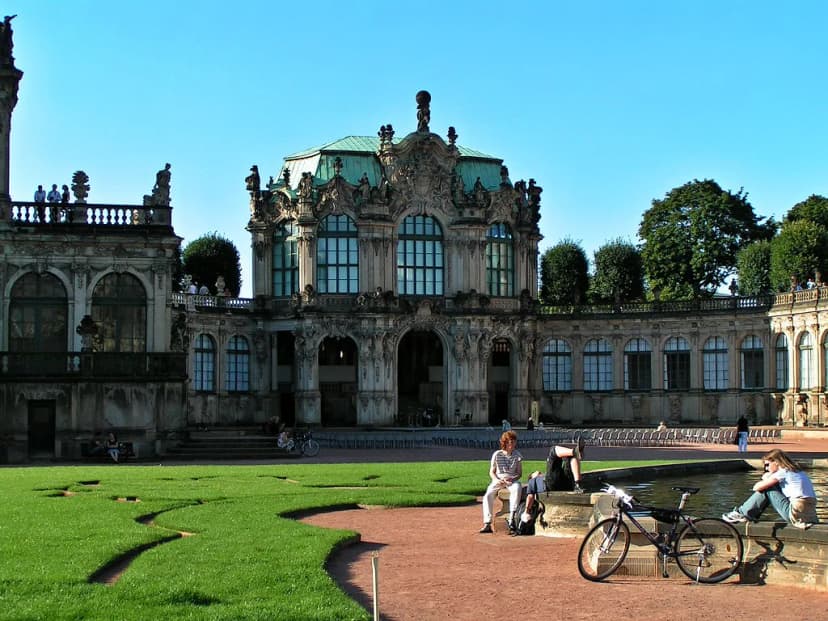
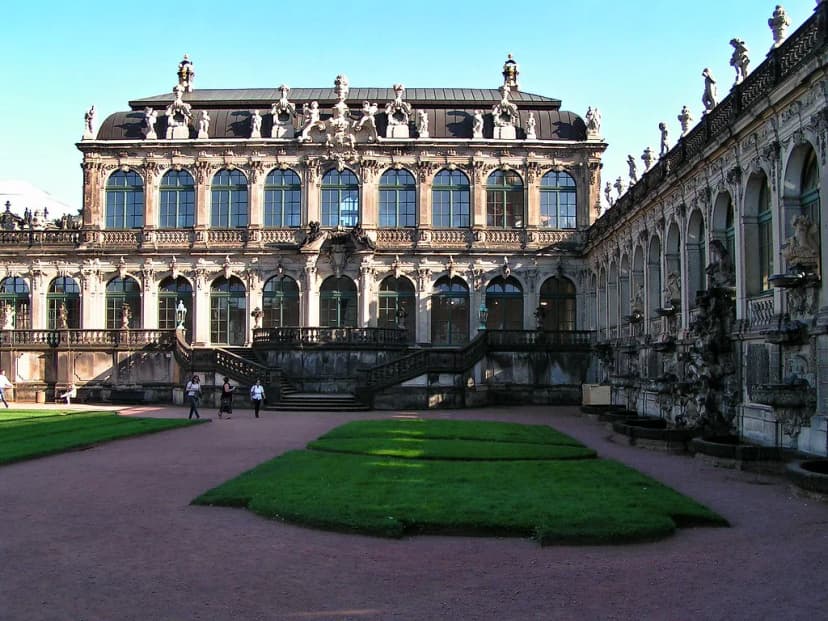
The Zwinger was built between 1709 and 1728 as a late Baroque complex, and its courtyards and garden areas are the main outdoor subject; the museums inside, including the Old Masters Picture Gallery and the Porcelain Collection, are a separate decision with their own entry conditions. Dresden Elbland describes the site as an example of late Baroque architecture whose interior collections grew out of August the Strong's art treasures. Frame the pavilions and the Crown Gate from the open ground rather than assuming courtyard and gallery access follow the same rules.
The Frauenkirche anchors Neumarkt with its stone dome, rebuilt after the Second World War and reconsecrated in 2005, and it reads best from the square rather than pressed against its base. The Semperoper on Theaterplatz gives you a second, very different massing: a long facade that needs width, so stand back across the square and use the opera house's own forecourt lines. The Royal Palace and the Fürstenzug complete a natural loop without entering any building.
Brühl's Terrace and the Elbe as a Vantage Point
Brühl's Terrace runs above the Elbe and is marketed as the balcony of Europe, which tells you what it is for: a raised, open line of sight over the river rather than a close-up viewpoint of any single building. Shoot down the channel for layers of bridges and banks, or across for the opposite shore. Because the terrace is elevated and open, it also works in flat light when facades elsewhere look dull.
The Elbe itself is a working element in the frame, not just a backdrop. The city's transport information notes that tram, bus, Elbe ferry and two mountain railway lines run within Dresden, and the Saxon steamship fleet operates round trips and excursions past the Blaues Wunder and towards Pillnitz and the Meissen wine region. That means moving boats enter your compositions at intervals, which is useful foreground interest but requires patience.
The Blaues Wunder and the Loschwitz Approaches
The city of Dresden gives the bridge's technical facts: a steel truss structure built between 1891 and 1893, 280 metres long, 12 metres wide, with trusses roughly 24 metres high, crossing without piers in the river. It was one of the first pier-free bridges in Europe, and it has survived with the oldest building fabric of any bridge in Dresden. Those proportions tell you what to plan for: a long horizontal object that needs either distance or a diagonal.
The light-blue paint is the compositional fact worth working with, not just the nickname story. A pale blue steel truss set against green valley slopes reads as a hard graphic line, so side-on views from the Loschwitz or Blasewitz approaches give you the full span, while downstream views compress the bridge against the river bend. Move between the two banks rather than shooting repeatedly from the same spot.
Mountain Railways as Subject and Viewpoint
The Schwebebahn, dating from 1901 and described by the city as the world's oldest suspended mountain railway, covers the climb from Loschwitz to Oberloschwitz in about four and a half minutes and gains 84 metres of height. The upper station delivers the outlook the city calls the beautiful view, and the machine house at the top station can be visited by those interested in the machinery. Note that the city publishes autumn revision closures for the Schwebebahn and the Standseilbahn, so those windows may force you to reorder a Loschwitz day.
The Standseilbahn has linked Loschwitz with the Weißer Hirsch villa quarter since 1895, and its upper station sits 95 metres higher, giving what the city calls a fantastic view over Dresden. Both railways work as subjects in themselves, especially the track geometry and the wooden cars, and as elevators to elevated sightlines you cannot reach on foot as quickly. If either line is under revision, the elevated compositions it provides are simply unavailable that week.
Light Planning for Sandstone and Steel
Reconstructed sandstone facades are directional: they respond to low, raking light and go flat and low-contrast under overcast skies. That makes early and late light more valuable in the old town, while a bright overcast day is actually workable for the bridge and the river, where you want even rendering of steel and water rather than deep shadow. Match the circuit to the forecast instead of forcing the same route every day.
The Elbe functions as a reflector, brightening the underside of buildings and the bridge deck and often pushing foreground exposure above the sky. Expose for the highlights and let the water carry the shadow detail, or bracket when shooting into the light from Brühl's Terrace. Evening is a distinct subject in its own right, with the old-town facades illuminated from the river side; compare approach options before committing to a night session.
What to Leave Out of the Walk
A shorter list produces better images. Trying to cover the Zwinger, the Frauenkirche, the palace, the terrace, the bridge and both railways in one day means spending most of it moving and almost none of it waiting for light. A suggested half day is enough for the old-town circuit, or a full day if you want to add the Elbe valley and the mountain railways.
Courtyard, garden, interior and tower access are four separate questions at any Dresden complex, and a single ticket or a single rule rarely covers all of them. Districts such as the Neustadt and locations outside this walk may be worth a separate trip, but they are not confirmed photography locations in the sources here. Do not assume that a public square, a courtyard and a museum hall share one access rule or one photography policy.
Practical and Legal Boundaries
Public space is the safe assumption for this walk, and anything beyond that needs checking with the operator. Tripod use, drone flight, commercial shoots and any permit requirements are governed by rules that differ between sites in Dresden, and the sources here do not state them for any individual location, so confirm current conditions with the site or the city before you travel with specialist equipment or plan a paid shoot.
Construction is the other variable that can reorder a day. The city's own tourism pages carry notices about work on the Blaues Wunder and about the two mountain railways' revision windows, and such dates are the publisher's statement and subject to change. Check the city's current notices and the transport operator's own information shortly before you go rather than relying on any plan written months earlier.
Plan Your Visit
Decide first between the Baroque old town and the Elbe valley, then build the day around one or two subjects rather than a checklist. Allow the light to set the order: facades early or late, steel and water in flat light, and the river terrace for the softer hours. A suggested half day is enough for either circuit if you are not waiting for a specific condition.
Before you go, confirm the two things that change: railway revision windows from the city and transport operator, and current construction near the bridge. Check the individual site's own rules for tripods, drones and interior photography, since those are not uniform across Dresden. With those checked, the public viewpoints in this guide are enough for a strong set of images without entering a single museum.
Frequently Asked Questions
Can you photograph the Dresden old town landmarks without entering any museum?
Yes. The Zwinger's courtyards and garden areas, the Frauenkirche's setting on Neumarkt, the Semperoper on Theaterplatz and the Royal Palace's exterior, including the Fürstenzug mural, can all be worked from public squares and streets. Interiors, towers and specific courtyards follow their own rules, so check with each institution before assuming a public square and a museum hall share the same policy.
Where can you photograph the Blaues Wunder from public space?
The bridge is approached from the Loschwitz and Blasewitz sides, and the city notes that two mountain railways start from the neighbouring Körnerplatz. Side-on views give you the full 280-metre span, while downstream positions compress the bridge against the river bend. Check current construction notices before you travel, because works on the bridge have been announced on the city's own tourism pages and can affect the approaches.
Are the Dresden mountain railways a photo subject as well as transport?
Both. The Schwebebahn dates from 1901 and rises 84 metres from Loschwitz to Oberloschwitz, while the Standseilbahn has linked Loschwitz with the Weißer Hirsch area since 1895 and reaches a station 95 metres higher. Their upper stations give elevated views over Dresden, and the lines themselves are photogenic objects. The city publishes autumn revision closures for both, so verify operating status before planning around them.